A, B, C game: how to stop giving away blinds to your own inner monkey
FunFarm psychologist Tatiana Barchukova is the first to link the poker A, B and C-game to science, explaining how to hold your concentration at the table for longer.

Tatiana develops mental support courses and leads a team of psychologists and mental coaches. Thanks to her attentiveness and professional approach, the school and fund have a mental care department that helps players maintain balance and stay resilient and motivated.
No athlete steps onto the start line without a warm-up. Muscles need to be warmed through, otherwise the first minutes are spent not on results but on "getting up to speed". In poker it's exactly the same — only it's not the body you need to warm up, but the mind. And if you sit down at the table "cold", the warm-up will happen anyway. You'll simply pay for it with your blinds.
Many mistakenly confuse the A-game with a period when they're simply winning hand after hand. But its essence isn't luck — it's the peak effectiveness of your attention and the quality of your decisions. Our article is about how to learn to manage one of your most important assets — your own head.
Interviewed a psychologist and written up by Vyacheslav Bobovich.
The three modes of your game
In the poker community, the term A-game has long been established. You're in a state of maximum concentration, engagement and constant analysis of your actions. But what counts as B- and C-game — everyone interprets differently. We propose a simple and workable three-tier scale.
A-game. Your decisions are well-founded and consistent. Your attention stays on the process, not the result. A calm reaction to shoves and opponents' actions. You keep your ranges and line logic clear, you're ready for complex hand analysis and unconventional plays, you notice your mistakes but don't berate yourself for them. The key internal feeling: "I'm in control of my game".
B-game. A small loss of quality and concentration. Most hands are handled through quick situational analysis and semi-automatic action, decisions are made faster than usual. Sometimes you forget that you'd planned to play the hand differently. It can feel like autopilot mode.
C-game. Mindless automatism, tilt and complete loss of control. You click without understanding why, or you do what your emotions tell you: get revenge, prove a point, punish, test the thought "I have no influence over anything".
And here it's important to accept an unpleasant truth: everyone ends up in the C-game at some point. That doesn't make you a weak player. What makes you weak is something else — the inability to notice this in time and bring your attention back to what's happening at the tables.
You shouldn't aim to spend every hour of a session in the A-game. That's physically impossible, since our bodies simply aren't built that way. You'll spend 80% of the session in the B-game, and that's normal. A professional's task is to level up the B-game and learn to return to the level above at the right moment. To switch from the C-game to the B-game, and from the B-game — back to the A-game, right at the moment of a key hand.
Who's actually making your decisions
To manage the modes, you need to understand who's responsible for them.
Psychologist Daniel Kahneman proved that we make most of our decisions on autopilot, not on the basis of logic and thorough evaluation. And blogger Tim Urban vividly described this using a metaphor whereby two beings live inside our head at once.
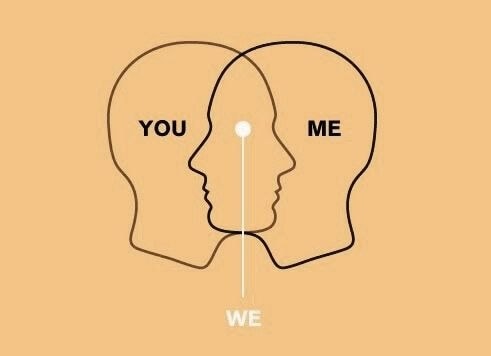
System 1 — the Instant Gratification Monkey.
This system of thinking quickly analyses the situation and makes the first suitable decision. However, its analysis is often based on feelings, emotions and false beliefs. It's the one that calls or folds "by feel". For example:
— "Yesterday I got shoved on with the same cards, so I'll fold now." — "I already got it wrong against this aggressor once — so it'll end badly this time too".
The Monkey looks for patterns where there are none, believes in omens and magical thinking. However, this system of thinking is very resilient and capable of handling an enormous number of decisions over the course of a session.
This is your autopilot, which significantly eases the pilot's workload, but requires a properly plotted course. Otherwise the plane risks moving in a random direction, relying now on the direction of the wind, now on the position of the sun, now on pure guesswork.
System 2 — the Rational Type. It counts probabilities, assesses opponents, makes plus-EV decisions. This is exactly the A-game. However, this type of thinking is very energy-intensive. It tires quickly and hands its authority back to the Monkey.
The link between the types is direct.
The A-game switches on when the Rational Type is active.
The B-game is the Monkey acting according to a strict, previously learned algorithm.
The C-game is the same Monkey, but one that's lost control, given in to emotions and doing whatever it wants.
Learning at FunFarm, from any level
Warming up before the start
Warming up before playing is essential — it's an axiom. Our cognitive functions draw on the same energy source as emotional regulation and the maintenance of homeostasis. And if either of those is in a poor state, our body's resources will be spent there instead of on thinking. Every time before a session, check yourself against three main blocks.
1. Physical state. What have you eaten? Did you get enough sleep? Are you sitting comfortably? Is nothing distracting you? As soon as the body senses physiological discomfort, it switches into survival mode and cognitive function drops dramatically. A hungry, sleep-deprived player is physically incapable of the A-game.
2. Focus on session goals. Why are you sitting down to play? Which skills from your training are you tracking today? Which mental qualities are you strengthening? What are you paying attention to? When the brain has a specific goal, it stops jumping from thought to thought, from outcome to outcome, and anxiety decreases. As a bonus, you deprive the brain of the chance to get stuck on negativity and bad beats.
3. Emotional mindset. Thinking comes easier in an uplifted mood. Emotional reactions directly affect the frontal lobes, where the rational thinking system lives. A good mood switches on logic and helps you stay in it longer. However, enthusiasm in the early stages is often followed by disappointment after setbacks. If you've run into this, read our article on how to deal with frustration and regain your love for the game.
Simple things can help set the right mood here and now: warm memories, favourite music, physical activity. Don't confuse this advice with a call to be happy about little things. It's a tool for activating the frontal lobes, so you can assess your play as soberly as possible and stay engaged for longer.
How to balance between modes
You can't be in A-game constantly — it lasts only a limited amount of time. If you burn through your entire resource in the early stages of a tournament, by the time the most crucial moments in the deep stages arrive, you'll no longer be able to make sound decisions. Within a session, you'll switch between modes, and that's normal. For optimal play, you need to focus your attention on two aspects: strengthening your B-game and the skill of bringing yourself back up to a higher level of play.
How to strengthen your B-game. Don't neglect training, and build your own algorithm for quickly assessing the situation in a hand. A competent “autopilot” in poker is the ability to pull the right knowledge from your memory at the right moment. Essentially, your inner “monkey” should instantly determine what's happening now — assess the cards, position, stack, and make a basic decision based on that. A-game kicks in when the moment is unusual or very costly, so you can carry out a more complex analysis of the situation.
Attention management. When your focus drifts and logic starts to “leak”, say the brief reason for key actions out loud or to yourself. This technique is equally effective both for shifting from B-game to A-game, and for moments when attention is completely lost. If you catch yourself realising you've mentally checked out of the session, go back to these questions for a quick analysis:
What's my position?
What's the stack depth?
What kind of opponent am I up against?
Use physiological micro-triggers.
To shift up a mode | To shift down a mode | |
Posture | Straighten your posture | Drop and relax your shoulders |
Breathing | Take a deep, quick breath in | A slow, long exhale |
Behavioural hygiene. Remove distracting stimuli. Turn off messengers and close unnecessary tabs. Get distracted just once, and you'll lose concentration for the next 10–15 minutes. Use an anchor phrase — say it out loud before starting, and mentally at the first signs of losing focus.
The main takeaway on managing your game
It's important to remember that our mental resource is limited. The brain spends the same “battery” on complex calculations, emotional control, and maintaining physiology. By switching on the rational type of thinking, we activate the most energy-consuming mode. It's physically impossible to sit in it for hours — the battery will run out, and you'll fall into tilt. That's why it's pointless to demand constant A-game from yourself.
Our real task is to load the right automatic habits into the Monkey. By strengthening your B-game, you'll learn to play well on autopilot and not burn through your bankroll when your mental resource is running low.
You don't control the cards. The Monkey — you can. And that's exactly the difference between the one who gives away their blinds on autopilot, and the one who stays in the driver's seat.
Free course · FF Start
Learn faster, play more deliberately
Get a clear workflow: theory, practice, hand reviews and fixing mistakes.