A cooler in poker
In this article, we'll break down what a cooler is in poker, how it differs from a bad beat, why it can't be avoided even with correct play, and how to deal with such hands.

Tatiana develops mental support courses and leads a team of psychologists and mental coaches. Thanks to her attentiveness and professional approach, the school and fund have a mental care department that helps players maintain balance and stay resilient and motivated.
We often see players at the tables who, after losing a big pot, start doubting their game. They flopped a set, played it aggressively across all streets, and on the river it turned out the opponent had quads. The player thinks: "Maybe I should have folded? Maybe this is my mistake?"
The problem isn't a mistake. The problem is that the player doesn't understand the nature of a concept like the cooler. As a result, they either start playing too tight, afraid of losing another big pot, or they go on tilt and lose control of their game.
*Tilt is a state of losing emotional control, in which a player begins making decisions that deviate from optimal strategy.
In this article, we'll break down what a cooler in poker is, how it differs from a bad beat, why it's impossible to avoid with correct play, and how to treat such hands so they don't destroy our mental stability and bankroll.

New breakdowns in your inbox
Subscribe to the FunFarm newsletter: fresh Poker ABC articles and material that helps you grow as a player.
What is a cooler in poker
A cooler is a situation in which two players get very strong hands, both play them optimally, but one is mathematically doomed to lose. It's not a mistake, not bad luck in the classic sense, and not a bad beat. It's part of poker variance, which works both ways.
*A bad beat is a situation in which we were a clear favorite in the hand, but the opponent caught up with their hand on later streets.
* Variance is the mathematical deviation of actual results from expected ones due to randomness.
We looked at the concept of variance in more detail in this article. We recommend following the link and reading it to better understand what we're talking about with you now.
A cooler has several key signs.
Both players genuinely have strong hands — not a top pair, but at least a set, a flush, or a full house.
Both players couldn't have known they were losing, because their decisions were based on ranges, not on exact cards.
Both played the way they should have from the standpoint of expected value.
And most importantly — with the same starting data, we would make the same decision again and again.
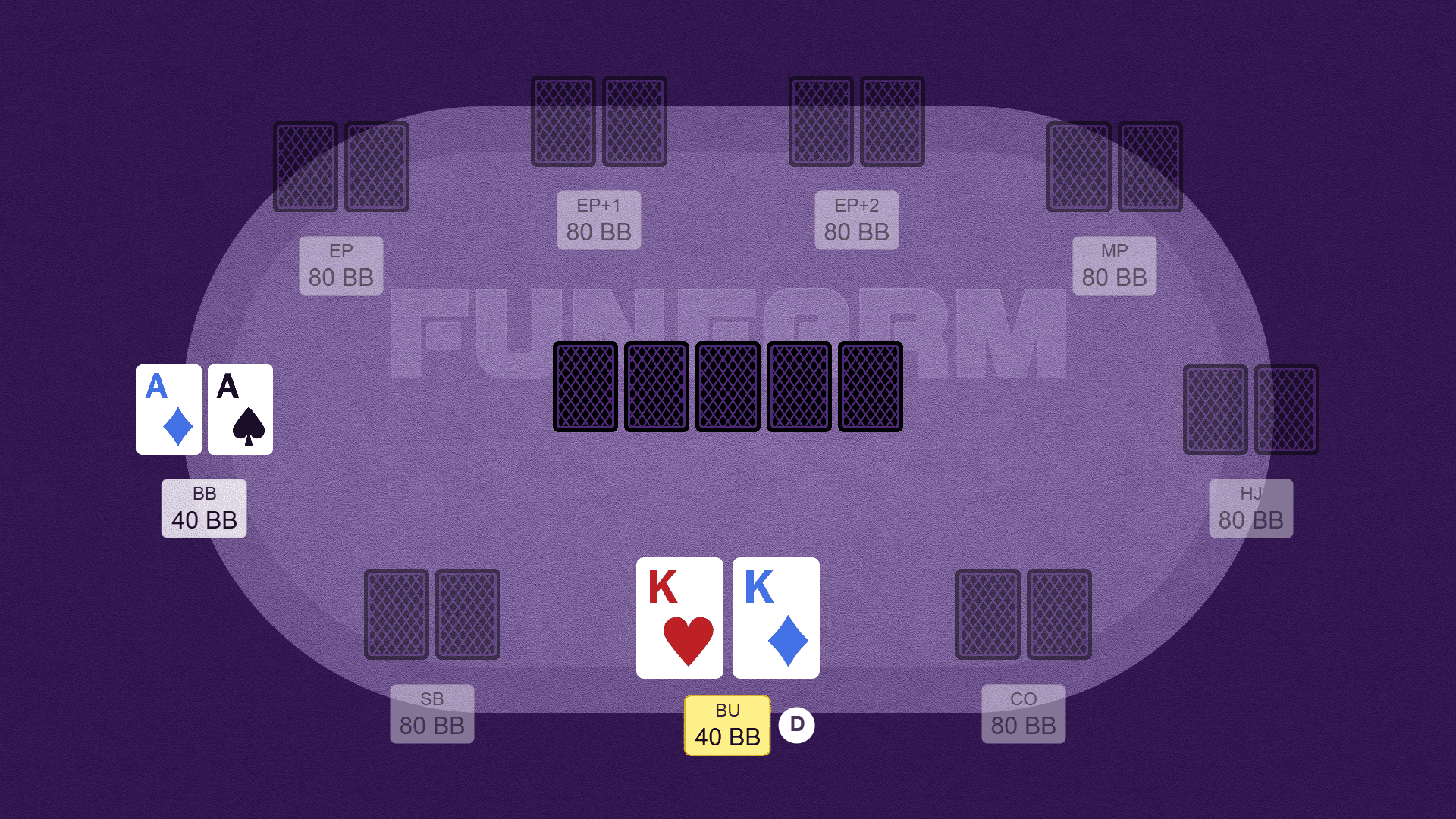
The simplest example of a cooler on the preflop: we have pocket kings, and the opponent has pocket aces. We're on the BTN, where we quite often open a wide range.
After our raise, the opponent will most often 3-bet, and we'll 4-bet or push. Getting it in is inevitable not only at 40 BB stacks, but also deeper.
In the end, having gotten it in, we lose 80% of the time. But we couldn't fold kings, because the opponent's range contains not only aces, but also, for example, AK, QQ, JJ, and so on. Against this entire range, our decision is +EV. The fact that this time he had aces doesn't make our decision a mistake.
Classic examples of coolers
Let's look at two more variations that are quite common at the tables.
1. A lower flush against a higher one
When there are three cards of the same suit on the board, both players can have flushes. The one with the higher top flush card wins. If we have a flush with a jack, and the opponent has a flush with an ace, we lose. But we can't fold a flush — it's too strong a hand.
Specific hand:
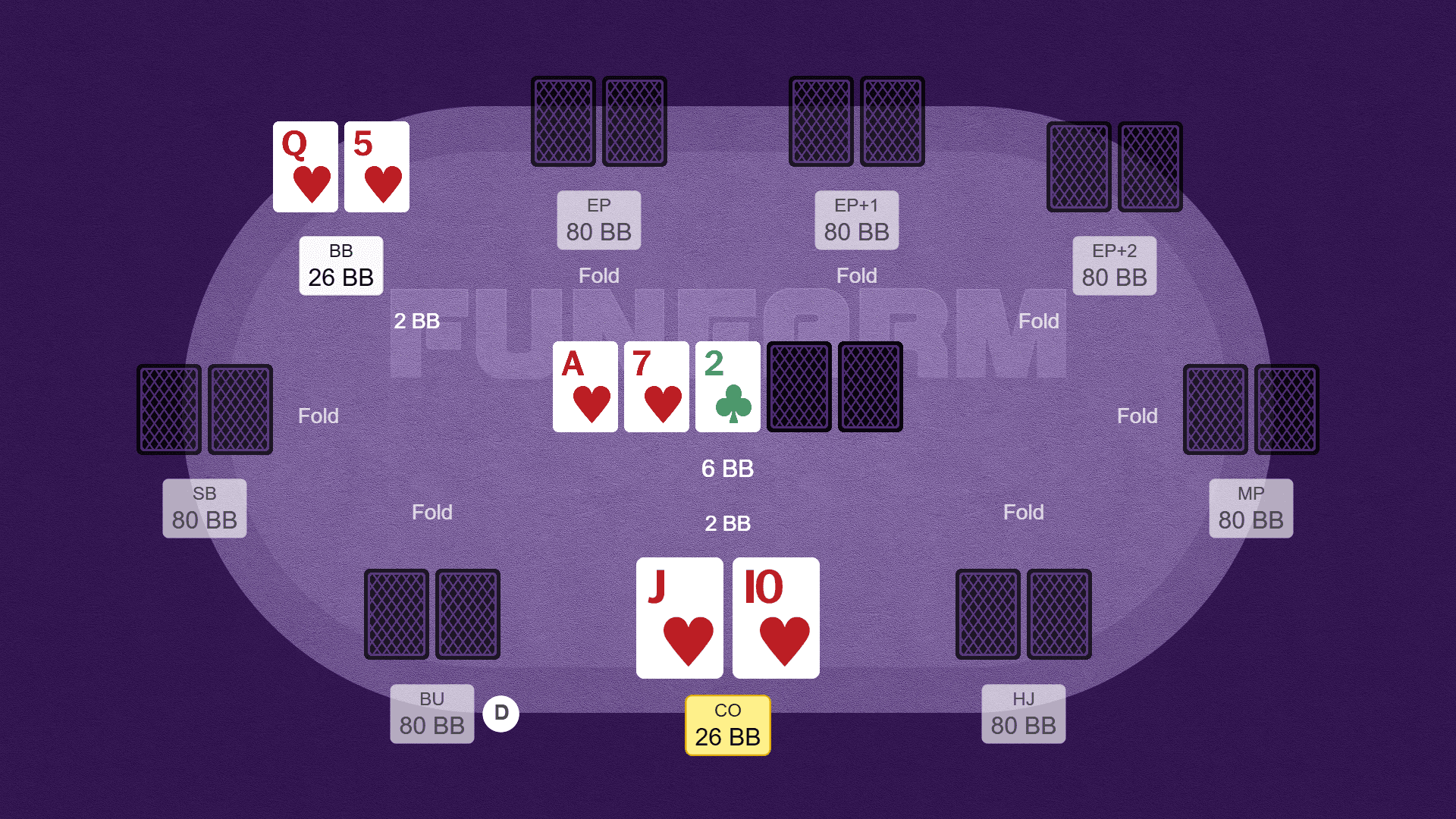
We have J♥️T♥️ in the CO. We opened with a raise, and the opponent on the button called. On the flop there's a flush draw. We make a c-bet, the opponent calls.
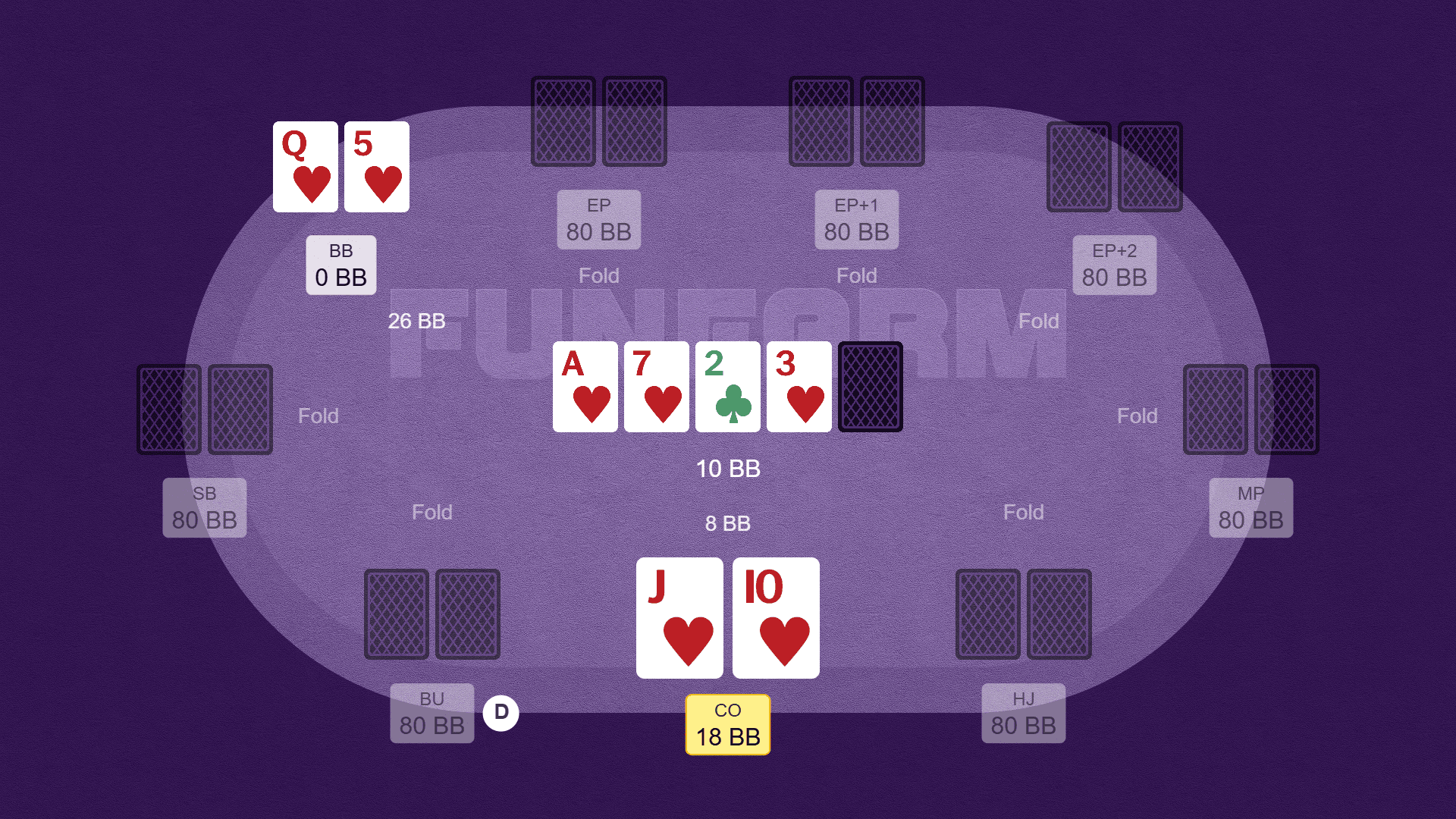
The turn brings the 3♥️. We have a made flush with a jack. We bet, the opponent pushes. In this case we can't fold, given the number of chips we need to add to the pot, plus the strength of the hand — we often beat weaker flushes, two pair, or flush draws that decided to play aggressively.
2. A straight against a higher straight
Straight to a specific hand:
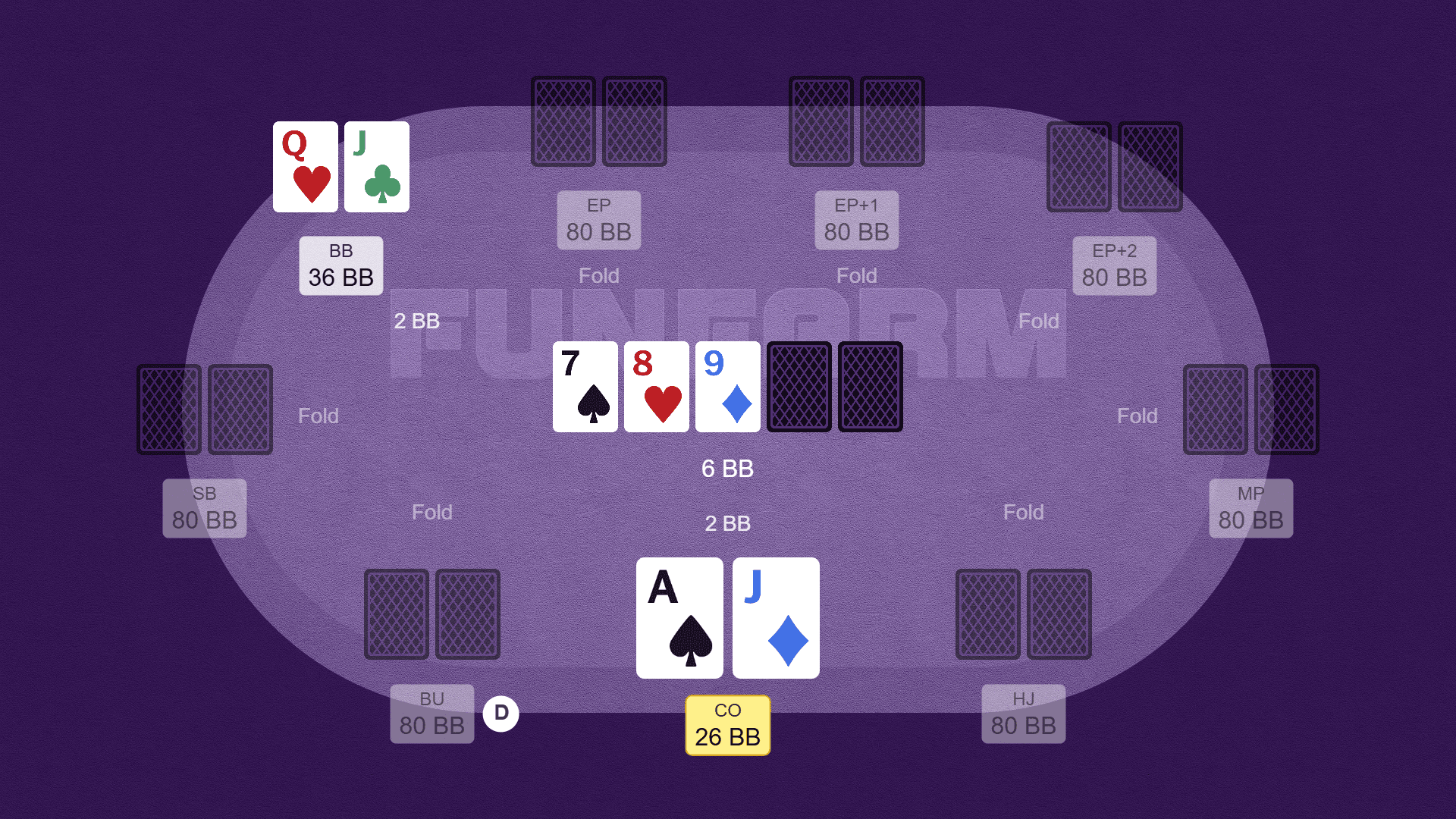
We have A♠️J♦️ in the CO. The opponent in the BB calls against our raise. On the flop a board appears in which we have a gutshot. We bet, the opponent decides to call.
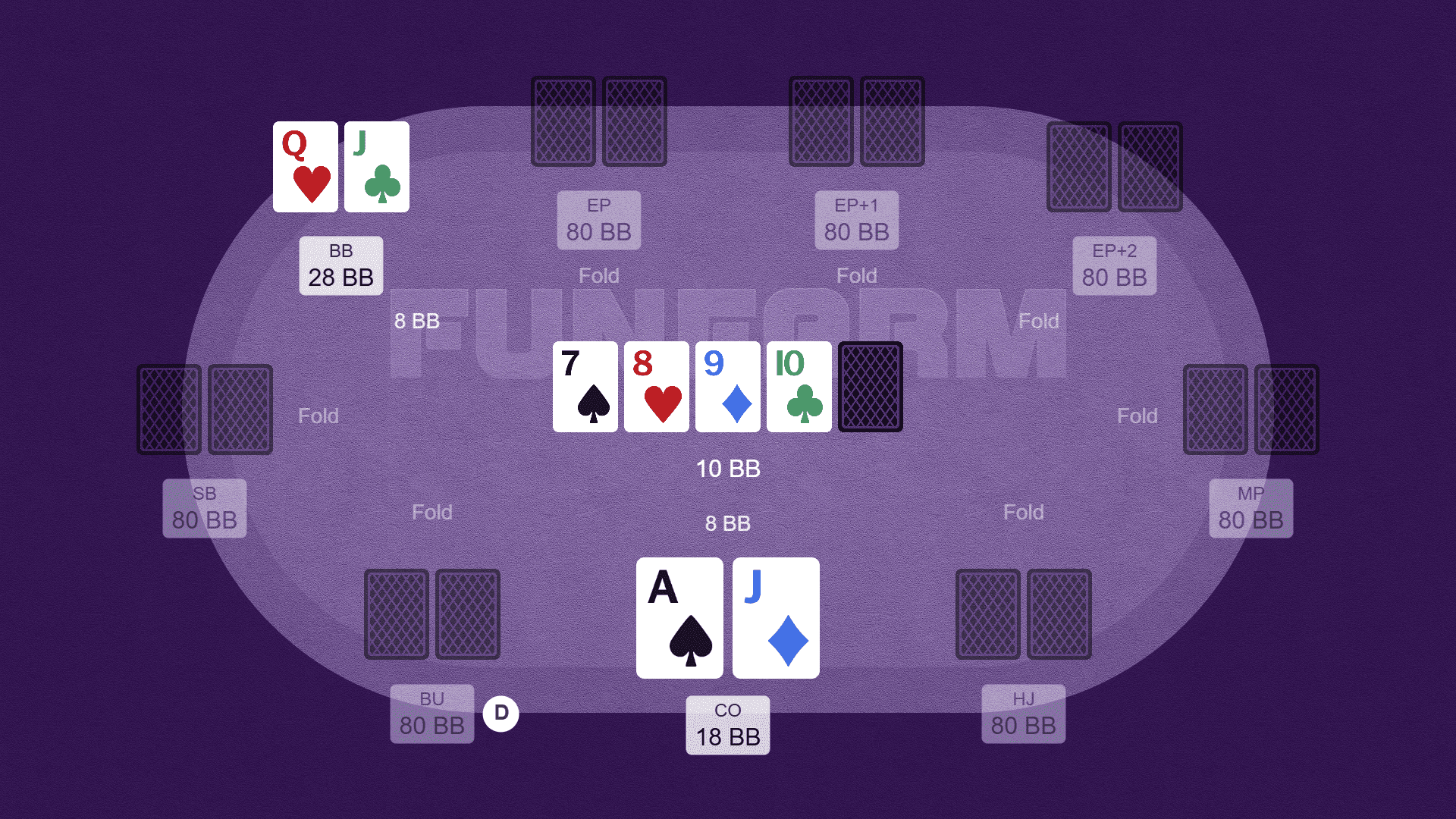
On the turn we make a strong straight and continue the aggression with a big bet. As we can see, the opponent sets a trap for us, but our hand is quite strong for barreling, to assume that we're already weaker right now.
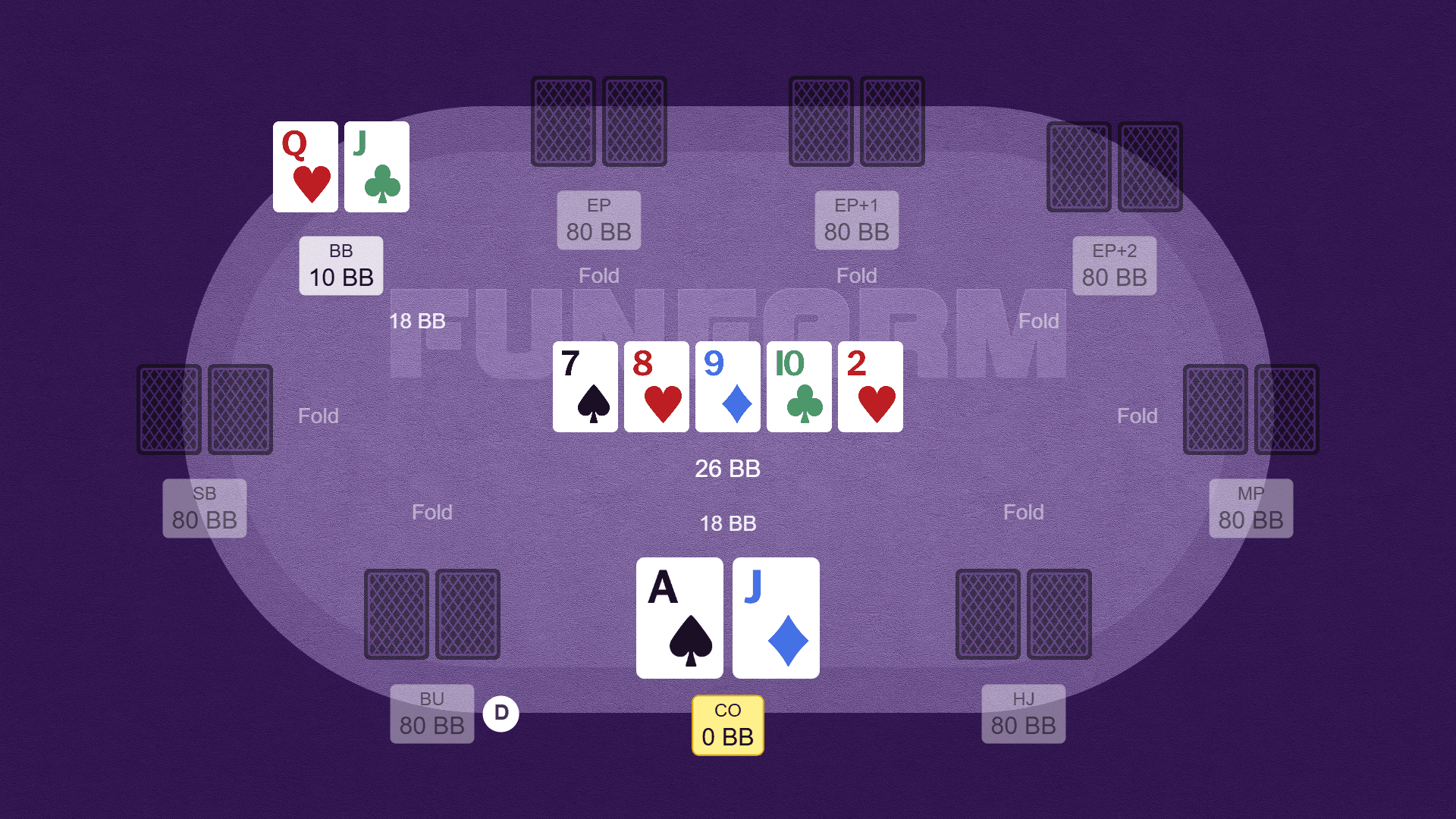
The river card changes nothing, the opponent checks, and we bet hoping for a call from weaker hands — for example, two pair. In the end we see a higher straight and lose, but you'll agree it's hard to say we played this hand incorrectly?
How a cooler differs from a bad beat
Beginning players often confuse a cooler and a bad beat, but these are different concepts. The distinction is critically important for correctly analyzing your hands and for mental stability.
A bad beat is a situation in which we were a clear favorite, but the opponent caught up with their hand on later streets. We did everything right, the opponent made a mathematically unjustified call, but he got lucky. Let's look at an example.
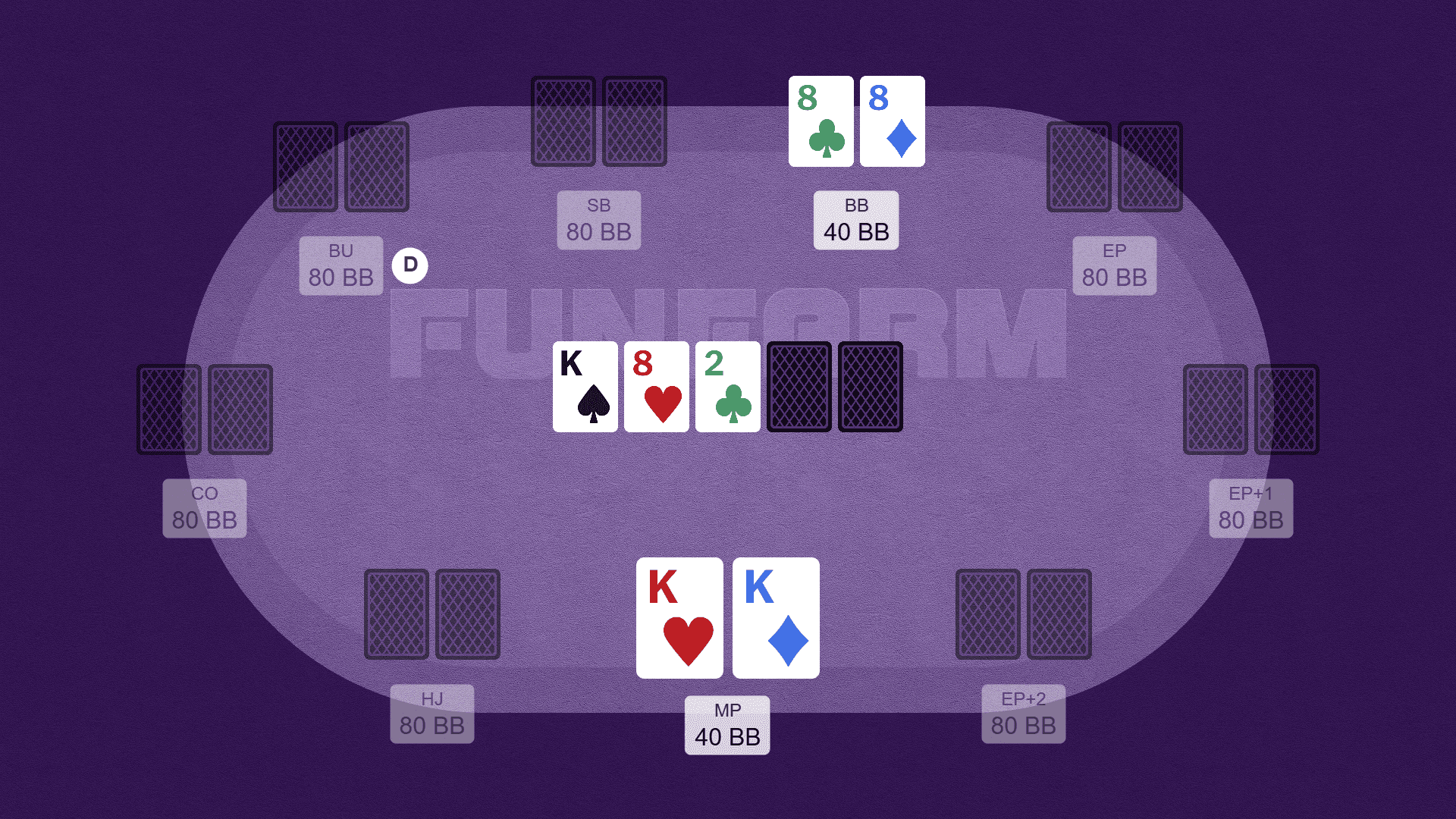
We have a set of kings on the flop, the opponent has a set of eights. We bet, he raises, we push, he calls. Both played correctly.
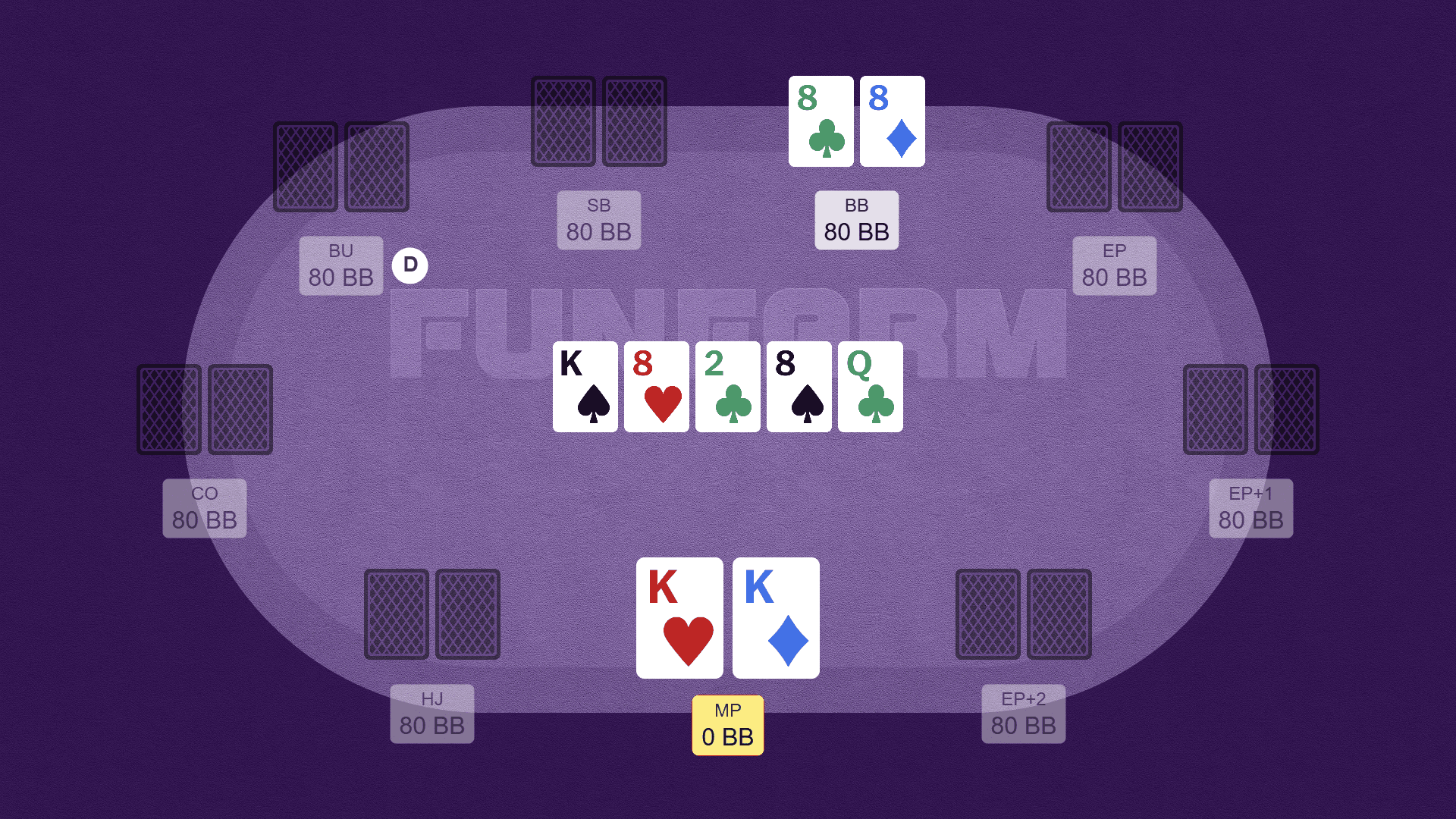
But on the turn the player hits quad eights, and we lose the hand. Could we have played differently on the flop? No, but we didn't win, because a bad beat happened.
A cooler, for its part, is a situation in which we were behind from the start, but couldn't have known it. Our equity against the opponent's range was good, but against his specific hand — low. In a cooler the opponent didn't make a mistake. He also had a strong hand, and he played it correctly.
Why is it important to distinguish these concepts? Because the reaction to them should be different. A bad beat can cause irritation — the opponent played badly, but won. A cooler shouldn't cause anything but acceptance: both played well, the variance just wasn't in our favor.
Let's remember a simple rule. An all-in with KK against AA on the preflop is a cooler. An all-in with AA against 44 on the preflop with 44 subsequently winning is a bad beat.
Learning at FunFarm, from any level
Can you get away from a cooler
The short answer: no. With standard play by both players, a cooler is inevitable. If we start folding strong hands only because we're afraid of a cooler, we'll lose far more money over the long run.
Exceptions exist, but they're rare and require very precise reading of the opponent. If we're playing against a super-tight player who only 3-bets with AA, we can fold KK. But in practice such players are almost never encountered. In most cases the decision to fold will be a mistake.
The same goes for postflop. If we always fold a set on the flop because we're afraid of a higher set, we'll lose far more money on hands where the opponent has top pair or a draw. A set is too strong a hand to fold. The cost of erring toward a fold is much higher than the cost of erring toward a call.
Conclusion: it's better to lose in a cooler than to constantly fold strong hands. Coolers happen rarely.
How to analyze cooler hands
After a cooler, many players just get angry and forget about the hand. That's a mistake. Cooler hands need to be analyzed, but with the right question: not "why did I lose?" but "could I have played differently with the information I had?"
If the answer is no, then it's a cooler. We accept it and move on. If the answer is yes, then it's not a cooler but a mistake, and we learn from it.
For analysis we use poker software — Flopzilla, Equilab, or solvers. We load the hand, set the opponents' ranges, and look at our equity against those ranges. If our decision was +EV against the range, then we played correctly, even if we lost in this specific hand.
We talked in more detail about what poker software is and how to use it correctly in this article. Go and read it.

Psychology: how not to go on tilt
Coolers are one of the main causes of tilt. The human brain struggles to perceive probabilities, trying to round them to zero or a hundred percent. When we lose in a situation where we "should have won," the brain perceives it as injustice.
But in poker there's no justice or injustice. There's only math and variance. To avoid going on tilt after a cooler, we ask ourselves one question: could I have played differently with the same starting data?
Working on theory helps us perceive coolers more calmly. The deeper we understand poker math, the easier it is for us to accept rare events. We also work on psychological resilience — we read books on the mental game, work with a coach, practice meditation. Physical condition also affects emotional control. The better our physical shape, the clearer our mind and the easier it is to maintain balance after a cooler.
In one of our articles we talked about how to handle the fear of making a mistake in poker on a mental level. If you want to work on your psychological resilience, start now via the link.
The main thing is to remember: coolers work both ways. Over the long run we get exactly as many coolers in our favor as against us. We simply remember the ones where we lost and forget the ones where we won.
Conclusion
We can't avoid coolers with correct play. The only way to eliminate them is to fold all hands except absolute nuts. But such a strategy would be -EV. And the game would lose its value: no thrill, no bluffs, no battle of intellects.
Instead of fearing coolers, we learn to accept them. We analyze hands to make sure we played correctly. We maintain a sufficient bankroll to survive the inevitable losses. We work on psychological resilience so that coolers don't throw us off balance.
If you want to learn how to analyze your hands, distinguish coolers from mistakes, and maintain mental stability over the long run — apply to FunFarm.
Free course · FF Start
Learn faster, play more deliberately
Get a clear workflow: theory, practice, hand reviews and fixing mistakes.
Frequently asked questions
Read next
How to Play Poker: Rules for Beginners

A, B, C game: how to stop giving away blinds to your own inner monkey
Who is a high roller in poker