How to deal with the fear of making mistakes in poker?
Why beginner poker players are afraid of making mistakes and how to fix it, how professionals deal with the fear of mistakes: a practical guide


Tatiana develops mental support courses and leads a team of psychologists and mental coaches. Thanks to her attentiveness and professional approach, the school and fund have a mental care department that helps players maintain balance and stay resilient and motivated.
The fear of mistakes accompanies every poker player. Sometimes it shows up as uncertainty before an important hand, sometimes as a tendency to play too cautiously. But fear itself is not an enemy: it's a signal that helps you understand yourself better and improve the quality of your decisions. Why this fear arises even in experienced players — we explain it through the Dunning-Kruger effect
In this article, we'll break down where the fear of mistakes comes from, which types of reactions intensify anxiety, how to cope with tension in key spots, and which practices build a lasting "immunity" to paralyzing fear.
This material will help you build a professional attitude toward mistakes and strengthen your psychological stability over the long run.
In this article, you'll learn:
what types of attitudes toward mistakes exist and why some of them intensify anxiety
how to stop perceiving a misstep as a threat to your self-esteem
what to do in the moment of a key hand, when fear intensifies
how to maintain long-term focus and reduce result pressure
which exercises build resilience and a professional attitude toward mistakes.
Types of fear of mistakes: how we react to missteps
Before coping with fear, it's important to understand exactly how we relate to mistakes. This attitude directly determines how strong the emotional reaction will be.
There are several varieties of attitudes toward mistakes — below we'll look at each of them more closely.
1. The perfectionist style: "a mistake = a catastrophe"
Players with this type of thinking are prone to catastrophizing — a cognitive distortion in which a small mistake feels like a failure. A misstep becomes the label "I'm not good enough."
This perception creates strong tension — attention narrows, a fear of making the wrong decision appears, and the feeling of tilt grows. For the perfectionist, a mistake is a threat to self-esteem, not working material.
What tilt is and how to fight it we broke down in one of the posts on our Telegram channel. Follow the link to the post and keep up with the fund's news.
2. The avoidant style: trying not to make a mistake at any cost

Players of this type fear not so much the mistake itself as the situations in which it might arise. They choose overly safe play — they fold more often, avoid thin decisions, and prefer only obvious lines.
This creates an illusion of control but deprives you of growth. Without stepping beyond your usual horizon, no adaptation forms and your thinking doesn't develop.
3. The learning style: "a mistake = information"
This is the healthiest and most professional form of reaction. The player separates the mistake from self-esteem: the action may be wrong, but that says nothing about their value as a player.
In cognitive-behavioral psychology, this approach is called healthy interpretation: an event is information that can be studied, not a verdict.
This style creates the psychological foundation for acquiring poker mastery.
Shifting your reference points — from result to process
The fear of mistakes intensifies when attention fixates on the result — your place in the tournament, a potential win, expectations from a specific session, personal financial goals.
In such moments, the brain overestimates the significance of a specific hand. This distortion is called "too high a stake" — when a particular event is given a significance it doesn't have.
This causes internal conflict. The player understands that one hand decides almost nothing over the long run, but emotionally perceives it as fateful.
In this case, keeping focus on long-term goals helps. What do you need for that?
evaluate progress, not a single result
perceive a mistake as an element of training
be aware of the long-run effect of decisions
regularly return to strategic development goals.
This is how what can be called a player's professional nervous system forms — resilience to swings in results.
Learning at FunFarm, from any level
What to do in the moment: techniques for key decisions

When fear intensifies right at the table, there's no opportunity for deep analysis. You need short mental techniques that help quickly regain control.
1. Technique: "Stop-thought"
Goal: to interrupt "catastrophizing." When your head says — "I'm about to lose everything," "this is stupid, not a decision" — the player gives themselves an internal command: "Stop!"
After that, they ask two questions:
What do I know for sure about the situation?
Which decision will be correct over the long run?
This technique switches thinking from emotional mode to rational mode.
2. Technique: "The Observer"
Goal: to step out of the whirlpool of emotions. For a second, the player imagines looking at the situation as a coach watching a student.
They calmly ask themselves — "what would I advise in this situation?". The observer's position reduces the influence of emotions and makes decisions cleaner.
3. Technique: "Minimal regret"
Goal: to maintain control over the situation. The player asks themselves — "which decision will I regret least tomorrow?".
This instantly removes the emotional noise and focuses attention on the quality of the decision, not on the fear of making a mistake.
How to develop "immunity" to the fear of mistakes
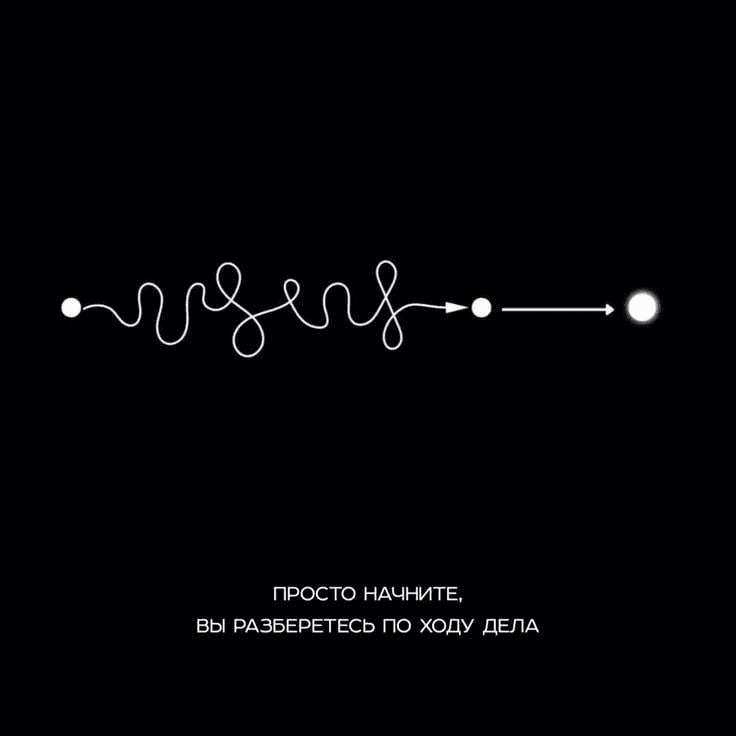
A professional's confidence isn't "I don't make mistakes," but "I know how to work with my imperfection." Below are three practices that help build resilience.
1. Small daily risks. Each day, one small step out of your game comfort zone — a thin value bet, a new line of play, the analysis of a difficult hand.
This way the brain learns that risk is not danger but a space for growth.
2. The "make 5 mistakes" challenge. The point isn't to make mistakes on purpose, but to not avoid them.
Over a session, record five situations where your decision was wrong. Write them down, analyze them, draw conclusions. This reduces fear and erases the association "mistake = threat."
3. The "jar of evidence." Start a note where you'll record:
difficult decisions you managed to make well
situations where you coped with stress
moments where the risk paid off.
Over time, this forms an objective image of your competence and replaces the internal dialogue "I can't do anything."
A new attitude toward mistakes
Paradoxically, the fear of mistakes is not an obstacle but an indicator. It appears where growth happens — new decisions, unfamiliar situations, complex lines.
If you learn to perceive a mistake as information, manage your attention in the moment, and gradually train resilience, fear will stop blocking your game. It will become a hint: this is exactly where your development zone is.
If you want to learn to manage anxiety, strengthen mental resilience, and develop a professional attitude toward mistakes — submit an application to FunFarm. We help players build a stable, conscious, and strong game over the long run.
Free course · FF Start
Keep your A-game longer
Build the skills to control your focus and know when to stop.
Frequently asked questions
Read next

A, B, C game: how to stop giving away blinds to your own inner monkey

Poker Without Burnout: How to Balance Playing with Work, Study and Family
A cooler in poker