How to play against very aggressive players in poker
At the tables you can run into opponents who play a wide range and constantly pressure their opponents with bets. Let's discuss how to play against loose-aggressive opponents.

One of our first coaches: on the team since the very founding of the project. He prioritizes simple and practical training with an emphasis on real game situations and decision-making over the long run. Val doesn't just "beat the games" as a player, but also instills a systematic approach to the game and discipline in his students.
Most beginner players are taught a tight-aggressive style. Poker players enter the pot with strong cards and realize their edge. However, you can meet opponents at the tables who play a wide range and constantly pressure their opponents with bets. Let's discuss how to play against loose-aggressive opponents.

New breakdowns in your inbox
Subscribe to the FunFarm newsletter: fresh Poker ABC articles and material that helps you grow as a player.
Key facts about strategy against aggressive players
It's profitable to catch aggressive opponents bluffing. Counter-aggression brings in less money than skilled bluff-catching.
To make sound calls, you need to think in ranges and understand your opponents' psychology.
Sometimes opponents are dealt strong hands. What matters isn't the outcome of a specific hand, but the result over the long run.
In situations with a positional advantage, it's profitable to widen your 3-bet range for value and as a bluff.
LAGs play a wide range but make rational decisions. Maniacs play even wider, but their aggression outweighs common sense.
Who are loose-aggressive players (LAGs)
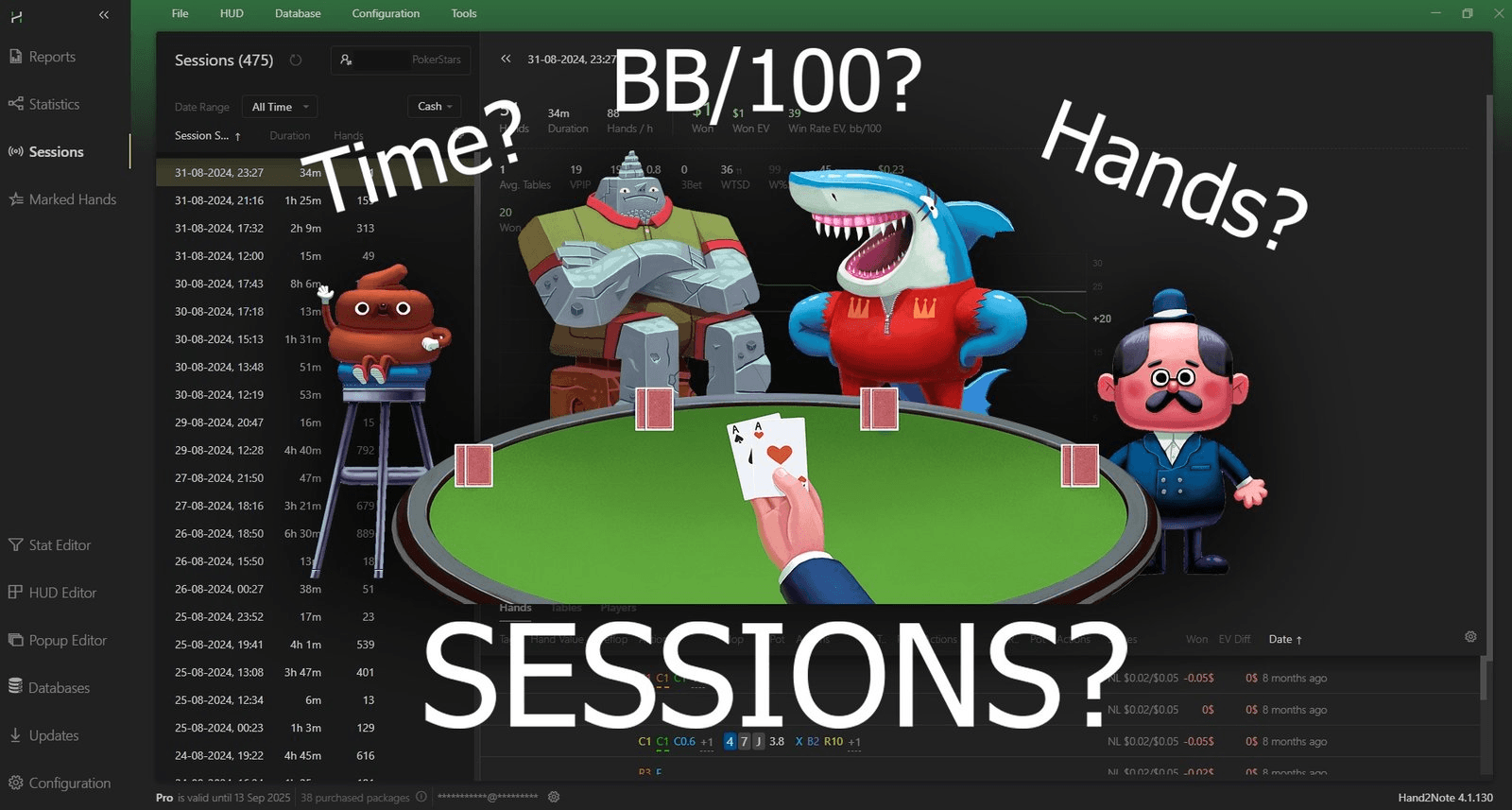
A loose-aggressive player is distinguished by a love of betting and playing a wide range. A LAG loves and knows how to pressure opponents with constant bets, raises, 3-bets, 4-bets and all-ins. From late positions, they open over 50% of starting hands. A LAG is dangerous because they know theory and balance their range. Statistics can help you spot a loose-aggressive player. Their stats in the HUD look like this: VPIP — 34-40, PFR — 27-32.
A maniac is a more aggressive version of a LAG. They love to raise, play a huge number of hands, but can't stop in time. If a LAG pulls off logical bluffs, a maniac often resorts to questionable lines. Their love of bets and raises regularly hurts them. Thinking poker players exploit maniacs' aggression. A maniac's VPIP and PFR figures exceed 40%.
Most poker players follow a mixed strategy. For example, they might actively use 3-bets preflop but otherwise act like a classic regular. Recreational players show the most dramatic deviations. A recreational player might follow a loose-passive style preflop and switch to off-the-charts aggression postflop. That's why professional players constantly monitor their opponents and table dynamics. Flexibility and avoiding cookie-cutter decisions bring more profit.
The main idea of the counter-strategy: let them bluff
Loose-aggressive opponents earn money by bluffing. They squeeze out opponents with constant bets and raises. Against most players, the strategy works effectively. To stand up to an aggressive opponent, you need a decent hand. However, strong combinations are dealt rarely. That's why cautious players regularly fold to LAGs' bets. There's another way to counter an aggressive poker style. It's about widening your calling range.
Over the long run, aggressive opponents get the same amount of strong hands and trash as everyone else. The player's task is to find the courage to call a few thick bets with a weak made hand. Let's take a hand between Charlie Carrel and Patrik Antonius from the Triton Series.
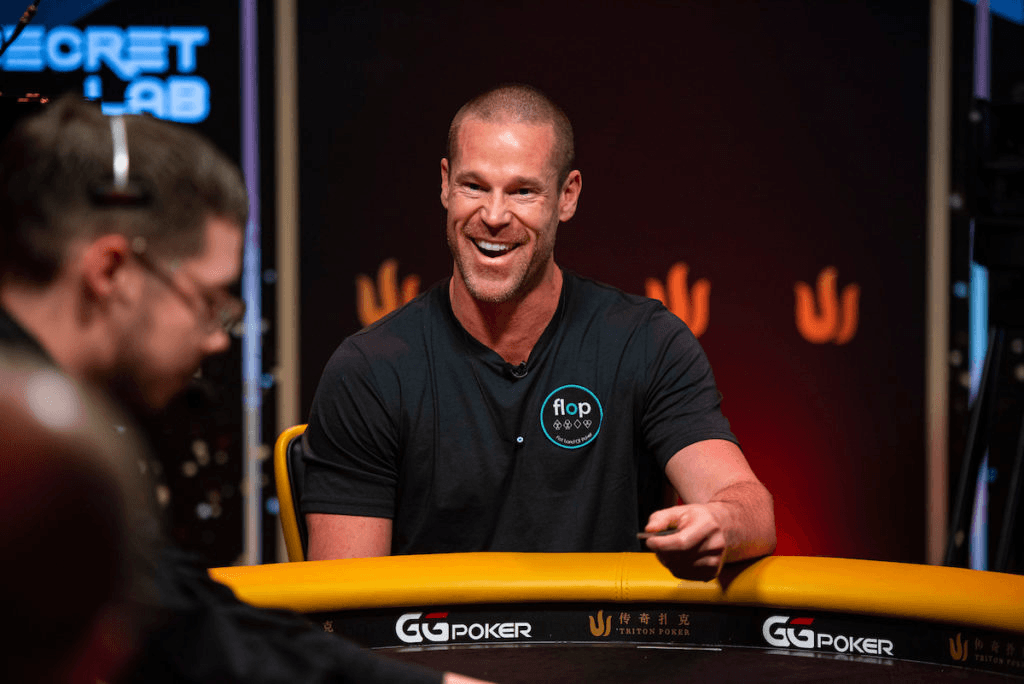
Charlie raised on the SB, and Patrik called on the BB with K♥️6♣️. On a flop of 6♥️9♠️J♦️, Carrel bet 1/3 pot and Antonius called. On the 5♥️ turn, the opponents both checked. The river brought a 2♦️, Charlie went all-in, Patrik thought and called. In the $25,000 tournament, Antonius called the push with third pair and saw Carrel's 8♠️4♣️. All thanks to experience playing against aggressive regulars.
However, risky calls can't be made in a vacuum. For the decision to be profitable over the long run, it needs to be prepared. A step-by-step guide might look like this:
Collect information on the opponent. Calling with a third or fourth pair isn't exactly a standard move. It's used against a suitable opponent. Build up data on your opponent. Study information on their aggression frequency, check out showdowns. Don't make expensive decisions based on a minimal sample size.
Widen your calling range. When the stats point to a loose-aggressive style from the opponent, the player should lower the requirements for hand strength. If a poker player previously called 3-bets with combinations from top pair, then against a LAG, even second pair with any kicker will do. Widen your calling range gradually — don't go to extremes. You shouldn't call a river push with A-high even against a maniac.
Avoid retaliatory bluffs. The idea of beating an opponent with their own weapon sounds nice, but works poorly in practice. An aggressive poker style triggers the desire to respond in kind. However, an experienced LAG applies pressure in the right spots, while their opponents often use ridiculous lines and simply give away money. A bluff works when a player acts logically. Trying to overpower an aggressor with aggression will only increase your losses.
Stick to your river plan. Calling a tight third barrel with second pair is scary. Why risk your tournament fate? You could wait for pocket aces and punish the LAG then. Don't give in to fear and stick to your plan. Otherwise, all the previous analysis and preparation will turn into a pointless waste of effort and resources. Standing up to a loose-aggressive opponent takes courage.
Catching bluffs isn't a simple strategy. Sometimes opponents will show up with the top of their range, sometimes an opponent's stats will create a false impression and lead to mistaken decisions. Your first attempts to stand up to loose-aggressive players will increase your losses. Over time, the fight against LAGs will pay off and make up for the early setbacks.
Learning at FunFarm, from any level
Preflop against an aggressor: 3-bet and 4-bet ranges
Loose-aggressive players raise and 3-bet a lot preflop. To counter them, you need to widen your 3-bet and 4-bet range. Often, retaliatory aggression resembles an emotional impulse rather than an element of a well-thought-out strategy. 3-bets and 4-bets with a random hand do more harm than good. Sensible poker players prepare special ranges for playing against LAGs. Let's discuss the ranges and adaptations for different types of loose-aggressive opponents.
The player raises from the BU more than 50% of the time. If an opponent opens more than 50% of hands from the BU, their range contains a lot of weak combinations. We fight back against this on two fronts:
Widen the 3-bet range for value. Supplement the top 5% with strong broadway hands, like ATs, AJ, KQ, KJ. Sometimes 99-88 will also work for a re-raise.
3-bet more often as a bluff. Polarise your range using A2s-A5s, low suited connectors. Other hands with the potential to hit a draw on the flop will also work.
Many players balance their value and bluff ranges. If a poker player 3-bets 4% of strong hands, they should add 4% of bluffs to that. In most situations, it's more profitable to decide based on the opponent. If they open wide but constantly fold to re-raises, it's more profitable to widen your 3-bet range. If your opponent raises a lot and doesn't fold to re-raises — reduce the bluff percentage and widen your 3-bet range for value.
An attentive LAG might notice they're being re-raised more often and respond with 4-bets. As a result, the player is left with a tough choice: go all-in or fold their hand. We don't recommend pushing all your chips into the middle of the table with suited connectors. Accept the idea that you can't win every hand in poker, and fold. Go all-in with QQ, KK, AA, AK. With additional information, this approach can be revised. For example, a wide 4-bet range combined with a high fold-to-5-bet rate are good arguments in favour of a bluff push with A2s-A5s.
The player 3-bets more than 12% of the time. There are two ways to counter an opponent with a wide 3-bet:
Increasing your bluff-4-bet. Usually tight players only 4-bet a value range: QQ, KK, AA, AK. That's why everyone respects their aggressive actions, including LAGs. The 4-bet range can be widened with A2s-A5s. Sometimes you can also add broadway cards with an ace. They slightly increase the chance of seeing a fold thanks to blockers.
Widening your calling range. A more complex option compared to the 4-bet. It requires skill in postflop play. Don't call 3-bets out of position. Playing medium hands without the initiative and positional advantage won't earn you much. Focus on situations where the opponent 3-bets from the blinds.
When playing against an aggressive 3-bettor, look at the stat by position. It provides more precise information compared to the overall 3-bet stat. Also remember the “vs Hero” statistics. A thinking poker player adapts their playstyle to the specific opponent. Against us, they may re-raise more or less often.
Let's also mention a third adjustment against an aggressive opponent. If 4-betting wide and calling 3-bets is difficult, narrow your raising range. The opponent won't be able to 3-bet after our fold. As your skill level grows, you can return to 4-bets and calling 3-bets.
Postflop: how to catch bluffs on the flop, turn and river
Catching an opponent's bluffs sensibly requires a high skill level. Bluff-catching requires thinking in ranges and good self-control. Otherwise, trying to catch a LAG's bluff turns into a lottery. With each new betting street, the cost of the decision increases. Let's look at the specifics of bluff-catching on the flop, turn and river.
Flop
A tight-aggressive poker style implies a large number of c-bets with a wide range. LAGs make continuation bets even more often. In a vacuum, the counter-strategy is simple: we call the c-bet with any pair, draw or backdoor. However, the hand won't end on the flop: a loose-aggressive opponent will often keep pressing on the turn and river. Calling on the flop without a plan for the remaining streets is a poor strategy. Statistics from a tracker can suggest the right decision. Frequent c-bets on the flop followed by a passive mode on the turn is a good situation for a float.
Check-call is the basic line against an aggressive regular. It allows you to keep the pot size under control and profit from the opponent's bluffs. We don't recommend calling the opponent's bets with hands weaker than an average pair. Calling with a weak pair will cause problems on the turn and river. For example, on a board of K♥️9♠️4♦️, a player hits a pair of fours with A♥️4♣️. Many higher cards will come on the following streets. If you're not prepared to call more than one bet, it's better to fold on the flop.
Sometimes players are advised to check-raise overpairs and better hands on the flop. This recommendation isn't a good one — a check-raise will push out the opponent's bluffs and leave strong hands in the pot. The move decreases rather than increases income. The line involving a flop donk bet also raises questions. It also denies the opponent the chance to make a c-bet with air or fire several barrels as a bluff. A donk bet can work against a specific opponent if they like to respond with aggression to unusual lines.
Turn
The increased pot size and the fourth community card raise the difficulty of the decision. If the opponent checks instead of betting, we can see the river for free or try to steal the pot with a bet. The check/fold statistic will suggest the optimal decision. Often a scary card will come on the turn — a rank that could strengthen the opponent's range. A loose-aggressive opponent will keep betting into it. So a bet into an ace or a king on the turn doesn't always indicate a strong hand from a LAG.
Occasionally an opponent might show an unusual line, such as a check-raise on the turn. In most cases, it points to a decent hand. Without a strong draw and suitable pot odds, we recommend folding.
River
On the river, an aggressive opponent will often go all-in or make a large bet. Some LAGs use overbets. Before making the final decision, it's important to:
reassess the board structure;
analyse the opponent's betting sequence on each street;
check the opponent's action statistics on the river.
Don't rush to finish the hand — spend the available time looking for the best option. Don't change your original plan because of the opponent's large bet. If we've been catching a bluff for 2 streets, then calling on the river becomes the logical outcome of previous decisions.
On the opponent's check, we calmly check back and go to showdown. As an alternative, consider a thin value bet.
Position against the aggressor
The course of a hand depends heavily on the player's position relative to the aggressor. Lack of positional advantage complicates any play, but it's especially hard to act OOP against a LAG. On every street, the opponent retains the right to have the last word. In most hands, a loose-aggressive player will make several bets to push the opponent out of the pot. A narrower raising range will reduce the opponent's advantage. Exclude weak broadway hands from it, such as KJo or ATo. Strong hands compensate for the lack of position.
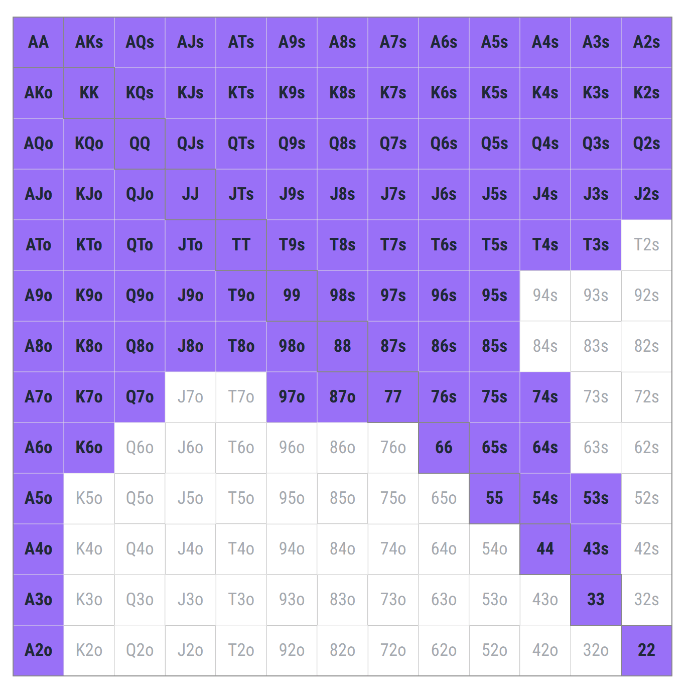
It's easier to counter an aggressor in position. The player has better control over pot size, has information about the LAG's previous actions and can take a free card. Experienced players widen their calling range to earn extra money off the aggressor.
Sometimes the best adaptation to a loose-aggressive opponent is to switch tables. Moving to a new seat saves money and helps maintain concentration. However, you can only leave the table in cash games. In a tournament, the rules don't allow you to move seats on your own. MTT players just have to be patient and tighten their raising range.

Psychology against hyper-aggression — how not to tilt
Aggressive players create a distinct table dynamic. Regular bets and raises knock opponents out of psychological balance. As a result, good players lose control, go on tilt and hand money over to LAGs. Loose-aggressive opponents provoke careful players into more active play. With a widened range and lost concentration, tight poker players naturally lose.
The simplest way to avoid tilt is to leave the table and take a break for a few minutes. A break allows you to restore your psychological state and continue the session. We recommend tournament players carry out prevention before starting their working day. Read Jared Tendler's books, keep a journal of your psychological state, find and analyse problems. Don't take revenge on your opponent after a loss. Remember: over the long run, more losses come not from a specific defeat but from the tilt that follows it.

Resilience against aggressive regulars is improved by: proper nutrition, healthy sleep and exercise. An extra hour of rest often brings more benefit than another hour in the solver.
Features of playing against an aggressor in MTT
In a tournament, playing against aggressive opponents is harder. Discipline rules don't allow you to close the table and open a new one. The modest sample of hands doesn't work in the player's favour either. The short duration of an MTT won't let you gather enough information to exploit a LAG. Follow a tight-aggressive style of play and don't lose control of yourself under pressure.
Strategy against an aggressive opponent in MTT depends on the stage of the tournament. With deep stacks, you need to play strong hands and avoid getting into difficult situations with questionable combinations. A blind cushion allows you to act more actively against weak opponents.
In the middle stage of a tournament, loose-aggressive players often seize the initiative. They increase the number of 3-bets and steals. We respond by widening our 4-bet range and defending our blinds more actively. Against raises from the BU, we need to 3-bet and call more often. If the game moves to postflop and the pot size grows threateningly, it's important to remember the "Fold" button. Not every attempt to fight back against the aggressor needs to be taken all the way to a stack-off.
In the late stage, loose-aggressive opponents increase the pressure. They often sit with the biggest stack at the table and use it to the fullest. At the bubble stage, a LAG can raise with any two cards. In a vacuum, it's profitable for us to go all-in against a wide range. However, the mathematically correct decision can lead to elimination from the tournament. It's wiser to sacrifice immediate gain for a spot in the prize zone or a bigger final payout.
At the final table, strategy depends on stack depth. In a push/fold state, you need to act aggressively and take risks. With a big stack, it's more profitable to play a careful game. Avoid clashes with the chip leader if there are many short stacks at the table. Don't risk the fate of the tournament and several levels of prize money. Let the loose-aggressive chip leader take out the short stacks.
How to learn to play poker
Loose-aggressive opponents cause a huge number of problems. Constant raises and 3-bets force you to rebuild your ranges and change strategy. To effectively counter LAGs and maniacs, you need to raise your level of play. Systematic training provides an advantage over opponents. Want to progress consistently — join FunFarm.

School students receive a number of privileges: free software, access to the salary project and backing
For beginners, we recommend taking the FF Start course. It introduces the basic concepts of tournament poker. A separate lesson in the programme is dedicated to opponent types and strategies for playing against them. Training on the starting course ends with an exam. We accept graduates onto the next step — FF Player Path. At the advanced level, poker players move onto a professional track and achieve their first successes.
Free course · FF Start
Break the game down street by street
Learn to plan a hand from preflop to river and understand the purpose of every action.
Frequently asked questions
Read next
Call, 3-bet or fold after a raise: how to make decisions

Float in Poker: How to Use Position to Steal Pots
Fish in poker: how to spot and outplay them