Fish in poker: how to spot and outplay them
Professionals were called "regulars", high-stakes players — "high rollers". Recreational players got their own nickname too.

Ilya is a Liga 2 player with six years of experience in online MTTs. He graduated from the Faculty of Journalism at RSUH and writes about poker for beginners, explaining complex things in simple, clear language. In his texts, Ilya combines his personal playing experience with his professional journalism skills to help newcomers confidently get into the game.
Facts about fish
Weak players are called fish in poker. Sometimes they're referred to with other words: fish, hobby player, amateur, recreational player.
Fish play a key role in poker. They bring in most of the income for professionals.
You can spot a recreational player by crude mistakes and statistics.
VPIP and PFR help split amateurs into types. Fish are usually divided into: phones, maniacs and nits.
One of the reliable signals of a fish is a limp preflop.
To profit from fish, you need to: bet more, bluff less, isolate more often, drop the slowplay and increase the sizing of value bets.
Choosing to learn turns a fish into a budding professional.

New breakdowns in your inbox
Subscribe to the FunFarm newsletter: fresh Poker ABC articles and material that helps you grow as a player.
Who is a fish in poker

Fish is a slang term for a weak player at the poker table.
Why are amateurs called "fish" and not capybaras or South American tree opossums? It's down to the parallel between fishing and playing poker. Both the angler and the poker player wait for the right moment, and when it comes — they turn the episode in their favour. Experienced players are often called "sharks". The analogy is simple: sharks eat fish, professionals take money from weak players.
Fish is the most popular term in the Russian-speaking player community. Less often, an adapted variant is used — fish (the literal fish translation, "ryba"). Industry specialists urge using neutral terms for weak opponents: recreational player, amateur or hobby player. The idea is simple: fish feed professionals, so they shouldn't be insulted. English-speaking poker players use donkey alongside fish. The holder of 16 WSOP bracelets — Phil Hellmuth — regularly uses the universal term "idiot".
Some poker players equate a beginner with a fish. Most beginning players indeed show a low level of skill. An online poker debutant will almost always lose to Michael Mizrachi or Daniel Negreanu. However, over time a newcomer will get training, gain experience and grow. Players are classified as fish based on the quality of decisions, not the number of hands or tournaments. For example, a limp-raise with AA always gives away a recreational player in an opponent. A systematic choice of absurd lines indicates a low level opponent.
Fish are contrasted with "regulars" in poker. Regulars have extensive experience, know strategy and play in profit. The term comes from the word regular — constant.
Amateurs play a key role in the ecosystem. Without them, the game would stop bringing in money for professionals. Let's take one of the statistical reports from the Hand2Note tracker. It included the stats of profitable players with a sample of over 10,000 hands. If they were seated at the same table, they would show a winrate of around 0.3 big blinds per 100 hands. Together with the room's commission, the regulars would end up in the negative. Replacing one of them with a fish flips the situation: each professional would win about 5.5 BB per 100 hands. That's why finding weak opponents is one of the key skills of a poker player.
How to spot a fish at the table
In poker, the ability to quickly identify an amateur makes money. The sooner a player spots a fish, the faster they adapt their strategy and take their stack. Recreational poker players systematically make bad decisions. Let's look at what signs give away an amateur.
Limps, frequent calls and rare folds. Recreational players love seeing the board cards. To lose less money, they prefer to call the big blind's bet. Postflop, the amateur continues playing with a very wide range. They're ready to call with any pair, gutshot or backdoor. With a flush draw or straight draw, a recreational player will often call bets on the flop and turn. With top pair, a fish calls 3 streets, and sometimes — plays for the stack.
Playing too wide a range. Fish enter the pot with 40-50% of hands. Even a regular wouldn't profitably play most of such a range. Some recreational players go further and see flops with hands like 8♠️3♠️ or 6♥️2♦️. The amateur doesn't know that two suited cards will hit a flush draw 10.9% of the time, and a flush from the flop will come in 0.85% of cases. The chance of getting a nice combination outweighs the boring mathematical probabilities.
Read also:
How to play flush in poker
Odd postflop lines. Professional poker players grind solid volumes of hands. In most situations they choose optimal lines of play. Flopped top pair on a wet board — we go for a tight value bet. A dangerous card hits on the turn — we control the pot size with a check in position. It's harder to find logic in a recreational player's actions. He might fire 3 barrels as a bluff on an unsuitable board. With a strong hand a fish will often choose the opposite line. For example, he'll check the flop and turn hoping to induce a bluff from his opponent.
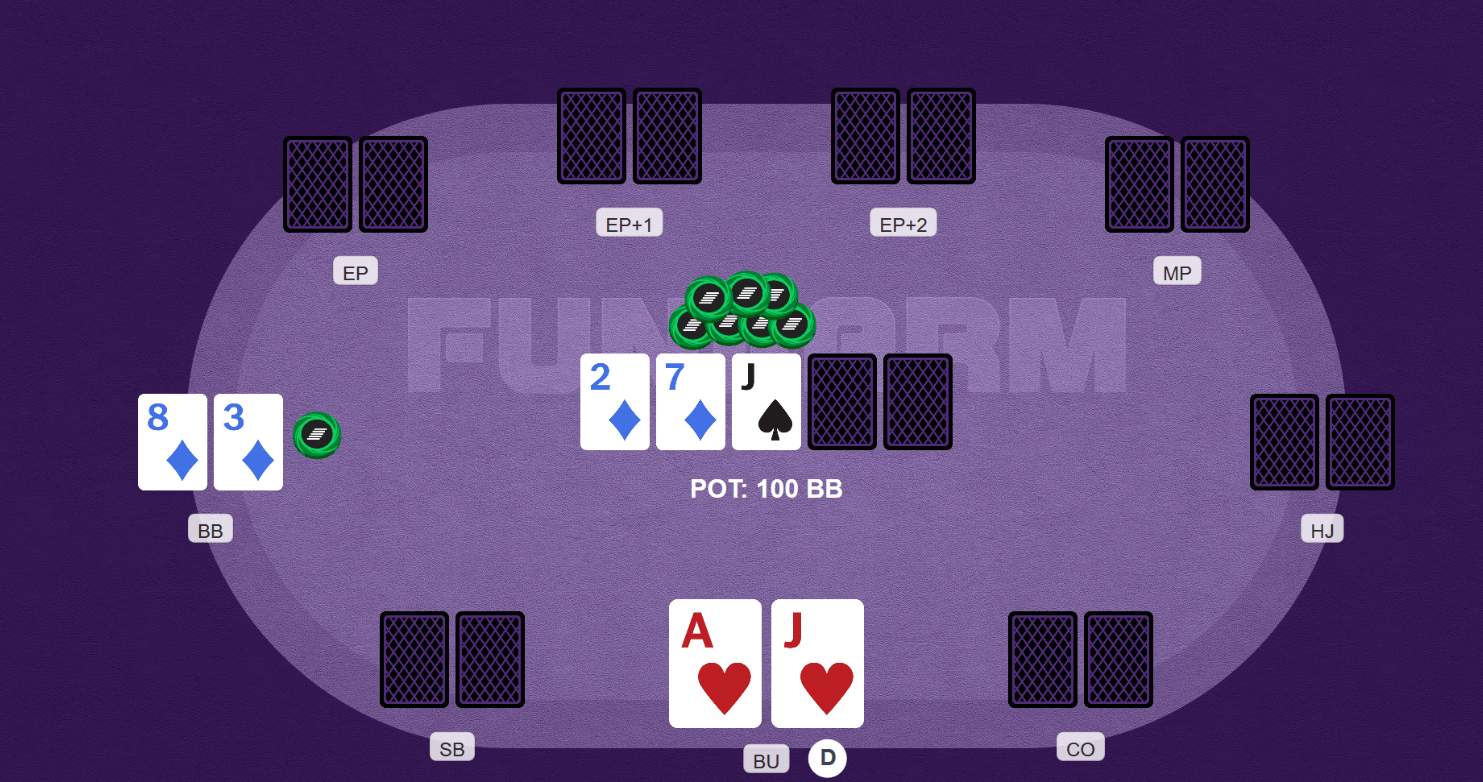
Donk bets of 1 big blind are also an example of odd lines. For instance, a fish in the BB calls a raise from an opponent on the BTN. The flop comes 2♦️7♦️J♠️ and the recreational player bets out of position for 1 BB. He might donk bet with:
a flush draw — hoping to see the turn cheaply;
two pair or a set — planning to build the pot and play for stacks;
2x — trying to keep the pot small and catch an improvement on the turn.
An odd line from a fish is hard to interpret. To build an effective counter-strategy, you need additional information. Poker trackers and notes provide that. This is where another problem arises — many fish are seen at the table for the first and last time. So it's hard to accumulate a decent sample of hands.
Other deviations in bet sizing also help spot a recreational player. For example, preflop raises of 4 BB or 3-bets with an oversized sizing. A flat raise on the flop also hints at an opponent's skill level. Example: player A makes a 5 BB continuation bet into a 7.5 BB pot, and player B raises his bet to 10 BB.
Learning at FunFarm, from any level
How to spot a fish by HUD stats (VPIP/PFR)
In live poker, a recreational player is given away not only by bad decisions but also by behaviour. If an opponent talks a lot, drinks alcohol, or makes mistakes when announcing actions, he'll often turn out to be a fish. In online poker, trackers help gather information on opponents. They save all of a player's decisions in every hand. What size raise did the opponent make? What hand did he show down? How many hands have we played against this opponent? The software processes useful data and displays it in the HUD.
The first hints come from VPIP and PFR stats. VPIP shows how often an opponent voluntarily puts money into the pot. PFR shows how often an opponent enters a hand with an aggressive action: a raise, a 3-bet, a 4-bet, a push. To draw adequate conclusions about an opponent, you need a sample of at least 200 hands. However, some recreational players can reveal themselves in just 2-3 hands. A rough picture of a recreational player can be formed within 15-20 hands.

A regular is distinguished from a fish by the width of the range they play. A skilled poker player enters a hand with strong hands. A recreational player has fewer requirements for their starting combination. He doesn't have preflop charts. A recreational player's VPIP often reaches 40% and higher. Many of a fish's decisions are determined by subjective factors. For example, at some point he entered a hand with 7♣️2♣️, flopped a flush and won a big pot. Ever since, he keeps calling raises with 7♣️2♣️ and looking at the community cards.
PFR in a vacuum carries limited value. It's always considered together with VPIP. The ratio between the two indicators will point to the type of fish. For example, an opponent with a stat line of 44/8 prefers to call rather than raise. An opponent with 43/35 almost always acts aggressively. Loose-passive opponents cause fewer problems than loose-aggressive ones.
The HUD provides other information about opponents as well. However, stats like WTSD, 3-bet, or Fold to 3-bet require large samples. So it's better to ignore them when facing a recreational player.
A poker tracker helps you spot a fish and determine their type. Add key stats to your HUD, wait for the sample to build up, and compare it with the benchmarks for each type of opponent. Data from Hand2Note 4 and other statistical programs allow you to win more. We recommend getting a tracker as early as possible.
Types of fish and how they lose
You won't find two identical recreational players in poker. Every fish has unique traits: some raise 4 BB preflop, some limp aces from UTG, some play gutshots via donk/3-bet. However, there are similar elements in their strategies. Based on these, fish are divided into several types. Let's look at each of them.
Phone. Also known as an answering machine or calling station. A loose-passive player. Loves seeing flops cheaply. Doesn't fold draw hands against bets of any size. In the HUD, the phone's stats look like this: VPIP — 40+, PFR — 5-15. A distinctive feature of the answering machine is a large gap between VPIP and PFR. Sometimes it reaches 25-30 points. Answering machines lose money on limps and loose calls on the postflop. High-level players regularly make isolation raises to end up heads-up against the phone. It's profitable for a professional to play as many pots as possible against answering machines.
Maniac. Plays a large percentage of hands and applies constant pressure on opponents. A loose-aggressive player almost always raises, 3-bets, 4-bets, or goes all-in. His VPIP and PFR often look like 40/38. Maniacs systematically increase bets, which increases the cost of a mistake and complicates the game. Loose-aggressive players cause the most problems for tight players. Weak regulars show excessive caution and give up pots without a fight. More experienced players slightly widen their calling range and give up less often. However, the key element of the strategy is the same — wait for a good hand and take the maniac's money.
Nit. Also known as a rock. Plays a narrow range. Builds the pot only with top combinations. In other cases, chooses passive lines. His VPIP rarely exceeds 15, PFR — 10. If phones lose most of their money on calls with poor combinations, nits make a profit on the preflop. It's profitable to steal blinds against them with any two cards. 3-bets also work well against many rocks.
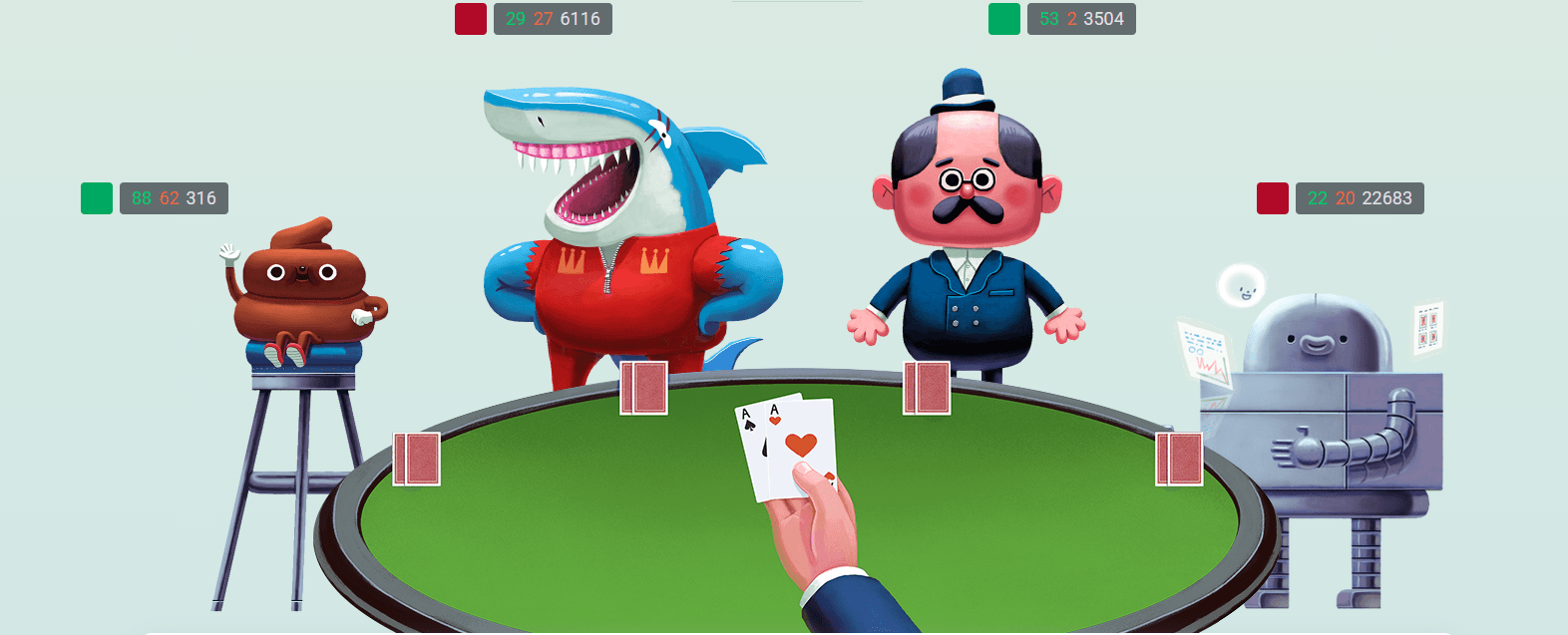
Some recreational players combine features of different fish types. For example, on the preflop, an amateur acts loose-passively, but upon hitting a draw or any pair, starts betting and raising. External factors, such as alcohol or a preceding loss of a big pot, also affect the fish's style. Sober, the opponent plays in the style of an answering machine, but after a drink — sharply increases in aggression. Top professionals closely monitor the table dynamics and adapt their strategy to the circumstances.
How to play against fish
High-class players avoid formulaic actions. Before each decision, they evaluate many factors: position, hand strength, opponent statistics, table dynamics, tournament stage. However, one can also derive universal principles for playing against amateurs. The key ones are:
Extract value with strong combinations. Most recreational players call too often. That's why a professional should make large value bets with made hands. For example, top pair with a good kicker is suitable for 2-3 bets against an answering machine.
Avoid slow-playing. Cunning traps don't work in hands with amateurs. For example, a newcomer is sitting at the table with a maniac. The loose-aggressive opponent regularly raises, 3-bets, and pushes opponents out on the postflop with large bets. The player catches pocket AA on UTG and decides to provoke the maniac with a limp. As a result, half the table enters the pot. Slow-playing has led the aces' holder into a multiway pot, where they have neither the initiative nor position.
Don't bluff phones. Loose-passive players are called answering machines for a reason. All thanks to regular calls with weak hands. Trying to push a phone out of the pot often increases the loss for the hand. If the fish likes their second pair, they won't fold it. Neither a scary card nor a large answering machine bet size will convince them.
Isolate in position. Widen your raising range when you see an opponent's limp. Often the opponent will give up the pot without a fight and you'll earn an extra blind. If they call the raise, you'll be able to play the hand in position, with the initiative and a stronger hand. We isolate a single limper with a raise of 3.5 big blinds. We add 1 BB for each subsequent limper.
Widen your value range. Many amateurs are willing to pay several streets with weak hands. If a poker player starts betting wider, they'll be able to win more. For example, top pair with a strong kicker is often enough for three value bets. With a second pair, you can find two bets. Increasing the size of the value bet also boosts income. An amateur is equally likely to call c-bets of 2/3 or 3/4 of the pot. Therefore, choose a larger bet.

Following principles helps you play profitably, but doesn't always bring maximum income. Additional information from a HUD can suggest a better decision. For example, a slowplay works poorly against an average opponent, but in a specific situation it will bring more profit.

How not to be a fish
Bad decisions give away a recreational player at the table: limps, calling large bets with trash, entering a pot with a wide range. However, the foundation of failures is formed by thinking errors. Seeing the full picture and becoming a winning player is prevented by:
Misperception of poker. An ordinary person puts an equal sign between gambling entertainment and poker. The legislation of many countries doesn't distinguish a card game from slots either. If a beginner doesn't understand the essence of poker, they won't make meaningful decisions.
Lack of discipline. Amateurs ignore the rules of bankroll management. Often a fish tops up their account with $50, registers for a tournament with all the money, and busts out quickly. They're not interested in playing cheap MTTs and building up experience. Playing while intoxicated is also a discipline problem. A drunk poker player won't show a high level of skill.
Psychological problems. Many players are not ready to take responsibility for themselves. They blame their losses on: inadequate opponents, a rigged RNG, poor room software. A victim's mindset prevents reaching correct conclusions and starting to work on oneself.
Training is the watershed between a recreational player and a beginning professional. Amateurs don't study software, don't look for training courses, and don't review hands. A player loses their fish status when they realise the importance of training.
How to grow from a fish into a shark
Many beginners show a weak level of play at the start of their careers. That's why they're often called fish. After the first failures, they face a choice: 1) continue making random decisions; 2) start learning. If a player views poker as entertainment and enjoys it, there's nothing wrong with that. Not everyone will become a professional. Earning money through poker is difficult — training requires a lot of effort and time. If you're planning to evolve from a fish into a shark, join FunFarm.

FunFarm offers a systematic approach and a huge number of perks, such as backing or a salary project
Training at the poker school consists of several stages. FF Start is the first of them. In the course for beginners, players study basic poker concepts, such as maths or push/fold. An exam allows you to confirm your knowledge. Graduates of FF Start are accepted to the next level — FF Player Path. The advanced tier helps you overcome the microstakes and reach a decent income. On average, students complete the FF Player Path in 8 months.

Free course · FF Start
Make decisions with more confidence
A structured course for beginners who want to understand the logic behind every hand.
Frequently asked questions
Read next
Call, 3-bet or fold after a raise: how to make decisions

Float in Poker: How to Use Position to Steal Pots
How to play against very aggressive players in poker