Float in Poker: How to Use Position to Steal Pots
float-in-poker


One of our first coaches: on the team since the very founding of the project. He prioritizes simple and practical training with an emphasis on real game situations and decision-making over the long run. Val doesn't just "beat the games" as a player, but also instills a systematic approach to the game and discipline in his students.
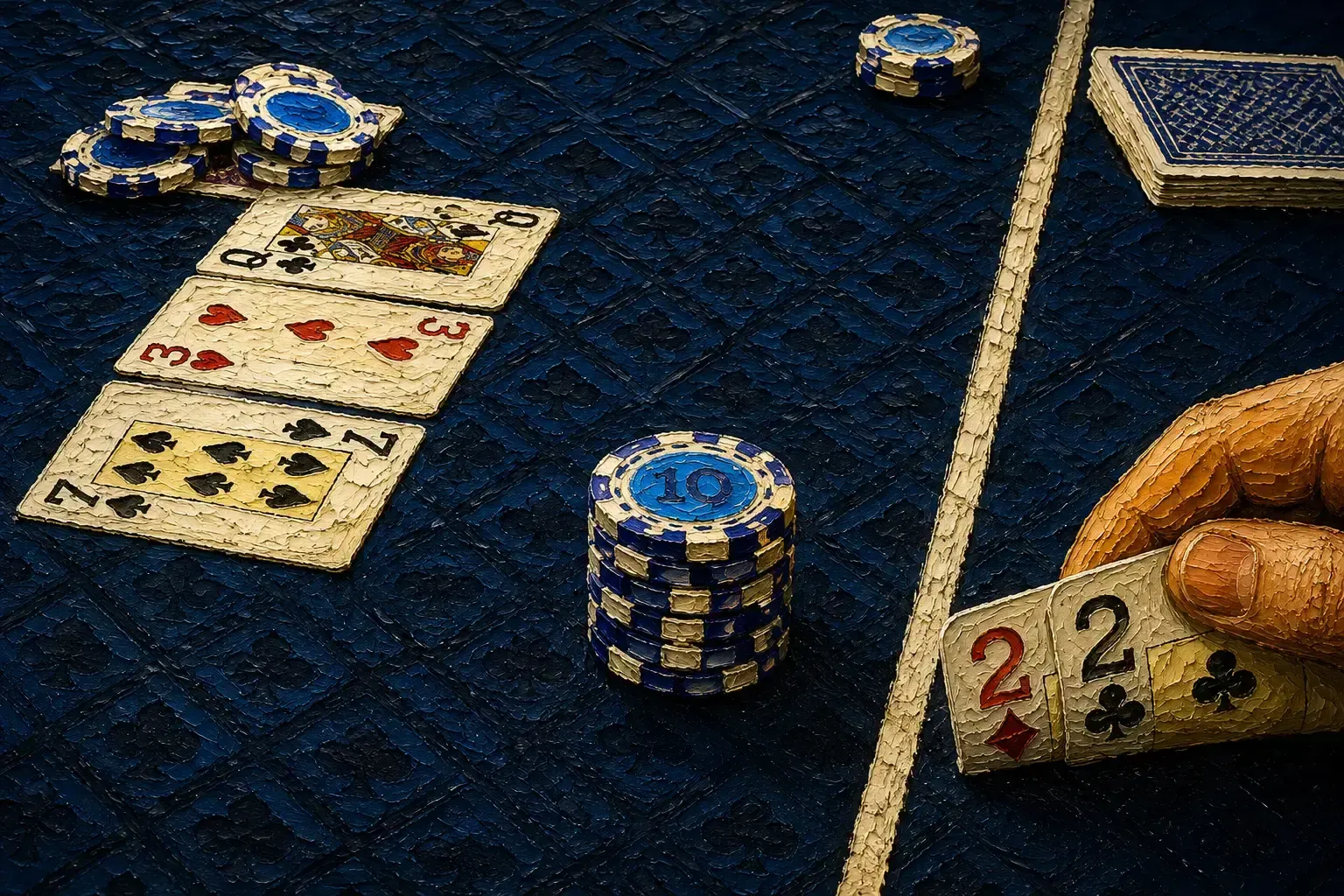
The continuation bet has long become a standard part of modern poker strategy. In many situations, the preflop aggressor makes a c-bet with a very wide range regardless of whether they connected with the flop. This creates an opportunity for counter-exploitation. If an opponent bets the first barrel too often but isn't prepared to keep applying pressure on later streets, their strategy becomes vulnerable.
This is exactly what floating is based on. Unlike a regular call, we're not relying only on improving our own hand. We continue the hand with an understanding of what the opponent's range will look like on the turn and which cards will let us seize the initiative.
Floating is considered one of the most effective postflop techniques against players who automatically fire a c-bet but play significantly more cautiously on later streets. However, this technique requires choosing the right spot.
In this article, we'll break down how floating works, in which situations it's profitable, and why its effectiveness is determined not by the strength of our hand, but by the logic of how ranges develop on subsequent streets.

New breakdowns in your inbox
Subscribe to the FunFarm newsletter: fresh Poker ABC articles and material that helps you grow as a player.
What is a float in poker
A float is a line of play in which we call the opponent's continuation bet on the flop with the plan to take the pot later if they give up further aggression. The key feature of this technique is that the decision isn't made solely based on the current strength of our hand.
Whereas a regular call is more often connected to realising our own equity, when floating we simultaneously assess how well the opponent's range holds up against further pressure.
Suppose a player opens with a raise from an early position, we defend from the button, and after the flop they make a c-bet. The mere fact of the bet doesn't mean their range consists mostly of strong hands. On many textures, modern players continue their aggression with almost their entire opening range. If they rarely fire a second barrel without a made hand, an opportunity to seize the initiative appears after their check on the turn. This is exactly the situation that a float exploits.
It's important to understand that a float can't be reduced to "calling with nothing." Such an interpretation oversimplifies the technique.
First, not just any hand is suitable for floating. Hands that retain some equity even after missing the flop work considerably better. These can be two overcards, backdoor flush or straight draws, gutshots, and other combinations capable of improving on later streets. If the opponent doesn't give up right away, we'll still have additional ways to win the hand.
If some of the terms are unfamiliar to you, we suggest checking out our glossary, which collects the most popular slang used by poker players.
Second, the decision is built around the opponent's range. We're relying not only on our own improvement, but also on the fact that a significant part of their range won't be able to withstand pressure after giving up the initiative.
For this reason, a float can't be considered a type of random bluff. It's a pre-planned line based on how the strength of ranges changes as the hand develops.
Why position is a prerequisite for floating
The classic float is almost always executed in position. It's precisely this positional advantage that makes the technique profitable in the long run.
After our call on the flop, the opponent is the first to act on the turn. If they keep up the aggression, we can abandon the initial plan and reconsider how to continue playing the hand. If, however, they check, the initiative passes to us. This moment is at the core of the entire strategy.
A check on the turn often means that the opponent's range has weakened. Of course, it doesn't always indicate the absence of a strong hand, but on average, after giving up the second barrel, the range contains considerably more medium-strength hands and failed bluffs. We get the chance to bet ourselves and apply pressure precisely to that part of the range. Without position, this mechanism stops working.
If we're the first to act on the turn, we don't know whether the opponent intends to keep up the aggression. We lose the information that makes a float profitable, and we're forced to create pressure ourselves without any prior sign of weakness from the opponent.
That's why attempts to use the classic float out of position are much rarer and require a far more precise understanding of ranges. This is exactly why, when choosing a spot for a float, we first assess the players' positions, and only then analyse the board texture and the opponent's tendencies.
Against whom and when to use a float

Floating isn't profitable against just any strategy. Its value depends entirely on how predictably the opponent distributes aggression between streets.
The most suitable targets are players who c-bet the flop too often but noticeably reduce their betting frequency on the turn. Such a line means that the first barrel contains a large amount of air and weak made hands that aren't prepared to continue applying pressure after a call. It is against ranges like these that the float realises its potential best.
The pot format is no less important. The play works best in heads-up pots. When only one opponent remains in the hand, the continuation-bet range is usually considerably wider than in a multiway pot. In pots with several players, the c-bet, by contrast, becomes stronger, since the likelihood of running into a made hand increases. Accordingly, the room for a profitable float narrows noticeably.
Board texture also matters a great deal. On dry flops, the c-bet range is often as wide as possible. A player may bet with virtually their entire opening range, hoping to take down the pot already on the first street. If they don't increase their aggression on the turn after our call, it becomes significantly harder for them to keep applying pressure. On more dynamic boards, the situation changes. Here, the second-barrel range usually contains more strong hands and draws, so the room for a successful float becomes smaller.
Finally, effective stacks need to be taken into account. A float assumes that after calling on the flop, we will have enough room left to apply pressure on the following streets. With short stacks, the pot approaches an all-in too quickly, and the opponent gets favourable odds to continue even with borderline hands. That's precisely why the play is significantly more effective when carried out at a comfortable stack depth, where both sides retain the ability to make decisions across multiple streets.
Learning at FunFarm, from any level
How to play the float
The float cannot be reduced to the mechanical sequence of "call on the flop — bet on the turn". Every action must correspond to how the ranges change as the hand develops.
If the opponent continues their aggression on the turn after our call, the original plan may lose its point. A second barrel usually means their range has become stronger than it was on the previous street. In such a situation, we continue only with hands that genuinely have sufficient equity or are capable of profitably applying further pressure.
If, however, the opponent checks, the situation changes. Along with giving up the initiative, their range becomes more vulnerable. This is exactly where the opportunity arises to turn a positional advantage into additional EV
Step 1. Assess the c-bet range
The float begins even before our call. We need to understand just how wide the opponent is betting their continuation bet on this particular texture.
If the player c-bets with virtually their entire opening range, a significant portion of their hands will be left without a clear plan for the following streets after our call. It is against precisely this kind of strategy that the float generates the most profit.
If, on the other hand, the c-bet range consists mainly of strong made hands from the start, the room for a float becomes considerably smaller. So the first decision concerns not our own hand, but the opponent's presumed range.
Step 2. Choose a suitable hand
You don't need a made hand to float. However, this doesn't mean that any two cards will do. The best candidates possess at least one of the following advantages:
two overcards
a backdoor flush draw
a backdoor straight draw
a gutshot
a hand capable of improving with a large number of turn cards.
Such hands retain additional equity. If the opponent doesn't give up after our call, we can still improve and keep fighting for the pot on the strength of our own hand.
Step 3. Wait for the initiative to shift
The main goal of calling on the flop is not to win the hand immediately. We're creating a situation in which the opponent has to make the next decision first. If they check on the turn, the initiative shifts to us.
Now it's we who determine the size of the pot and put pressure on a range that has given up continuing its aggression. This is exactly what distinguishes a float from an ordinary call: we're not simply continuing the hand, but planning in advance to take advantage of the opponent's most likely reaction on the next street.
Step 4. Assess the turn card
Not every turn card is equally well suited to continuing the aggression. Some cards interact considerably more strongly with our presumed range.
For example, a high card can increase the number of strong hands we're able to represent after calling on the flop. Other cards close off obvious draws or make the opponent's range more vulnerable.
Blank turns require a more cautious approach. If the card barely changes the equity distribution between the ranges, the bet should be based primarily on the tendencies of the specific opponent rather than solely on the fact that they checked. That's why a successful float always takes into account not just one street, but the development of the entire hand.
Floating and fold equity
The main source of profit when floating isn't improving your own hand, but fold equity.
After checking on the turn, the opponent is more often left with medium-strength hands, failed bluffs, or combinations that have some showdown value, but aren't ready to play for a big pot. It's against this part of the range that our bet works.
It's important to understand that we're applying pressure not to a specific hand, but to the whole continuing range.
If the opponent doesn't defend enough combinations, the bet starts to generate profit regardless of whether we've improved or not. That's why floating is closely tied to understanding ranges. We're not trying to guess whether the opponent has top pair or a missed flush draw. What matters is which part of their range can continue against new aggression, and which part will be forced to give up the pot.
That's precisely why floating remains effective even when our hand doesn't improve on the turn. The profit comes from the fact that the opponent's range isn't defended often enough.

Common mistakes made by beginners
1. Floating without a plan for the next streets
The most common mistake is calling a continuation bet simply because position allows it. If we don't already know in advance on which turns we'll continue the aggression and on which we'll give it up, this call quickly turns into passive range defence with no clear purpose.
2. Ignoring the opponent's range
Some players use floating against any continuation bet. This approach is rarely profitable. If the opponent only bets a strong range from the start, or often continues aggression on the turn, the room for successful pressure shrinks considerably. That's why we first assess the opponent's strategy before deciding whether to call.
3. Trying to float without position
Without position, we lose the main advantage of this move. We can no longer wait for the opponent's decision on the turn and are forced to act first. As a result, a large part of the information that makes floating profitable simply disappears.
4. Floating with hands that have no additional equity
Completely random hands are rarely the best candidates for floating. If the opponent continues the aggression, we're left with almost no way to win the hand. Combinations that retain the potential to improve on later streets hold up far better.
5. Automatically betting after a check
An opponent's check doesn't necessarily mean weakness. Before continuing the aggression, we need to assess:
the board texture
the turn card
the opponent's continuing range
our own range after calling on the flop.
Sometimes the best decision is still to check behind. Trying to turn every float into a mandatory bluff makes the strategy too predictable.
Conclusion
To sum up, a successful float begins even before calling the continuation bet. We assess the board texture, the opponent's range, stack depth, and plan the rest of the hand. If our call leaves the opponent's range vulnerable on the turn, position allows us to turn that advantage into extra EV.
That's exactly why, when choosing this line, we evaluate not a single combination but the interaction between two ranges throughout the entire hand. This approach allows for more well-founded decisions and helps us make better use of opponents' postflop mistakes.
If you want to learn how to exploit your opponents' mistakes more thoughtfully and with greater control, apply to join FunFarm.

Free course · FF Start
Fix costly beginner mistakes
Learn when to bet, call or fold — and when putting pressure on an opponent pays off.