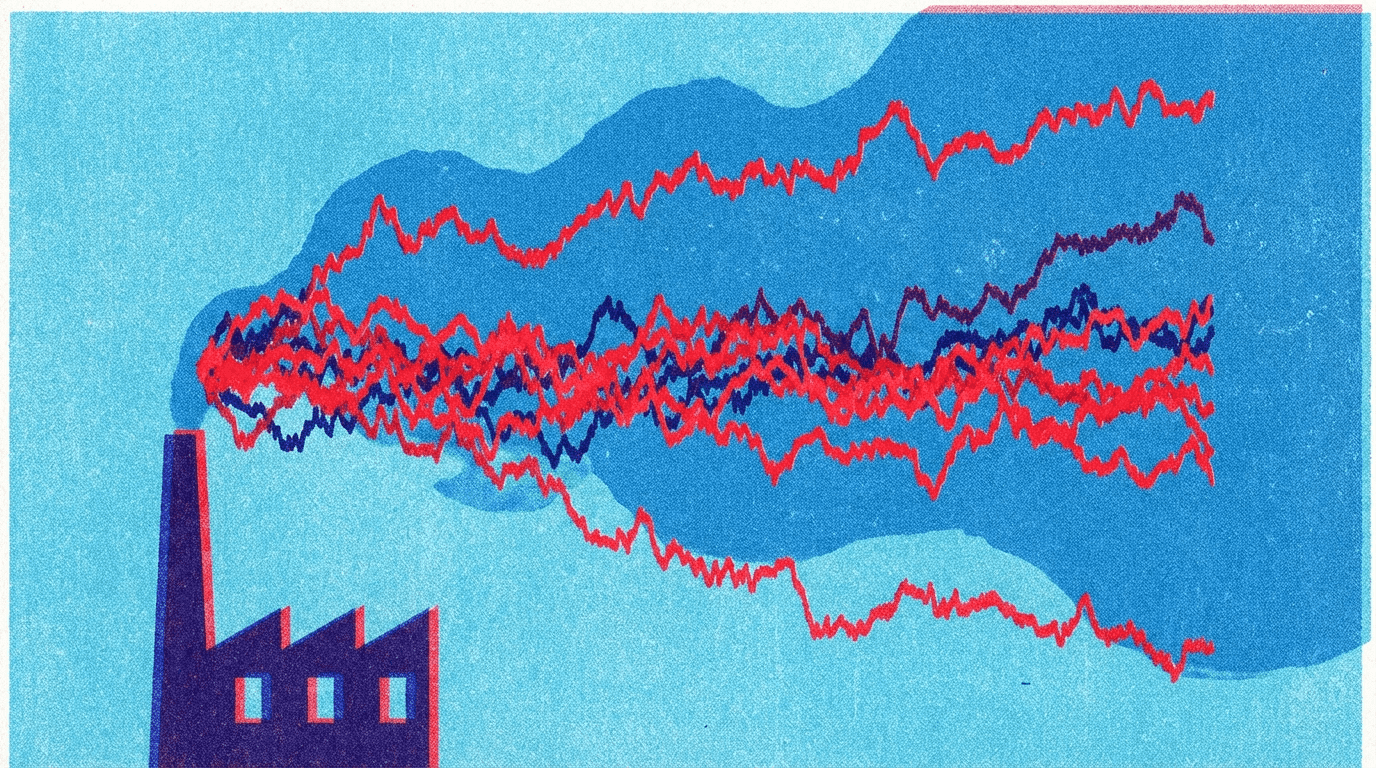
Tilt in Poker: How to Stop Losing Money to Emotions
What is tilt and why does it burn your money? We break down the causes, types, and give you a step-by-step guide to fighting tilt.


Tatiana develops mental support courses and leads a team of psychologists and mental coaches. Thanks to her attentiveness and professional approach, the school and fund have a mental care department that helps players maintain balance and stay resilient and motivated.
Every poker player knows this feeling. You lose a key hand with pocket aces against random trash. A red mist clouds your mind, logic shuts off, and your fingers reach for the "All-in" button on the very next hand to "win it back." This state is the poker player's main and most expensive enemy. Its name is tilt.
In a world where your edge over opponents is measured in fractions of a percent, the ability to control tilt isn't just a useful skill — it's a fundamental requirement for playing a winning game. It's the wall separating the amateurs who feed the rake from the professionals who build a bankroll.
This guide is your shield in the fight against tilt. We'll dissect this monster: understand where it comes from, learn to recognize its symptoms, and most importantly, deploy an arsenal of techniques to bring it fully under control.
What is tilt?
Tilt is any in-game decision made not on the basis of logic and strategy, but under the influence of negative (and sometimes positive) emotions. Simply put, it's the state where your emotional brain seizes control from your rational one.
At the root of tilt lies a real psychological phenomenon described by the Yerkes-Dodson law. It states that for maximum productivity, a person needs an optimal level of stress or arousal.
Too low a level: You're bored, lacking concentration.
Too high a level (tilt): Emotions (anger, frustration, despair) overwhelm you, and your cognitive functions plummet. You stop thinking strategically.
Your goal isn't the complete absence of emotion, but keeping yourself in the zone of peak performance without plunging into the abyss of tilt.
The main tilt triggers
Tilt doesn't come out of nowhere. It's usually set off by one of these events:
Bad Beat: The classic of the genre. You got it in with a 90% chance to win, but one of your opponent's two outs hit on the river. It feels like extreme injustice and is trigger No. 1.
Cooler: A situation where you have a very strong hand (a full house, for example), but your opponent's hand turns out to be even stronger (quads or a higher full house). Losing in such a spot is practically unavoidable, and it hits your psyche hard.
Downswing: When misfortune follows misfortune, even though you're playing correctly. The constant pressure of variance wears you down and makes you doubt your game.
Opponents' mistakes: When you watch a player make a glaring error but win the pot. The thought "How can someone play like that and win?!" is a direct road to tilt.
Learning at FunFarm, from any level
Types of tilt: Which one is yours?
Tilt manifests in different ways. Identify your type to fight it more effectively.
Type of tilt | Emotional manifestation | Example of in-game action |
Aggressive ("Hot") | Anger, rage, the desire for revenge. | You start playing trash hands, making unjustifiably large bets (3-bets, 4-bets), bluffing on every hand, trying to "steamroll" the table. |
Passive ("Cold") | Fear, uncertainty, apathy. | You stop betting for value with strong hands, afraid of losing. You fold where you should call. You play too straightforwardly and predictably. |
"Winner's" tilt | Euphoria, a feeling of invincibility. | After a big win, you feel like a poker genius and start playing too loose, getting into questionable hands because "today is my day." |
How to fight tilt: Preventive and active methods
The fight against tilt is waged on two fronts: preparation before the game and actions taken right in the middle of the "storm."
Preventive measures: Building your defense before the session starts
Iron-clad bankroll management. Proper capital management is your main vaccine against tilt. When you know that losing a few buy-ins isn't a financial catastrophe for you, enduring bad beats becomes far easier.
Setting stop-losses. Decide in advance on a loss limit for the session (for example, 3-5 buy-ins). The moment you hit it — immediately close all your tables. No exceptions. This is a mechanical rule that will save you from yourself.
Physical and mental state. Never sit down to play tired, hungry, or in a bad mood. Poker is an intellectual sport. Poor sleep and stress reduce your capacity for self-control.
Active techniques: What to do right now, at the table
The 10-second rule. Feel a fit of anger coming on? Before taking any action, close your eyes and take a deep, slow breath in and out. This simple trick breaks the emotional reaction and gives your rational brain a chance to regain control.
A logical dialogue with yourself. Ask yourself one question: "What action will be mathematically profitable in this situation over the long run?" This shifts the focus away from emotion ("I want revenge!") and toward strategy ("Which move will make me money?").
An immediate break. If you feel you're losing control, the best decision is to end the session immediately. Get up from the computer, take a walk, drink some water. Coming back to the game the next day with a fresh head is far more profitable than dumping your entire bankroll in one evening.
Conclusion: Your main step toward steady profit
Tilt isn't a sign of a weak player. Everyone tilts, even world champions. The difference between an amateur and a professional lies not in the absence of tilt, but in the ability to recognize and stop it in time.
Controlling your emotions is just as much a poker skill as calculating pot odds or analyzing ranges. Without it, even the most perfect strategy is doomed to fail. You can memorize GTO by heart, but if you can't master yourself after a bad beat, you'll always lose.
Real growth in poker begins when you build a solid foundation — both in strategy and in psychology.
Ready to move from fighting the consequences of tilt to building a game that prevents it? Get free access to the first lesson of the FF Start course. Learn how the professionals think and lay the foundation of a winning strategy today.
Free course · FF Start
Turn hands into experience
Learn to keep a journal, spot recurring mistakes and plan the next stage of your learning.
Frequently asked questions
Read next

A, B, C game: how to stop giving away blinds to your own inner monkey

Poker Without Burnout: How to Balance Playing with Work, Study and Family

A cooler in poker