What is winrate in poker and what counts as a good one
Over a short run, poker results depend more on luck than on quality of play. Winrate, bb/100 and ROI help reveal the real picture.

Ilya is a Liga 2 player with six years of experience in online MTTs. He graduated from the Faculty of Journalism at RSUH and writes about poker for beginners, explaining complex things in simple, clear language. In his texts, Ilya combines his personal playing experience with his professional journalism skills to help newcomers confidently get into the game.
Key facts about winrate
Winrate in poker is an important indicator of profitability in cash games. A poker player's efficiency is measured in bb/100.
bb/100 shows how many big blinds a player wins per 100 hands.
At low stakes, a good winrate is considered to be 10 bb/100 or higher, at mid stakes — 5 to 8 bb/100, at high stakes — from 5 bb/100.
In tournaments, EV bb/100 and ROI are used instead of bb/100. EV bb/100 allows you to assess the quality of a player's decisions, while ROI shows the average MTT profitability.
In live poker, performance is measured using $/hour.
Rake has a strong impact on winrate and ROI. The higher the commission, the lower the bb/100 and ROI.
You can find out other players' winrate and ROI using trackers and services like SmartHand and SharkScope.

New breakdowns in your inbox
Subscribe to the FunFarm newsletter: fresh Poker ABC articles and material that helps you grow as a player.
What is winrate in poker and why is it calculated
Winrate is a poker player's profit over a specific period of time or a certain number of hands. The term comes from the English word Winrate. Winrate helps assess the quality of play over the long run.
It's usually used in cash games. In tournaments, EV bb/100 is used. It doesn't reflect actual results, but it answers the question: "does the player beat the field?". In tournament poker, whenever winrate is discussed, EV bb/100 is always implied rather than bb/100. In MTTs, a lot of attention is also paid to another benchmark — ROI. Winrate is measured in big blinds per 100 hands, or bb/100. For example, if a player won $100 over 1,000 hands at a $1/$2 table, their winrate equals 5 bb/100. The industry also uses other units of measurement. These include:
BB/100. If the lowercase letters "bb" in bb/100 stand for "big blinds", the capitalised version carries a different meaning. In the BB/100 variant, "BB" stands for "Big Bets". This counting method was used in limit hold'em. A big bet in Fixed Limit equals 2 big blinds. Nowadays the value of the BB/100 metric is close to zero, since limit hold'em is barely played anywhere.
Dollar/hour. There are no trackers in live poker, so players use the classic method. To calculate $/hour, you need to know total income and the number of hours played. Example: a player won $5,000 over 100 hours of play. Their hourly income is $50. Online, "dollar/hour" is replaced by "dollar/tournament", because poker players simultaneously take part in MTTs with different buy-ins. This metric brings them to a common denominator.
Winrate allows you not only to compare your skill level with colleagues, but also to find the most profitable stakes. For example, a player plays NL50 and NL100 at the same time. Their monthly volume equals 50,000 hands. On NL50 they played 40,000 hands with 7 bb/100, on NL100 — 10,000 hands with 2 bb/100. Looking at the situation in a vacuum, it's more profitable for the player to play NL50 exclusively. Their income over 10,000 hands on NL50 is almost twice as high as on NL100.
Winrate in poker helps you choose the right bankroll management. The general rule is: "The higher the bb/100 or ROI, the easier it is for the player to withstand a negative variance swing". The logic is simple: it's easier for a high-level player to survive a downswing. Their skill compensates for the variance spike and allows them to preserve their bankroll. A weaker winning player finds it harder to weather the storm. To survive a difficult period, they need a bigger margin of safety.
How bb/100 is calculated
A poker tracker automatically provides information about a player's winrate. However, many rooms don't allow the use of statistical software. That's why it's useful to be able to calculate winrate yourself. To perform the calculations, you need to know:
total income;
total number of hands;
working stakes.
The process of calculating winrate can be divided into two stages:
Calculate income in $/100 format. Take the winnings, divide by the number of hands, multiply by 100.
Divide the result of the first stage by BB. Use the monetary value of the big blind. For example, an NL10 player would plug in 0.10.
Let's take an NL200 player as an example. Over 50,000 hands they won $5,000. Let's calculate their winrate:
5,000 : 50,000 x 100 = 10.
10 : 2 = 5.
The player plays NL200 with a winrate of 5 bb/100.
Most players delegate winrate calculations to trackers. Any modern statistical software is capable of calculating bb/100. However, it's useful to keep in mind:
Filters by stakes. A tracker can provide mixed statistics. For example, a poker player plays NL200, NL400 and NL600 at the same time. Because of this, the software may output averaged data across the three stakes. This distorts the picture for specific stake levels. To get separate data by stakes, you need to set the parameters in the settings.
Rake. Some statistics programs can calculate bb/100 accounting for the rake. It's important to separate these figures during analysis. For example, a PokerStars player with 10 bb/100 is planning to switch rooms. If they move to POKEROK, their winrate at the same stake will drop almost by half. All because of the huge rake in the Good Game network.
Playing in different rooms. If a poker player plays in several places in parallel, it's important to pay attention to the results in each room separately. This helps set priorities and choose the most profitable platform.
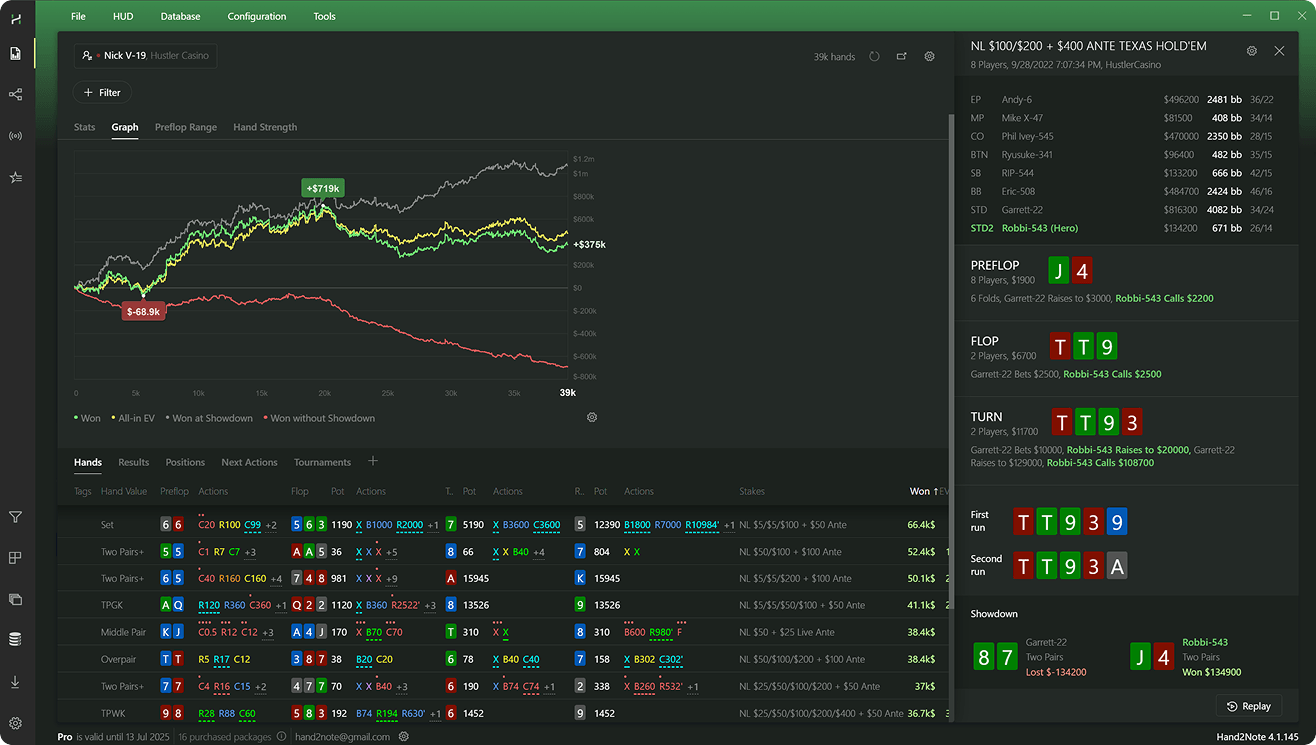
Poker trackers also provide other useful stats: All-in EV bb/100 or Adjusted bb/100. It shows how profitable a player's decisions are. Let's take a classic example: a player goes all-in preflop with pocket aces and loses to kings. In the moment, they were unlucky, but they made all the right decisions. Over the long run, they'll win the pot 80% of the time. EV bb/100 more honestly reflects a player's skill level. The opposite example: a player makes bad decisions but outrun their bb/100 due to variance.
What is a good winrate in tournaments
Tournament players use two metrics: EV bb/100 and ROI. Depending on the buy-in, a good winrate is considered to be:
13 bb/100 — at microstakes;
10 bb/100 — at mid stakes;
6 bb/100 — at high stakes.
Tournaments also use ROI. Return on Investment shows a player's profit from each dollar invested. ROI is calculated using the formula: ROI = (total profit / total buy-in amount) x 100%.
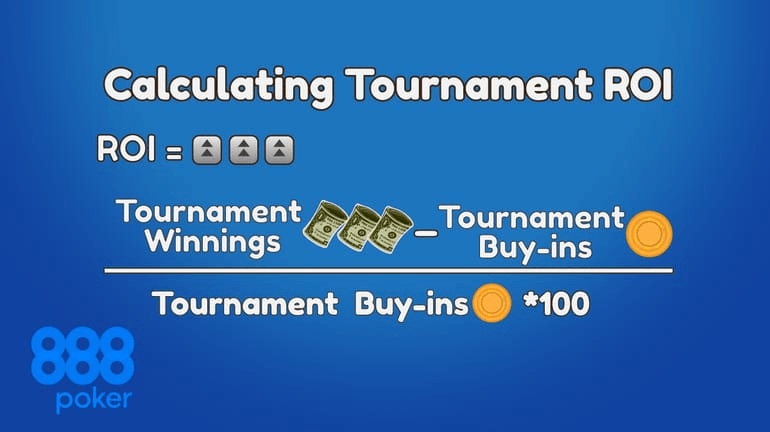
To calculate total profit, you need to subtract all buy-ins from the total winnings. Re-entries, rebuys and add-ons are also included in the total entry fee amount. Let's show this with an example. A player played 200 tournaments at $20 each. In total, they spent $4,000 on MTT entries. Their income was $5,500, and their net profit was $1,500. Let's plug the numbers into the formula:
1,500 : 4,000 x 100 = 37.5%. The player finished the 200-tournament sample with an ROI of 37.5%.
A player's winrate in tournament poker is determined not only by their skill level. Results are also influenced by other factors:
Buy-in size. Cheap tournaments have a lot of weak opponents. They make more mistakes and give away their stacks more readily. As a result, skilled players show a higher ROI.
MTT format. In a fast-paced tournament, luck plays the decisive role. A fast structure prevents players from showing their skill. A tournament with a deep structure gives more room to leverage an edge over opponents. That's why ROI is higher there.
Number of participants. ROI drops as the number of opponents grows. It's easier to win an MTT with 200 entrants than one with 1,000. That's why many beginner players prefer smaller rooms rather than GGPoker or PokerStars. The re-entry option also lowers a player's chances.
Variance. Over a short sample, a player's winrate depends more on luck than on skill. To get an objective picture, you need to play a large enough sample.
Rakeback and promotions. Loyalty program refunds and income from other promos aren't included in the ROI figure. However, rakeback and leaderboard placements bring in extra money.
Different stakes have their own idea of a good ROI. General rule: the more expensive the tournament, the higher the skill level of opponents and the lower the ROI.
Learning at FunFarm, from any level
What is considered a good winrate in cash games
The same progression applies in cash games as in tournaments: the higher the stake, the lower the bb/100. One of the main differences between the disciplines is the role of the rake. At microstakes, rooms take such a large commission that it eats up a substantial part of the income. For example, over 50,000 hands, an NL5 player will pay around $300 in rake. If they play at 10 bb/100, they'll earn $250 over the month. The platform will take the largest share of their winrate as commission. At higher stakes, the rooms' appetites drop. As a result, players lose less money to the rake.
Approximate figures for a good cash game winrate are collected in the table:
Stakes | Winrate in bb/100 |
NL2 | 20+ |
NL5 | 15+ |
NL10 | 10+ |
NL25 | 6-10 |
NL50 | 6-10 |
NL100 | 5-8 |
NL200 | 5-8 |
NL500 | 5-6 |
NL1000 and up | 5+ |
Some professionals show even more impressive results. For example, here's what the leaderboard for June 2025 looked like on PokerStars:
Player | Stakes | Hands per month | bb/100 |
Jelieva | NL10 | 70,527 | 16.5 |
Vegetarian93 | NL25 | 31,974 | 29 |
ArtemSnapkouski | NL50 | 66,309 | 8.7 |
Vadjkee | NL100 | 57,929 | 7 |
MuUkr | NL200 | 27,378 | 18.6 |
MuUkr | NL500 | 4,925 | 25.7 |
GWValueTown | NL1000 | 3,242 | 32.2 |
Bot35 | NL2000 | 2,215 | 28.2 |
KayhanMok | NL5000 and up | 492 | 145 |
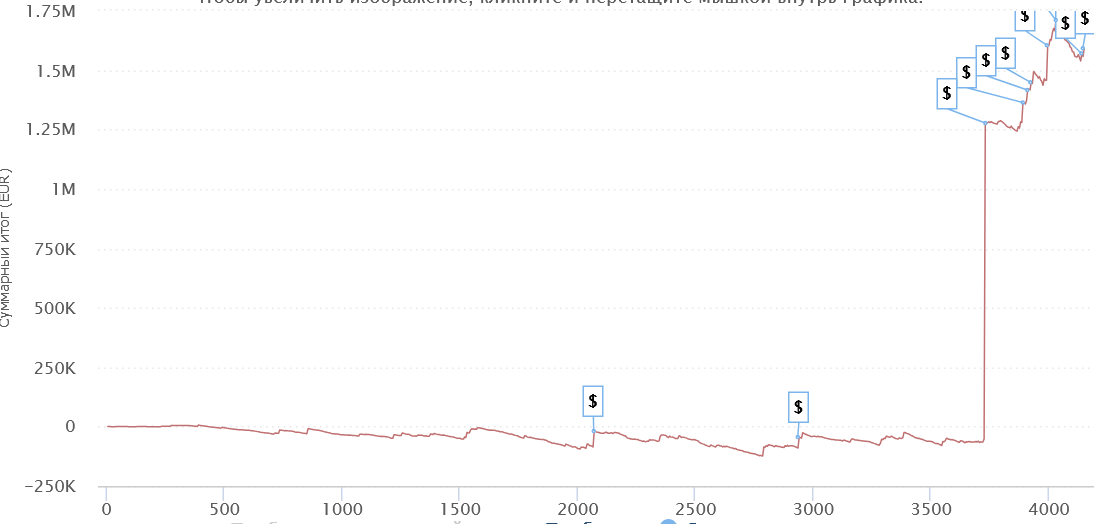
The top earner — KayhanMok — won over $250,000 in just 492 hands. A winrate of 145 bb/100 perfectly illustrates the role of variance over the short run.
What winrates look like in other formats
Tournaments and cash games are the main poker disciplines. However, players achieve good results in other formats too. Let's discuss winrates in Spin&Go, Zoom, live cash games, and Heads Up.
Spin&Go. In these fast three-handed tournaments, it's hard to achieve a high ROI. About 10-15 hands after a Spin&Go starts, the push/fold stage begins. High variance lowers players' winrate. In Spins, the focus isn't on ROI but on ChipEV. This metric shows how many chips a player wins on average per Spin&Go tournament. A result of 45 to 75 chips per Spin&Go is considered good. The high speed of these tournaments allows players to rack up a solid sample size. That's why regulars in Spin&Go get most of their income from rakeback and promotions.

Zoom. The ability to fold a weak hand and instantly move to the next deal lowers winrate. While a recreational player at a regular cash table might play a marginal hand, in fast-fold poker they'll simply fold. Frequent table changes don't help professionals either. They make it harder to build up stats and exploit opponents' weaknesses. That's why winrate in Zoom is 1-2 bb/100 lower compared to classic cash games. At mid-stakes, 4-5 bb/100 is considered a good result.
Heads-Up. In recent years, HU Cash has lost ground. Many rooms have removed tables for one-on-one duels. However, skilled poker players earn good money in HU. Top players achieve 10+ bb/100. Most HU specialists move on to other formats and disciplines. Experience in one-on-one duels helps outplay opponents in MTTs and cash games.
Live cash. Offline the game moves significantly slower than online. However, professionals achieve decent results. Approximate $/hour by stakes looks like this:
Stakes | $/hour |
NL500 | $120 |
NL1000 | $140 |
NL2500 | $260 |
NL5000 | $460 |
NL10000 | $900 |
NL20000 | $2,500 |
At a superficial glance, offline looks more attractive than online. However, it's important to account for organisational factors, such as travel or food expenses. Not every poker player enjoys the pace of 20 hands per hour either. Compared to 90-100 hands online, offline resembles a snail race.
Where to check winrate in cash games and tournaments
A poker tracker helps monitor your own results. It collects a hand history, forms a database, and provides winrate information. Statistical software also accumulates data on other players. However, this doesn't allow for conclusions about opponents' skills. The problem lies in the small sample of hands. Several portals are ready to provide information on opponents. Let's discuss each of them.
Statname. A browser-based service for collecting statistics on cash players. Allows you to get information on any opponent at the table in a couple of clicks. The site produces reports with basic statistics and a graph. In the Statname database, you can find information on players from: POKEROK, RedStar Poker, PokerStars, PokerKing, TigerGaming, 888Poker. The service's main drawback is coverage: not all hands make it into the database.
SmartHand. An automatic poker statistics service. Allows you to get key data on an opponent in one click. Works through a browser extension. The SmartHand database includes data from players on: POKEROK, PokerKing, PokerStars, TigerGaming, 888Poker. Compared to Statname, SmartHand loses fewer hands. The service provides information for NL10-NL25 stakes for free.
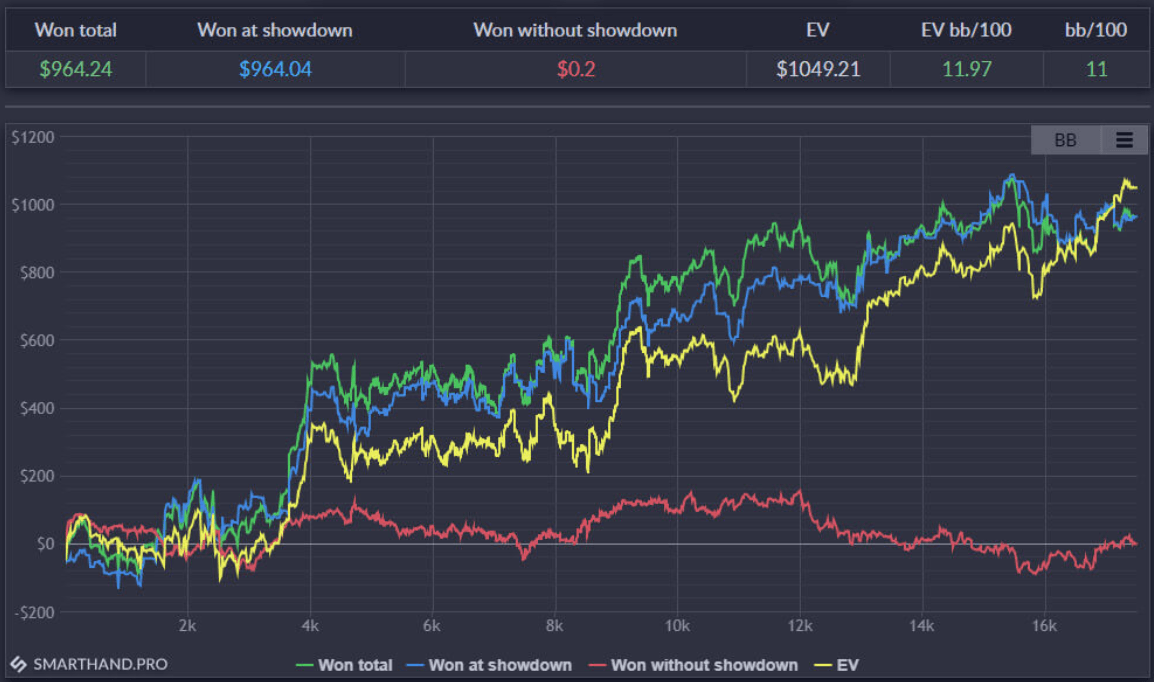
SharkScope. The largest database of online tournament results. The service has been operating for more than 20 years. On the site, you can view the ROI, profit, graph, form, and tournament history of any player. SharkScope also offers a separate app. The service tracks data from: TigerGaming, PokerStars, 888Poker, CoinPoker, Stake, RedStar Poker. The service's main goal is to give the player information about an unknown opponent so they can make the right decision at a key moment in an MTT.
Players' results in live tournaments can be viewed on Hendon Mob. The site tracks most festivals. Among the service's advantages are convenient search and rankings for every taste.

What affects winrate the most
A huge number of factors affect a player's results. Winrate depends most heavily on: the number of tables, selection, skill in playing position, bankroll management, psychological state, and training. Let's break down each of them.
Number of tables open. Let's take two players as an example: Linus and Dag. Linus prefers careful poker and doesn't play more than four tables simultaneously. In a month, he racks up 20,000 hands at NL200 with a winrate of 10 bb/100. In total, he earns $4,000. Dag runs long sessions and multi-tables heavily at the same NL200. Over a distance of 70,000 hands, he shows a modest 4 bb/100, but nets $5,600 for the month. Dag could have opened the same 4 tables and made 10 bb/100, but chose a different path.
Selection. Recreational players provide most of the professionals' income. The better a poker player selects tables, the higher their winrate over the long run. The skill of finding weak opponents often outweighs skill level. Sometimes selection can turn out to be the only difference between players with 5 bb/100 and 15 bb/100. In tournament poker, SharkScope helps assess the number of recreational players in an MTT via tournament search and average player level.
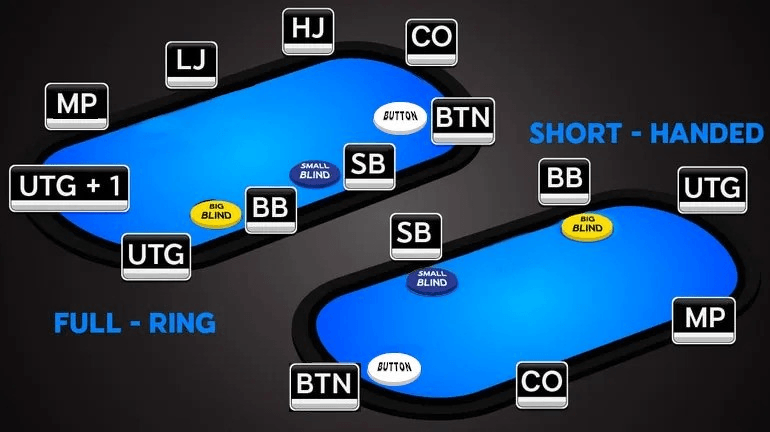
Table size. Full Ring players usually show higher results than their Short Handed counterparts. At longer tables, players pay blinds less often and can wait for a strong hand. In Short Handed, mandatory bets come around faster and provoke more frequent involvement in the pot.
Playing in position. Position gives players information and the ability to control the pot. The more effectively a player uses this advantage, the higher their winrate.
Bankroll management. A disciplined approach to managing capital protects a player when they hit a losing streak. A player takes on serious risk if they don't follow bankroll management. For example, a player with an ABI of $10 moved up to $20 tournaments with a bankroll of $1,500 and caught a downswing. After a series of losses at the more expensive stake, their balance dropped to $900. Now they're forced not simply to go back to $10 MTTs, but to drop even lower. Instead of a steady climb, the player will spend a couple of months rebuilding their bankroll.
Psychological state. Players' worst sessions happen on tilt. One bad day can bury several weeks of work. Top professionals constantly monitor their psychological state and make adjustments. Over the long run, tilt eats up several percentage points of ROI or bb/100.
Training. Strong players regularly raise their skill level. They discuss hands with colleagues, analyse their play in software, and take lessons from coaches. Over the long run, skill development helps increase winrate as they move up through the stakes.
Other aspects of life also affect winrate: sleep quality, bad habits, physical exercise. To perform at your best at the tables, you need to get each of these in order.
The biggest mistakes when assessing your own winrate
ROI and EV bb/100 statistics give players a tool for assessing the quality of their play. When analysing these figures, some players make mistakes and arrive at false conclusions. Let's break down the key ones.
Looking at a small sample. Over a short distance, poker results depend on variance, not skill. Some beginners play 2,000 hands, see a 25 bb/100 winrate, and lose touch with reality. They move up to higher stakes and start to believe they've completely solved poker. When the positive variance swing comes to an end, the beginner loses it all. To get an adequate picture of the quality of your play, you need a sample of several tens of thousands of hands or hundreds of tournaments.
Not filtering the data. Let's illustrate this with a tournament regular. Every month they play 600-700 MTTs with a 10% ROI. When starting sessions, the player registers for tournaments of any format: freezeouts, knockouts, rebuys, Mystery Bounty, Deepstack. They show the highest winrate in MTTs with a standard blind structure. Tournaments with a fast structure perform worst of all. If they adjust their schedule, they'll significantly improve their results. However, the regular doesn't know this, because they never looked at each MTT category separately.
Ignoring the impact of rake and rakeback. Many players analyse their net winrate and forget about indirect sources of income. On some platforms, rakeback provides a significant share of a player's profit. The rake return needs to be factored into your calculations. And remember about rake. It hits players' winrate hard.
Comparing winrates across different stakes. A stable 5 bb/100 at NL5000 is a magnificent, world-class result. That same 5 bb/100 at NL25 is a good figure for a recreational player. Trying to put yourself on the same level as Linus Loeliger based on one month at NL100 will lead to nothing good. Compare your winrate against players at your own stakes to soberly assess your skill level.
How to raise your winrate in tournament poker
You can raise your winrate in various ways: reduce the number of tables, work through psychological issues, remove loss-making MTTs from your schedule. However, the key role in progress belongs to training. The best players in the world constantly raise their skill level. They: review hands, watch training videos, work with coaches. Systematic training helps you move up through the stakes and increase your income. FunFarm poker school offers exactly that.

Beginner players complete the FF Start course. As part of the training programme, they cover basic topics: mathematics, ICM, opponent types, push/fold, and final table strategy. The course concludes with an exam. Graduates of the starting step are accepted into FF Player Path. The advanced course allows you to overcome microstakes and reach a decent income. Want to win tournaments — join FunFarm.

Free course · FF Start
Protect your bankroll from the first stakes
Learn the rules of money management and tell normal variance apart from dangerous play beyond your bankroll.