Betting formats in poker: how No-Limit, Pot-Limit and Fixed-Limit differ
Poker brings together different types of card games, disciplines and formats. Games are also classified by their betting structure. Let's discuss the No-Limit, Pot-Limit and Fixed-Limit formats.

Ilya is a Liga 2 player with six years of experience in online MTTs. He graduated from the Faculty of Journalism at RSUH and writes about poker for beginners, explaining complex things in simple, clear language. In his texts, Ilya combines his personal playing experience with his professional journalism skills to help newcomers confidently get into the game.
Poker brings together different types of card games, disciplines and formats. Games are also classified by betting structure. Let's discuss the No-Limit, Pot-Limit and Fixed-Limit formats.

New breakdowns in your inbox
Subscribe to the FunFarm newsletter: fresh Poker ABC articles and material that helps you grow as a player.
Key information about betting formats in poker:
The rules of poker offer 3 betting structures: No-Limit, Pot-Limit and Fixed-Limit.
In Texas hold'em, the no-limit format dominates, while in Omaha it's pot-limit.
In the early days of online poker, Fixed-Limit competed in popularity with No-Limit. Over time, fixed-limit poker lost ground.
In no-limit hold'em, a player can go all-in at any point in the hand.
In pot-limit games, the amount in the pot limits the size of the bet.
In Fixed-Limit, no more than four raises can be made per betting round.
Why different betting limits exist
No-Limit Texas hold'em is the most popular type of poker today. No-Limit Hold'em hasn't always dominated the industry.
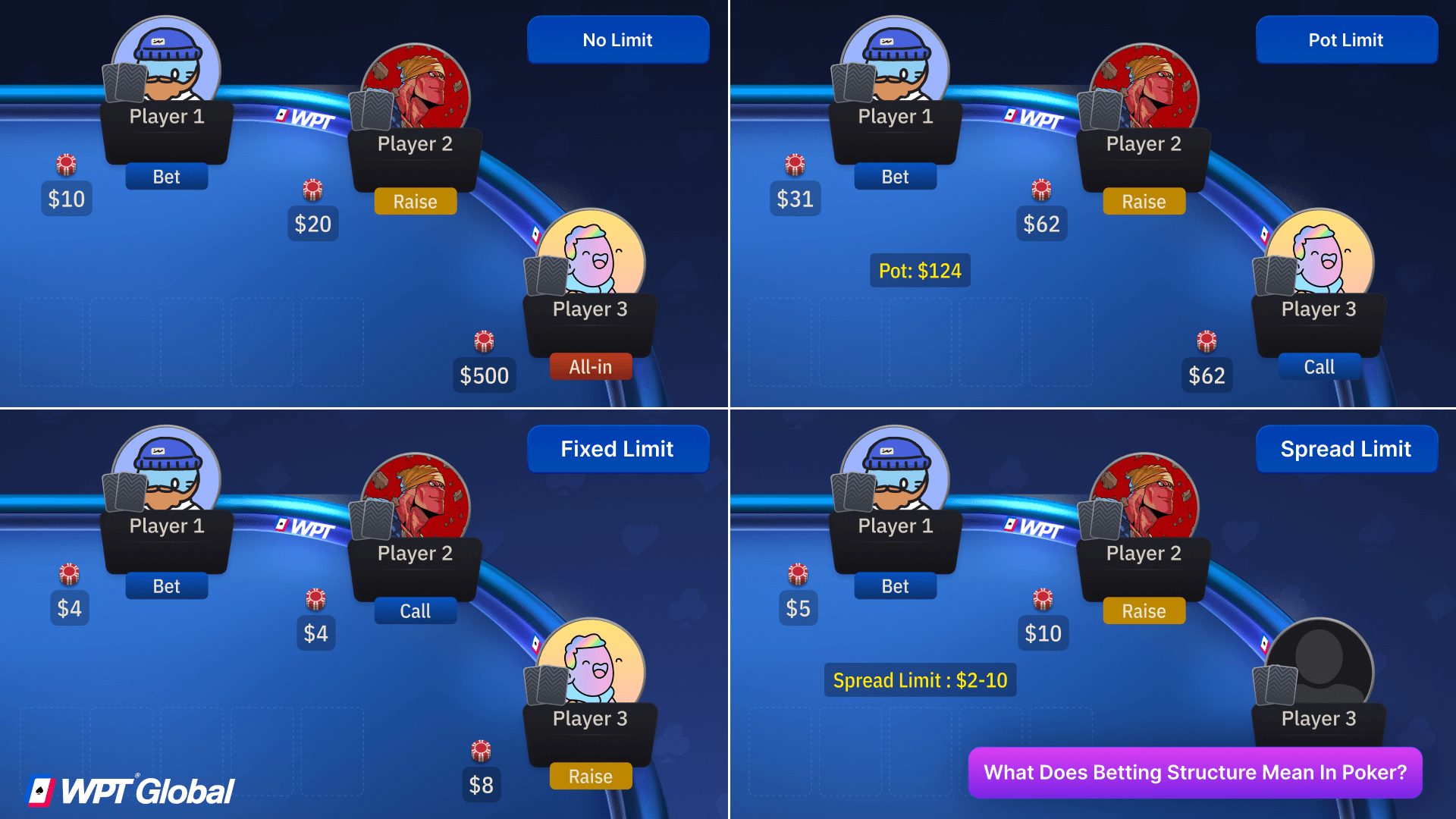
Before the 1970s, stud and draw poker shared the lead. In both card games, bet sizes were limited. Fixed-Limit rules were more commonly applied at the tables. Pot-Limit principles operated in more aggressive games: opponents could raise no more than the amount of the pot. The No-Limit variant was used upon request from poker players. Most casinos and gambling houses preferred FL and PL.
Limiting bet sizes “extends the life” of a recreational player. In no-limit hold'em, a recreational player can lose their stack in a single hand. As a result, they: lose money, don't enjoy themselves and often leave poker for good. The betting structure in limit hold'em allows dozens of hands to be played. The inability to go all-in reduces psychological pressure on players. Poker players act more relaxed and take opponents' aggression more calmly.
Over the long run, Fixed-Limit poker generated more revenue. Many small and medium pots increased the casino's commission. Let's compare the no-limit and limit approaches using an example. Suppose the organiser takes a 5% rake at a $1/$2 table. The cap is $10 per pot. Players on the blinds go all-in and form a $400 pot. The venue will receive $10 once. Let's transfer the situation to FL. At a table with limited bets, players won't be able to invest more than $62 in the pot. The casino's commission will be $3.10. Opponents kept most of their stacks, which will allow them to play many pots and exceed the $10 rake.
Betting structure in poker affects variance and pot sizes. We've summarised the information in the table:
Format | Variance | Pot sizes |
No-Limit | Maximum. One mistake or an unlucky river card leads to losing your stack. | Large. At any point in the hand, a player can make an overbet and seriously increase the pot. |
Pot-Limit | Moderate. A poor decision on the river can cost you your stack, but the opponent has to build it up on previous streets. | Medium. To go all-in, a poker player must do preparatory work on the preflop, flop and turn. |
Fixed-Limit | Minimum. In the most expensive hands, a player won't lose more than 30 big blinds. | Small. The final pot rarely exceeds 15-20 blinds. |
The format also changes the strategy of the game. In no-limit hold'em, a big role is given to bluffing. Good hand-reading skills and a well-timed bet allow you to take down any pot in NL Hold'em. In FL, it's harder to push an opponent out of the pot. To pull off a bluff at a limit poker table, you need to consistently represent strength across several streets. In the no-limit variant, you can influence an opponent's decision with bet size. For example, an opponent might call a 1/2 pot bet but fold to a pot-sized bet.
Another difference is playing draw hands. In no-limit hold'em, a player's actions with a draw are determined by the pot odds. If an opponent creates an attractive situation with modest bets, then calling with a straight draw or flush draw is profitable. In the opposite situation, a player can protect a made hand from a draw with large bets. At a Fixed-Limit table, it's almost always profitable for the opponent to call with draw hands. The betting structure limits the options available to the holder of a made hand.
Pot-Limit occupies an intermediate position between NL and FL. A player in pot-limit poker can selectively bluff and successfully defend hands against drawing hands.
No-Limit: no-limit poker
No-limit poker is the most popular format of the modern era. No-Limit is distinguished by the ability to go all-in at any moment of the hand. You can push your chips into the middle of the table on: the preflop, flop, turn or river. The all-in option creates a special dynamic: experienced players use their stack as a pressure tool. Newcomers and recreational players are forced to act with an eye on a possible push from their opponent. All the major tournaments are held under NL Holdem rules. These include: the Main Event at the World Series of Poker, MILLION$ at POKEROK, and The Venom at PokerKing.
Key features of No-Limit poker:
Constant threat of an all-in. An opponent can announce an all-in on every street of betting. In online poker, a player is given 30-40 seconds to make a response decision. It's especially tough to face a push in a tournament, because one mistake can wipe out hours of work. Simply large bets also create pressure.
Low chance of cheaply reaching a showdown. In Fixed-Limit, a player can see an opponent's hand for 5-6 blinds. In a no-limit game, a huge bet can be made at any moment. In NL Holdem, you won't be allowed to gather information cheaply.
Increased risk of tilt. Good starting hands in no-limit Texas Hold'em come rarely. A classic story: a player waits 20 minutes for aces, gets them, gets their whole stack in on the preflop, loses to the opponent's deuces and busts out of the tournament. It's the perfect situation to trigger tilt. FL and PL create gentler conditions for a player's psyche.
High effectiveness of bluffs. The ability to vary the bet size allows a player to leverage a skill advantage. A skilled poker player knows how to apply pressure at the right moment and take the pot without a showdown. In games with limits on bet sizes, bluffing is harder.
Complex drawing play. In no-limit Hold'em, the profitability of calling with a straight draw or flush draw is determined by the size of the opponent's bet. In most cases, the math doesn't favour the player. That's why they must take into account potential odds and other nuances. In Fixed-Limit and Pot-Limit, completing a draw is cheaper.
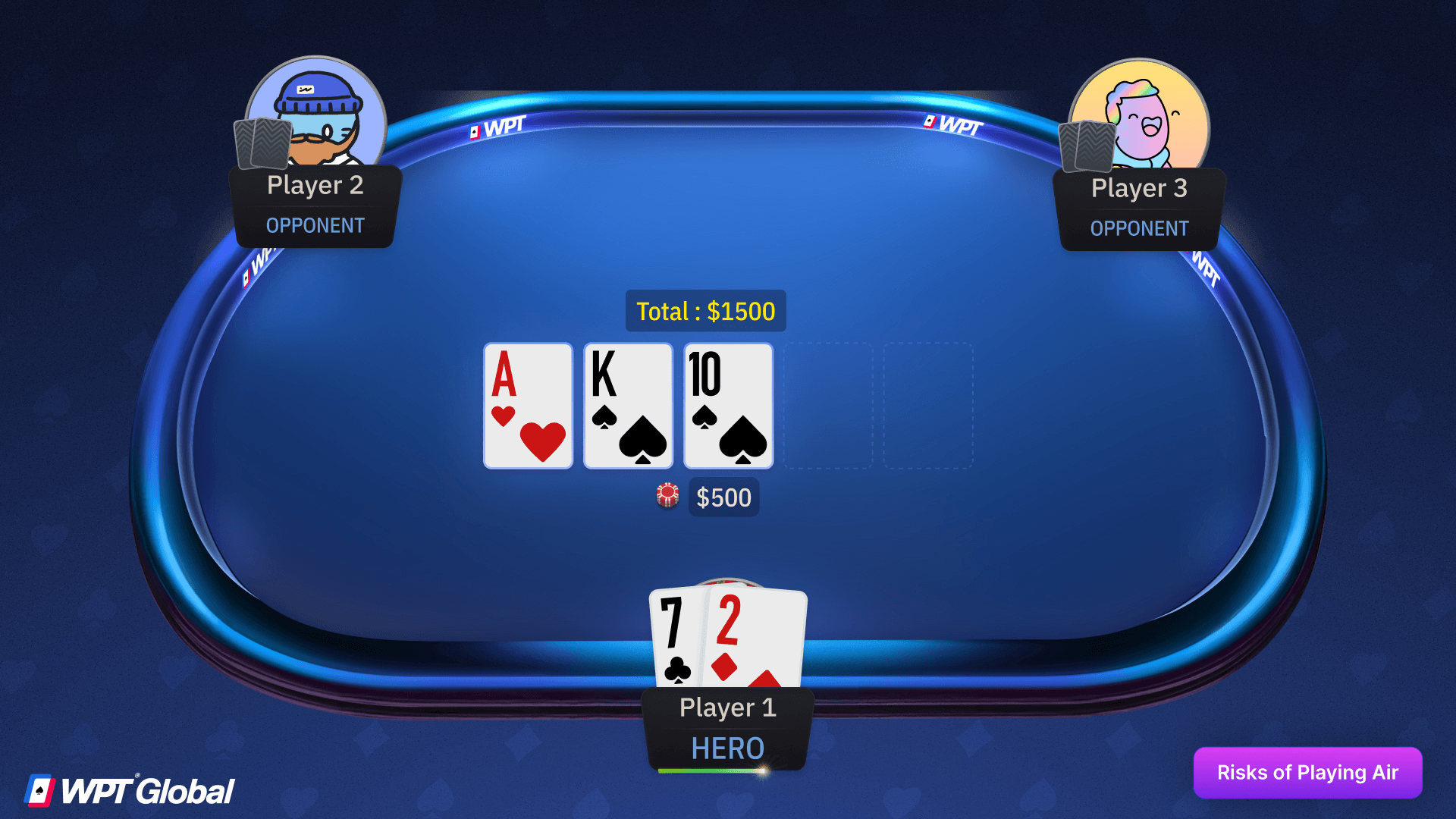
In no-limit Hold'em, players regularly bluff. At tables with a different betting structure, it's harder to push an opponent out of the pot
You can play no-limit Texas Hold'em at: POKEROK, PokerStars, WPT Global, RedStar Poker, Winamax Poker, CoinPoker and other online poker rooms. The format dominates in all disciplines: cash, tournaments, Spin & Go, and Sit & Go.
Learning at FunFarm, from any level
Pot-Limit: pot-limit poker
The main difference between Pot-Limit and No-Limit is the restriction on bet size. In a pot-limit game, a poker player cannot risk their stack at any point in the hand. The upper limit of a bet is set by the size of the pot and the bets of the other players in the current round. It's easier to show with an example.
At a table with blinds of $1/$2 sit Alex and Kristen. On the preflop, Alex raised to $4, and Kristen called. With the mandatory bets included, the pot size reached $11. On the flop, Alex made a continuation bet of $8. The maximum raise in PL is calculated as follows: pot + opponents' bets in the current round + the amount to call the player. In the example, the maximum raise amount equals: $19 + $8 + $8 = $35.
In Hold'em, PL isn't popular, but the pot-limit betting structure dominates in Omaha. It limits pot sizes on the early betting streets, but doesn't prevent investing all the chips into the pot by the river. Key features of Pot-Limit:
Slow pot growth. In NL, opponents can quickly build up the pot with 3-bets and 4-bets already on the preflop. In PL, players build the pot more gradually due to the restrictions. Therefore, mistakes in Pot-Limit cost less than in No-Limit. Players push expensive decisions to the river.
Cheap draws. The pot-limit betting structure complicates defending made hands against drawing hands. A player cannot make a large overbet against an opponent with a draw. The turn opens up more options for the holder of a made hand. To see the river, an opponent with a draw will pay a high price.
More postflop play. A reduction in the number of all-ins on the preflop and flop increases the amount of play on the later streets. Strong poker players get more opportunities to leverage their advantage through hand reading and understanding board structures.
Less pressure. In pot-limit, players are less often put in front of a tough choice: all-in or fold. Many poker players defend a wider range under more controlled conditions. At a PL table, it's easier to avoid tilt.
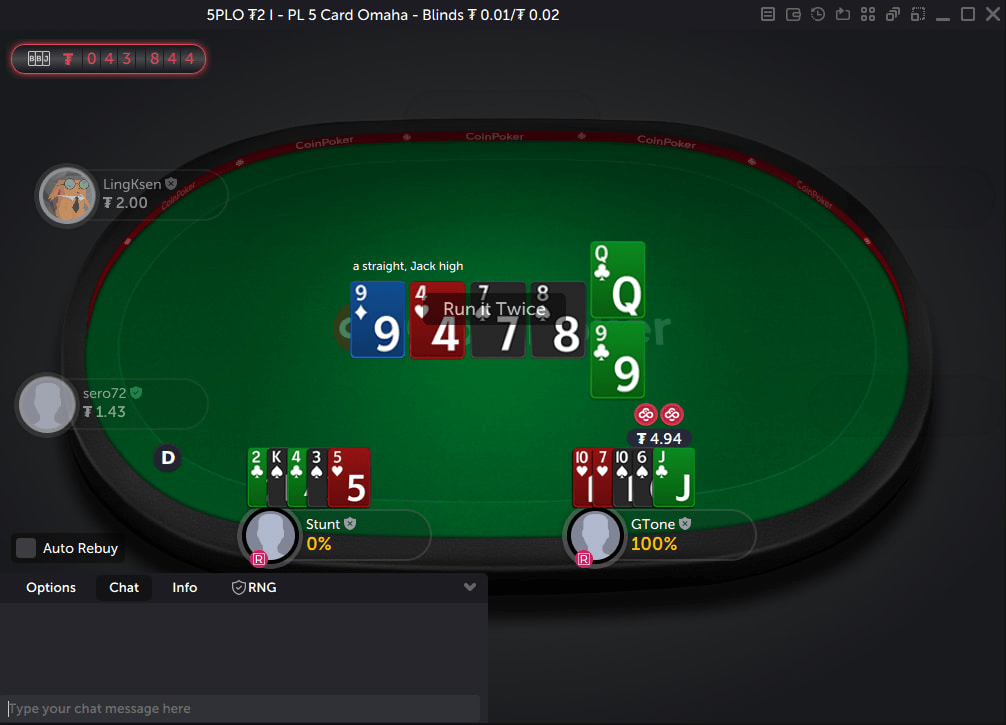
You can't play Pot-Limit hold'em online. But PL is easy to find on any platform in the Omaha section. The format is available at: RedStar Poker, POKEROK, PokerKing. The latter two rooms also organise tournaments with Pot-Limit rules.
Fixed-Limit: limit poker
The Fixed-Limit format leaves players with minimal freedom when choosing bet sizes. In FL, poker players can make no more than four bets on each street. On the preflop and flop, the increment equals the small blind, on the turn and river — the big blind. Let's show this with an example.
Suppose Alex and Kristen are sitting at an FL 9-max table with $1/$2 blinds. Alex raised to $3, Kristen made a re-raise to $4, Alex raised to $5, Kristen increased to $6. Alex can't continue the re-raise “ladder” — Fixed-Limit rules forbid it. He can only call the $6 bet or fold his hand. The last bet in the chain of aggressive actions in limit poker is called the “cap”.
Key features of FL:
Alternative names for the blinds. At a Fixed-Limit table, the small blind is called the “Small bet”, the big blind — the “Big bet”. On the preflop and flop, players increase the pot size by the small bet, on the turn and river — by the big bet.
Alternative rules for Heads-Up. The limit on the number of bets per round is removed if only two opponents remain in the hand. In a one-on-one confrontation, poker players can raise until they invest their entire stack. The cap on the number of bets is removed provided that two people are contesting the pot at the start of the betting. If three players were involved but one folded, the limit still applies.
Math matters more than psychology. In Fixed Limit poker, you won't force an opponent to fold their hand with a huge raise. All decisions at the table are made based on: pot odds, the number of outs and the probability of improving. Mind games don't work in FL.
Reduced role of bluffing. Limits don't allow you to push an opponent out of the pot with a large bet. That's why players bluff only in the rarest cases.
Low variance. The inability to play for stacks protects the poker player's bankroll. It's harder to lose all your money in FL than in NL. The flip side of the coin — betting limits also reduce winnings. Building up capital at Fixed-Limit tables is harder.
The Fixed-Limit format dominated online poker in the early 2000s. No-Limit seized the lead after Chris Moneymaker's victory at the WSOP-2003 and the launch of PokerStars. Now it's hard to find a platform with live FL. The most popular room in the industry — POKEROK — ignores the fixed-limit format. You can find Fixed-Limit cash tables at RedStar Poker and PokerKing. No room in the industry runs regular FL tournaments. However, Fixed-Limit events do make it onto the schedule of major festivals on PokerStars. For example, at SCOOP-2025, 10 tournaments in the FL format were held across different poker variants.

Which format should a beginner choose
No-limit Texas hold'em is the best entry point into poker. Arguments in favour of NL Hold'em include:
Simplicity of the rules. To play hold'em meaningfully, it's enough to memorise hand rankings, positions and the order of betting. Other types of poker cause more difficulties. Even experienced players don't always quickly understand the rules of seven-card stud or lowball.
Popularity. No-limit hold'em is the basic game of online poker. It's offered by all rooms in the industry. NL Hold'em dominates in all disciplines. Most online poker tournaments are held under Texas hold'em rules. Let's take POKEROK as an example. Over 90% of the room's schedule is devoted to MTTs in NL Hold'em. Choosing hold'em lets you find opponents at any time of day or night.
Prize money. The biggest guarantees are paid out in NL Hold'em tournaments. For example, in spring 2025, PokerKing organised a double The Venom. The guarantee for the NL Hold'em tournament was $8,000,000. The winner took home $1,505,240. In the PLO MTT, $2,000,000 was played for. The champion was paid $436,927. A similar ratio of prize money can be seen at live festivals too, like the WSOP.
Training materials. In terms of the number of training materials, NL Hold'em is ahead of other types of poker. Thousands of videos on YouTube and hundreds of books will help you reach a high level of play. Hold'em is also more popular among poker software developers. Most training programmes are created for NL Hold'em.
The downsides of hold'em include high variance. Riding out a losing streak in NL Hold'em is harder than at tables with other betting formats. However, sound bankroll management and systematic work will help you get through the tough times.

After no-limit hold'em, we recommend taking up Omaha. Without experience in NL Hold'em, achieving success in PLO is difficult because of the higher variance. Without a solid bankroll and resilience to stress, going into Omaha is risky. The game also places greater demands on a poker player's skill. The difference between NL Hold'em and PLO is illustrated by the number of starting combinations. In hold'em, a player can be dealt 1,326 combinations, in Omaha — 270,725. Competition between formats doesn't make the task any easier either. Many rooms offer five-card and six-card variations of Omaha. You need to adapt your strategy to each one.
Fans of mixed games will find it useful to study Fixed-Limit poker. FL rounds are included in H.O.R.S.E. and 8-Game. Don't discount tournaments in the Dealer's Choice format either. Among the 20 popular variants of poker, there are games with a fixed betting structure.
The «Player Path» is the fund's main educational programme for players moving on from training to professional practice.
Join
How to learn to play poker
In the early days of online poker, newcomers learned to play at Fixed-Limit tables. The format made it possible to master basic strategy and offered moderate variance. Players memorised starting hand charts and learned to value bet correctly. Once a beginner had built up the core skills, they moved on to No-Limit. Nowadays you can't start a career in FL, because most rooms in the industry have abandoned the format. Newcomers are forced to start in NL. To avoid problems and set yourself on a winning trajectory from day one, we recommend taking training at FunFarm.

Students of the school receive a number of perks: a bankroll for playing in more expensive tournaments, free software, individual and group training sessions, and sessions with psychologists
Newcomers should take a look at the FF Start programme. It introduces the key topics of poker: maths, opponent types, final-table strategy, and push/fold. Students build a solid foundation for long-term success. FF Start includes 30 lessons. Advanced players will find the Player Path programme suitable. It comprises 15 levels of training. The course covers: Heads-Up play, short-stack and deep-stack tactics, ICM, and other aspects of tournament poker. Over 8 months, a player reaches a professional level and starts earning consistently.

Free course · FF Start
Poker without the confusion
Master the basics and know what to do at the table from your very first hands.