What is a dealer in poker and why is it needed
Understanding how the dealer works matters not just for getting to know the rules of the game. The order of betting, determining positions at the table, the correct formation of the pot, and compliance with the rules of each hand all depend on the dealer's actions.

Ilya is a Liga 2 player with six years of experience in online MTTs. He graduated from the Faculty of Journalism at RSUH and writes about poker for beginners, explaining complex things in simple, clear language. In his texts, Ilya combines his personal playing experience with his professional journalism skills to help newcomers confidently get into the game.
During their first live poker games, many beginning players run into confusion. There's a person at the table who deals the cards, monitors the bets, and announces the winner. At the same time, in front of one of the players lies a special chip with the letter D, which is also called the dealer. This raises a natural question: which of them is the real dealer, and what role does each of them play?
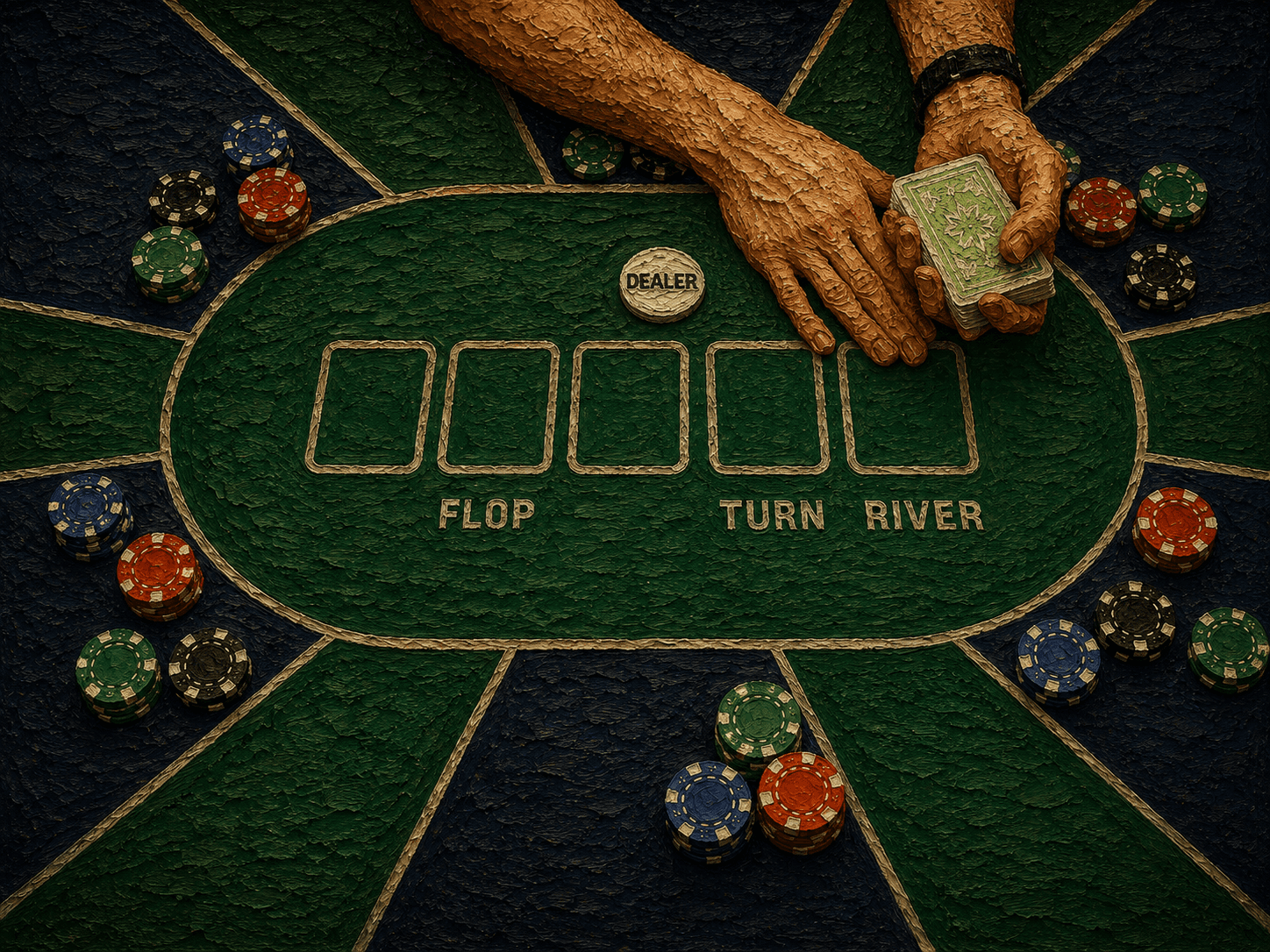
Understanding how the dealer works is important not only for getting familiar with the rules of the game. The order of betting, the determination of positions at the table, the correct formation of the pot, and adherence to the regulations of each hand all depend on the dealer's actions. Even such a seemingly simple detail as the dealer chip directly affects game strategy and the order in which decisions are made.
In this article, we'll break down who the dealer is in poker, what duties they perform at the table, why the dealer chip is needed, how the order of players' actions is determined, and why the button position is considered one of the most advantageous in poker.

New breakdowns in your inbox
Subscribe to the FunFarm newsletter: fresh Poker ABC articles and material that helps you grow as a player.
Who is the dealer in poker
The dealer in poker is the person responsible for running the hand and ensuring the rules of the game are followed. In live poker, it's the dealer who shuffles the deck, deals the cards, monitors the players' actions, controls the bets, and determines the winner at showdown. Their job is to make sure that every hand proceeds strictly according to the established rules and doesn't give rise to disputes.
It's important to understand that the dealer is not a participant in the game. Unlike casino games, where players compete against the house, in poker opponents play against each other. The dealer remains a neutral party who ensures the hand is run correctly and oversees compliance with the regulations.
At the same time, the term "dealer" is used in two meanings at once. The first is the employee of a casino or poker club who serves the table. The second is the player position marked by a special button chip. In practice these are different concepts, each of which performs its own function.
The dealer's main duties
The dealer's work isn't limited to simply dealing the cards. During each hand, they perform dozens of actions on which the correctness of the game process depends.
1. Shuffling and preparing the deck
Every new hand begins with shuffling the cards. The dealer's main task is to ensure a random order of the deck and to rule out the possibility of anyone gaining additional information. In most casinos, the deck is thoroughly shuffled several times in a row. After that, the cards are cut. This procedure makes the order of the cards as random as possible and provides additional protection of the game against potential manipulation.
Modern poker clubs often use special devices for automatic shuffling. While the players are involved in one hand, the next deck is already being shuffled automatically. This helps maintain a high pace of play and reduce pauses between hands.
2. Dealing the cards
After preparing the deck, the dealer begins dealing the cards to the participants. In Texas Hold'em, each player receives two face-down cards. In Omaha — four. The cards are dealt clockwise, starting with the player to the left of the dealer position.
During the deal, the dealer must make sure that no card accidentally becomes visible to other participants. Even a small error can lead to a redeal, which is why dealing technique is one of the key skills of a professional dealer.
3. Revealing the community cards
After betting is completed on each street, the dealer reveals the community cards. Before this, the top card of the deck is discarded. This procedure is called burning a card and is used as an additional security measure. After that, the flop, turn, and river cards are revealed.
For most players this looks like a standard part of the hand. However, it's precisely the observance of such procedures that ensures the fairness of the game and rules out the possibility of using information about the top cards of the deck.
4. Controlling bets and the pot
One of the dealer's most important functions is controlling the bets. During a hand, they monitor the order of players' actions, announce bet sizes, and verify that all actions are performed correctly. If a player pushes chips forward without announcing the amount, the dealer must count them and state the bet size for the whole table.
In addition, the dealer forms the pot, collects the players' bets, and oversees the creation of additional pots in situations where one or more participants go all-in. At the end of the hand, it's the dealer who distributes the main and side pots among the winners.
5. Ensuring the rules are followed
During betting, the dealer controls the order of players' actions. Preflop, the first to make a decision is the player to the left of the big blind. After the flop is revealed, the first to act is the participant sitting to the left of the button. The dealer's task is to make sure no one violates the established order of action.
In addition, the dealer prevents breaches of poker etiquette, monitors compliance with tournament regulations, and helps resolve disputes at the table.
6. Determining the winner
If a hand reaches the showing of cards, the dealer determines the winner. At showdown,* they compare the players' combinations, determine the best hand, and pass the won pot to the winner. In the case of equal combinations, the pot is split among several participants. If a dispute arises, the final decision may be made by the senior manager of the gaming room.
*Showdown — the final stage of a poker hand, at which the remaining players in the hand reveal their cards in order to determine who holds the strongest combination.
What is the dealer chip

The dealer chip, or button, is a special marker that determines the nominal dealer position at the table. It usually bears the word Dealer or the letter D. After each hand, the button moves one seat clockwise. Thanks to this, all participants take turns occupying every position at the table.
Beginning players often think the button is needed solely to indicate the dealer. In reality, its main task is to determine the order of players' actions and the placement of the forced bets. It's precisely relative to the button that the following are determined:
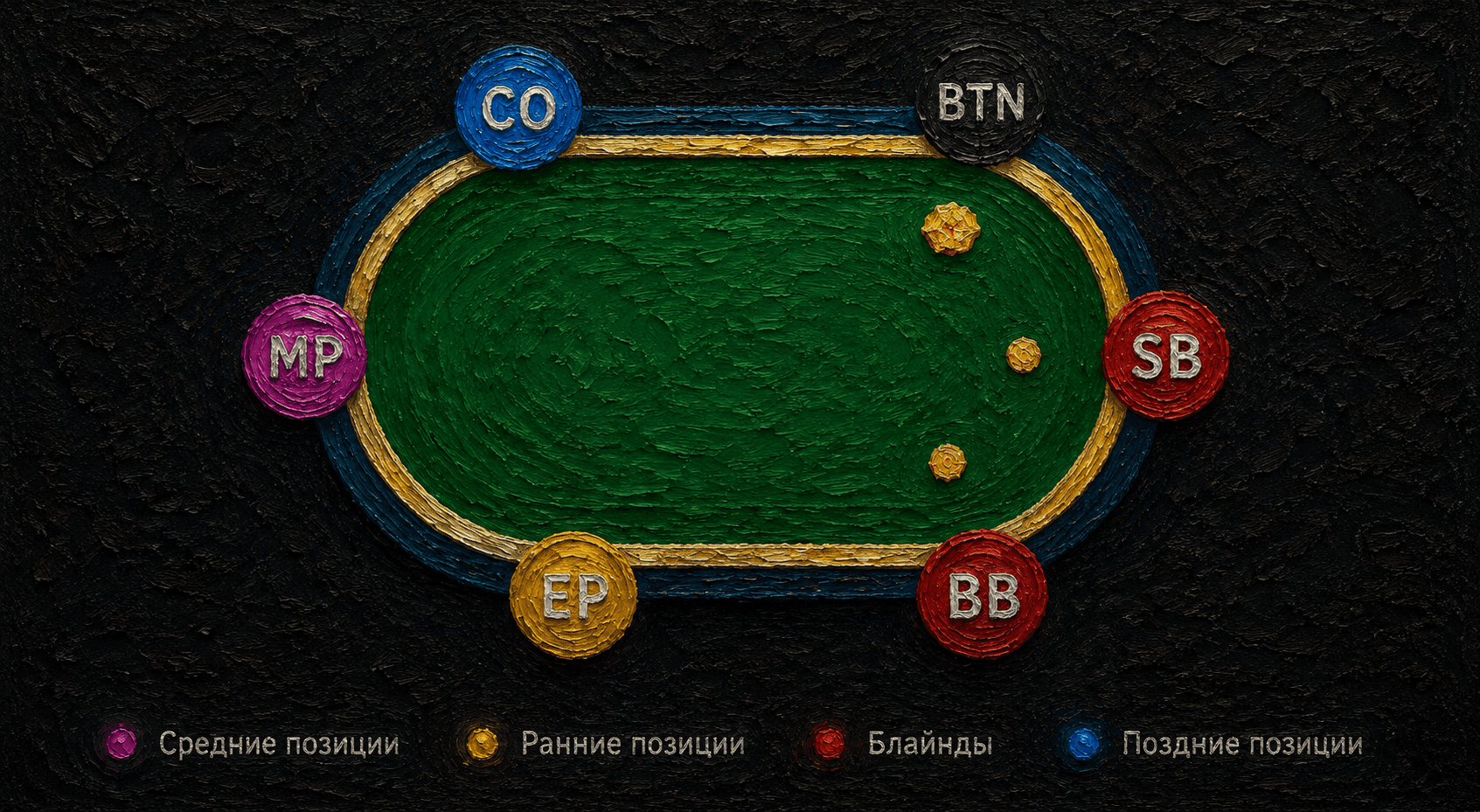
small blind
big blind
early positions
middle positions
late positions
Without the button it would be impossible to maintain a fair order of action at the table.
Learning at FunFarm, from any level
Why the button is considered the best position
The button position is considered the most advantageous in poker. The main advantage is that the player makes their decision last on every street of betting. By the time it's their turn, they've already seen the actions of the other participants and can gain additional information about the strength of their ranges.
For example, if several players have checked, the player on the button can take advantage of their weakness and bet themselves. If opponents have shown aggression, they get the chance to more accurately assess the strength of their own hand and make a decision taking the additional information into account.
That's exactly why strong players strive to use the button as actively as possible to apply pressure on opponents and steal the forced bets. Over the long run, the positional advantage becomes one of the most important factors of profitable play.
How the dealer works in home games
During home poker games there usually isn't a professional dealer. In such situations, the duties of the one dealing pass from one player to another along with the button. After a hand is completed, the dealer chip moves clockwise, and the next participant takes on the functions of shuffling and dealing the cards.
To avoid disputes, before the game starts it's recommended to determine in advance:
the sizes of the forced bets
the order of raising the blinds
the rules for buying additional chips
the tournament structure.
The more thoroughly the rules are agreed upon before the game starts, the fewer disputes will arise during play.

Should you leave the dealer a tip
In live poker, tipping the dealer is considered part of poker etiquette. Players usually leave a small part of the won pot after big hands or a successful tournament performance. The size of the tip remains voluntary and depends on local traditions, the size of the winnings, and the player's personal decision.
Tips are not mandatory, but in most poker clubs they're considered a sign of respect for the dealer's work.
How to become a poker dealer
From the outside, it may seem that the dealer's job consists only of dealing cards. In practice, the requirements for the profession are considerably higher.
A professional dealer must:
have an excellent knowledge of the rules of poker
quickly count bets and pots
have a good memory
maintain concentration over many hours
be able to resolve conflict situations
have clear speech and good communication skills.
Most casinos prefer to train their future employees themselves. For this there are special dealer schools, where the rules of poker, the order of running hands, working with chips, and the specifics of interacting with players are studied.
The work requires high concentration and stress resilience, since any mistake can affect the course of the game and lead to a dispute at the table.
1. Does the dealer play poker along with the participants?
No. In casinos and poker clubs, the dealer doesn't participate in hands and doesn't make bets. Their task is to serve the table and ensure the rules are followed. Players compete with each other, not with the dealer.
2. Why is the dealer chip needed?
The dealer chip determines the button position. The placement of the small and big blinds, as well as the order of players' actions on all streets of betting, depends on it.
3. Why is the button considered the best position?
The player on the button makes decisions last after the flop. This makes it possible to gain more information about opponents' actions and make more accurate decisions.
4. What does the dealer do during the showdown?
The dealer compares the players' combinations, determines the winner, and distributes the pot. In the case of equal combinations, they split the winnings among several participants.
5. Can you play against the dealer?
In classic poker, no. Players compete among themselves. However, there are certain casino games, for example Caribbean poker or Casino Hold'em, where participants really do play against the dealer.
6. How does the dealer in online poker differ from a live dealer?
In most online rooms, the dealer's functions are performed by software. In live dealer games, the hands are run by a real casino employee, while players watch the process via video stream.
Free course · FF Start
Your first hands, with a clear plan
Learn to read the table, compare hands and understand the order of action.