Brain Food for Poker Players: The Top Foods to Sharpen Focus and Cognitive Performance
We break down what to eat before and during your session to sustain peak concentration, eliminate mental fatigue, and ensure clinical decision-making at the tables.

Ilya is a Liga 2 player with six years of experience in online MTTs. He graduated from the Faculty of Journalism at RSUH and writes about poker for beginners, explaining complex things in simple, clear language. In his texts, Ilya combines his personal playing experience with his professional journalism skills to help newcomers confidently get into the game.
You have opened twelve tables, set up your HUD, and are ready to dedicate the next 6+ hours to poker. For the first couple of hours, everything goes perfectly: decisions are executed efficiently, ranges are easily read, and concentration is at its peak. But then, a feeling familiar to every player creeps in — the head starts to feel heavy, focus scatters, and simple decisions begin to take far more time.
Many attribute this to game fatigue, a bad run, or a lack of motivation. However, one of the most common reasons is much simpler — poor nutrition.
Poker demands intense concentration for many hours consecutively. The brain constantly analyses opponents' actions, calculates equity, evaluates ranges, and makes dozens of decisions every single minute. To operate at this level, it requires high-quality fuel. If the body receives too little energy, or if it is supplied unevenly, cognitive speed drops, memory degrades, and controlling emotions becomes far more challenging.
*Equity — our share of the pot, corresponding to your current chances of winning. Usage example: "With a pocket pair of Aces against a random hand pre-flop, our equity is approximately 85%".
By the way, we wrote about how to control emotions in poker and avoid tilting in this article. Go check it out.
Let’s break down which foods truly help maintain focus during a poker session, what is best avoided, and how to structure your nutrition so your quality of play remains elite from the very first hand to the last.

New breakdowns in your inbox
Subscribe to the FunFarm newsletter: fresh Poker ABC articles and material that helps you grow as a player.
Why Nutrition Directly Impacts Your Quality of Play
Despite its small size, the brain is one of the most energy-consuming organs in the human body. While it accounts for only about 2% of total body weight, it consumes roughly 20% of the body's entire energy.
During a long poker session, the cognitive load is particularly heavy. If energy starts to run low, the brain gradually shifts into an economy mode of sorts. For a poker player, this manifests as very specific symptoms:
focusing becomes much harder
the number of autopilot decisions increases
the speed of calculating pot odds drops
emotional volatility increases after lost pots
misclicks and technical errors occur more frequently
*Misclick — an unintentional action taken due to accidentally pressing the wrong button on the screen. Instead of the intended move, the player executes a different one, which can drastically alter the outcome of a hand.
At the same time, many do not even connect these changes to nutrition. For instance, a player might drink an energy drink or eat a chocolate bar, feel a sudden rush of alertness, and then encounter severe fatigue just half an hour later. The culprit is sharp fluctuations in blood sugar levels. This is exactly why nutrition must be viewed as an essential part of session preparation, just like high-quality sleep, a comfortable workstation, or a pre-game warm-up.
We discussed how to set up a comfortable workstation in this article. Go check it out.
How the Brain Gets Energy
The brain's primary source of energy is glucose. It is produced during the digestion of carbohydrates and enters the bloodstream, supplying nerve cells with the necessary power. However, not all carbohydrates are created equal.
Let’s discuss the carbohydrates you should incorporate into your diet, and those you should avoid.
Simple Carbohydrates
These include sugar, sweets, white bread, pastries, sugary drinks, and most chocolate bars. Such products rapidly spike blood sugar levels. While you feel a sudden burst of strength and alertness, this effect is short-lived.
The body releases a large amount of insulin, causing blood sugar levels to crash. Within 20–40 minutes, drowsiness sets in, attention drops, and concentrating becomes much more difficult. This is why a sugary snack before a long poker session usually does more harm than good.
Complex Carbohydrates
Foods with a low or medium glycaemic index work in a completely different way. These include:
oatmeal
buckwheat
brown rice
quinoa
wholemeal bread
legumes
vegetables
These foods are digested much slower. Glucose enters the bloodstream gradually, ensuring the brain receives sustainable fuel for several hours without sharp energy drops. Consequently, complex carbohydrates are considered the optimal choice before a long playing session.
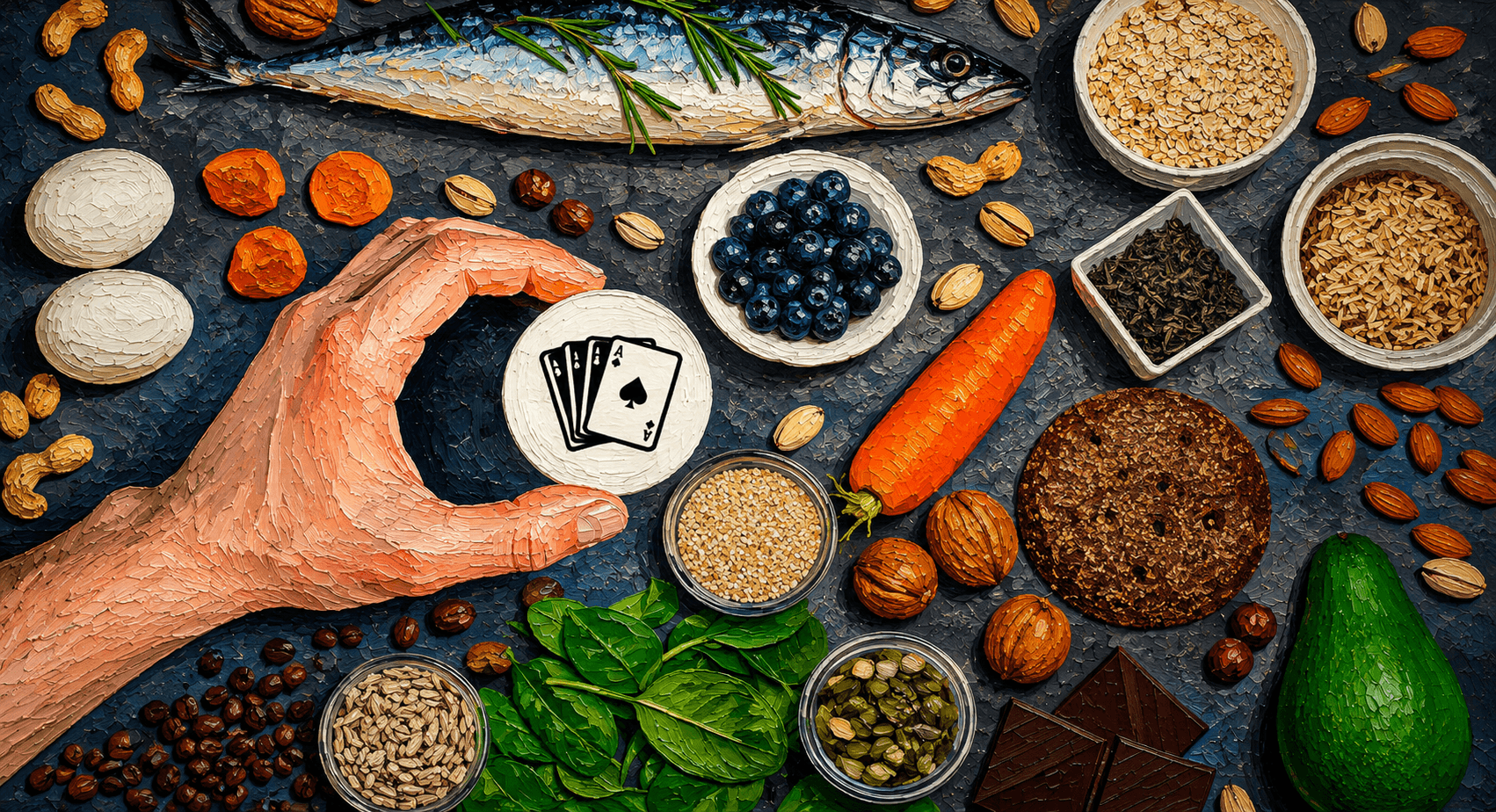
Top Foods for Maximum Focus
No single food will turn you into a poker crusher in a single session. However, regular consumption of specific foods helps keep your attention, memory, and cognitive speed sharp.
1. Oily Fish — The Omega-3 Powerhouse
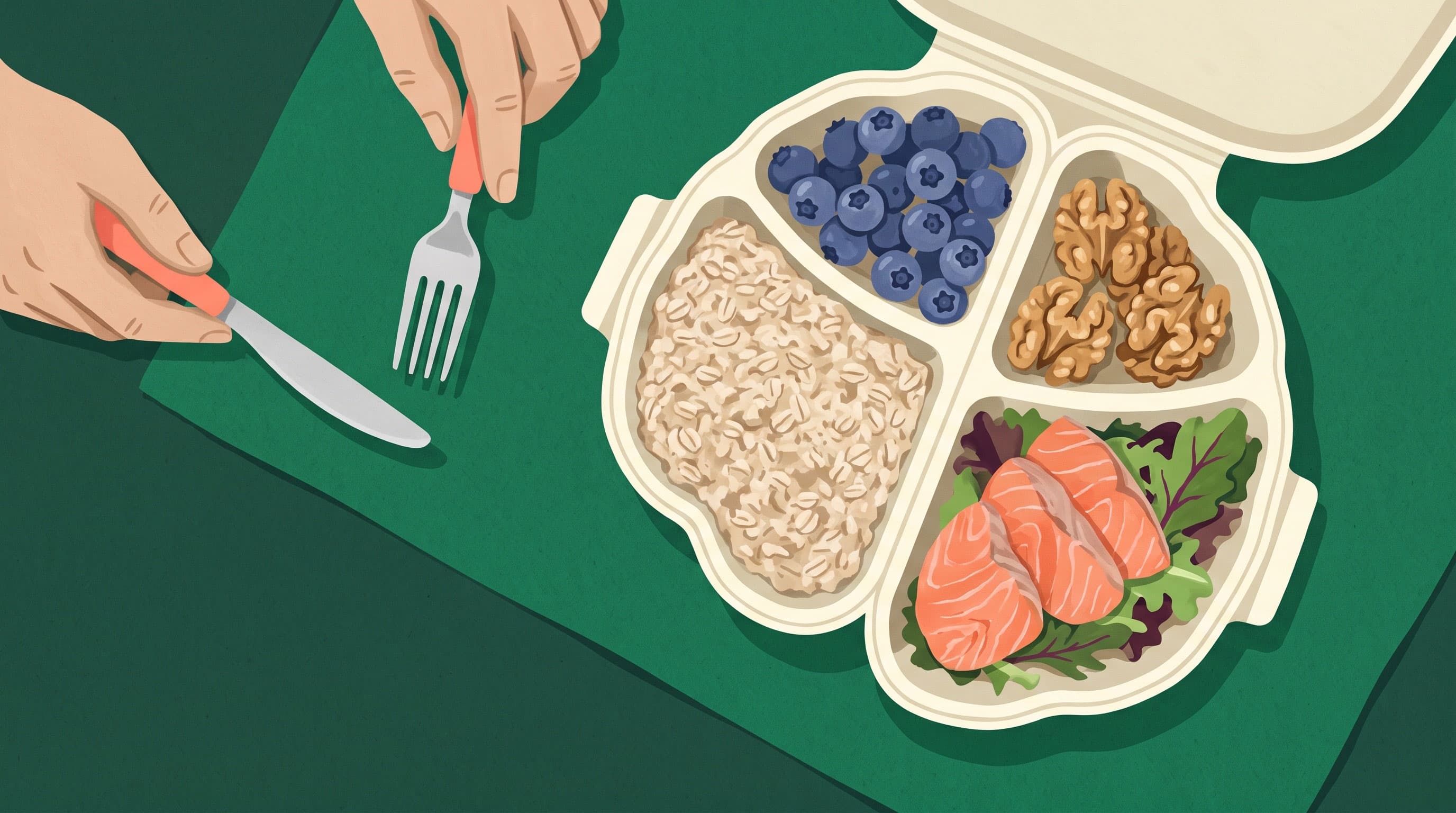
One of the most beneficial foods for the brain is oily saltwater fish. Salmon, mackerel, herring, sardines, and trout contain rich amounts of omega-3 fatty acids.
These acids help maintain the healthy functioning of the nervous system. Studies show a clear link between adequate omega-3 intake and sharper memory, higher information processing speeds, and reduced age-related cognitive decline.
If fish is rarely on your menu, it is highly beneficial to add other sources of omega-3:
walnuts
flaxseeds
olive oil
avocados
2. Green Vegetables
Spinach, broccoli, various salad greens, parsley, and other leafy greens contain high amounts of B vitamins, vitamin K, lutein, and antioxidants. These compounds protect nerve cells from damage and help sustain cognitive functions.
For a poker player, these foods are also incredibly valuable because they help maintain steady performance without causing a feeling of heaviness after eating. It is best to consume greens daily, adding them to your main meals.
3. Nuts
Nuts are rich in healthy fats, contain vitamin E, provide a great source of plant protein, and are highly satiating. Walnuts are considered particularly beneficial, as they contain alpha-linolenic acid, which belongs to the omega-3 family.
However, it is important to keep their high calorie density in mind. A solid portion is about 30 grams per day. This is sufficient to get all the benefits without overeating. Moreover, nuts are the perfect snack to graze on during a long session. They do not trigger sharp sugar spikes and allow you to maintain a stable level of energy.
4. Berries
Blueberries, raspberries, blackberries, and strawberries are packed with antioxidants. They help improve blood blood flow to the brain and protect nerve cells from age-related changes. Some studies also link regular berry consumption with improved memory and the ability to absorb new information. If fresh berries are out of season, frozen ones work just as well, as they retain most of their beneficial properties.
5. Eggs
Eggs contain several compounds essential for brain function: high-quality protein, B vitamins, and choline.
Choline is involved in the synthesis of acetylcholine — a neurotransmitter that plays a crucial role in memory and learning processes. Therefore, an omelette or boiled eggs paired with complex lease of carbohydrates is an excellent breakfast option before a grinding session.
6. Dark Chocolate
Good news for those with a sweet tooth — you do not need to cut chocolate out entirely. However, we are talking specifically about dark chocolate with a cocoa content of at least 70%.
It contains antioxidants, flavonoids, and a small amount of caffeine, which can positively influence attention span and processing speed. That said, just two or three squares are more than enough. Eating an entire bar before stepping onto the virtual felt is not recommended — the excess sugar will completely negate any potential benefits.
7. Oatmeal and Other Grains
If you have to choose one breakfast food before a long session, oatmeal is one of your best bets. It contains complex carbohydrates and delivers energy to the body slowly. Unlike sugary cereals or croissants, oatmeal porridge helps avoid blood sugar spikes and maintains concentration for much longer.
Excellent alternatives include buckwheat, brown rice, quinoa, and wholemeal pasta. All these foods are best paired with a high-quality protein source — eggs, chicken, turkey, or fish.
Learning at FunFarm, from any level
Foods to Avoid Before a Poker Session
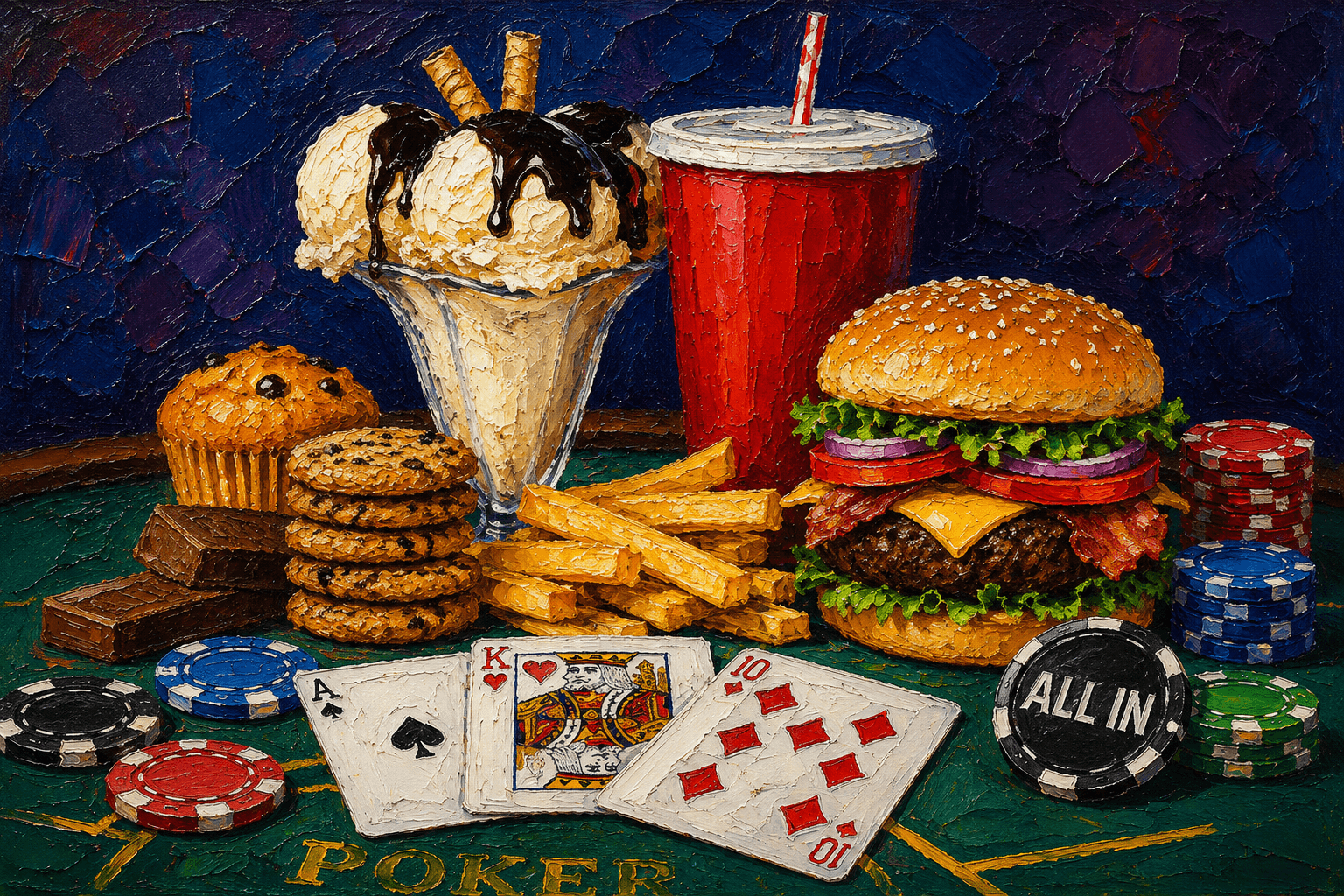
There are no strictly forbidden foods. However, some items make maintaining concentration during a long session significantly harder.
1. Fast Food and Heavy, Greasy Food
Pizza, burgers, chips, and other heavy convenience foods are often the go-to choices for poker players during evening and night sessions. It is convenient, fast, and does not require stepping away from the tables.
However, after such a meal, the body directs a massive portion of its resources toward digestion. Instead of the expected energy boost, drowsiness sets in, reaction speeds drop, and the feeling of heaviness destroys your concentration.
If you have a multi-hour session ahead, it is far better to opt for a lighter meal containing plenty of protein and complex carbohydrates.
2. High-Sugar Treats
Sweets provide a quick burst of energy, but the effect is highly volatile. After a sharp rise in blood sugar, an equally rapid crash follows. As a result, you will soon face fatigue, irritability, and the urge to hunt for more sugar.
During a long MTT session, these swings are highly detrimental. The player only feels sharp in brief bursts, followed by severe drops in focus. If you want something sweet, stick to a small amount of dark chocolate or fresh fruit.
3. Energy Drinks
Energy drinks certainly provide a temporary boost in alertness. However, this effect is achieved through massive doses of caffeine and sugar.
After the initial high, a pronounced crash typically follows. Furthermore, excessive consumption of energy drinks can heighten anxiety, elevate heart rate, and degrade the quality of your sleep once the session ends.
If you grind regularly at night, a constant reliance on energy drinks can severely impact your recovery between sessions.
Tips for Staying Sharp
1. Stay Adequately Hydrated
When discussing concentration, people often talk about coffee or smart supplements. However, even mild dehydration can impair attention, memory, and information processing speed. During a long grind, it is easy to forget to drink. A player gets completely absorbed in the action across the tables and only remembers to drink when they already feel parched.
It is wise to keep a bottle of water next to your setup before the session starts and take occasional sips. You do not need to follow a strict mathematical formula — just ensure you avoid feeling noticeably thirsty.
2. Coffee is Fine, but Do Not Overdo It
Caffeine can indeed sharpen attention, reaction times, and the subjective feeling of alertness. That is why a cup of coffee 30–60 minutes before register-time can help you get in the zone much easier.
However, keep two things in mind. First, coffee is not a substitute for sleep. If a player is chronically sleep-deprived, packing on more caffeine will not solve the issue; it will only mask the fatigue temporarily. Second, drinking coffee late in your session can destroy your ability to fall asleep afterwards. If you play the night shift and plan to sleep in the morning, try to consume your last major dose of caffeine at least 8–10 hours before your planned bedtime.
The main principle is simple: use coffee as a tactical tool to boost concentration, not as a crutch to compensate for chronic sleep deprivation.
An Example Game-Day Meal Plan
There is no one-size-fits-all menu. It depends on your session start time, sleep schedule, and personal preferences. But there are a few core principles that work for most players.
1–2 hours before the session — your main pre-game meal, which should contain:
a source of complex carbohydrates
high-quality protein
a small amount of healthy fats
For example: oatmeal porridge with eggs, buckwheat with chicken breast, rice with fish, or cottage cheese with berries and nuts. This combination fuels a stable level of energy for hours.
During the session — prepare light snacks in advance, so you do not have to make dining decisions during the 5-minute tournament breaks.
Apples, bananas, berries, Greek yoghurt, nuts, vegetable sticks, or a few squares of dark chocolate are excellent choices.
If the session lasts more than six hours, it makes sense to have a proper, light meal rather than constantly snacking on sweets.
After the session — opt for a light dinner consisting of protein and a moderate amount of complex carbohydrates.
For example: an omelette with vegetables, cottage cheese, fish with rice, or chicken with vegetables. This allows your body to recover easily, ensuring high-quality sleep.

Are Supplements and Nootropics Necessary?
There is a massive industry of brain supplements claiming to boost memory, focus, and thinking speed. To date, there is strong, convincing evidence showing that most popular nootropics significantly improve cognitive function in healthy individuals is minimal.
If your diet is diverse and you do not have vitamin or mineral deficiencies, the foundation of your performance remains solid sleep, regular physical activity, balanced nutrition, and proper hydration.
Supplements may be prescribed by a doctor for confirmed deficiencies, but they should never be viewed as a shortcut to bypass a healthy lifestyle.
How to Avoid Binging on Junk Food During a Session
Most impulsive eating decisions are not made because the player is genuinely hungry. Usually, the triggers are:
fatigue
stress after a brutal bad beat
lack of prepared food
the desire for a quick dopamine hit
So the best way to avoid late-night pizza or energy drink runs is to prepare in advance.
Before launching your tables:
prepare plenty of water
prep a healthy snack
plan what you will eat mid-session in advance.
By doing so, the probability of ordering fast food after a nasty 2-outer will drop significantly.
Conclusion
Nutrition will not turn you into a poker legend overnight. There is no magic food that will instantly improve your range reading or teach you to make flawless decisions. However, elite performance over a large sample size is built from small, daily habits.
In poker, your edge is often calculated in fractions of a percent. And if proper nutrition allows you to make even a few better decisions per session, it will absolutely show in your win rate over the long run.
And if you want to master poker at a technical level and turn your long-term grind into a stable source of income, apply to join FunFarm today.
Free course · FF Start
Turn interest into practice
Get a foundation that helps you consciously choose your format, tools and next step.
Frequently asked questions
Read next

Healthy sleep for poker players: how to fix your routine

Sports for Poker Players: Best Picks for Focus

Card Sharps in Poker: Famous Names and Their Main Tricks