How to Find a Good Poker Coach and Not Get Scammed
Top coaches are expensive. Budget options often don't deliver results. Let's discuss how to find a good coach and avoid scammers.


One of our first coaches: on the team since the very founding of the project. He prioritizes simple and practical training with an emphasis on real game situations and decision-making over the long run. Val doesn't just "beat the games" as a player, but also instills a systematic approach to the game and discipline in his students.
Training with a coach is the fastest way to raise your game. However, finding the right coach is hard. During your search you need to consider: the cost of lessons, the mentor's qualifications, the teaching methodology, reviews from former students. Top coaches are expensive. Budget options often don't deliver results. Let's discuss how to find a good coach and avoid scammers.

New breakdowns in your inbox
Subscribe to the FunFarm newsletter: fresh Poker ABC articles and material that helps you grow as a player.
Key facts about poker coaches
A poker coach finds and corrects mistakes in a student's strategy.
One-on-one training accelerates your climb through the stakes.
Coaches charge from $10 to $1,000 per lesson. The specific amount depends on the coach's skill, popularity, and achievements.
No one regulates the poker coaching market. Scammers and weak players often masquerade as experienced specialists.
To find the right mentor, you need to do extensive research. Study their graph, student reviews, and teaching methodology.
Why you need a poker coach
An individual approach increases the speed of learning. This principle works in any field. If parents want to prepare a child for exams, they hire a tutor.
A coach will speed up your progress, but the pace costs money
A trainer will also help you lose weight quickly and get in shape. One-on-one lessons benefit poker players too. Beginners go to a coach to lay a foundation. Professionals want to maintain their edge over opponents and reach a new level.
One-on-one training has the maximum effect if a player:
has hit a ceiling and can't move up to a higher stake;
keeps repeating the same mistakes;
doesn't know how to analyze a database;
hasn't developed an effective approach to learning;
shows a high level of skill but loses money due to tilt.
A coach can't be considered a cure-all. Some categories of players don't need one. Among them:
Absolute beginners. You can learn hand rankings, the order of betting, and the value of positions without a mentor. The same goes for getting your first experience playing online poker.
Players without discipline. To benefit from lessons, a poker player must reinforce knowledge in practice. You can't just pay a coach and automatically reach a new level. The "Pay-to-win" system doesn't work in poker. After each session you need to do homework on your own: analyze hands in software, study opponents, write down and memorize conclusions.
Recreational players. If a player sat down to have fun, they don't need a strict preflop range or balanced poker skills. Complex concepts and discipline will get in the way of enjoying the game.
The speed of progress in poker depends on various factors: a person's abilities, the amount of time spent playing and learning, discipline, risk perception. For example, Liv devoted 30 hours a week to poker for a whole year and went from freerolls to tournaments with an ABI of $50. Igor spent 10 hours a week playing and over 12 months reached an ABI of $15. If Igor hires a coach, his level will start growing faster. However, closing the gap solely through one-on-one lessons won't work.
Here are the advantages of lessons with a coach:
Fast progress. The player is immediately taught the right approach. They don't waste time on trial and error.
Deep study of theory. A good coach presents material systematically. The poker player avoids the chaos of scattered information.
Feedback. The mentor answers students' questions in detail.
A community of players. Many coaches gather their students in private chats where they discuss strategy and analyze hands.
Let's also list the drawbacks of one-on-one training:
High cost of lessons. An hour-long lesson costs from $10 to $1,000. The amount depends on the mentor's qualifications, their workload, and their credentials.
No guarantees. A student can take a course with a top mentor and keep losing. Over the short run, results depend on variance, not skill.
The risk of falling victim to a scammer. Poker coaches aren't issued licenses or certificates. Nor is the quality of their work regulated. That's why low-level players and scammers become coaches. Recognizing them takes effort.
No comparative studies on the speed of growth in poker have been conducted. Therefore, you can't draw parallels between self-study and working with a coach. The most striking example of recent years is the story of Maria Konnikova. The author, with zero poker experience, decided to write a book about the card game. As part of the experiment, she studied with Erik Seidel and Jared Tendler for a year.
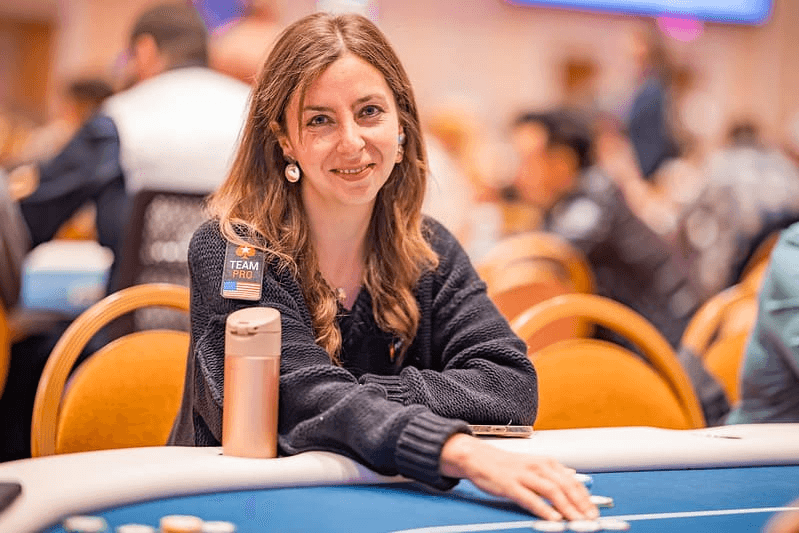
Systematic training brought Maria Konnikova a WSOP bracelet and seven-figure winnings
After 10 months of training, she won the PokerStars Caribbean Adventure tournament and received $86,400. In 2024, Konnikova won a World Series of Poker bracelet online. As of May 4, 2026, Maria's career winnings exceeded $1,000,000. Today Konnikova successfully combines professional poker play with writing.
What's the difference between an MTT coach and a cash coach
Tournaments and cash are the two main disciplines of poker. Tournaments offer a competitive environment. In the final of an MTT, the winner takes all the chips. The title of champion nicely complements a prize of a hundred buy-ins. Cash involves seeking out weak opponents, careful play, and earning a few stacks per session. The disciplines require different skills.
An MTT poker coach teaches: shifting strategy as blinds increase, the ICM concept, the principles of short-stack play and final-table play. For example, a qualified mentor will not only explain the basic idea of the Independent Chip Model but will also show specific hands. Examples of foolish decisions costing tens of thousands of dollars will reinforce the material. Additionally, the coach will help eliminate unprofitable tournaments and build a proper schedule.
In cash, a coach teaches how to extract maximum profit over the long run. They pay heightened attention to: bet frequency, building preflop and postflop ranges, exploiting opponents at the table. For advanced players, mentors explain balanced strategy, triple-barrel bluffs, and other complex concepts. For example, a cash coach will not only give theory about auto-profit but will also provide suitable situations.
Cash and tournaments bring success through different skills. When you choose a coach, look at their specialization
Many players consider cash the more difficult discipline. They push the idea that cash skills will benefit an MTT player too. In practice the situation is more complicated: without an understanding of ICM and blind-growth dynamics, a cash coach may advise a nominally plus-EV call that leads to elimination. The reverse is also true: an MTT poker teacher is unlikely to help a cash player. Don't look for a universal solution — choose a coach for your discipline.
Learning at FunFarm, from any level
Where to find a poker coach
Thousands of people offer to teach you poker. You can find a teacher: on a specialized site, at a poker school, on a YouTube channel, or through personal recommendations. Let's go through each option.
A poker site. Some sites offer full sections with mentors. Filters help you select a poker coach. You can sort coaches by: type of poker, discipline, lesson price, stakes, or buy-ins. Graphs of a specialist's results, a description of the learning process, and client reviews allow you to form a complete impression. Sometimes coaching is set up as a separate section on a forum. One coach — one thread. A potential client can ask questions and get detailed answers.

Schools and backing funds are a good alternative to a coach. Many of them offer free training
A poker school. The cooperation scheme looks like this: a player is taught, given a bankroll, and provided other assistance in exchange for a share of the income. Large organizations create their own courses, keep materials up to date, and systematically improve their effectiveness. Some backing funds set requirements for participants and don't accept players without experience. FunFarm doesn't sort people into categories and is ready to work with beginners. Fund participants receive a bankroll to play with and other privileges.
Here's how training is structured at FF. The fund operates a structure of 5 tiers: FF Start, Player Path, Liga 1, Liga 2, Elite. At the first level, students get free lessons and reinforce skills in a trainer. We accept FF graduates into the "Player Path," providing backing and an advanced curriculum. After 8 months, students reach a professional level and a decent income.
YouTube channels and streams. Many poker coaches publish content on YouTube and other platforms. Instructional videos help assess a coach's qualifications and how they present material. Often students start with free content and then hire a coach. For example, one of the best online poker players — Ben "Bencb789" Rolle — releases videos on YouTube. Live broadcasts on streaming platforms also create good advertising. Coherent reasoning live on air boosts a coach's authority. Popular mentors not only comment on the game but also answer viewers' questions.
Personal recommendations. A friend's advice will also help you find the right coach. A colleague's recommendation will always outweigh a dry review from a stranger on a forum. In a private conversation, a former student will honestly assess a coach's skills and answer questions. How does the mentor structure the learning system? What homework do they assign? Is there a lasting effect from the training course? Detailed information lets you make a well-considered decision.
How to vet a poker coach
Before making a final choice, it's important to vet the coach's skills. Not every mentor will bring real value and take a player to a high level. Some coaches give outdated information, others structure the learning process mediocrely, and still others ignore the student's preferences and churn out identical players. Let's not discount plain scammers either. The following will help you form an objective picture of a coach:
The graph and results from SharkScope and Hendon Mob. The first service collects information on players' performances in online tournaments, the second on winnings at live series. The data from SharkScope can't be called exhaustive — the site doesn't track results from some rooms. Not all tournament series make it into the Hendon Mob database either.
Student reviews. Comments from former clients let you assess a coach's teaching methodology and attitude toward the work. Remember: not all reviews are written by real students. Wording and literacy will help distinguish a genuine opinion from a paid one. Real people make mistakes, use simple language, and cite specific facts. Fake reviews stand out for their heightened literacy and vague wording.
Social activity. A live blog or regular Twitch broadcasts add credibility to a poker coach. A popular journal and streams guarantee nothing, but they reduce the likelihood of deception. A coach won't risk their reputation for a student's few hundred dollars.
A trial lesson. Some mentors run the first session at a reduced price. A test lesson lets you evaluate the coach in practice and make a well-considered decision about working together.
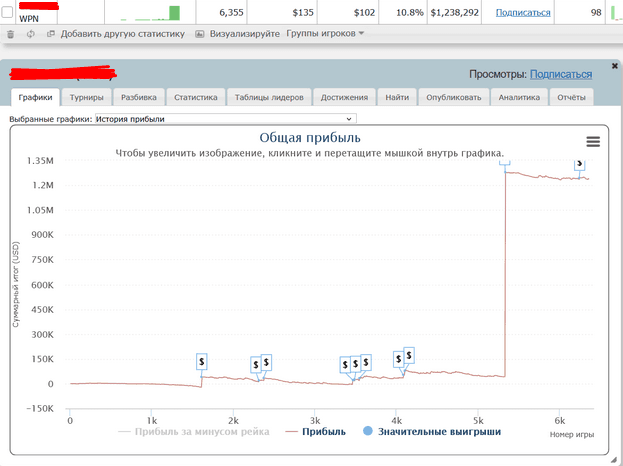
SharkScope graphs and statistics provide good food for thought. However, sometimes even income above $1,000,000 isn't convincing proof of a player's abilities
Direct questions will also help you vet a coach. Here are a few examples:
What stake are you currently playing. Many stars of the past can't "keep up" with the level of modern poker. The 2010 WCOOP winner might be playing mid stakes at a loss in 2026. Some coaches have even ended their careers but offer poker teaching services. Give preference to practicing coaches.
What does your graph look like over the past year. A SharkScope screenshot is a good way to assess a mentor's form. If they consistently lose over the long run and went into coaching out of desperation, it's better to choose another candidate. The graph will also indicate how many MTTs they've played. A monthly volume of 10–20 tournaments doesn't speak in a coach's favor. A minimal volume of play leads to the loss of skills.
How does a lesson go. The format of the learning process determines a student's progress. The more effectively a mentor presents information, the faster a player implements it. Top coaches test different teaching methods and choose the option best suited to the student. Bad mentors use the same methodology and don't adapt it to the client.
How many students do you have. A coach's workload indicates their popularity. However, a large number of clients can't be considered an unambiguous plus. A packed schedule leaves less time to find the optimal learning system for each student. Lesson preparation suffers too. Often a coach doesn't have enough time to answer a client's questions outside the lesson.
If you want to do your "homework" perfectly, we recommend finding a few of a potential coach's students and tracking their progress. SharkScope or a player's blog will provide useful information. Use client reviews as a starting point. Enter the nickname into the search bar on a forum or in a statistics service.

Signs of a scammer or an incompetent coach
Some of a coach's answers and actions will indicate low qualifications. Don't hire a coach if they:
Guarantees wins or an average income. A lot in poker depends on variance. That's why a sensible specialist won't promise a student a quick triumph at WCOOP or in the MILLION$. A coach can guarantee that the client will study specific topics and be able to apply the skills in the game.
Hides their current graph. SharkScope statistics are an effective way to assess a player's skills. Most professional coaches publish their graph to confirm a high level of skill. A qualified specialist will send a SharkScope screenshot in response to a request. A weak coach will talk about confidentiality or the service's data being unreliable.
Asks for money upfront. An hour-long lesson with a not-so-popular poker coach costs $15–$20. A training course will run a few hundred dollars. A demand to pay the full amount in advance is a reason to be wary. Experienced mentors offer a trial lesson with a one-time payment. If the teaching style doesn't suit you, the student pays for 1 lesson and finds another coach.
Works anonymously. Avoid coaches without: threads on popular forums, a personal journal, recognition in the poker community, and student reviews. A qualified poker teacher doesn't hide their successes — they promote their brand.
Hides their teaching methodology. A real coach explains the learning process in detail. The client knows in advance how a lesson will go. A scammer prefers generalized wording and avoids specifics. Often a lesson description is accompanied by the words: exclusive, unique, secret.
Plays the wrong stakes. A coach with an ABI of $20 won't teach you to win $100 tournaments. What's the point of taking a course with a mentor if they haven't brought themselves to a high level? We'll set aside extreme cases involving the loss of a bankroll and a forced drop down the stakes.
Uses marketing tricks. Serious specialists rarely lower the price of lessons. They don't resort to manipulations like "buy the course today because it'll be more expensive tomorrow" or "only 2 spots left."

Experienced coaches don't give guarantees because they can't control variance
Let's also mention the obvious signals. A large number of negative reviews or a coach's nickname on a forum "blacklist" is a compelling argument to look for an alternative.
Alternative ways to learn
Lessons with a coach are the most effective but expensive way to learn. You can raise your game in other ways too. Among them: reading books, watching videos and streams, analyzing hands in software, discussing strategy with colleagues, enrolling in a poker school. Let's discuss them in more detail.
Books. They quickly become outdated but help you understand the basic principles of poker. They're great for getting acquainted with the rules and the math of hold'em. Works on psychology will form the right attitude toward the game and teach you to fight tilt. We covered the topic in more depth in "Top 5 poker books…".
Videos. Specialized courses let you study complex poker concepts. Authors create materials on: the red line, GTO, beating low stakes, planning a hand. A huge number of videos can be found on YouTube and other platforms. The FunFarm channel offers learning materials too.
Streams. Live broadcasts on Twitch give you the chance to follow the game and listen to the thoughts of top poker players. The best streamers don't just sit and click buttons but also answer viewers' questions.
Software. Modern players have hundreds of poker programs at their disposal. Trackers save hand histories and display a HUD during play, trainers sharpen push/fold, calculators help find and correct mistakes in hands, solvers teach balanced poker. We covered poker software in more detail in a guide.
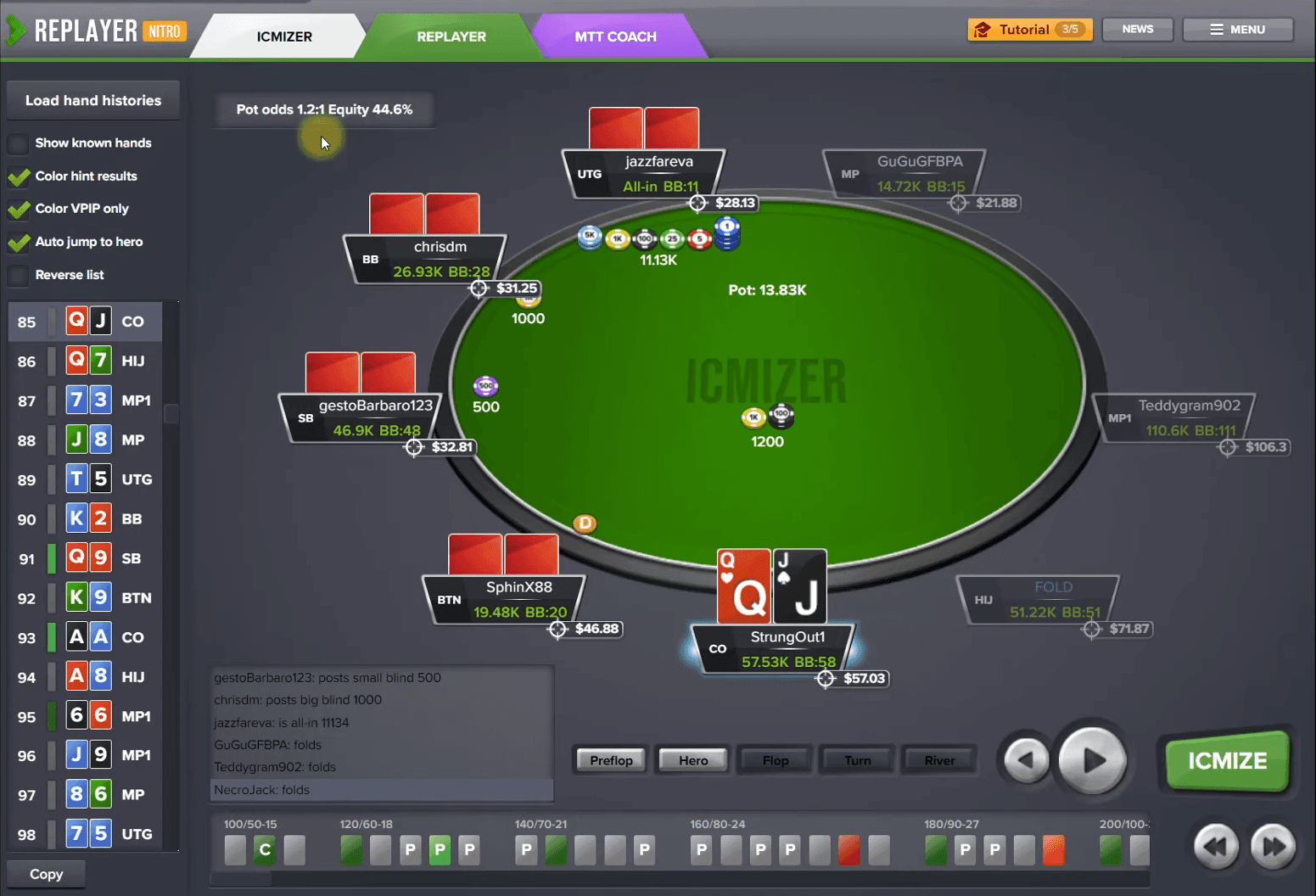
You can grow in poker on your own too, but the path takes more time
Discussion. Before finding a poker coach, study hands with other players. Many poker players create chats on Discord and Telegram. An outside opinion will simplify finding mistakes and let you look at a hand from a different angle. Some poker sites offer sections for hand evaluation. Use them to get an alternative opinion.
A poker school. Funds also provide poker training with coaches. They teach you to play in exchange for a share of future income. To become a participant, you need to pass a selection. Schools don't take beginners. For example, the ticket into the Player Path is successfully passing the exam at the end of the FF Start course. Fund students receive not only free training but also a range of privileges: free software, a bankroll to play higher stakes, consultations with a psychologist, the chance to enter a salaried project.

Free course · FF Start
Turn interest into practice
Get a foundation that helps you consciously choose your format, tools and next step.
Frequently asked questions
Read next

Healthy sleep for poker players: how to fix your routine

Brain Food for Poker Players: The Top Foods to Sharpen Focus and Cognitive Performance

Sports for Poker Players: Best Picks for Focus