Healthy sleep for poker players: how to fix your routine
How to stay focused and avoid tilting from fatigue, even if you play at night.

Ilya is a Liga 2 player with six years of experience in online MTTs. He graduated from the Faculty of Journalism at RSUH and writes about poker for beginners, explaining complex things in simple, clear language. In his texts, Ilya combines his personal playing experience with his professional journalism skills to help newcomers confidently get into the game.
Many poker players run into the same problem: the session starts in the evening and finishes well past midnight. If the tournament day is going well, play can carry on until five, six or seven in the morning. After that the brain stays in working mode for a long while: hands, mistakes, bad beats and late-stage decisions keep replaying in your head.
*A bad beat (from the English "bad beat" — an unlucky loss, also called a "crash" in slang) is a situation in poker where a player holding a clearly stronger hand loses the pot because an opponent hits a stronger combination on the later streets.
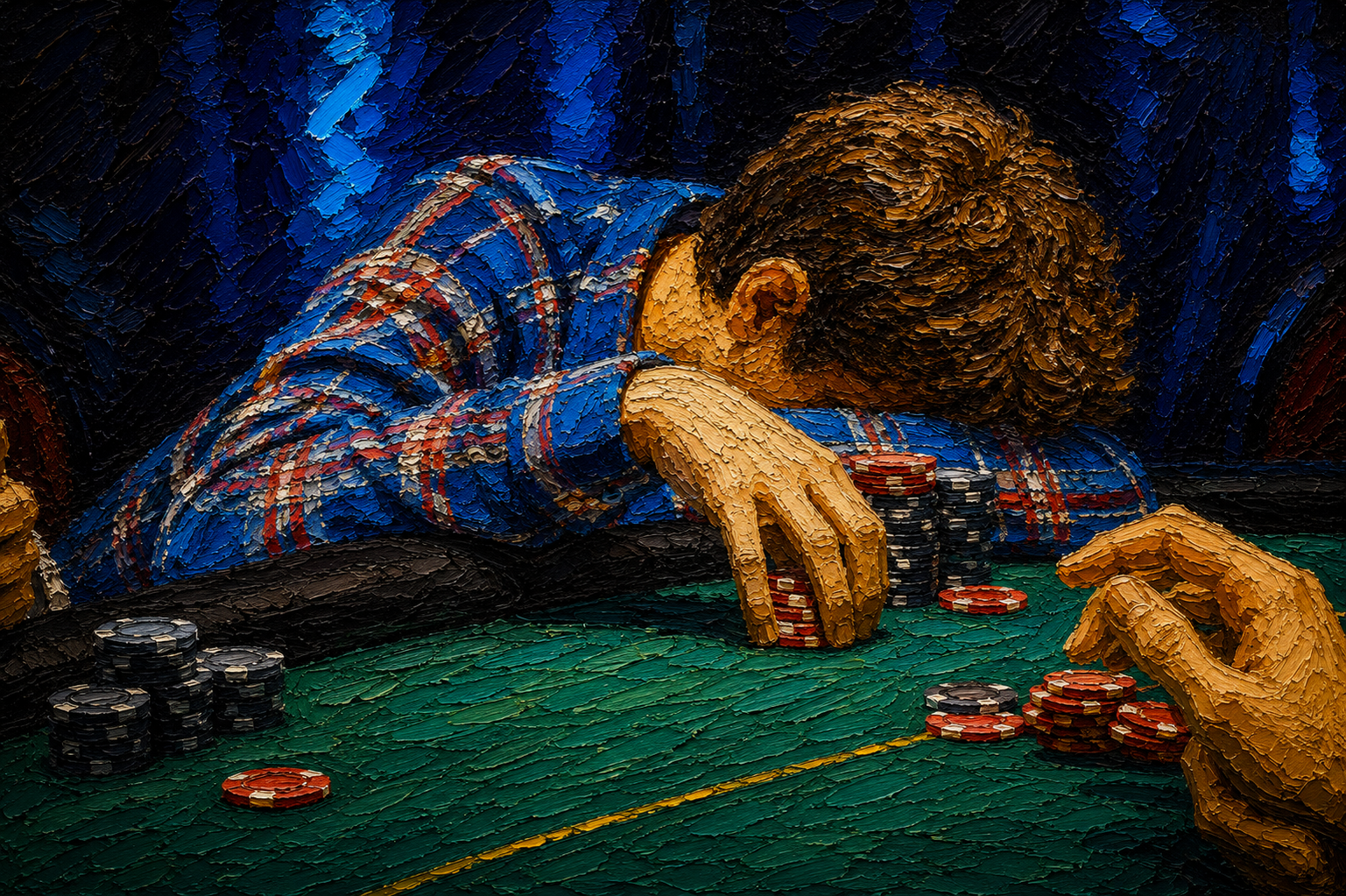
The next day it feels as though all you need is a longer lie-in, a coffee and you can sit down at the tables again. In practice, though, sleep deprivation quickly starts to show up in your game. Concentrating becomes harder, counting ranges takes more effort, irritation sets in faster, and decisions are increasingly made on autopilot.
For a poker player, sleep is a working resource that determines your ability to hold your attention, control your emotions and make quality decisions over the long run. You can't control the cards or your opponents' actions, but you can control your own state before a session.
In this article we'll look at why sleep deprivation has such a strong impact on your game, how much sleep you need, how circadian rhythms work and what to do if most of your poker sessions take place at night.

New breakdowns in your inbox
Subscribe to the FunFarm newsletter: fresh Poker ABC articles and material that helps you grow as a player.
Key facts about healthy sleep for a poker player
Healthy sleep directly affects the quality of your poker decisions.
Sleep deprivation reduces concentration, memory, emotional control and resistance to tilt.
An adult usually needs 7–9 hours of sleep.
For poker players with night sessions, what often matters is not just duration but a consistent routine — the same sleep times, light hygiene, caffeine control and recovery after long playing days.
*Tilt is an emotional or psychological state in which a player loses self-control and starts deviating from their optimal strategy because of frustration, anger, stress or even excessive joy.
We examined the problem of tilt in the poker world in more detail in this article. Head over, read it and strengthen your mental state.
Why sleep deprivation hits your game harder than you think
Poker demands more than just strategic knowledge. During a long session a player is constantly processing information: stack sizes, positions, ranges, bet sizes, table dynamics, opponents' actions and their own emotional state.
When you don't get enough sleep, it is precisely this set of skills that suffers first. A tired brain holds attention less well. A player more often misses important details: an unusual bet size, a change in timing, the stack behind them, the payout structure in a tournament. On its own such a mistake may seem minor, but over a 6–10 hour session they add up.
Sleep deprivation also worsens memory and the speed at which you process information. It becomes harder to remember how an opponent played a similar spot earlier, which lines they chose on the river, how often they defended their blinds or fired a continuation bet. As a result, decisions start being made not on the basis of observations but on a general feeling.
Another important factor is emotional regulation. Poker constantly creates situations where you need to stay calm: coolers, bad beats, long stretches without good hands, unsuccessful final tables. If a player hasn't had enough sleep, their ability to control their reaction drops. Where in a normal state they would calmly click fold or close the table, after a lack of sleep the urge appears to "win it back" or to prove that the opponent's decision was bad.
*A cooler (from the English "cooler" — a fridge, something that "cools your enthusiasm") is a situation in a hand where two or more players are dealt very strong holdings and none of them has any objective grounds for folding.
This is exactly why fatigue often masquerades as strategic errors. The player thinks they are playing badly, when in fact the problem started earlier — they sat down to play in a state in which making quality decisions is problematic.
When we regularly start sessions feeling less than our best, other psychological symptoms appear too — boredom and a reluctance to continue the session, for example. We discussed this in more detail in this article.
How much sleep you need and what circadian rhythms are
Most adults need 7–9 hours of sleep a day. That isn't a hard-and-fast figure for everyone, but it's a good benchmark. For one person seven hours really is enough, while another needs closer to nine to concentrate properly.
For a poker player it's important to look not only at the quantity of sleep but also at its quality. Eight hours in a noisy, bright room after a night session may leave you less recovered than seven hours in darkness, quiet and a consistent routine.
Sleep and wakefulness are governed by circadian rhythms — the body's internal biological clock. They help the body understand when to be active and when to prepare for rest. They're strongly influenced by light: in the morning it helps you wake up, while in the evening and at night excess light interferes with melatonin production.
The problem with night sessions is that they often go against the body's natural schedule. When it's dark outside, the body gradually prepares for sleep, while at that same moment a poker player has to make complex decisions, keep track of tables and maintain concentration.
Sleep consists of cycles of roughly 90 minutes. During the night, the body passes through different phases: lighter sleep, deep sleep and REM sleep. If you wake up at the wrong moment, even after enough hours you can feel heavy and worn out. That's why for many players it's better to plan sleep in blocks close to 7.5 or 9 hours, rather than setting an alarm for a random time.
It's also important to understand that "catching up" on sleep over the weekend doesn't fully solve the problem. If a player has slept five hours a night all week and then spends one day in bed until noon, part of the tiredness will indeed go away. But circadian rhythms and the quality of concentration won't recover instantly. Moreover, a sharp change in sleep timing can actually increase the feeling of being worn out.
Learning at FunFarm, from any level
Night sessions and a disrupted schedule
Poker is different from a regular night shift. A shift worker usually has a clear start and end time. For a poker player it's more complicated: a session might end after 6 hours, or it might stretch to 10–12 hours if the player runs deep in tournaments.
This is especially true for MTT players. They often play at least 5 days a week, with each session lasting 6+ hours. With such a schedule, sleep can't be treated as random recovery between playing days. Sleep becomes part of the professional schedule.
The main mistake is trying to live in two schedules at once. For example, playing until morning all week, then suddenly going to bed at midnight and getting up early on weekends. For the body, this is similar to constant flights across time zones. This state is called social jet lag: formally the person is at home, but their internal clock keeps getting disrupted.
If night sessions are a constant part of your game, it's better to choose a stable, shifted schedule. For example, if most playing days end around 5:00, it makes more sense to go to bed around 6:00 and wake up at 13:30–14:00. This kind of schedule isn't ideal from a biological standpoint, but it's much better than the chaos of your sleep time shifting by several hours every day.
For a player who grinds 5–6 days a week, stability matters more than trying to "live normally" on the occasional day off. Deviations of 1–2 hours are acceptable, but sharp swings break the adaptation.
*Grinding is a systematic, prolonged and intensive style of play aimed at generating stable income through high volume.
How to fix your sleep schedule with night sessions
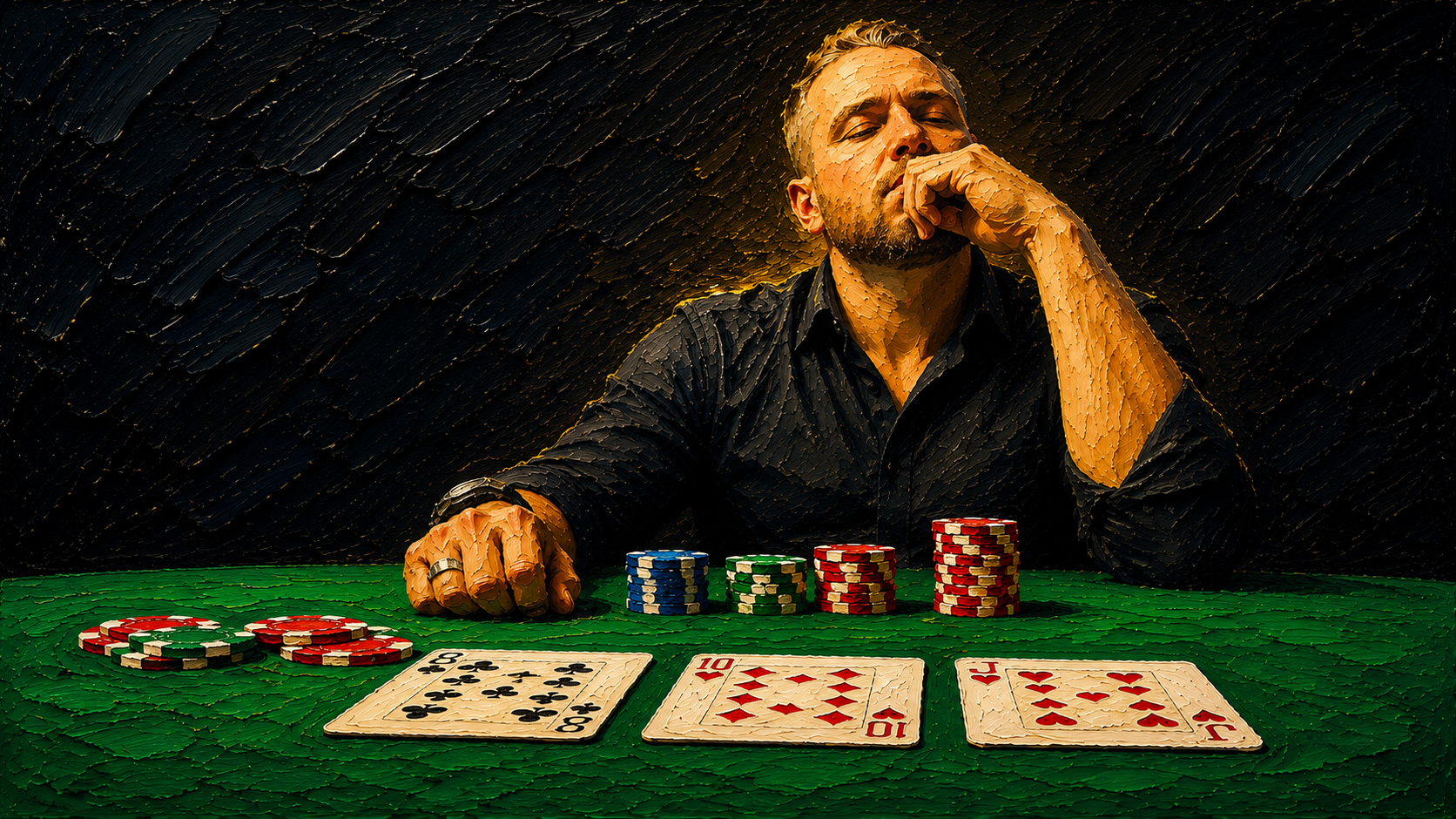
1. Choose a fixed sleep window
The first step is to determine a realistic bedtime and wake-up time. Not the one that looks ideal on paper, but the one that matches your actual playing schedule. If you regularly finish sessions at 4:00–5:00, planning to sleep from 1:00 to 9:00 makes no sense. Such a schedule will constantly fall apart. It's far more practical to build your routine around the actual time your play ends.
For example:
play until 4:30
30–60 minutes to wind down after the session
sleep from 5:30–6:00 to 13:30–14:00
bright light and activity after waking up
preparation for the evening session
This kind of schedule doesn't turn night play into an ideal lifestyle, but it reduces the damage caused by constant swings.
2. Don't go to sleep straight after playing
After a long session, the brain needs time to come out of game mode. Especially if there were big pots, final stages of tournaments, or emotionally tough hands.
That's why it's useful to have a short end-of-day ritual after a session. Don't review your database, don't look at your graph, don't discuss beats in chats and don't open one more table "just to relax".
It's better to do simple things: close the client, jot down 1–2 hands for future analysis, take a shower, dim the lights, air out the room. This kind of ritual signals to the brain that the playing part of the day is over.
3. Set up light hygiene
Light is one of the main regulators of sleep. If you go to bed in the morning, the body receives a conflicting signal: it's light outside, so it must be time to be awake. That's why daytime sleep needs to be protected just as seriously as nighttime sleep.
The room should be as dark as possible. Blackout curtains, a sleep mask, turning off device indicator lights, and avoiding bright light before bed all help. If it's already dawn by the time you finish your session and you're heading home or going outside, sunglasses can help reduce your exposure to light.
After waking up, the logic is reversed. You need to signal to the body that "day" has begun. Bright natural light or powerful artificial lighting works well for this. If you wake up during the day, try to spend the first 20–30 minutes not in dim light, but under good lighting.
4. Watch your caffeine intake
Caffeine can help at the start of a session, but it easily disrupts sleep afterwards. Its effect can last many hours, so a cup of coffee at the end of a night tournament often makes it hard to fall asleep even after the game is over.
A practical rule for a poker player: the last significant dose of caffeine should be at least 8–10 hours before your planned sleep time. If you plan to go to bed at 6:00, it's best to stop caffeine around 20:00–22:00. Later on, you can use water, a light stretch, fresh air, washing your face with cold water, or short breaks between tournaments.
5. Take a nap before your session
If your main session lasts 6–10 hours, a short nap before playing can be a useful tool. The optimal format is 20–30 minutes. A longer nap of 1.5–2 hours is also possible, but it needs to be planned carefully. It works better on days after a particularly hard night or before a long Sunday session. If you sleep too long and too late, you risk disrupting your main sleep after the game.
6. Watch what you eat during a night session
Heavy food at night worsens how you feel and how you sleep. The body isn't set up for active digestion late at night, so fatty food, fast food, and large amounts of sweets can increase drowsiness, heaviness, and irritability.
It's better to prepare light food in advance: protein foods, vegetables, porridge, yoghurt, nuts, fruit. This reduces the risk of impulsive snacking during tilt or fatigue.
It's also important to drink water. Dehydration increases fatigue and reduces concentration, but you shouldn't drink too much right before bed, so you don't wake up several times.
7. Turn your bedroom into a recovery tool
Sleep quality depends on conditions. For daytime sleep, darkness, quiet, and coolness are especially important. The optimal room temperature is often in the range of 18–20 °C. It's worth airing the room before sleep. If it's noisy at home, you can use earplugs or white noise. If light gets into the room, it's better to fix the problem with curtains rather than hoping your body will get used to it.
Poker players often invest in their computer, monitors, software, and training, but ignore the place where they recover. Good sleep is just as much an investment in the quality of your play as hand reviews or working with a coach.

Example routine for an MTT player with night sessions
Imagine a player who plays 5 days a week. The session starts at 20:00 and usually lasts until 4:00–5:00. On Sundays, longer tournaments are possible.
Example of a stable routine:
13:30 — wake up
14:00 — bright light, food, light activity
15:00–17:00 — theory, hand reviews, everyday tasks
18:00 — preparing for the session
19:30 — short ritual to get into the game
20:00–4:30 — session
4:30–5:15 — shower, pre-sleep rituals
5:30–13:30 — sleep
This routine isn't universal. It needs to be adapted to the tournament schedule and your personal body rhythms. But the principle stays the same: the more often you play at night, the more important a stable sleep window becomes.
Sometimes a session might end not at 4:30, but at 7:00 or later. The main mistake is to completely break your routine after such a day. It's better to keep the general framework. If you usually sleep until 13:30, after a very long night you can sleep longer, but don't drift into uncontrolled sleep until the evening. Otherwise, the next night will become a problem again.
If you didn't get much sleep, you can add a short nap before your next session. But if you feel very tired, it's better to reduce your workload or skip some of the tournaments. Sometimes the most profitable choice is not to sit down to play in a state where the probability of mistakes is already too high.
Conclusion
Sleep doesn't guarantee a winning session. But it increases the likelihood that you'll play closer to your true level. In poker, that's already a big advantage.
And if you apply to join FunFarm, we'll help you make technically correct decisions in an optimal physical and psychological state on a regular basis.
Free course · FF Start
Fundamentals first, solvers second
Understand the principles of the game so you use software as a tool, not as a source of ready-made answers.
Frequently asked questions
Read next

Brain Food for Poker Players: The Top Foods to Sharpen Focus and Cognitive Performance

Sports for Poker Players: Best Picks for Focus
Card Sharps in Poker: Famous Names and Their Main Tricks