Card Sharps in Poker: Famous Names and Their Main Tricks
We'll discuss card cheats of the past and present, and the methods used to combat them.
Ilya is a Liga 2 player with six years of experience in online MTTs. He graduated from the Faculty of Journalism at RSUH and writes about poker for beginners, explaining complex things in simple, clear language. In his texts, Ilya combines his personal playing experience with his professional journalism skills to help newcomers confidently get into the game.
To earn money consistently at poker, you need a high level of skill. Hundreds of hours of training and practice will give you an edge over your opponents. However, not everyone is ready to work on themselves systematically. Many players choose an easier, dishonest path. Let's talk about card cheats of the past and present, and the methods of fighting them.

New breakdowns in your inbox
Subscribe to the FunFarm newsletter: fresh Poker ABC articles and material that helps you grow as a player.
Key facts about poker cheats
A cheat is a professional swindler in the world of card games. They earn money by deceiving their opponents.
Cheating techniques include: marking the deck, false shuffling, collusion with other players, and using technical devices.
The golden age in the history of cheating was the mid-19th century. Cheats made the most money on the Mississippi steamboats, in the saloons of the Wild West, and in European casinos.
The history of cheating includes: George Devol, Canada Bill Jones, Doc Holliday, and Wyatt Earp.
Card cheats haven't disappeared in the era of online poker either. Among modern players, the following have earned a bad reputation: Russell Hamilton, Michael Postle, Ali Imsirovic, Bryn Kenney, and Phil Ivey.
21st-century cheats use: bots, RTA, ghosting, multi-accounting, chip dumping, and superusers.
Who card cheats are
A cheat is a professional swindler in card games. They earn money through sleight of hand, technical devices, and collusion with accomplices. For example, they mark the backs of cards in advance to know their opponent's hand and manipulate the further course of the play. The Russian word "шулер" came from Poland in the mid-18th century. The Polish "szuler" has its roots in the German card game "scholler".
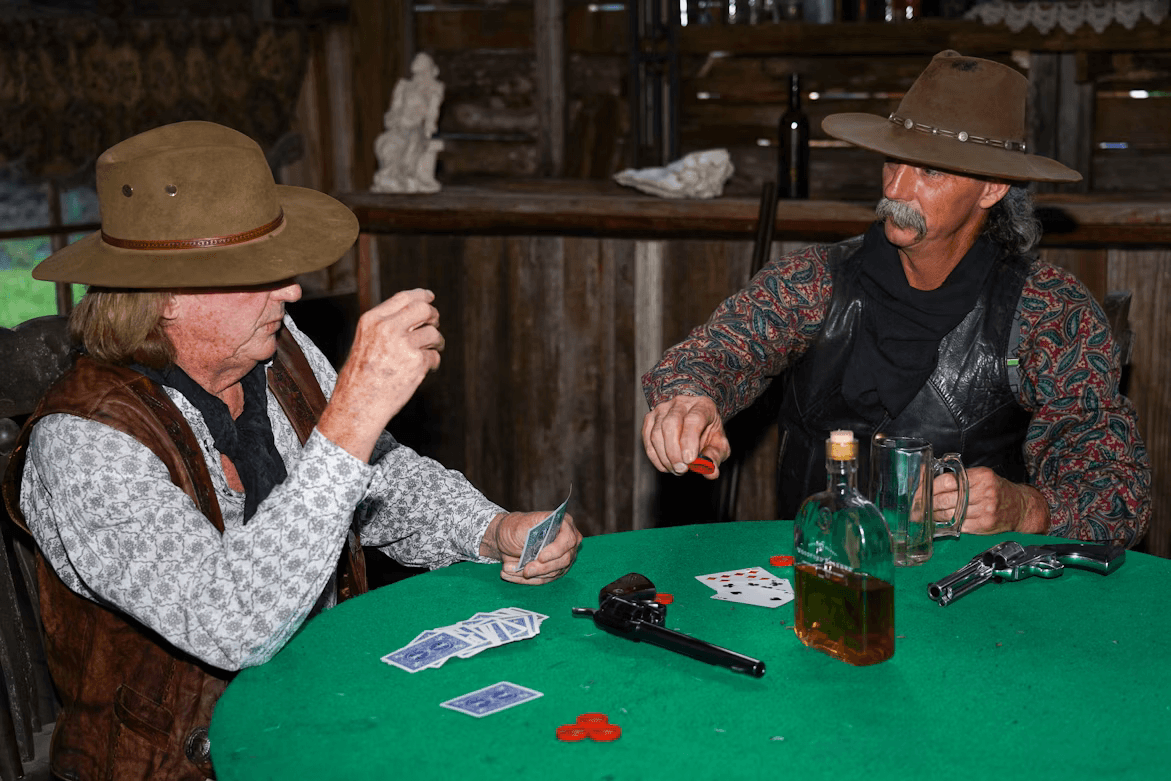
Two hundred years ago, a cheat could be shot at the poker table. Today, a cheat's winnings are confiscated, and their name is added to a blacklist
An ordinary player gains an edge through constant self-improvement. A cheat relies on banned techniques. If a poker player accidentally sees an opponent's card and uses the information to their advantage, they don't become a cheat. A true swindler systematically breaks the rules and gains an unfair advantage. For example, they buy or make infrared glasses to see through the deck.
The legislation of most countries in the world equates cheats with fraudsters. If a swindler is caught during a game, the security service:
confiscates the winnings;
escorts the offender out of the establishment;
adds their name to a blacklist and bars them from entering the casino.
In the case of a serious violation, the establishment's staff call the police and hand the fraudster over to them.
In online poker, swindlers are punished more leniently. Usually, poker rooms block the account and confiscate the bankroll. It doesn't go as far as fines and prison sentences.
The era of the Mississippi steamboats (1830s–1880s): the golden age of American cheats
In the 19th century, steamboats played a big role in communication between cities. River transport connected the largest settlements in the USA: St. Louis, Memphis, and New Orleans. Wealthy Americans traveled on the steamboats: cotton plantation owners, merchants, freight carriers, and adventurers. Card games became a popular form of leisure during the voyage.
Steamboat passengers played: five-card poker, faro, euchre, and blackjack. The card tables ran around the clock. Travelers were trapped — they physically couldn't leave the game for several days. Soon the closed communities of wealthy passengers attracted swindlers like George Devol and Bill Jones.
George Devol
Over 40 years of his "career", he won about $2,000,000. In 2026, his winnings, adjusted for inflation, would exceed $75,000,000. In 1839, ten-year-old George ran away from home and got a job on the steamboat "Wacousta" with a salary of $4 a month. While working, the boy watched the elegant professional players and decided to follow in their footsteps. By the age of 14, Devol could shuffle the deck in a few seconds; by 16, he had earned $2,700 during the Mexican–American War. The young cheat won the money from soldiers.

Wealthy passengers and the possibility of round-the-clock play attracted card cheats
George was famous for his cold pragmatism and indifference to his victims. He considered honest players "suckers" and had no problem taking his winnings in slaves. He "cashed out" the slaves at a price of $1,000 per person. By 1860, Devol's affairs went into decline. Two circumstances worked against the fraudster:
the Civil War between the North and the South;
his recognizability.
As a result, George switched from steamboats to trains. "Doing business" in the railcars turned out to be harder. Finding victims on his own took more time and effort. Often the work didn't pay off, because wealthy people rarely traveled by rail. After ending his career, Devol wrote an autobiography, "Forty Years a Gambler on the Mississippi". It is considered the main printed source on the golden age of card cheats. George died in 1903. The famous cheat spent the last years of his life in poverty.
Canada Bill Jones
William "Canada Bill" Jones also entered the history of cheating. If George Devol was famous for his record income, Jones is remembered as a brilliant actor. Canada Bill magnificently played the role of a country bumpkin. He wore oversized clothes, spoke in a squeaky voice, and asked stupid questions. William created the impression of easy prey, which attracted players.
Jones was born in Yorkshire, England, but moved to Canada in 1860. Soon he made his way to the Mississippi and joined forces with George Devol. At the peak of his career, Canada Bill earned up to $150,000 a year. His biggest income came from the simplest game — three-card monte. Its essence:
the dealer shuffles 3 cards and offers to pick out the A♠️;
the cheat's accomplices take turns guessing and acting out easy wins;
the victim believes the fraudsters and joins the game;
the cheat hides the right card and takes the player's money.
Big earnings didn't save William from dying in poverty. Jones lost all his income from cheating in other card games.
How the golden age ended
The era of the Mississippi cheats was ended by the railroads. By the end of the 19th century, passengers abandoned steamboats in favor of trains. Rail transport pushed out its competitor. George Devol and other fraudsters switched to trains, but couldn't repeat their success. Rail transport didn't offer suitable conditions. The audience was different too: wealthy passengers rarely traveled by train. Let's not discount the consequences of the Civil War either. In the postwar years, the population rarely prospers.
The Wild West and saloons (1860–1900): cheating as part of the myth
Cards weren't only played on the Mississippi steamboats. In the 19th century, Americans were conquering the Wild West and moving toward the Pacific coast. In the process, settlers built new towns. The central role in a classic Wild West settlement belonged to the saloons. The establishment combined the features of a bar, a hotel, and a casino.

The gambling tables attracted: cowboys, soldiers, prospectors, trappers, and fraudsters
Saloon patrons preferred five-card poker, faro, and monte. Famous adventurers also played in the saloons: Doc Holliday, Wyatt Earp, and Bat Masterson.
Doc Holliday
Doc Holliday received a classical education and trained as a dentist. A successful medical career was prevented by a diagnosis: the young doctor was found to have tuberculosis. In the mid-19th century, they hadn't yet learned to treat the disease. In search of a dry and warm climate, Holliday moved west. He started earning a living by gambling. A sharp mind, an education, and the inability to work because of his illness made him an ideal professional card player.
Doc Holliday became friends with another poker enthusiast and historical figure — Wyatt Earp. In 1878, Holliday saved Earp's life in a shootout. Doc's image was regularly used in Westerns. The creators of one of the best-selling games in history — Red Dead Redemption 2 — were also inspired by him.
Wyatt Earp: a cheat with a sheriff's badge
Wyatt Earp lived a contradictory and long life. Official sources paint the image of a legendary sheriff and gunman. In the real world, Wyatt played cards professionally, owned saloons, and had a controversial reputation. He knew the subtleties of the games superbly and often acted as a croupier and organizer. The most famous episode of Earp's life is the gunfight at the O.K. Corral. Movies romanticize the fight, but in reality the clash with the Clanton clan resembled a classic ambush.
Painting a bright image of Wyatt is hindered by his dark deeds at the card table. The sheriff regularly manipulated the deck when playing faro. He was arrested for cheating in Los Angeles. His role as a saloon owner and game organizer allowed Earp to regularly earn money by dubious methods. Wyatt died at the age of 81. Unlike most of his colleagues in the trade, he ended his life a wealthy man.
Bat Masterson: from gunman to New York journalist
Bat Masterson managed to be: a buffalo hunter, an army scout, a sheriff, and a sports journalist. Poker held a special place in his résumé. Masterson adhered to a code of honor and tried to remain an honest man. A rare quality for a resident of the Wild West.
Bat also earned a living from gambling. He was considered an expert in poker and faro. At the table, Masterson didn't stray from his code of honor and didn't use cheating techniques. The only dubious episode of his gambling career occurred in 1902. Bat was accused of organizing a crooked game and was arrested in New York. The charges were later dropped, because the plaintiff left the city and didn't appear in court.
Execution for collusion in poker
In modern casinos, cheats are escorted out of the establishment and put on a blacklist. In the Wild West, different principles of justice operated. If a swindler was caught with a marked deck or with cards up his sleeve, he could be hanged right there in the saloon. That's why the path of the fraudster was chosen by the bravest, most desperate, or most foolish people of their time. Some players met their death at the poker table even without breaking the rules.
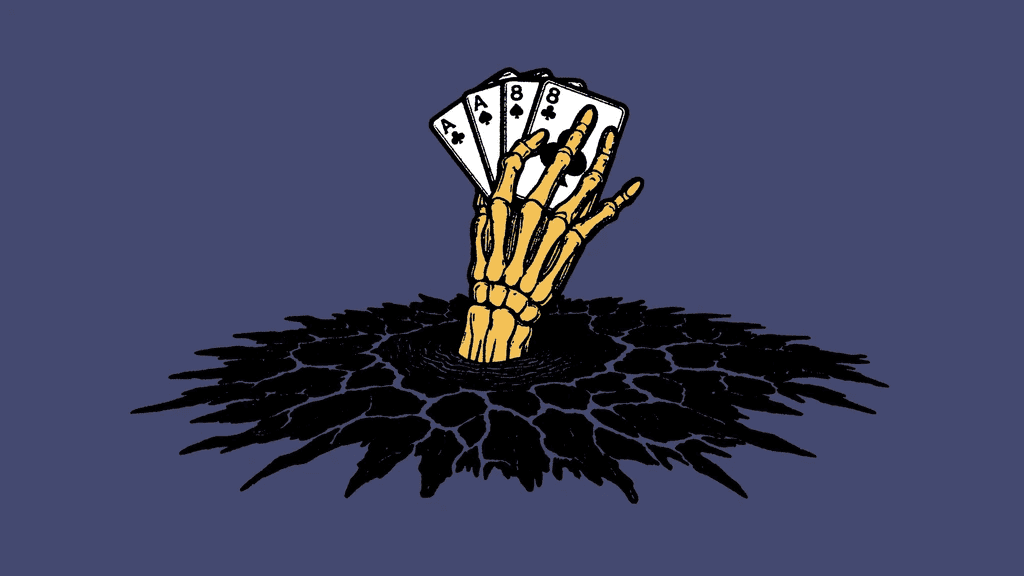
James "Wild Bill" Hickok was shot in the middle of a hand. The story of his death formed the myth of the "dead man's hand"
Learning at FunFarm, from any level
The Old World — European casinos and aristocratic cheats of the 19th century
In Europe, they preferred baccarat and other card games. The cheats were also different from the American ones. In the "Old World", gambling entertainment attracted rich people and aristocrats. If a player was caught cheating, he wasn't hanged in the casino, but challenged to a duel. A cheat was considered not just an offender, but a criminal and a destroyer of the social order.
Three centers competed for the title of gambling capital:
Baden-Baden. It flourished after casinos were banned in France. Leo Tolstoy and Fyodor Dostoevsky played at the tables of the local establishments.
Monte Carlo. The gambling capital of the world in the 19th century. The annual revenue from the casino allowed the principality to abolish direct taxes for its citizens.
Homburg. The first project of François Blanc — the famous architect and gambling organizer. The German town attracted the international elite. Blanc's success in Homburg secured him an invitation to Monte Carlo, where he became world-famous.
The most high-profile cheating story at a card table occurred in 1890 in Great Britain.
The Prince of Wales case
In September 1890, Lieutenant Colonel of the Life Guards Sir William Gordon-Cumming was accused of cheating during a game of baccarat. Next to the soldier was his longtime friend and the future King Edward VII. To avoid public disgrace, William was forced to sign a document. In it, he swore never to play cards again in exchange for the silence of those present. However, the truth came out, and the officer sued for libel. The Prince of Wales also testified. For the first time in 500 years, an heir to the British throne was summoned as a witness in court.
The court found Sir William guilty. He was expelled from the army and excluded from high society. The fraudster wasn't lynched on the spot, but the outcome can hardly be called pleasant.
Cheats of the Russian Empire
Gambling also flourished in the Russian Empire. All of Russia's monarchs fought against cards. Every ruler of the Empire issued a decree banning gambling. The first to speak out against cards was Tsar Alexei Mikhailovich. In the Sobornoye Ulozheniye of 1649, gambling was declared a grave crime. Offenders were branded with hot iron. Later, card games were banned by: Peter I, Catherine II, Alexander I, and Nicholas I. However, no one managed to defeat gambling entertainment.
Among the card cheats of the Russian Empire, we note:
Baron Gerambo. He became famous during the reign of Catherine II. The fraudster dressed flamboyantly, wrote poetry in Latin, and rode around on dogs. In the records of his contemporaries, Baron Gerambo was described as the most skillful cheat. His opponents lost "down to their last shirt".
The Zanovich brothers. They began their cheating "career" in Europe. In 1770, the brothers met a wealthy Englishman and invited him to play cards. As a result, he lost about 90,000 pounds to the swindlers. Later they moved to Venice, but soon ended up in prison. After escaping, they headed to Russia. In the Empire, the Zanoviches engaged in card scams, but are better remembered for forging 700,000 rubles.
Full-fledged communities of fraudsters also operated in Russia. For example, Nikolai Vasilyevich Gogol wrote the play "The Gamblers" based on a real story of card cheats.
What cheating techniques were used in the past
To make money, fraudsters acted inventively. They used: special deck-shuffling techniques, marked cards, mechanical devices, and collusion with other participants. Let's examine the techniques separately.

Sleight of hand is the most important skill for a card cheat. However, fraudsters also adopted the achievements of science
Marking. The oldest and most widespread method of deception. The cheat would put inconspicuous marks on the back of the card. They allowed him to determine its rank and suit. There were many variations:
Pinprick marks. Microscopic markings on the margins of the back. Visible only against the light or at a certain angle.
Embossed marks. Pressing into the card paper with a fingernail or a special tool. An experienced swindler could feel the tiny dent during the shuffle.
In the 20th century, the technique evolved thanks to ultraviolet marks. Special lighting allowed them to be seen. The ordinary eye couldn't detect the ink. Later, the toolkit was expanded with contact lenses. They made it possible to see the marks without additional equipment.
False shuffling. The cheat creates the appearance of shuffling the cards. In reality, the fraudster preserves the sequence of ranks he needs in the deck. From the outside, the false shuffle raises no doubts: the cards fly out impressively in a fan and snap on the table. Among manipulations with the deck, we'll include the techniques:
Second from the top. The dealer subtly deals the player not the top card, but the second one. He keeps the first for himself.
Bottom dealing. The dealer takes a card from the bottom of the deck. This action allows him to steer the hand according to a pre-planned scenario.
Holdout. A mechanical device for cheating at the card table. The holdout was attached to the sleeve or to a belt under the vest. A system of springs, levers, and clamps allowed a card to be retrieved at the right moment. For example, a player at a draw poker table caught four heart cards. To complete a flush, a fifth is needed. The holdout made it possible to obtain a winning hand. The first examples of "cybernetic prosthetics" for poker were described in the 1880s.
Palming. The technique of attaching a card to the palm. A card leaves the deck and appears at the right moment. The technique was often combined with false shuffling. The cheat secretly stole a card and later presented it at showdown. Palming was invented at the dawn of the 18th century.
Cooler. The cheat would prepare a "cold" deck in advance with the perfect card order for his win. At the right moment, he would swap out the honest deck. The technique worked perfectly in faro and baccarat, because the cards there aren't shuffled every round. The fraudster's rigged set gave him the strongest combination. However, the opponents also got top combinations. As a result, they believed in the strength of their hand and lost more.
Over time, the term "cooler" took on a new meaning. Today it refers to a situation where the participants in a hand have caught such good combinations that they can't leave the play. Example: AA against KK in a blind-vs-blind battle at an NL Holdem table.
How people cheat in online poker
Technological progress has made life harder for fraudsters in casinos. In gambling establishments, the actions of patrons are watched by hundreds of cameras and dozens of security staff. The decks at the table are shuffled by shuffle machines. Casinos have established information sharing and maintain joint "blacklists". However, technological progress led to the emergence of online poker. Card cheats didn't pass by the new direction. Let's examine the most popular techniques of fraudsters.
Collusion. Team play contradicts the rules of poker. However, players regularly try to cheat the system. Poker players take seats at the same table and share information about their hands with each other. The extra data gives them an edge. For example, in September 2021, GGPoker blocked the accounts of Ali Imsirovic and Jake Schindler for collusion. The affected players were paid compensation of $1,160,000.

Every year about 100 tournaments are held at the WSOP, so a bracelet won't surprise anyone. Unlike a blatantly rigged match on a live stream
Sometimes scandals arise at live tournaments too. The most striking example is the heads-up at WSOP 2025 between Yaginuma and Carroll. For winning the bracelet tournament, Yaginuma could have received a bonus of $1,000,000. At the start, Carroll had 9 times more chips than his opponent. However, he squandered his lead with strange limps and folds. In the end, Yaginuma won, but the organizers conducted an investigation and voided the tournament results.
The players weren't officially accused of cheating, but both were given a lifetime ban from the WSOP and Caesars casinos. Many industry publications recognized the duel between Yaginuma and Carroll as the most brazen collusion in poker history.
Multi-accounting. One user creates several accounts and plays them simultaneously. Breaking this rule increases the chances of winning a tournament. The most high-profile multi-accounting scandal erupted in 2007. Back then, PokerStars disqualified the winner of the WCOOP main tournament under the nickname "TheV0id". The champion was stripped of the title and the $1,228,330 prize. Following the investigation, PS confirmed that TheV0id had played several accounts simultaneously.
Ghosting. A situation where a weak player reaches the final table of a major tournament and hands control over to a professional. Poker room rules prohibit ghosting. Only the account holder may play on a user's account. A well-known case of ghosting is the victory of Ivan Deyra in one of the Winamax Poker tournaments. In 2021, he won €78,000 on his father's account. The poker room ambassador grossly violated the platform's rules. Winamax Poker terminated its contract with the player.
Bots. The main threat of online poker. Algorithms that play under the guise of a human. Year by year, artificial intelligence plays stronger and stronger. Bot scandals flare up regularly. In 2026, Martin Zamani — a professional poker player — published a 30-second video. The clip shows a room with 25 computers. A bot is installed on each one. A full-fledged bot farm plays around the clock at the tables of Ignition Poker. In January 2024, TylerRM published a large-scale investigation. In it, the player talked about a network of bots in Winning Poker tournaments.
RTA. A new danger was created by solvers. GTO Wizard and other programs provide play recommendations in real time online. Cheats manage to input the details of a hand and get advice during the play. On charges of playing with Real-time assistance, GGPoker blocked the account of Bryn Kenney and forty other players. Kenney is a poker legend and the leader of the world ranking by career winnings. As of June 2026, he had won $85,234,888. To block such a well-known player and former brand ambassador, you need convincing arguments.

Ali Imsirovic went from the best tournament player of the year to one of the main cheats in poker
Superusers. To improve the quality of the software and fix bugs, developers create service accounts. Some administrator accounts provide the ability to see players' hole cards. Not all developers avoided the temptation to use the advantage in their own interests.
In 2008, UltimateBet players noticed the anomalous results of several opponents. Particularly impressive success was shown by a user with the nickname NioNio. The poker player won over $600,000 in 64 hours. NioNio often made surprising decisions. It was as if he knew his opponents' hands. At first, the room's management denied the superusers, but later acknowledged the problem. The brand paid a fine of $1,500,000. In total, 23 accounts were used in the fraud scheme. Such a large-scale cheating story caused a mass exodus of players. Soon the room ceased operations.
GGPoker showed an example of a quick response to fraudsters. In December 2023, a post was published on the 2+2 forum where a user suspected the player MoneyTaker69 of cheating. The reason was the poker player's anomalously high winrate with stats of 53/17. The room conducted an investigation and confirmed the hypothesis. MoneyTaker69 had found a vulnerability in the software and knew his chances of winning at any moment of the hand. GGPoker blocked the user, confiscated his bankroll, and distributed the money to those affected.
Top 5 famous cheats of the poker era
George Devol and Bill Jones are recognized as the greatest card cheats of the 19th century. However, outstanding cheats can be found in modern history too. Among them: Russell Hamilton, Michael Postle, Ali Imsirovic, Bryn Kenney, and Phil Ivey.
Russell Hamilton. WSOP 1994 ME champion, UltimateBet consultant, and the "brain" of the superuser operation. Under his leadership, the developers created accounts with "extended" capabilities. He personally used holes in UB's security to make money. Hamilton didn't go to prison — the fraudster was saved by the semi-legal status of online poker in the USA.
Michael Postle. A mediocre professional showed fantastic results in one specific place — the Stones casino. The peak of Michael's career was folding pocket kings preflop in a situation where one opponent limped and the second isolated him. Postle seemed to know that the aggressor had AA. What worked against Michael was that he folded KK on a live stream. The paradoxical fold attracted the attention of viewers, and they analyzed the recordings of all the broadcasts featuring Michael. Before difficult decisions, Postle would tilt his head and look at the left pocket of his pants. Later, the player filed a libel lawsuit for $330,000,000, but the court rejected it.

Serious accusations were leveled against Kenney, but the player avoided the consequences and continued his poker career
Ali Imsirovic. The rising star of poker collected a royal flush of accusations. In 2022, Ali was suspected of: multi-accounting, ghosting, using Real-Time Assistance, and collusion. GGPoker was the first to react. The room banned Imsirovic and confiscated a bankroll of $320,000. Soon bans followed from the organizers of live festivals and casino owners. He was permanently blocked in most rooms and on the leading live series. Together with Imsirovic, Jake Schindler — WSOP champion and holder of $36,000,000 in career winnings — also went down.
Bryn Kenney. In 2022, the player was accused of: collusion, multi-accounting, using RTA, and running a cult. The guilt was confirmed by Lauren Roberts — the owner of one of the accounts that Bryn played on. Publicly, Kenney admitted to minor violations, like advising his students at decisive stages of MTTs. The poker player wasn't put on any blacklists or barred from tournaments. The accusations tarnished his reputation but didn't kill Kenney's career. He continues to participate in expensive tournaments and lead in total winnings.

Real-Time Assistance is one of the main dangers of online poker. To counter it, rooms and solver developers join forces
Phil Ivey. One of the legends of poker and a ten-time WSOP bracelet holder took advantage of deck defects in baccarat. In 2012, Ivey won $22,000,000 at two casinos: Crockfords and Borgata. Phil's success was secured by his observation skills. The player noticed defects on the backs of the cards and used them to his advantage. Knowing the next cards gave Ivey a decisive edge. The casinos refused to pay and accused the poker legend of cheating. Years-long lawsuits began. In both cases, justice sided with Crockfords and Borgata.

How modern poker rooms and casinos protect the game
Casinos and poker rooms wage a fight against fraudsters. In land-based gambling establishments, cheats are countered by the security service. Casino staff are helped by hundreds of cameras. Surveillance devices are placed at every table. The human factor is eliminated by rotating dealers every 30 minutes and the procedure of "burning" the top card of the deck. To prevent theft, casinos are implementing RFID chips to track the chips. Since 2024, WSOP tournaments have used cameras with a 30-minute delay. Viewers see the hand, while players at the table can't gain an illegal advantage.

More often, online poker players suffer from the actions of fraudsters away from the tables. They have money stolen using phishing links and other methods of deception
Measures against card cheats are also applied in online poker. The key ones:
Built-in protection. The room's client scans the player's computer in search of prohibited programs or processes. For example, PokerStars forcibly closes Flopzilla when the room is launched. The client also tracks other factors, like an enabled VPN or mouse cursor movement. The system also analyzes related information. If a player usually deposits $50, but now deposits $5,000, the room will register a deviation from the pattern and check the transaction.
Regular reports. Some online poker brands don't emphasize the work of the security service. Such an approach creates the impression of inaction and provokes criticism. Many platforms choose the opposite policy and regularly publish reports on blocked accounts and confiscated funds. partypoker and PokerStars provide data more often than others. For example: in April 2025, partypoker blocked 291 accounts and seized $71,771.
Partnership with software developers. GTO Wizard and other solvers have simultaneously made players' lives harder and easier. Advanced software provided the opportunity to master a balanced strategy. It also gave an advantage to cheats. Fraudsters input the parameters of a hand and get recommendations on a live stream. To thwart the swindlers, rooms and solvers exchange information. In 2025, GTO Wizard helped block 31 cheats on GGPoker.
Collaboration with players. Many high-profile bot scandals were started by investigations by poker players. They studied the statistics, found anomalies, and published the information. Rooms reacted to the public outcry, conducted investigations, and took measures. For example, the superuser stories at UltimateBet and GGPoker started with players' suspicions.
Licensing authorities also monitor the safety of the game. The gambling commissions of Malta, Gibraltar, and Great Britain regularly conduct audits and publish the results. The state of the random number generator is monitored by independent companies. They analyze the operation of the RNG and issue certificates. For example, on the PokerKing website you can find an iTech Labs report.
How a player can protect themselves — 5 practical tips
To avoid fraudsters and keep your money, caution is needed. In live play: watch your chips and don't get distracted by your phone during a hand. Some players photograph their stacks after each level. Visual proof helps resolve a disputed situation in your favor. For online poker players, we recommend:
Choosing licensed rooms. Brands publish information about their documents at the bottom of the official website. Platforms list: the legal entity and license details. For example, RedStar Poker is owned by RSP Entertainment group and operates under the Curaçao license OGL/2024/168/0127. When choosing a place to play, consider the room's reputation. PokerStars, with 25 years in the industry, looks more reliable than Pinco Poker.
Not giving your account to other people. Room rules permit only the account holder to use the account. For violating the user agreement, the poker player's account is blocked, and the money is confiscated.
Not using prohibited software. If a brand doesn't allow playing with a tracker or hand converter, follow the platform's rules. Statistics give an edge, but it's not worth risking your bankroll. The same story applies to bots and RTA.
Paying attention to suspicious opponents. Noticed strange lines from an opponent? Keep an eye on them. Gather information about the dubious opponent and provide it to the room's security service. To increase the chances of success, publish your investigation on specialized resources. Proving ghosting or other collusion in poker is hard, but there's a chance.
Improving the security of your accounts. Use two-factor authentication and complex passwords. In this article, we examined how people cheat in poker, but most players lose money due to account hacking and personal data leaks. Don't create identical passwords for the room and your email.
Don't forget the general rules of cybersecurity either. Check the site's encryption and its domain name. Don't click on dubious links in Telegram and other messengers.
How to learn to play poker
Money in poker isn't brought only by cheating techniques. Top players earn millions of dollars through skill. Without training, you can't reach a high level of play. The following will help you study poker: books, videos, software, discussions with colleagues, and lessons with coaches. However, you can spend years searching for an effective training method. FunFarm allows you to save time and money.

Hone your theory on real situations in the trainer
The FF Start course is suitable for beginning players. Over 30 lessons, the student will build the foundation of future success. The basic program ends with an exam. We accept FF Start graduates onto the next tier — into FF Player Path. The advanced course gives you the opportunity to become a professional and reach a decent income level. By the end of the course, poker players overcome the microstakes and reach a monthly income of $1,200.

Free course · FF Start
Learn poker systematically
From the first rules to strategy, math and a clear development plan.
Frequently asked questions
Read next

Healthy sleep for poker players: how to fix your routine

Brain Food for Poker Players: The Top Foods to Sharpen Focus and Cognitive Performance

Sports for Poker Players: Best Picks for Focus