Steven Chidwick: biography, achievements, and playing style
Greatness in poker can be measured in different ways: titles, earnings, respect within the community. Stephen Chidwick has it all — a player who started his journey with freerolls and made it all the way to the recognition of his peers and the top of the All-Time Money List.
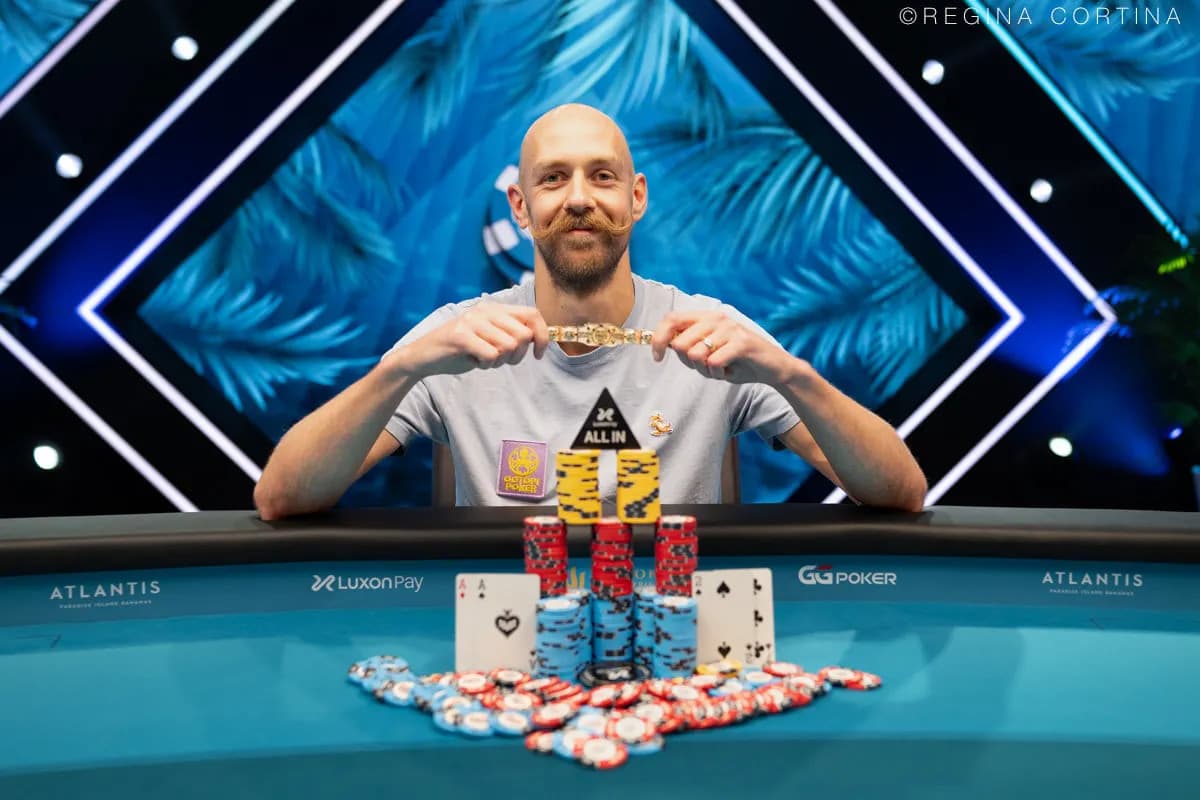
Stephen Chidwick is an English professional poker player. He has earned a reputation as one of the greatest poker players in history thanks to his incredible consistency at the highest stakes, his ability to adapt to different poker formats, and his constant work on improving his game. Peers rate Chidwick extremely highly in various polls, and CardPlayer recognizes him as the best player of the last decade. The Englishman still participates in the most expensive tournaments, and has recently become one of the leaders of the Octopi Poker platform.

New breakdowns in your inbox
Subscribe to the FunFarm newsletter: fresh Poker ABC articles and material that helps you grow as a player.
Biographical Information
Full name: Stephen James Chidwick
Date and place of birth: May 10, 1989, Deal, Kent, England
Nicknames: Stevie444, TylersDad64
WSOP bracelets: 2 ($50,000 PLO Championship and $25,000 PLO High Roller 8-Handed)
Triton Series titles: 3
Career live tournament winnings: $79,927,053 (according to Hendon Mob as of October 10, 2026)
Biggest live tournament cash: $5,368,947
Early Days and Building Up From Freerolls
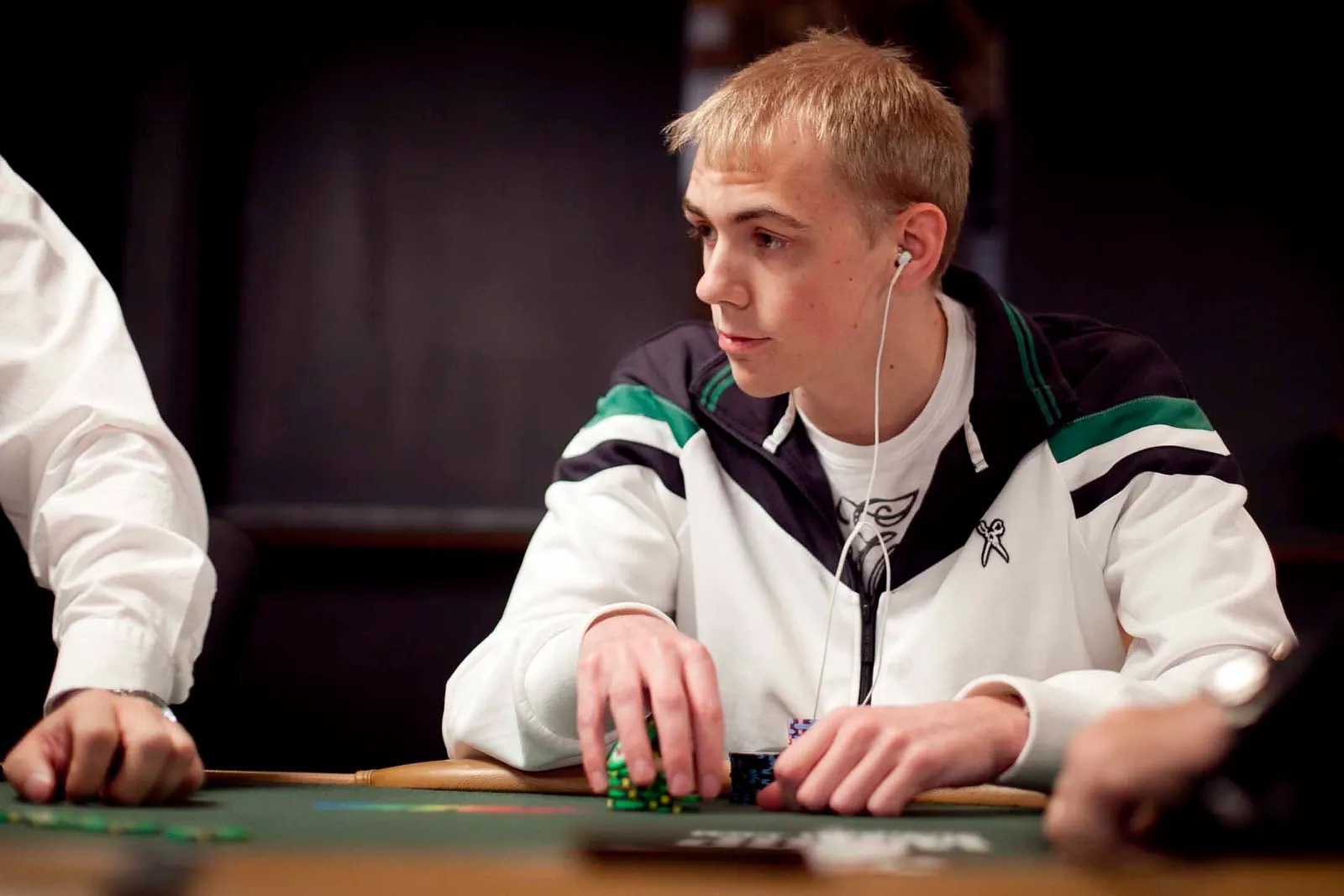
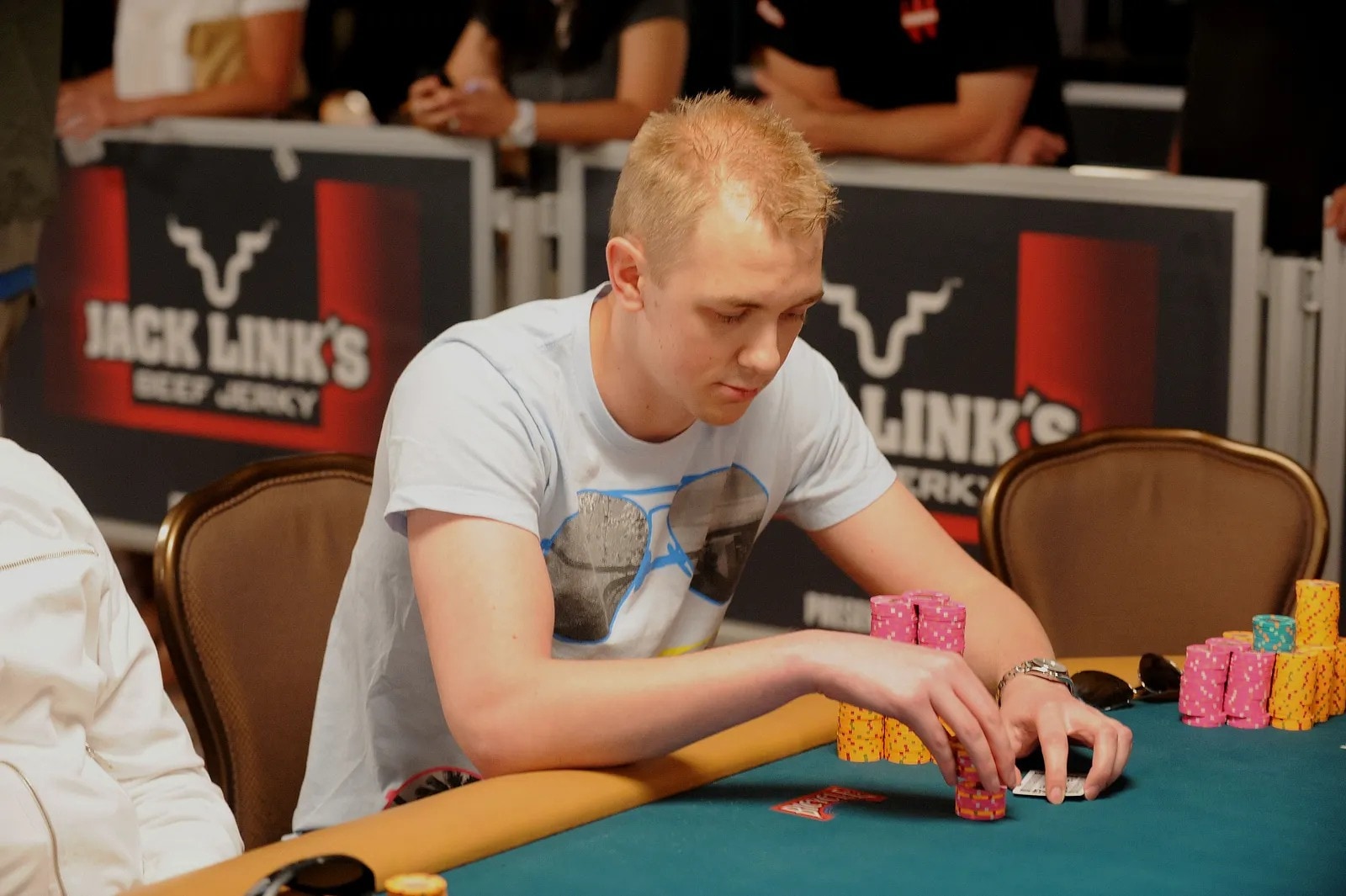
Stephen Chidwick was born in the small English town of Deal, population 30,000. Almost nothing is known about the future high roller's childhood and youth due to his reserved nature. However, in a podcast with Daniel Cates, Chidwick shared that he always loved all kinds of games.
As a child, Chidwick spent a lot of time playing cards, board games, and video games. At a young age he got into poker, and at 16 he discovered freerolls. Back then, the possibility of winning $10 or even more without any investment seemed incredible to him. It was these tournaments that became the starting point of young Stephen's poker career.
Chidwick soon moved on to Sit&Go and quickly conquered this format as well. He climbed to the highest buy-ins available on the sites he played, and of course didn't want to stop there. He was driven by a desire to reach the highest stakes and play against the best poker players in the world. Right after finishing school, Stephen decided to start a professional poker career and began playing online late into the night, after which he would watch training videos and only go to sleep toward morning.
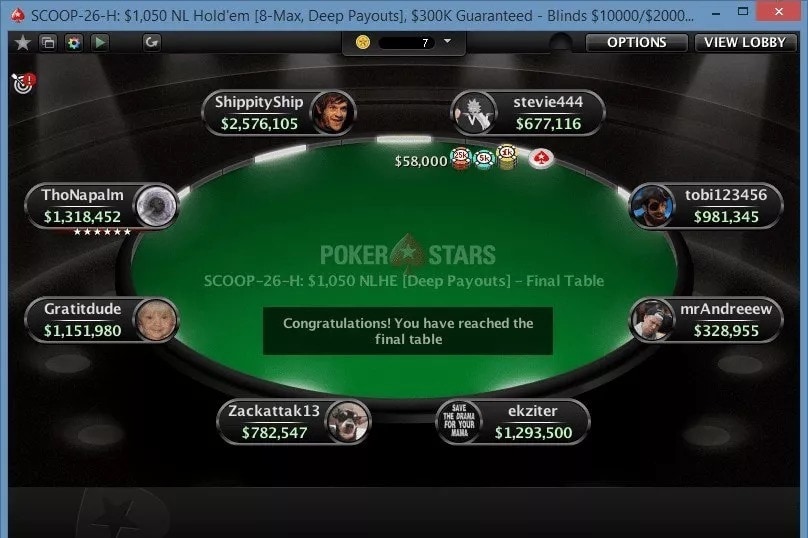
Already online, Chidwick earned a reputation as a dangerous opponent, playing under the nicknames "Stevie444" and "TylersDad64" on PokerStars and FullTilt Poker. One of his favorite formats was Step Sit&Go satellites. Through them, he could reach events awarding packages for live tournaments. This is exactly how the young player found his way to live events.
Chidwick quickly fell in love with this lifestyle, full of travel and meeting new people. Trips to different cities and countries were cheap, since the packages won through satellites included accommodation and the tournament buy-in. Soon enough, bright impressions were followed by his first success.
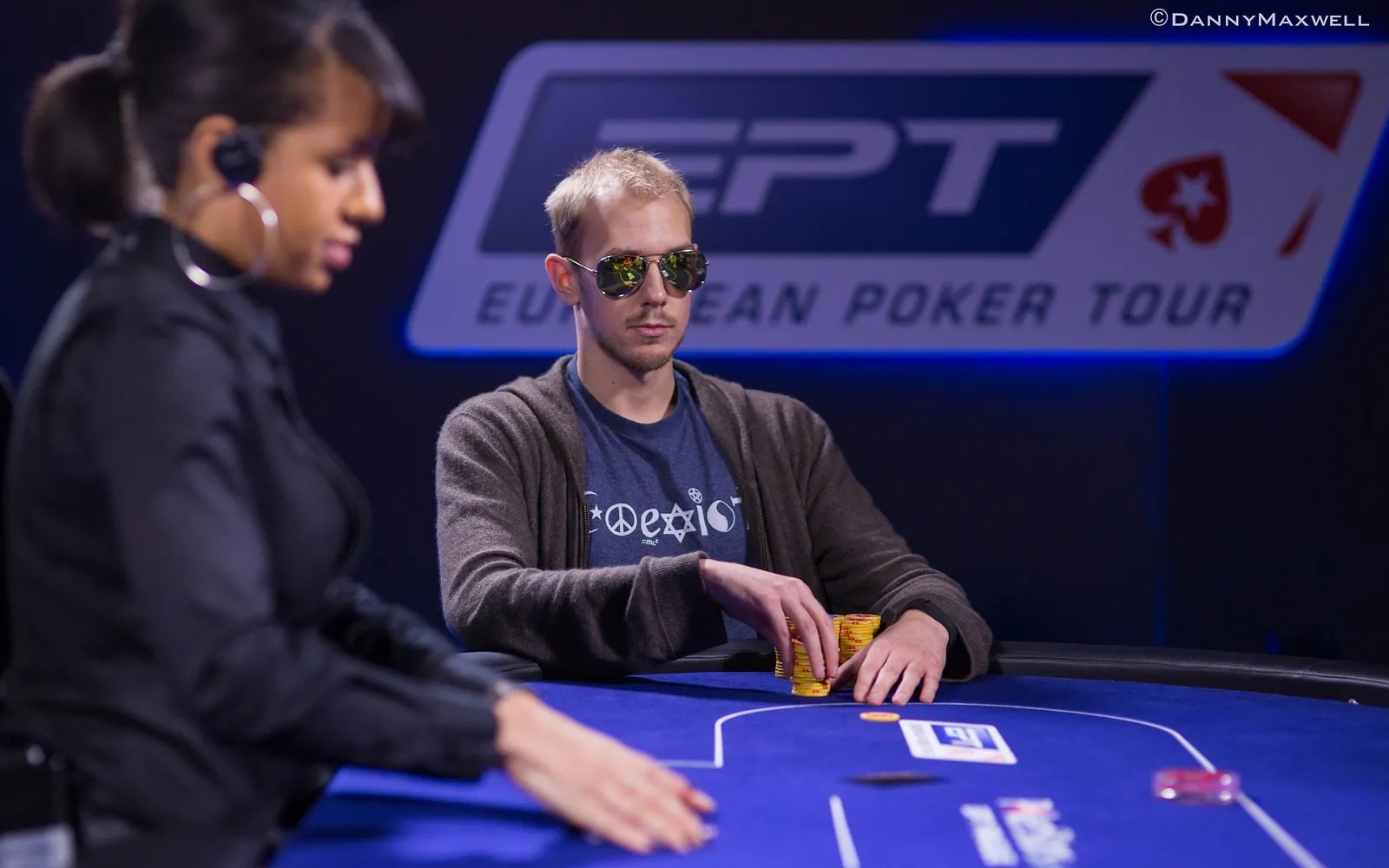
In 2008, 18-year-old Chidwick won a $1,000 No-Limit Hold'em tournament at the PokerStars Caribbean Adventure, earning $88,760. A few months later, the young Englishman made a name for himself at the EPT in Barcelona, where he finished 15th in the €8,000 NLH Main Event and received €37,200. At the same time, he continued playing online, and in 2009 he registered his first six-figure cash. That's when Chidwick finished second in an NLHE 6-Max event as part of the FTOPS series on FullTilt and took home $142,155.
The story of FullTilt's 2011 collapse was told in the article about "Black Friday":
How "Black Friday" Changed the World of Online Poker
Breakthrough Into the Elite
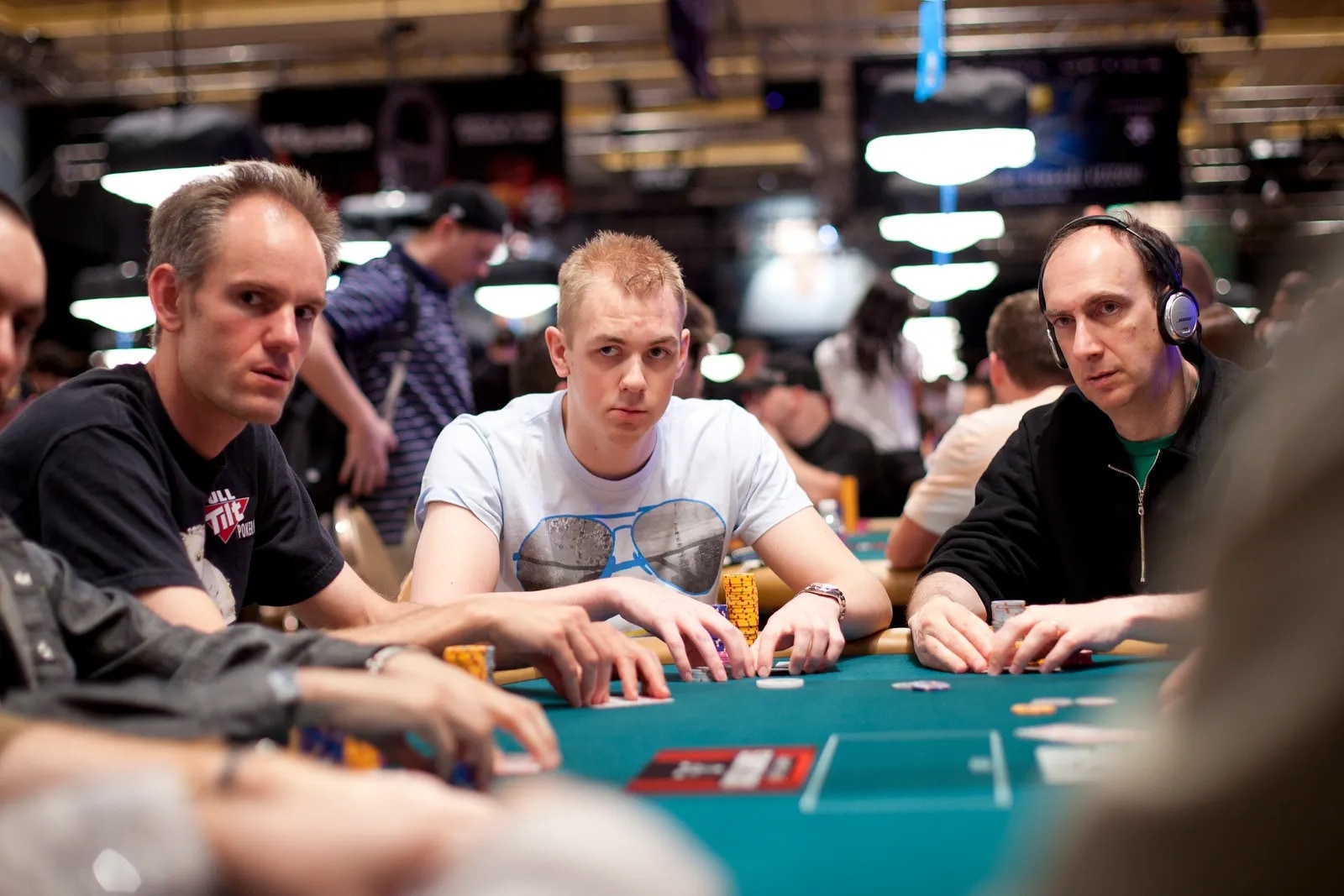
Stephen Chidwick fully began his journey into high roller tournaments in the new decade. In 2010, the Brit made his debut at the World Series and registered three cashes in $1,500 No-Limit Hold'em events. Incidentally, in September of that year, WSOP made a stop in London, where Chidwick finished 24th in a similar £1,000 event for a £4,179 prize.
Already in 2011, the English poker player reached a World Series final table for the first time. This happened in Las Vegas in the $10,000 PLO Championship and earned him $198,927. The young player left behind many well-known opponents, including Eric Clutier, Jonathan Jaffe, and Mike Matusow.
Chidwick didn't stop there, registering three more cashes at WSOP 2011. The cashes were much more modest, but the Englishman showed his versatility, reaching the money in Hold'em, Razz, and pot-limit Hold'em/Omaha mix events.
You can learn about the nuances of Omaha, Razz, and other poker games here:
Types of Poker: Variants, Rules, and Features
In the following years, both the prize money and the buy-ins Chidwick could afford kept growing. The Englishman actively ground the WSOP and reached final tables several more times. Moreover, he managed to do this not only in Hold'em and Omaha events, but also in mixed-game events such as H.O.R.S.E.
Although in the early 2010s Chidwick still played in cheap tournaments as well. For example, in 2013 at the EPT in London, he became champion in an 8-Game event with a £500 buy-in, earning him £5,280. For comparison — that's almost three times less than the Brit received for a 479th-place finish in the WSOP Main Event!
Chidwick took part in a huge number of tournaments around the world: from his native England to Australia and the Caribbean islands. His bankroll gradually grew, and in 2016 he began participating more often in high rollers with buy-ins starting at $25,000. For example, in October 2016, Stephen cashed for more than $460,000, finishing third twice in $25,000 and $50,000 tournaments at the legendary Aria casino in Vegas.
The breakthrough years for Chidwick were 2018 and 2019. In February 2018, the inaugural U.S. Poker Open was held in Las Vegas, where the Brit simply dominated. He reached the money in five of eight tournaments and won titles in the $25,000 NLH and $25,000 Mixed Game Championship events. These results allowed him to earn $1,256,650 and take home the trophy for first place in the series' overall standings.
In the spring, Chidwick registered his first-ever seven-figure cash, earning $1,298,521 for sixth place in the No-Limit Hold'em event at the Super High Roller Bowl in Macau. And at Partypoker Live in Barcelona, the Englishman made two big cashes at once — €1,100,000 for second place in the Super High Roller with a €100,000 buy-in, and another €1,000,000 for third place in the €10,000 main event.
After these wins, Chidwick jumped to first place in the Global Poker Index rankings, becoming the first Brit to achieve this. The English player held the lead on this list until early October, when he was overtaken by Alex Foxen. The American professional ultimately did not relinquish the top spot and won the title of "2018 Player of the Year" according to GPI.
That same year, 2018, Chidwick came close to becoming the owner of the purple jacket — the special trophy awarded to the winner of the Poker Masters leaderboard. The most frustrating part is that the Brit missed this chance through no fault of his own. During the final EPT tournament in Barcelona, he and his wife had their passports stolen.
Replacing the documents took quite a lot of time, which is why Chidwick missed most of the Poker Masters series in Las Vegas. The purple jacket ultimately went to American Ali Imsirovic.
All these results allowed Stephen Chidwick to enter the poker elite. And in 2019, he received official recognition from his peers. CardPlayer conducted a survey among professionals, and 24 out of 76 regulars named the Englishman the best player in the world. However, before that, the Brit managed to finally close one important gap in his resume.
Major Titles in His Career
As we've already mentioned, Chidwick had been actively grinding the WSOP since the early 2010s. Over time, he made deep runs in tournaments of the most varied formats a regular occurrence. The Englishman reached the money 52 times and made 13 final tables, but just couldn't get his hands on a title. Naturally, this led to him appearing on lists of the best players without a bracelet.
Also read:
Best Players Without a WSOP Title
Chidwick managed to change this in 2019. The Englishman didn't arrive in Las Vegas right at the start of the series, as he often had before. Instead, he spent two weeks in Paris with his wife and two-month-old daughter. Perhaps this family vacation gave Stephen the strength he needed, as he won a bracelet in the very first tournament he entered.
The lucky event for Chidwick turned out to be the $25,000 PLO High Roller 8-Handed, which drew 278 entries. The Brit met James Chen heads-up, who could have become the first player from Taiwan with a WSOP bracelet. However, Chen was unable to put up a fight against Chidwick heads-up, and the English high roller finally won his first World Series title, as well as $1,618,417.

"This means a lot to me, I'm thrilled. Of course, it's an incredible achievement, and I'm a little in shock. I usually play every tournament. I reach the final table, lose, and then immediately register for a $1,500 Stud tournament. But this time I arrived here in the middle of the series, hadn't played in any of the previous tournaments, and won the very first one I played. It's pretty funny," Chidwick shared his emotions after the victory.
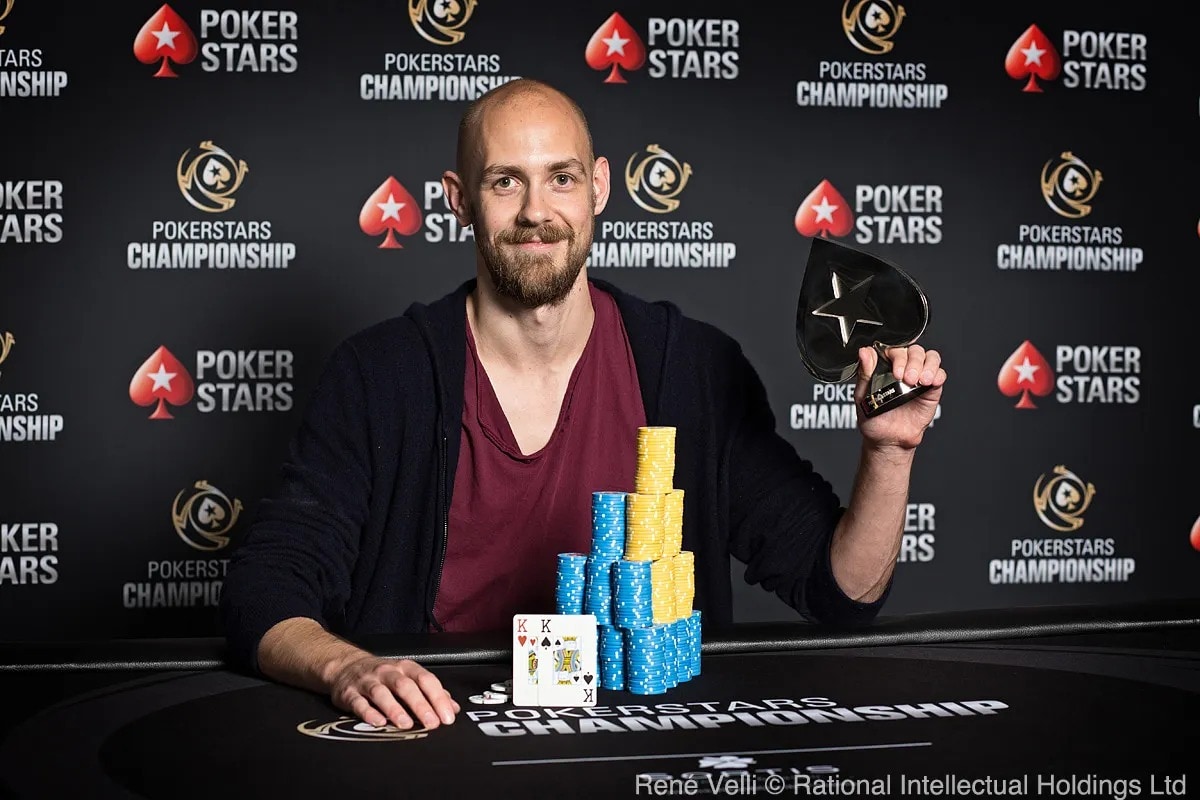
That same year, 2019, Chidwick made several large cashes at the Triton Series in London. But even within this high-roller series, the Brit had to show patience and persistence before he managed to win a trophy. He got his first "trident" in a Short Deck event with a €100,000 buy-in at the festival in Madrid in 2022.
At that series, incidentally, Chidwick finished in the top three twice before his win. Second place in the €75,000 NLH 8-Handed brought him €1,291,414, and third place in the €50,000 NLH 8-Handed Turbo earned him €277,500. And along with the long-awaited title, the Brit also took home the main prize of €1,800,000.
Outstanding tournament results helped Chidwick become "Player of the Year" according to CardPlayer for the first time in his career in 2019. He would repeat this success three years later, winning five titles and reaching 25 final tables. Thanks to this, the Brit became the second poker player after Daniel Negreanu to be named CardPlayer's player of the year twice.
Short Deck became Chidwick's signature format on Triton. It was in this discipline that he won two of his other series trophies. Stephen earned his second win in Jeju in 2024 in a $20,000 event, and his third — also in South Korea, but in 2025. Last year, the Englishman became champion of the $200,000 Short Deck PLPF, beating Kiat Lee heads-up and earning $3,455,000.
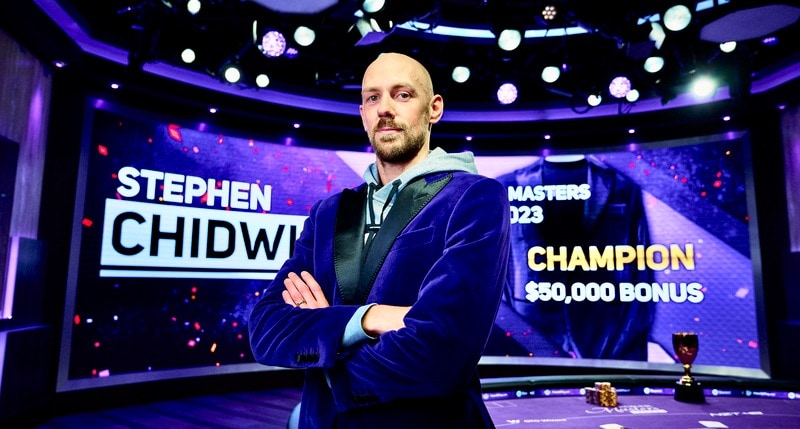
Between his first and second Triton titles, Chidwick accomplished what had eluded him in 2018 — becoming the owner of the Poker Masters purple jacket. Although the series didn't start particularly well for him. In the first five tournaments, the Englishman didn't reach the money once. But in the second half of the series, he made four cashes and won one title.
Heading into the final Poker Masters event, Chidwick was tied for second place in the standings with Chino Rheem, trailing Vladas Tamasauskas. In the $50,000 event that would decide the race, the Englishman made it to heads-up against Jonathan Jaffe. The loss in that match didn't prevent Chidwick from coming out on top and claiming the purple jacket. In addition, he became the only player to earn more than $1,000,000 from the series.
And at the end of 2024, Chidwick further cemented his poker legacy by winning his second WSOP bracelet. This trophy, like his first, came in a pot-limit Omaha event. At WSOP Paradise, the Brit conquered the $50,000 PLO Championship with 122 entries, finishing ahead of Ben Tollerene, Artur Martirosyan, Nick Schulman, and Phil Hellmuth, and earning $1,357,080.
In 2026, Stephen Chidwick continues to actively participate in the most prestigious tournaments. In March, he reached the money eight times at Triton Jeju, and on the exact day of his 37th birthday he won the €20,000 NLH at EPT Monte Carlo, taking home €137,288.
In the summer, the British high roller made four cashes at the WSOP, and last month he had a successful trip to Triton Jeju II. Three cashes at the South Korea festival brought him a total of $898,000. Such consistently high results allow Chidwick to hold third place on the list of players with the biggest earnings in the series' history. Only the record 12-time Triton trophy winner Jason Koon and Bryn Kenney are above him.
Learning at FunFarm, from any level
Chidwick Online, in Cash Games, and in Various Disciplines
We mentioned that 2018 was a breakthrough year for Stephen Chidwick in live tournaments. However, that year he also performed successfully online. According to Hendon Mob, he has at least ten cashes in various events. The biggest cash was $81,955 for 11th place in the $25,000 NLHE 8-Max High Roller at WCOOP.
As of June 2018, Chidwick had 2,282 cashes in online tournaments, which earned him more than $5,000,000. The Englishman certainly didn't stop there. For example, in July 2020, he won two titles in one day, taking down the $5,200 Big Game and the $10,300 Mix-Max 2nd Chance on PartyPoker, earning $367,727.
Chidwick registered another six-figure cash in October of that same year, earning $263,791 for second place in the $10,300 Super MILLION$ High Rollers. There is no information about the Brit's confirmed winnings in recent years, but by the end of 2021 he had earned at least $5.8 million online in total.
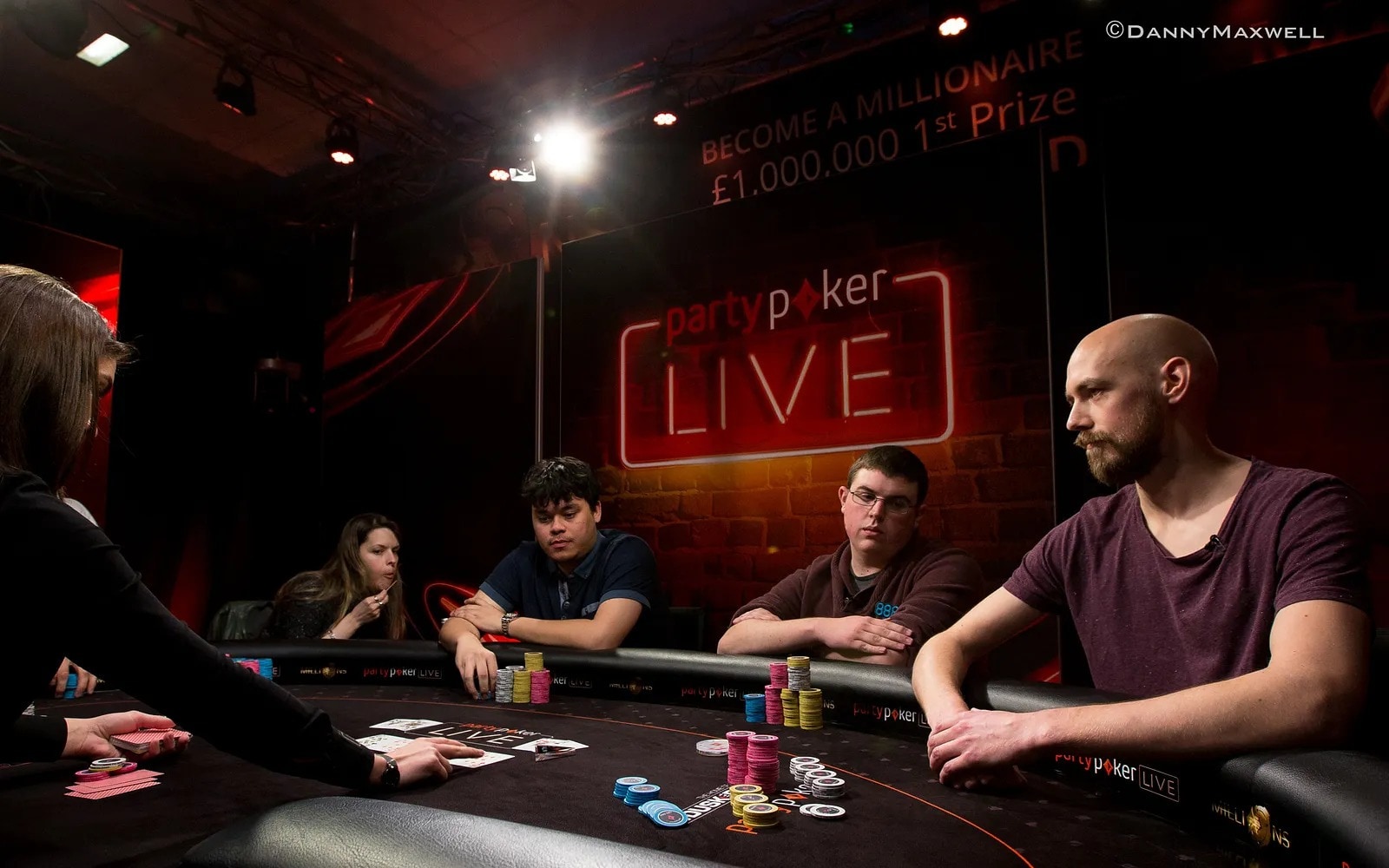
And yet, live tournaments remain Chidwick's main field of activity. According to The Hendon Mob, over his career he has reached the money more than 400 times at various live events. The Englishman plays Hold'em tournaments most often, but his skills allow him to be successful in other disciplines as well.
As we've already noted, both of Chidwick's bracelets came in Omaha events, and his three Triton titles came in Short Deck. Moreover, after his first WSOP win, Stephen admitted that PLO wasn't his strong suit. In addition, the British high roller has made deep runs in mixed-game and Razz events.
By Chidwick's own admission, in recent years he has spent most of his time playing NLH and PLO. This is due to the slow structure of mixed-game tournaments, which makes it difficult to combine them with faster formats without missing major events. In his view, his versatility stems from a shared foundation of thinking rather than equal volume played across different disciplines.
Chidwick practically doesn't play cash games at all. In a Reddit Q&A session, he explained this by saying that he prefers tournaments more and doesn't try to get into private cash sessions.
Chidwick's Career Earnings
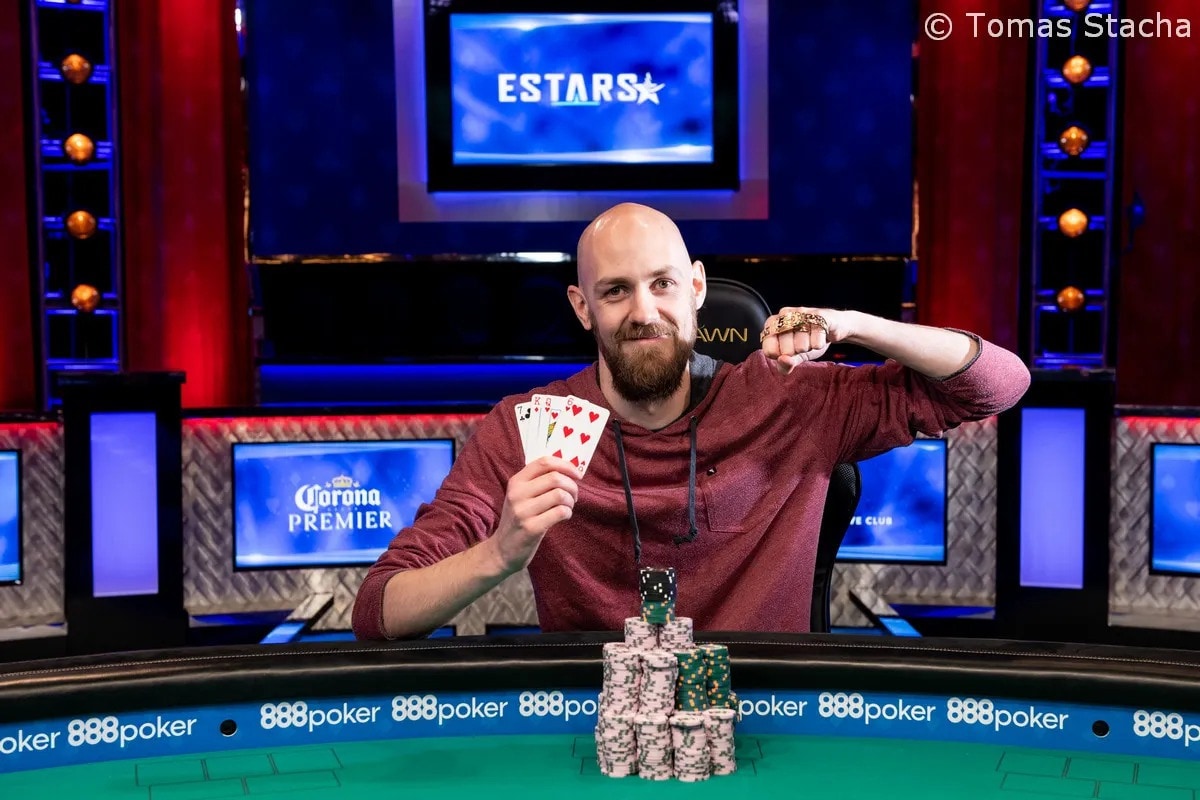
Over 15 years of his career, Stephen Chidwick has earned $79,927,053 in live tournaments. He ranks second on the world's All-Time Money List, trailing only Bryn Kenney, who has earned $90,849,210. However, Jason Koon is nipping at the Brit's heels, with total winnings of just over $77,000,000.
At the same time, Chidwick is unquestionably the best English player in terms of live tournament earnings. According to The Hendon Mob, he's more than double ahead of his closest pursuer, Ben Heath, who has won $39,237,318.
Chidwick's biggest cash came in 2019, when he received £4,410,000 ($5,368,947) for fourth place in the £1,050,000 NLH Triton Million for Charity. Only Dan Smith, Bryn Kenney, and Aaron Zang finished above him that time. On the Triton Series, the Brit also received his biggest payout for a win. That was the $3,455,000 in the Short Deck high roller at last year's festival in Jeju, which we mentioned earlier.
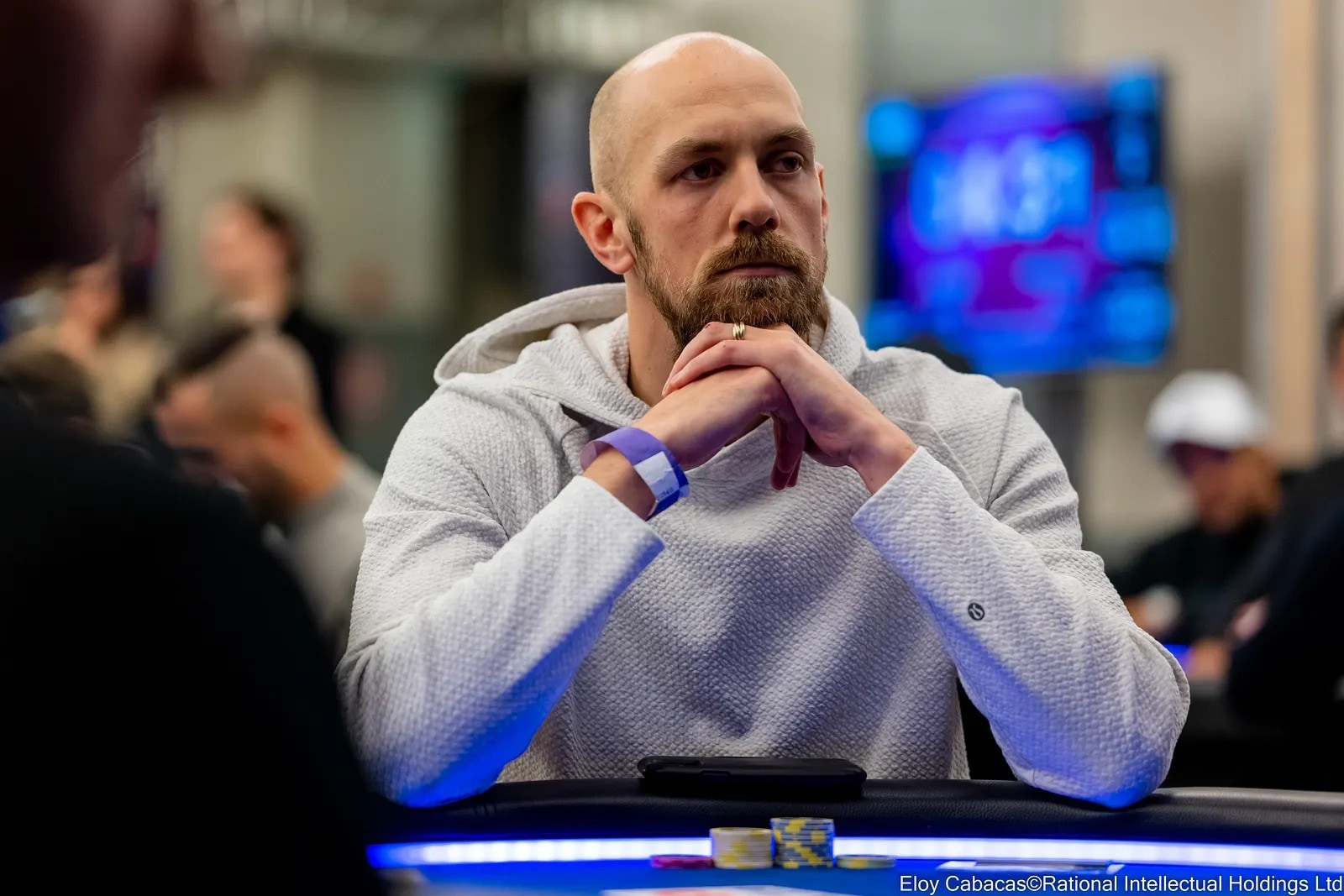
It's worth noting that almost $80 million represents gross winnings, which don't account for tournament buy-ins, taxes, and other expenses. However, in January of this year, Chidwick revealed his career profit. On Reddit, he shared that he had earned between $5 million and $10 million net. At the same time, the Brit noted that he doesn't have data preserved from the early years of his career.
Chidwick differs from many regulars in that he is extremely meticulous about bankroll management. Thanks to this attitude toward money, he has, by his own admission, never gone broke or been on backing. The biggest risk the Englishman ever took was spending 2% of his bankroll on a tournament entry. Normally, though, he prefers to stake no more than 0.5-1% of his net worth.
"A Child in a Robot Suit": Psychology and Strengths
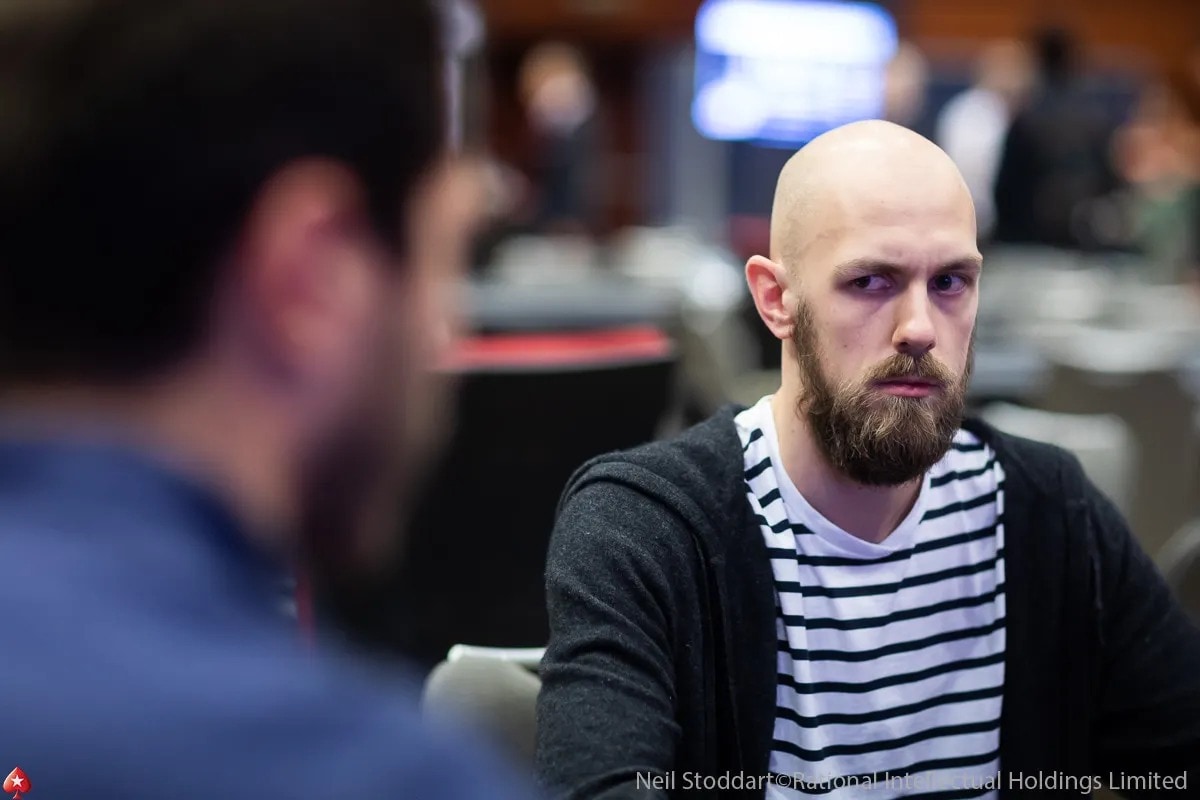
For a long time, Chidwick had a reputation in the community as an emotionless player, a real cyborg. As Stephen himself has said, many opponents considered him angry or overly serious because of his silence and heavy stare. However, the reasons for this behavior lay in the Brit's own psychology.
At the very start of his live tournament career, Chidwick constantly kept his eyes down so as not to let opponents pick up any tells, but at the same time he himself wasn't reading opponents either. Later, he realized that observing players gave him more information than he had expected. And thanks to this, he himself started getting under opponents' skin with a piercing stare:
"I turned my attention outward, looking at my opponent whenever the action concerned him. The added complexity of factoring in such observation when making decisions is something that has fascinated me ever since. It wasn't done to intimidate, but to have as much information as possible."
In a long and candid post on X, Chidwick also admitted that he fits the criteria for autism spectrum disorder and bipolar disorder, although he has not been diagnosed with either. In the first years of his career, after long sessions he was plagued by anxiety, which he managed to turn into fuel for his drive to become one of the best players in the world.
However, recognition within the poker community did not bring him complete satisfaction. After earning the "Player of the Year" title, Chidwick developed a serious fear of mistakes and even uncertainty about his own skill level. To cope with these issues, he delved into self-analysis, which allowed him to recognize his need to be accepted and the necessity of opening up to those around him.
It was this realization that prompted Chidwick to create an account on X, where he talked about all of this. In his first post, Stephen called himself "a child in a robot suit" searching for love, spiritual connection, and a sense of belonging.
Later, the English high roller shared that stoicism had a strong influence on him. Thanks to this philosophy, he learned to calmly accept disappointing results such as bubbling out. Chidwick also started viewing downswings as an opportunity for growth, and losses accepted with dignity began to bring him just as much satisfaction as wins.
Chidwick pays a great deal of attention to his mental health. To that end, he regularly exercises, follows a strict sleep schedule, meditates, and practices breathing exercises. What helps him avoid tilt is that he doesn't dwell on his mistakes, but accepts them.
At the table, the English high roller always tries to maintain as straight a posture as possible and keep an impassive expression. He views slouching as a sign that he's checked out of the game. Thanks to this behavior, it's difficult for his opponents to find tells and draw conclusions about his inner state.
Key tips for building the right mindset were collected in a separate article:
A, B, C Game: How to Stop Giving Away Your Blinds to Your Inner Monkey
Of course, Chidwick's success isn't based on strong psychology alone. A big role in his rise was played by his mastery of solvers at the very start of his career. The Brit has said that he was one of the first to start using PioSolver, and this gave him an edge over his opponents.
At the same time, Chidwick is not a pure GTO player. He considers ICM to be an imperfect model. In his view, for success in live tournaments, the ranges and strategies learned with its help need to be combined with intuition and reads on opponents:
"When you're face to face with another person playing out a poker hand, you need to account for far more information than GTO provides. Not the least important factor is the intangible, immeasurable energy field influenced by players' emotional states. The human factor is an integral part of poker, which makes every hand played unlike any other."
Chidwick is constantly working on his approach to the game. For example, in one interview he said that early in his career he mistakenly considered all amateurs to be fish who mostly acted the same way. Later, the Brit realized that amateur high rollers were using this same attitude against him, and he began adapting more to the style of each specific opponent.
Chidwick achieved his poker versatility not through volume played across different disciplines, but through an overall understanding of the game. He builds his strategy based on ranges, the ability to apply stack pressure, and, of course, opponent analysis.

Notable Hands
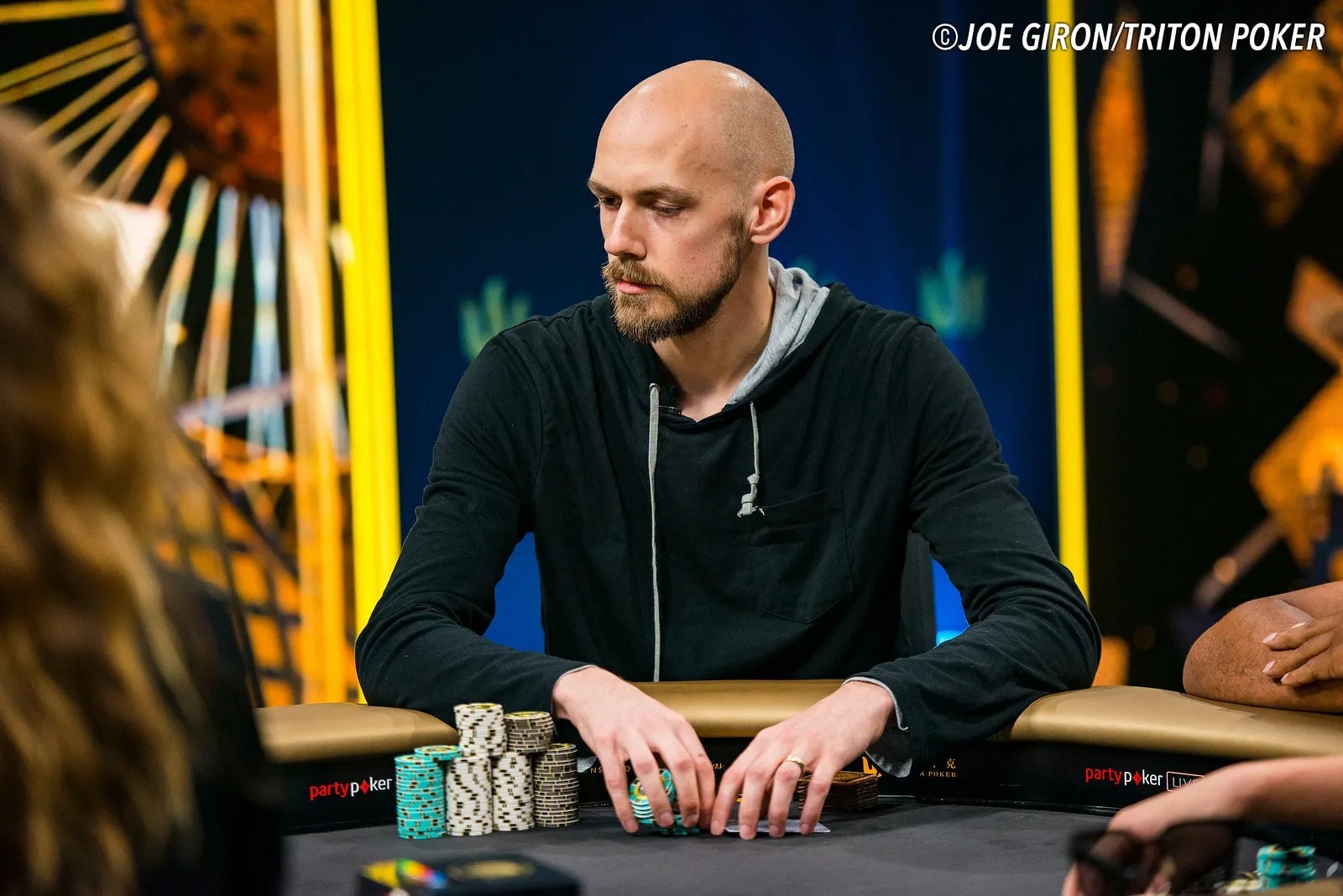
One example of departing from the GTO model that Stephen Chidwick has cited is a hand against Bryn Kenney at the 4-max stage of the 2019 £1,050,000 NLH Triton Million for Charity. The blinds were 200,000/400,000, Kenney was the chip leader by a wide margin, and Chidwick had the second-largest stack.
Chidwick opened from UTG with 7♠️7♦️ for 1,100,000 chips, and Kenney jammed 24 million chips from the big blind with K♥️J♣️. The Englishman decided to call, and had an equity edge preflop. However, Kenney paired his king on the A♦️K♣️9♥️ flop, and on the 4♦️ turn his opponent was left with only two outs. The 10♥️ fell on the river, and Chidwick was eliminated in fourth place.
In the podcast with Dan Cates, Chidwick explained his decision by saying that if he won the hand, he could take control of the table and gain the ability to apply stack pressure on his opponents:
"We were at a turning point: if Bryn had gotten a bit more chips, he would have been able to completely dominate the table. And if I had won, I myself would have been in a position allowing me to control the course of play. That said, I'm not sure myself how significant this deviation from the optimal strategy was, or how sound my reasoning really was."
At that same tournament, another notable hand occurred involving Chidwick. At the 7-max stage, he had to make a difficult decision against Vivek Rajkumar. The Indian player had an almost fivefold chip advantage.
Preflop, Rajkumar raised to 450,000 from the button with A♠️8♣️ with blinds at 100,000/200,000. Chidwick defended from the big blind with J♦️5♦️. On the J♣️9♠️4♥️ flop, the Brit picked up top pair and a significant equity edge. He responded to Rajkumar's 300,000 continuation bet with a check-call. The same thing happened on the Q♠️ turn after a bet of 850,000 from the Indian player.
On the 6♥️ river, Rajkumar decided to run a big bluff and moved all-in. Chidwick used up all his available time bank cards, then called and exposed his opponent's bluff with second pair. Winning this pot allowed the Englishman to double up.
In this hand, Chidwick showed his willingness to make risky decisions even under significant money pressure. However, according to an analysis by Adrian Mateos, at this stage it was easier for the Brit to call than it would have been on the bubble, where he could bust without any payout at all.
According to the Spaniard, Rajkumar chose a less-than-ideal hand to bluff with, while Chidwick had a good bluff-catcher. In addition, it may have been easier for the Englishman to decide to call if he considered his opponent an aggressive player trying to maximize his chip advantage.
Rajkumar vs Chidwick (from 0:05): Top Triton Poker Hands of the Year - 2019
In one interview, Stephen Chidwick said that in tournaments, the last chips in a stack will always be the most valuable. He was guided by this principle at the final table of the $100,000 Super High Roller at the 2019 PokerStars Caribbean Adventure series.
At the 8-max stage, Chidwick open-raised to 65,000 from UTG with A♠️J♥️. Sam Greenwood defended on the big blind with A♥️6♥️. On the K♦️8♥️7♠️ flop, Chidwick still had the equity edge, and continued applying pressure with a bet of 60,000. Greenwood called again.
On the 2♥️ turn, Chidwick made an overbet, betting 300,000 into a 295,000 pot. Greenwood, after some thought, called anyway, holding a flush draw. This draw came in on the Q♥️ river, but Chidwick decided to bluff with ace-high. He bet 590,000, leaving himself with just one chip worth 5,000, which amounted to 1/6 of the big blind.
Greenwood responded by shoving all-in for 1,120,000 chips. Had he called, Chidwick would have been eliminated from the tournament immediately, but he decided to fold. His one remaining chip allowed him to continue playing. The Brit deliberately kept himself this tiny chance at survival and a pay jump.
However, Chidwick wasn't able to build back up or simply outlast one of the short stacks, and he was eliminated in eighth place with a $236,720 payout. Greenwood won that tournament, earning $1,775,460.
Chidwick Outside of Poker
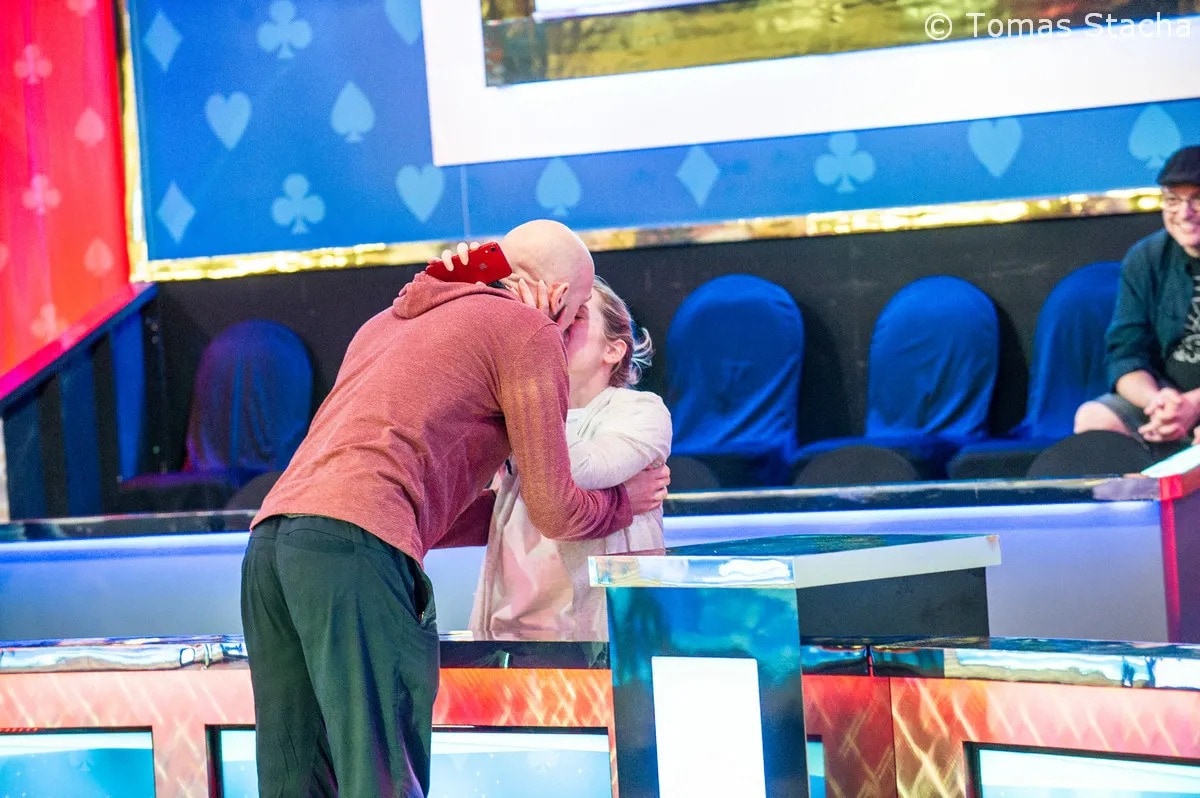
In the mid-2010s, Stephen Chidwick met his future wife, Marin. The high roller himself said that she supported him and gave him serious motivation to realize his poker potential. After his daughter was born in 2019, the Brit thought he would cut back on his volume, but then realized that this event motivated him to become even better:
"Of course, after having a child, priorities shifted, and one of the biggest changes was increased motivation to become better. I want to be the best father I can be. At first I thought I'd partially step back from the game. But the more I thought about what it means to be a good father, the more I realized how important it is to be a role model."
Over the years of his high-roller career, Chidwick hasn't lost his love for board games, which he was into even as a child. In 2016, the 41st World Backgammon Championship was held in Monte Carlo. The British poker player took part in the Intermediate division, where 47 people competed. Chidwick went the distance and became division champion, beating Dane Lasse Danielsen in the final match.
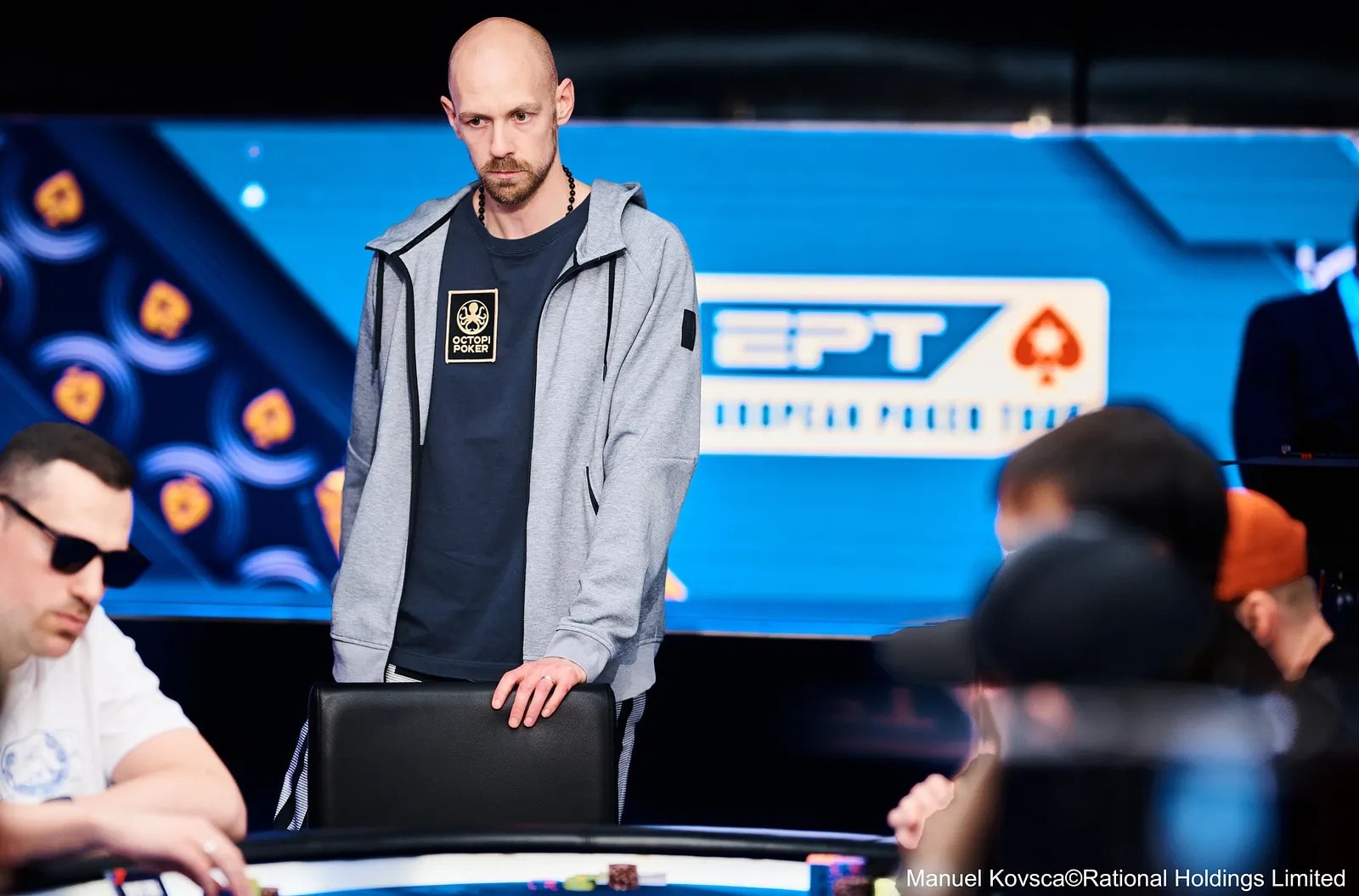
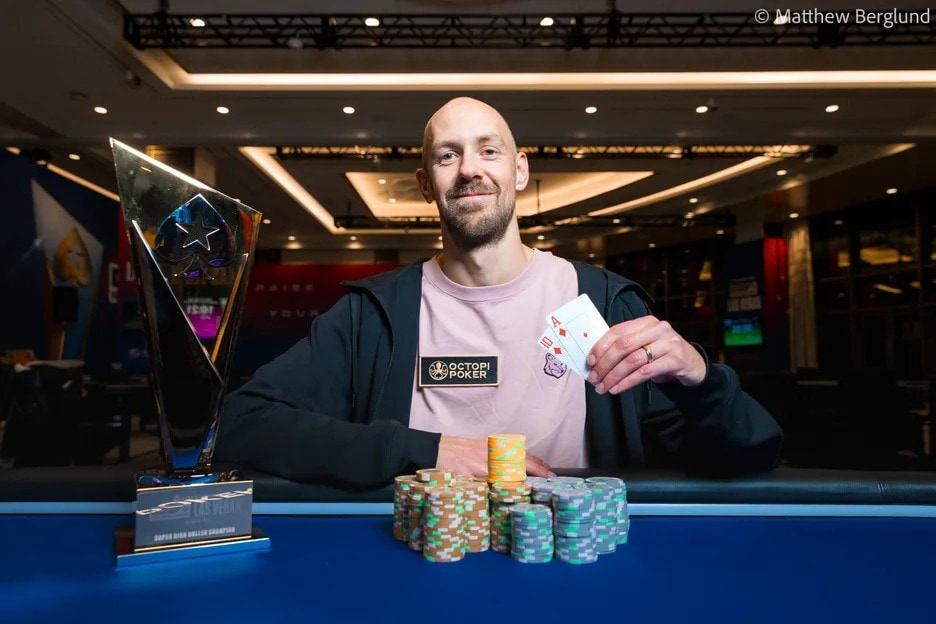
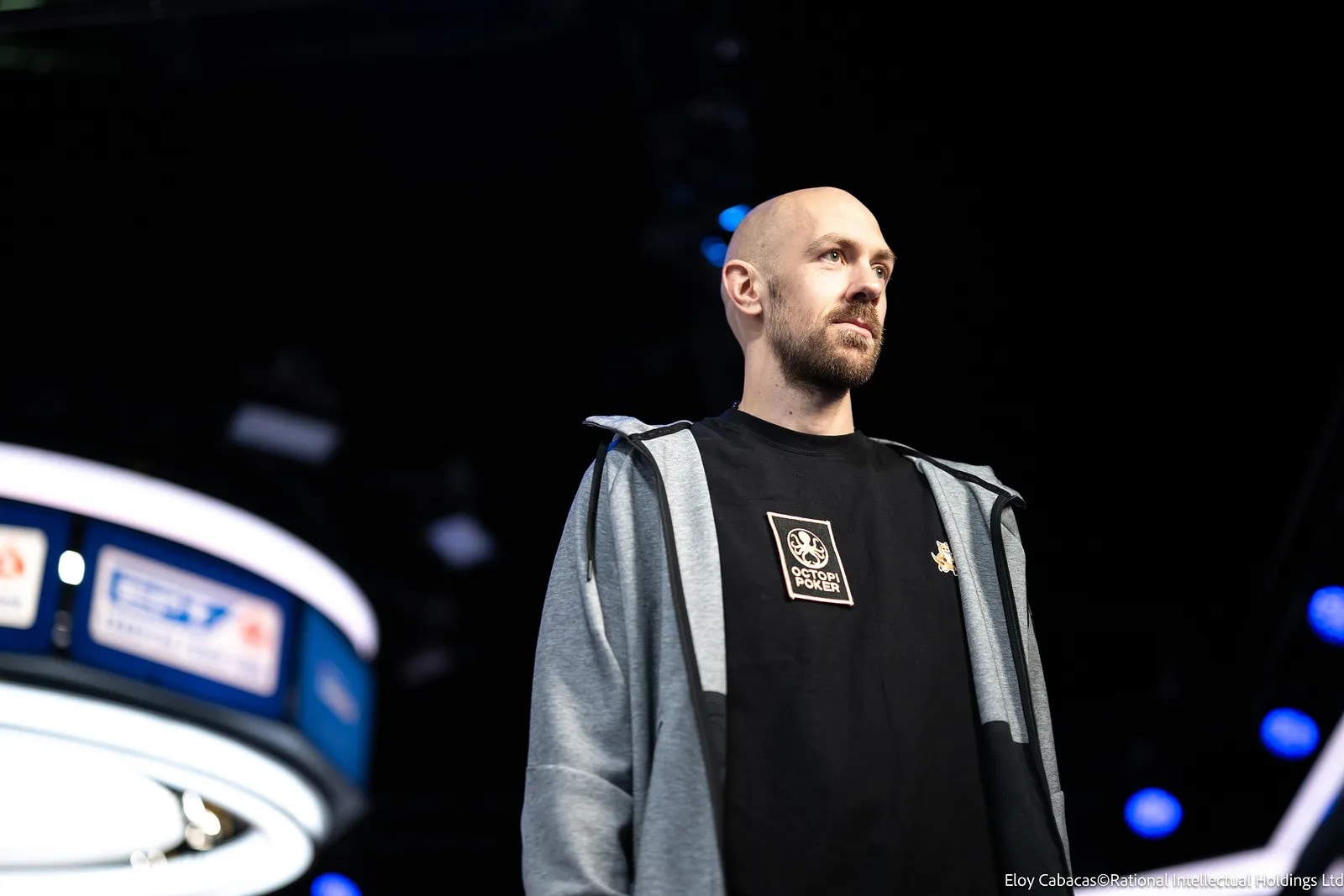
And recently, Stephen Chidwick decided to share his accumulated experience and knowledge with the poker community. In 2024, he joined the Octopi Poker project, which had already existed for two years at that point and offered MTT training based on artificial intelligence and cloud computing.
With his direct involvement, the company developed a GTO trainer that allows users to simulate a large number of tournament situations and get instant feedback on their decisions. In addition, Chidwick created a course for Octopi called "Unlocking Your Potential," aimed at experienced and advanced players. The cost of one personal lesson under this program is $2,500.
Individual training and spot practice in a poker simulator are much closer than you might think. Apply for training at the FunFarm school right now.
A Role Model
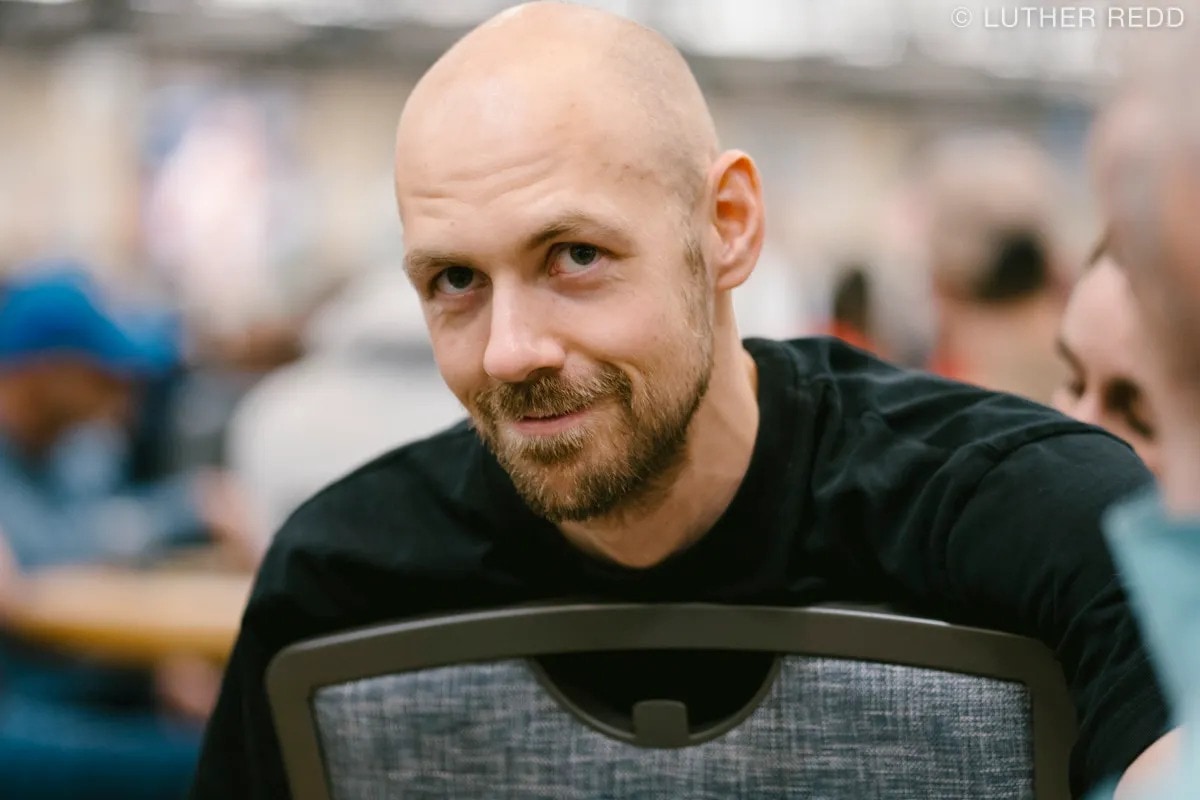
Stephen Chidwick has shown that it's possible to reach the poker Olympus even from the very bottom. Persistence and constant self-improvement helped him turn playing freerolls into tens of millions of dollars in live tournament prize money.
Huge volumes of play in Sit&Go and cheap satellites allowed the Brit to hone his work with ranges and the most common spots. He later reinforced these skills by working with solvers and developing his intuition. Chidwick notes that poker software is necessary to understand an opponent's actions, not just to memorize GTO ranges. In this, he resembles Fedor Holz, whose career and style we covered earlier.
Chidwick can also serve as a role model when it comes to working on one's mindset. He stands out among his peers for his incredible composure and work ethic, which allow him to showcase top-level play in high-roller tournaments.
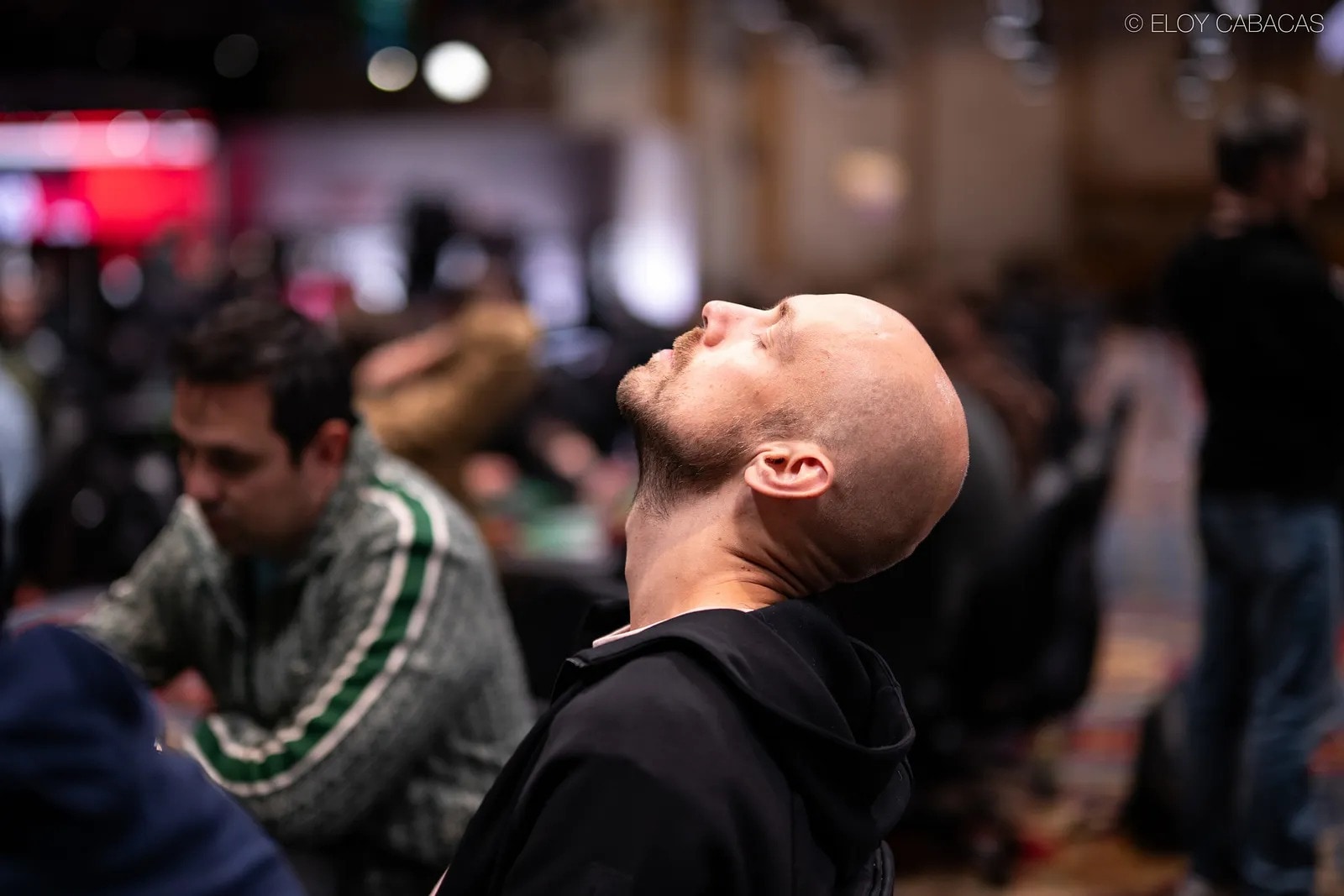
His clear daily routine, of course, plays a huge role in this psychological stability. Chidwick notes that exercise, meditation, and walks help him maintain the high level of concentration he needs. However, he didn't arrive at this right away. In the early years of his career, he sometimes went to sleep hungry after long live tournament sessions, because he was afraid to interact with people.
To overcome his fears and anxiety, Chidwick had to work on his psychology for a long time. And progress in this area also helped him feel more confident in his personal life and in communicating with those around him.
And finally, Chidwick can be called a model for bankroll management. Many poker players at all sorts of stakes are let down precisely by a careless attitude toward their finances. The Englishman, on the other hand, has shown that strict rules for handling money help you move up in stakes and even reach the very highest level.
Free course · FF Start
Build a clear path in poker
The course ties rules, practice, hand analysis and further growth into one system.
Frequently asked questions
Read next
Tom "durrrr" Dwan: the biography of a high-stakes poker legend
History of Playing Cards: From Chinese Roots to 52 Cards
Online Poker History: First Hand to Billion-Dollar Industry