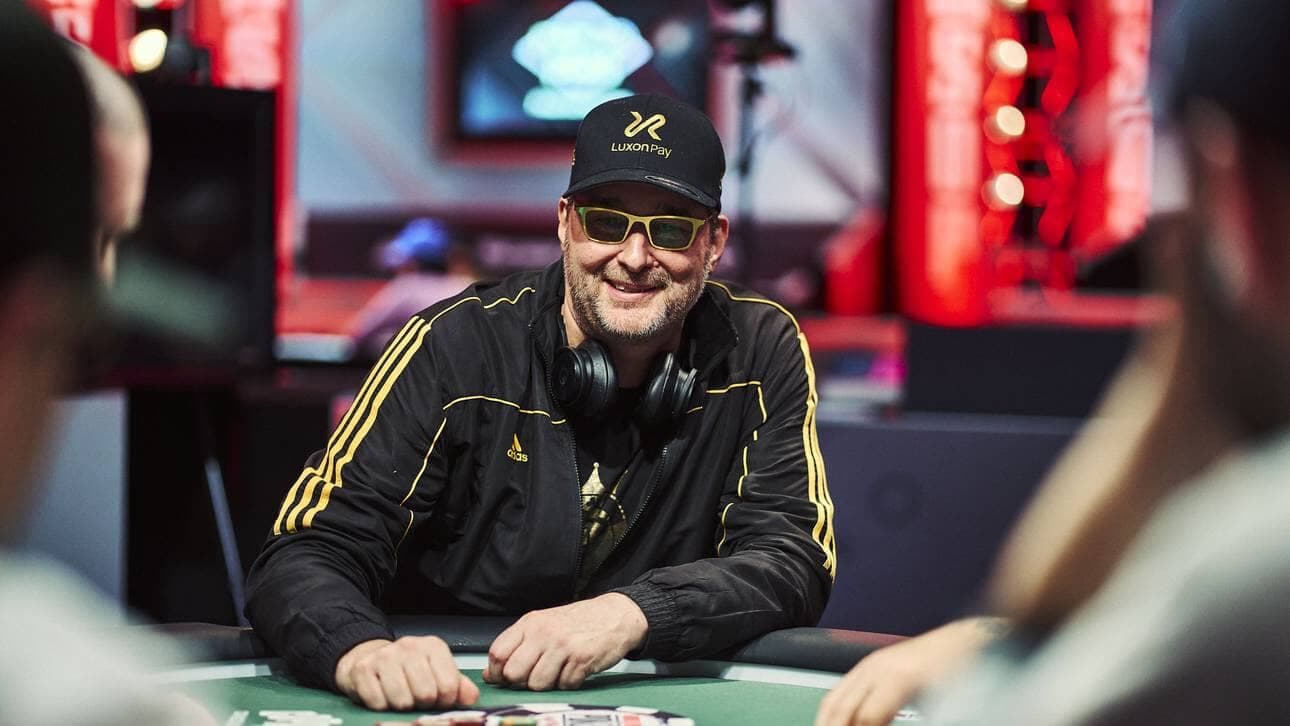
Phil Ivey: Biography, Winnings, and Playing Style
From the first illegal sessions with a fake ID to Triton 2026. We'll break down the playing style, financial standing, the inside story of the high-profile lawsuits, and practical takeaways for beginner poker players.
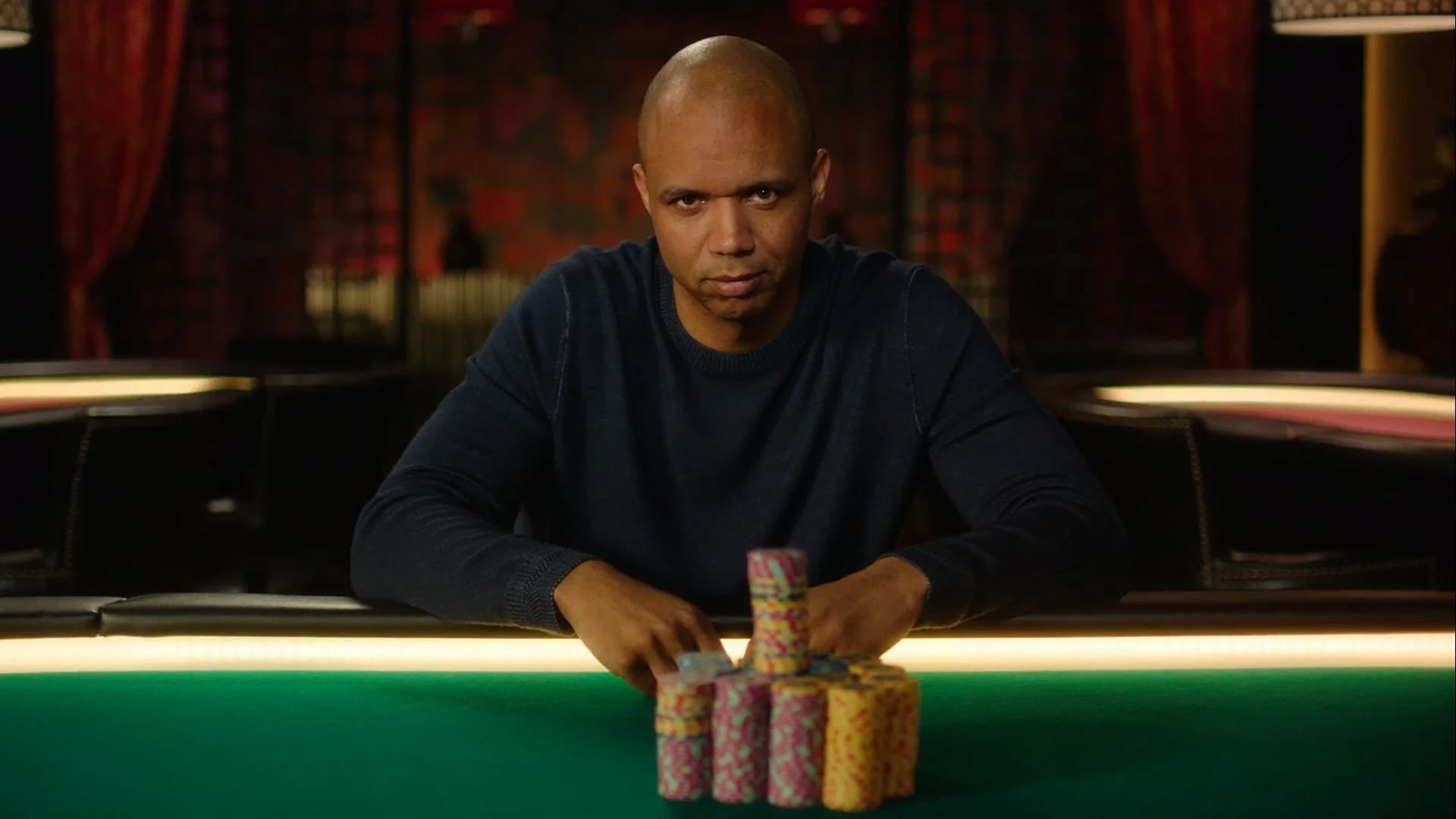
Phil Ivey is rightfully considered one of the strongest all-around players of his generation. The American professional and Hall of Fame member has dominated both offline and online, and his résumé boasts 11 WSOP gold bracelets, a WPT title, and a hat-trick at the Aussie Millions.

New breakdowns in your inbox
Subscribe to the FunFarm newsletter: fresh Poker ABC articles and material that helps you grow as a player.
Phil Ivey: the essentials
Full name: Phillip Dennis Ivey Jr.
Date and place of birth: February 1, 1977, Riverside, California, USA
Country: USA
Age: 49
Online handles: "Phil Ivey," "Polarizing," "RaiseOnce"
Main disciplines: All-around
WSOP bracelets: 11
WPT titles: 1
Live tournament earnings: $56,074,164 (according to the profile on The Hendon Mob)
Biggest cash: $3,582,753
All Time Money List ranking: 11th (according to the All Time Money List on The Hendon Mob)
Hall of Fame membership: inducted in 2017
Current status: active player, WPT Global ambassador
Childhood and first games
Phil Ivey was born in California, but his family moved to Roselle, New Jersey, when he was a few months old. Cards entered Phil's life at the age of eight, when his grandfather, Leonard "Bud" Simmons, showed his grandson the basics of five-card stud. According to Ivey's own recollections, his grandfather cheated during the home games to prove to the boy that gambling would only lead to losing money. The effect turned out to be the opposite — Phil wanted to figure out the logic of the game and learn how to win.
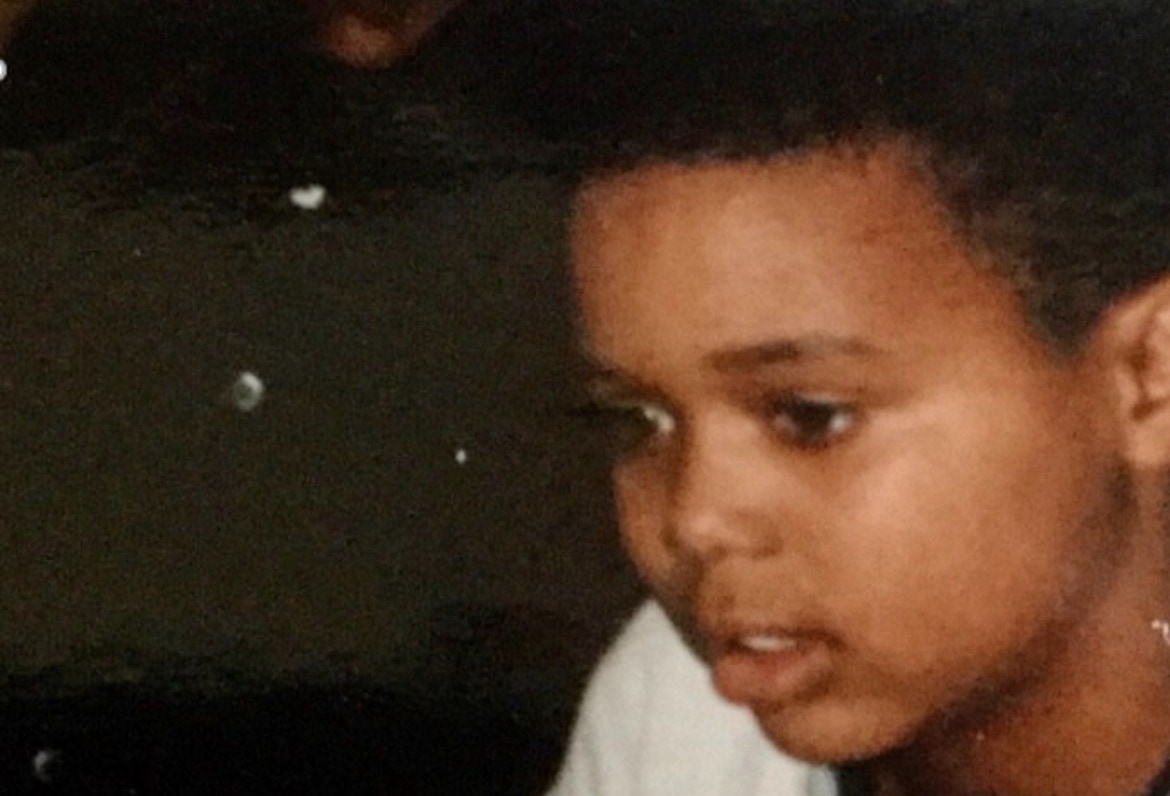
As a teenager, Phil got a job at a telemarketing company in New Brunswick, where he quickly gathered his first rivals among his coworkers. But his main goal was Atlantic City. Since there were still several years left until the legal age of 21, Ivey acquired a fake ID under the name Jerome Graham and began regularly disappearing into the casino.
His first steps had nothing to do with easy money. Phil regularly lost all his earnings and ended up spending the night on the beach or at bus stations, only to return to the tables in the morning. Because of these endless marathons, the local regulars gave him the nickname No Home Jerome.
During this period, mental endurance became a key skill for Ivey. He played limit stud against experienced older players who caught the teenager's mistakes. After every session, Phil spent hours replaying hands in his head, analyzing his actions. Later, in interviews, he admitted that at the start of his career he simply wanted to play more than anyone else.
Read also:
How to play poker: rules for beginners
Career and achievements
Most poker stars choose one discipline and perfect it to the absolute max. Phil Ivey's strength initially lay in mixed games. He mastered every format, which made him the most dangerous opponent at any table.
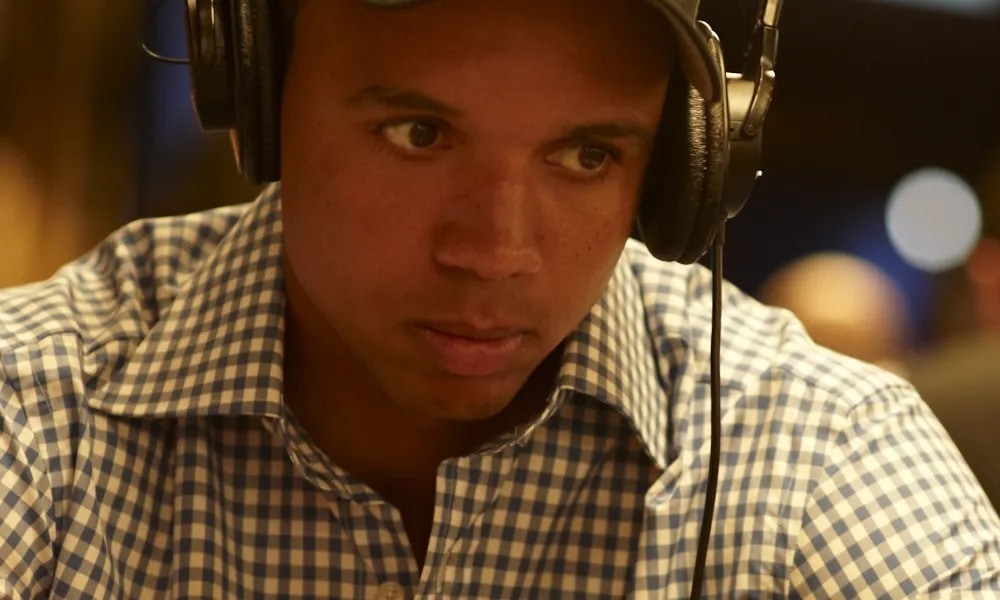
By the late 1990s, Ivey had become a consistently winning player at mid-stakes in Atlantic City and started traveling to Las Vegas. In 2000, the twenty-three-year-old American won his first WSOP bracelet in the $2,500 Pot Limit Omaha event, beating old-school legend Amarillo Slim Preston at the final table.
2002 became his breakthrough year, when Ivey took home three bracelets in a single series in S.H.O.E., seven-card stud, and stud hi-lo. In doing so, he matched the record set by Puggy Pearson (1973) and Ted Forrest (1993). As early as 2003, Phil finished tenth in the WSOP Main Event. His elimination at the hands of Chris Moneymaker right before the final table sparked debate about how the industry might have developed had Ivey stayed in the game. This same era saw Ivey earn the nickname "the Tiger Woods of poker": the comparison to the golfer reflected both his dominance and the emergence of a Black champion in a conservative environment.
In 2008, Ivey won his first WPT title. The very next year, 2009, he made the final table of the WSOP Main Event as part of the famous "November Nine."
Learning at FunFarm, from any level
Ivey has told journalists that Melbourne, Australia is his favorite stop on the world poker tour. It was here that he completed his hat-trick, winning the Aussie Millions $250,000 Challenge in 2012, 2014, and 2015.
The quarter-million-dollar buy-in drew a tight field — anywhere from 16 to 46 entries per series. Elite high rollers and Asian millionaires clashed at the tables. Because of the limited number of entrants, only 4 to 6 players made the money.
In 2014, Ivey left Isaac Haxton, Patrik Antonius, and Daniel Negreanu behind. Taking home his biggest career cash of $3.58 million, Phil summed up the level of resistance in his signature style:
"The final table was pretty relaxed, the tournament was easy for me."
With the arrival of the solver era, Ivey maintained his position at the highest level. In the summer of 2024, he won his eleventh WSOP gold bracelet in the Triple Draw championship. In the 2025 and 2026 seasons, Phil Ivey continues to compete against young regulars, combining private cash games at the highest stakes with regular deep runs at high-roller series.
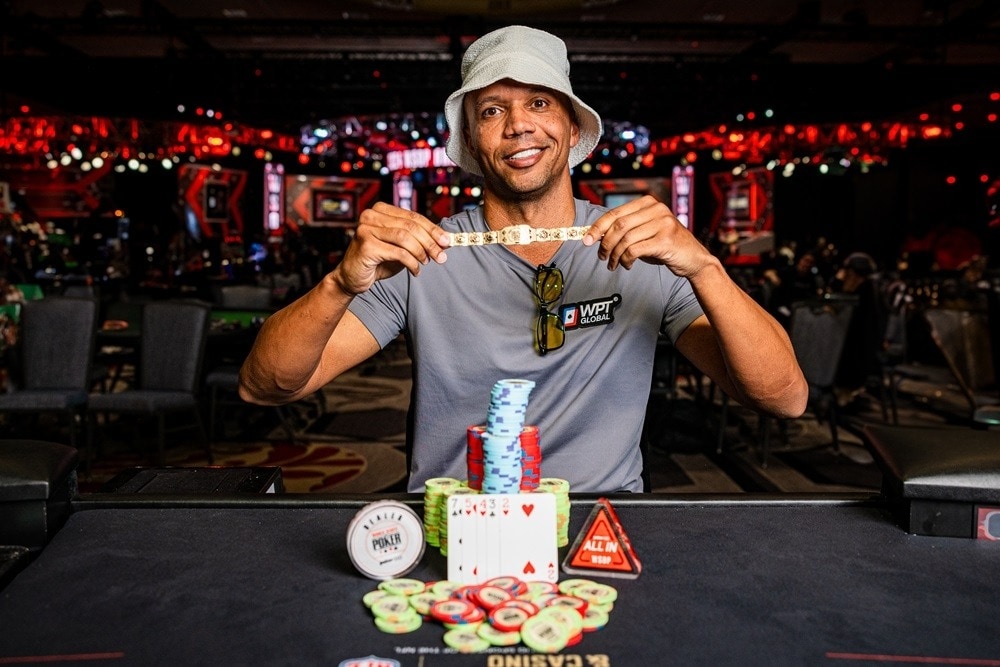
Table of key results
Year | Tournament | Discipline | Place | Payout | Career significance |
2000 | WSOP | Pot-Limit Omaha | 1st | $195,000 | First gold bracelet. Beat old-school legend Amarillo Slim heads-up. |
2002 | WSOP (three events) | 7-Card Stud, Stud H/L, S.H.O.E. | 1st | $357,980 (combined across three events) | Record — 3 bracelets in a single summer series. Cemented his status as the strongest all-around player |
2008 | WPT L.A. Poker Classic | No-Limit Hold'em | 1st | $1,596,100 | First World Poker Tour title |
2009 | WSOP Main Event | No-Limit Hold'em | 7th | $1,404,014 | The tournament of the year. Ivey's run to the "November Nine" sparked huge viewer interest. |
2014 | Aussie Millions $250k Challenge | No-Limit Hold'em | 1st | $3,582,753 | Biggest live tournament win of his career and part of the historic Melbourne hat-trick |
2024 | WSOP | Limit 2-7 Triple Draw | 1st | $347,440 | Historic 11th bracelet |
2026 | WSOP/ Poker Players Championship | 9-Game Mix | 3rd | $600,698 | Confirmed his class in a marathon of 9 disciplines (from hold'em to lowball). The tournament is considered the ultimate skill test among professionals |
Cash games and online: Behind the official databases
Tournament databases show only a small, public slice of Ivey's career. Since the early 2000s, Phil has been a regular participant in the "Big Game" at Bellagio — a private table at $4,000/$8,000 stakes in mixed games, where Doyle Brunson, Chip Reese, Barry Greenstein, David Grey, and others played. It was the assessment of these peers that shaped Ivey's reputation: Barry Greenstein, in the book "Ace on the River," called him the strongest player he had ever sat down with, while Daniel Negreanu considers Ivey the best all-around player in the world and has compared him to Michael Jordan.
The most famous episode in Phil's cash-game career was his matches against Texas billionaire Andy Beal. Beal challenged professionals to heads-up limit hold'em with stakes up to $50,000/$100,000. In February 2006, after Beal had won more than $10 million from "the Corporation," Ivey sat down at the table and, over three days, won back around $16.6 million, according to participants and journalist Michael Craig. It's important to understand that this was played with the syndicate's money, and Ivey's personal share was never publicly disclosed.
At the same time, Ivey became a star of the television shows High Stakes Poker and Poker After Dark. Having mastered live play under the glare of the TV cameras, Phil carried his dominance over into online poker as well.
During the golden era of Full Tilt Poker, playing under his real name, he earned $19,242,744, recording one of the most profitable upswings in the history of online cash games. However, subsequent sessions under other aliases clearly proved that even professional players are defenseless against variance. According to tracking-service reports, upon returning to Full Tilt under the nickname Polarizing, Phil left more than $5 million at the tables, and his RaiseOnce account on PokerStars went a further $2.5 million into the red.
Another defining side of his life has been betting and prop bets. Phil made a point of refusing small amounts and regularly made enormous wagers. For instance, his run to the WSOP Main Event final table in 2009 was accompanied by hidden prop bets with his peers — had Phil won the championship, he would have collected around $3 million from his opponents.
The American press has discussed an episode from 2008, in which Ivey allegedly bet $2,000,000 on the Los Angeles Lakers to win the NBA Finals but lost the money after Boston won — though within the professional poker community this story remains at the level of rumor to this day.
And the most famous example of his personal love of gambling was a golf bet against Joe Cassidy at odds of 200:1. In an interview for the Two Plus Two PokerCast podcast, Phil confirmed that he managed to sink a precise shot from 80 yards away, turning his thousand dollars into $200,000.
Playing style and strengths
Working with ranges
Analysis by theorists shows that Ivey calculates his opponent's range of cards based on incomplete data and board texture. Rather than trying to guess his opponent's exact two cards, Phil thinks in terms of ranges, narrowing them down by process of elimination. On the preflop, he outlines a wide spectrum of hands, and then, street by street, cuts away what doesn't fit. The board texture and his opponent's actions serve as his main markers.
For example, if an opponent checks on a dangerous, coordinated board, Ivey excludes sets and two pair from their range, since strong but vulnerable hands are obligated to defend with a bet. On later streets, he evaluates the balance of value hands and bluffs. One can assume that if an opponent's betting line looks illogical for a strong hand, Ivey interprets that range as mathematically skewed toward a bluff.
Exploitation and adaptation
Ivey notices flaws in his opponents' games and adjusts his bet sizing to target a specific opponent's weaknesses. Renowned theorist and mixed-game professional Phil Galfond has noted that Ivey was never tied to a single mathematical model. Unlike modern players who play purely by GTO, Phil looks to exploit specific opponent mistakes.
According to Daniel Negreanu, Phil's main strength lies in how quickly he reads individual weaknesses in opponents' strategies on the fly. Barry Greenstein, in "Ace on the River," summed up that Ivey surpasses everyone else in his ability to stay focused and make optimal decisions under heavy psychological and financial pressure.
Aggression as a pressure tool
Ivey regularly uses heavy raises and 3-bets in spots where his opponent is forced to make decisions with a borderline range. Phil applies aggression not for the old-school purpose of gathering information, but as a way to seize the initiative and knock his opponent out of their comfort zone. By creating pressure on the preflop and flop, Phil collects fold equity and denies opponents the chance to cheaply realize the equity of their vulnerable hands.

Versatility
Eleven WSOP bracelets, won across nine poker variants, is a statistical fact proving a deep understanding of limit math. In mixed games like 2-7 lowball or seven-card stud, it's impossible to win on intuition alone. Ivey's deep runs in the annual WSOP mixed-discipline marathons prove his ability to adapt his strategic thinking to polar-opposite poker models.
Psychological control
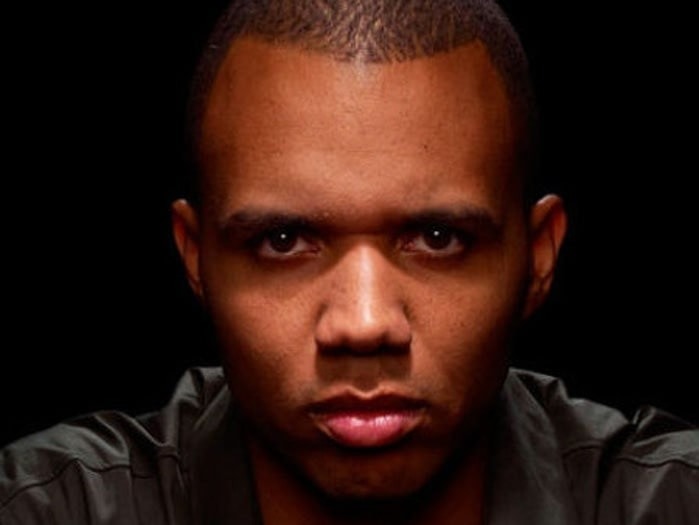
Ivey's famous hypnotic stare serves an important practical purpose. Phil's opponents have noted in interviews on more than one occasion that at the most tense moments, his face and body become completely still. Ivey fully conceals his emotions so as not to give opponents a single clue, while simultaneously watching them closely — picking up on the slightest hesitation before they make a decision.
The ability to admit his own mistakes
In professional poker, greatness is defined not by the absence of mistakes, but by how quickly a player admits them and their ability to suppress their ego in order to grow. In fact, the legendary player's main strength lies in his ability to dissect his own actions and learn from others, as confirmed by those closest to him.
Annie Duke (in her book "Thinking in Bets") recounts an episode from 2004: after winning a tournament, Ivey had dinner with her brother Howard Lederer, and instead of celebrating the win, he spent the time analyzing decisions and lamenting hands where he'd made mistakes.
Daniel Negreanu (on Joe Ingram's podcast):
"What makes Phil great is the complete absence of ego when it comes to learning. If he sees a young player doing something better than him, he won't say, 'I'm Phil Ivey, I know poker better.' He'll sit down and start asking questions like a beginner, just to figure out where the gaps are in his own strategy."
Best hands
Hand 1. Against Chris Moneymaker, WSOP ME 2003
It's the bubble stage of the final table at the 2003 WSOP Main Event. 10 players remain — the next elimination sets the final table. Phil Ivey defends the big blind with 9♠️ 9♥️ against a preflop raise from Chris Moneymaker holding A♥️ Q♦️.
On a Q♥️ 6♠️ Q♠️ flop, Moneymaker flops trip queens, and Ivey calls one bet with his pocket pair. The turn brings the 9♣️, turning Ivey's hand into a full house. Moneymaker fires a $200,000 barrel. Ivey, recognizing his hand is now ahead of his opponent's range, moves all-in for his remaining $220,000. Moneymaker calls. Ivey's mathematical equity at this point is 83% to win versus his opponent's 17%. The river brings the A♠️, giving Moneymaker a higher full house and eliminating Ivey from the tournament.
Decision breakdown. From a poker theory standpoint, there's no alternative line in Ivey's actions. This hand is a classic cooler. The strategic task for a player in such scenarios is to get the entire available stack into the middle as quickly and firmly as possible while their range holds a mathematical advantage.
In an interview, Ivey confirmed a conversation with Barry Greenstein, admitting that from the standpoint of no-limit hold'em theory — which Phil was only just beginning to grasp in 2003 — his flop call with pocket nines against an aggressive Moneymaker looked questionable:
"Barry told me back then, 'I would have folded on the flop.' And he was right. But I called the flop because I understood exactly where Chris was at. I felt his hand, and I knew that if I hit my out on the turn or river, we'd be getting all the chips in. And that's exactly what happened."
Why this hand matters. This flop exploit confirms that Ivey was playing to his specific opponent from the very start, setting up conditions to extract maximum value. The fact that his opponent's 17% came in on the river is pure variance, which doesn't change the accuracy of Ivey's plan for the hand.
Takeaway for beginners. Never judge the quality of your play by the result of a specific pot. After a painful bad beat, break the hand down action by action. If the mathematically correct decision at each point was profitable, your strategy was correct.
Hand 2. Against Lex Veldhuis (High Stakes Poker, Season 6, Episode 8)
A dynamic duel unfolded at the table of this legendary deep-stacked cash-game show. Barry Greenstein opens the betting with a $5,500 raise holding Q♣️ 10♦️. Phil Ivey, having just successfully bluffed two streets against another opponent, decides to ignore the weakness of his own cards and announces a 3-bet to $18,000 with 5♠️ 2♦️. Sitting behind him, young Dutch professional Lex Veldhuis looks down at K♥️ J♥️ and re-raises Ivey, making it a 4-bet to $51,600.
Greenstein folds, and the action comes back to Ivey. The standard GTO decision with offsuit 5-2 against a 4-bet is an obvious fold. However, Ivey pulls off a deep exploit. Instead of folding quickly, he asks Veldhuis how big his remaining stack is. Getting the answer "A hundred forty-something," Phil, without a flicker on his face, announces a 5-bet all-in. Veldhuis pauses briefly, sighs, and folds his hand, handing Ivey a massive preflop pot with 5-high.
Decision breakdown. Interpreting this hand, we can conclude it was a successful application of the leverage concept. Veldhuis had been playing aggressively at the table up to that point. Ivey assumed his opponent's range was skewed toward a bluff and forced Lex to make a decision for his entire stack. The Dutchman folded the better hand, since Ivey's all-in looked, from his opponent's perspective, like pocket aces or kings.
Why this hand matters. The hand has gone down in history as one of the greatest preflop bluffs ever shown on television. It clearly proves that at the highest level of live poker, table dynamics and an understanding of opponent psychology can devalue the absolute strength of your cards.
Takeaway for beginners. Poker is a game of uncertainty, where the strength of your hand always depends on context, as well as on both your opponent's behavior and your own. In live poker, the winner isn't the one dealt the best starting hand, but the one who knows how to seize the initiative and create unbearable conditions for their opponent.
Earnings and net worth
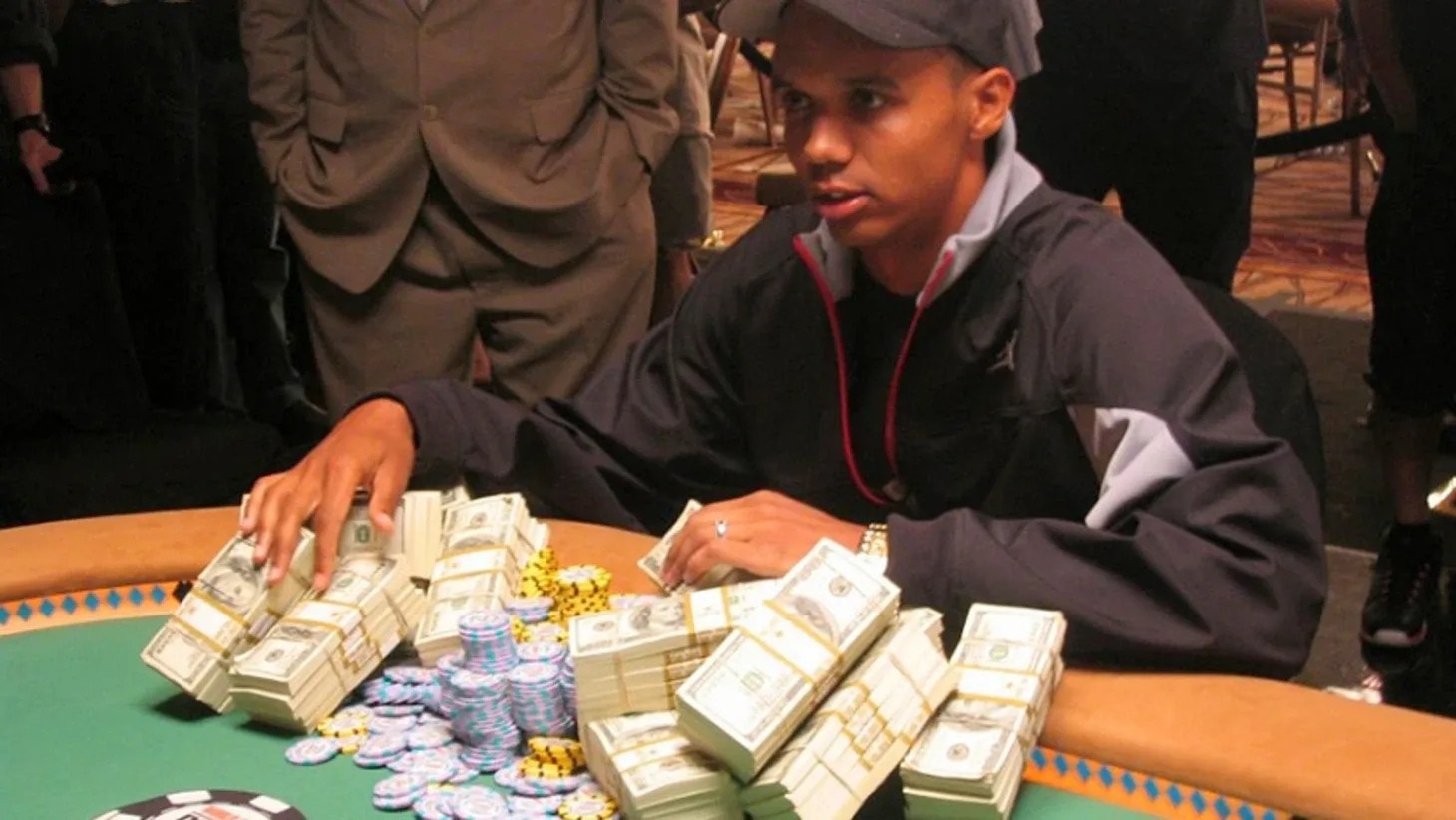
As of September 2026, The Hendon Mob database records $56,074,164 in total live tournament earnings for Phil Ivey across 269 cashes. This amount places him 11th in the global All Time Money List, 7th among American poker players, and 1st among players from the state of New Jersey.
The largest single payout of Phil's career remains the $3,582,753 he received for winning the Aussie Millions $250,000 Challenge in February 2014. Ivey officially crossed the $56 million mark during the Triton Poker series in Jeju in the fall of 2026.
That said, in the sports industry it's important to clearly distinguish between "winnings" and "net income." Tournament earnings are payouts that don't account for buy-ins, taxes, logistics costs, or the cut that players pay to their backers.
That's exactly why it's impossible to determine a poker player's real net profit from public databases. The situation is further complicated by the fact that throughout his career, Phil Ivey has made money in private cash games at ultra-high stakes, the financial results of which are never published. To date, there's no reliable, confirmed public estimate of Phil Ivey's personal net worth.
Metric | What it means | Source |
Live tournament cashes | Total sum of all live tournament payouts (not the same as net profit) | |
WSOP earnings | $22,893,879 | |
Biggest cash | $3,582,753 | |
Net worth | The player's personal net worth, accounting for all assets, business interests, and liabilities | No public expert estimates are available |
Edge sorting and legal battles
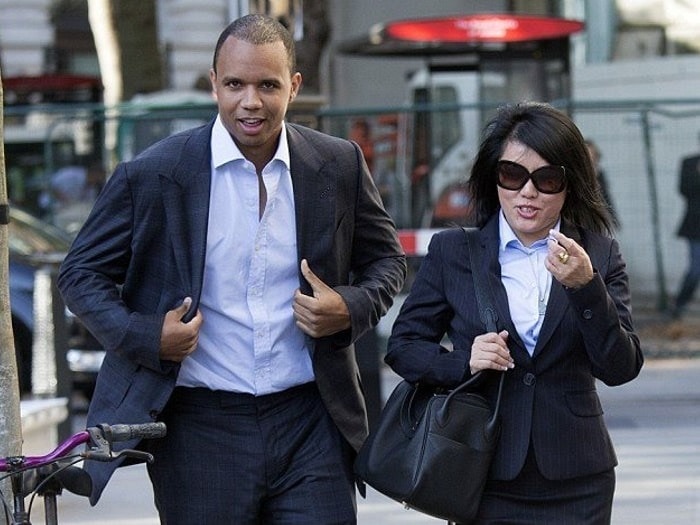
The most discussed part of Ivey's biography has nothing to do with poker. In 2012, he played baccarat at two casinos, and both stories ended up in court.
How the scheme worked
Some decks of cards have a microscopic asymmetry in the pattern printed on their backs. It was Cheung Yin "Kelly" Sun who noticed that on cards made by manufacturer Gemaco, the pattern on one long edge differed from the opposite one. Ivey didn't understand the finer points of sorting, but his name and multimillion-dollar bankroll were essential for Kelly to gain access to private tables.
Using his VIP status, Ivey made a series of demands to the casinos — to play in a separate room, to be given a specific deck, and to have a dealer who spoke Cantonese. Citing "superstitions," Kelly asked the dealer to rotate key cards valued at 7, 8, and 9 by 180 degrees before sending them to the discard pile. The automatic shuffling machine mixed the cards but didn't change their orientation. On the next pass through the deck, Kelly Sun would read the pattern on the back of a card before it was revealed and tell Ivey in Cantonese where to bet — on "Player" or on "Banker." This scheme eliminated the house edge and gave the players an advantage over the casino.
Two main legal cases
Borgata (Atlantic City)
Between April and October 2012, Ivey and Sun won around $9.6 million playing baccarat over four visits. The casino paid out the winnings, then filed a lawsuit in 2014. In December 2016, federal judge Noel Hillman ruled that the players had breached their contract with the casino, since using "marked" cards violated New Jersey's Casino Control Act, though the court rejected the fraud claims. In 2018, Ivey and Sun were ordered to return $10.1 million. The casino tried to seize Phil's winnings at the 2019 WSOP in Nevada, but in July 2020 the parties reached a confidential settlement, finally closing the dispute.
Crockfords (London, Genting)
In August 2012, Ivey and Sun won around £7.7 million at the London club over two days. However, British management, suspecting something was off during an internal review, returned only Phil's £1 million deposit to him, withholding the full amount of his winnings. Not one to back down, Ivey himself sued the casino in 2013, making the story public. The High Court, the Court of Appeal, and the Supreme Court all denied Ivey's claim for the £7.7 million. The Supreme Court ruled that the use of edge sorting constituted cheating under the rules of Punto Banco and a breach of an implied term of his contract with the casino. Ivey was not criminally charged.
Is Phil Ivey a cheater
Phil Ivey has never been convicted of fraud, and no criminal charges have ever been brought against him. The British court found his actions to be cheating solely in the context of the civil contract between the player and the casino, while the American court found a breach of casino rules.
At the same time, the judges officially acknowledged that Ivey genuinely did not consider his actions to be cheating. He was convinced he was legally exploiting the casino's inattentiveness and a flaw in the Gemaco card backs — a defect the management could have fixed in a minute simply by switching decks. The court found the poker player to be honest in his beliefs, but ruled that a player's personal opinion doesn't make their actions lawful.
Personal life
In 2002, Phil married his high school sweetheart, Luciaetta Ivey. In December 2009, the marriage was officially dissolved in the state of Nevada. The process received wide press coverage due to a subsequent dispute over the integrity of the court proceedings. Luciaetta's lawyers filed an appeal after discovering that Ivey had made a donation to the election campaign fund of the judge who handled their case and approved the terms of the property division. The details of this case and the official ruling of the Nevada Supreme Court confirm that the ex-wife's claim of judicial bias over a $5,000 contribution was ultimately dismissed. In the current media landscape, Phil keeps his marital status private, not disclosing information about his personal relationships.
Among Ivey's confirmed interests outside the poker table are golf, basketball, and big sports bets. At the same time, the poker player is actively involved in philanthropy. In 2008, he founded the Budding Ivey Foundation, named after his grandfather. For years, the foundation has sponsored educational programs and raised funds to help children from disadvantaged families.
The geography of Ivey's life has always tracked poker trends. After 2012, he moved to Asia, becoming a key figure in the private high-stakes cash scene in Macau and Manila. However, since 2022 Phil has returned to regular appearances in the United States, reclaiming his status as the leading media figure at the World Series of Poker, WPT Global, and Triton Poker.
What he's doing now
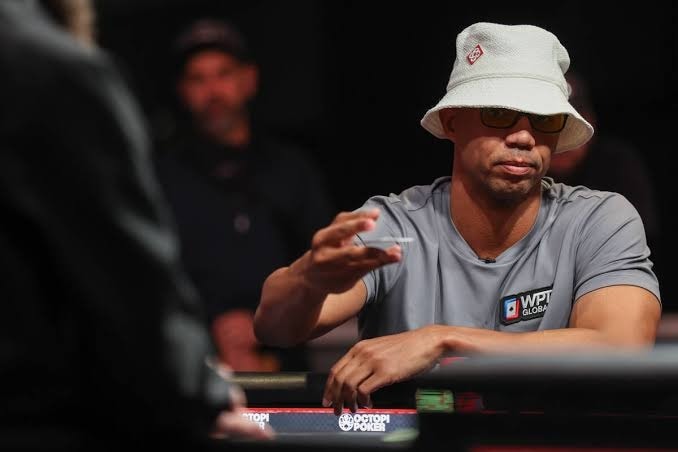
Phil Ivey remains an active professional player. He travels extensively around the world as a WPT Global ambassador and continues to deliver strong results.
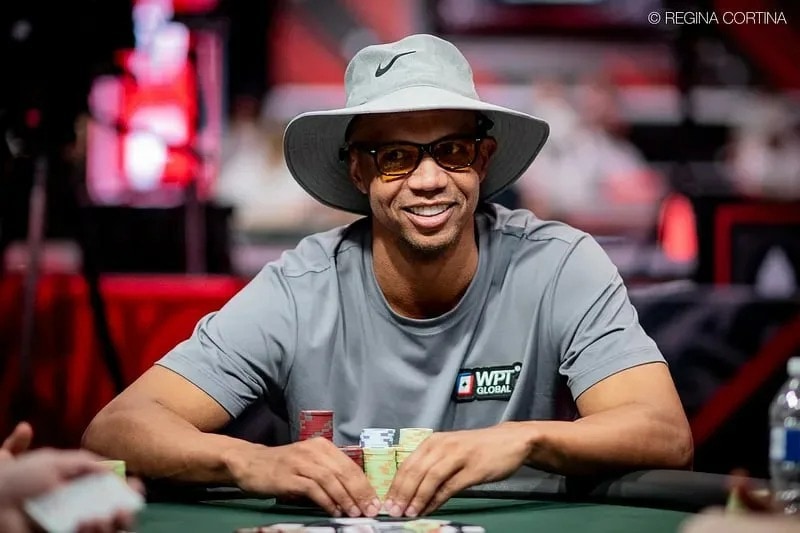
At the 2022 WSOP, he finished 2nd in the $100,000 NLH High Roller ($1,172,659), in 2023 he won two Triton London events, and in 2024 he claimed his 11th bracelet. In 2025, he finished 4th in the $150,000 NLH at Triton Montenegro ($1,482,000) and 3rd in the $100,000 NLH Onyx series in Cyprus ($1,080,000). At the recent WSOP 2026, Phil once again showcased his skills as an all-around player, finishing third in the $50,000 Poker Players Championship.
Phil's current position in the GPI world live tournament player index (154th place) reflects only his selective approach to the schedule, as he skips cheaper events. At the same time, other numbers demonstrate his true scale within the industry. In the historical popularity ranking of profiles on the leading poker portal The Hendon Mob, Phil Ivey holds 2nd place in the world, trailing only Daniel Negreanu in number of views. A quarter-century into his high-stakes career, he remains a player whose moves at the table continue to captivate the audience.
What a beginner can learn
A breakdown of Phil Ivey's career shows that the key factor behind his long-term success is fundamental playing discipline. We've identified four key lessons a beginning player can take from the legend to build a successful career:
1. Separating the quality of your play from the final result.
Ivey's main mental skill is emotional neutrality toward variance. Losing to Chris Moneymaker on the river in 2003 or losing five million dollars online didn't make Phil change his logic. Poker is a long-run game. The only thing you can control is the accuracy of the decisions you make.
2. Developing versatility and flexibility in your poker thinking.
Studying mixed disciplines teaches you to understand limit math and the mechanics of how hand values shift from street to street on a deeper level. The more polar-opposite poker models you master, the faster your thinking will adapt to unconventional lines from opponents in classic hold'em.
3. Professional focus and observation of the field.
Early in his career, Ivey spent hours sitting in the spectator seats at Atlantic City casinos, meticulously studying other players' reactions and timing tells. At the table, Ivey scans opponents for nonverbal cues while simultaneously controlling his own behavior, denying opponents any information.
4. The ability to admit your own mistakes and revisit your decisions.
Ivey never created the illusion of his own infallibility. Professional growth is impossible without a willingness to regularly question your own actions. You need to build the habit of thoroughly reviewing your own sessions, identifying systematic mistakes, and adjusting your strategy.
Building such a system on your own and finding the weaknesses in your own strategy is a tough challenge — one that Phil Ivey spent years of trial and error working through. Today, beginning players can cover that same ground many times faster by training with the FunFarm team. Under the guidance of coaches, ranges, psychology, and session reviews are worked through systematically.

Free course · FF Start
Poker without the confusion
Master the basics and know what to do at the table from your very first hands.
Frequently asked questions
Read next
Стивен Чидвик: биография, достижения и стиль игры
Крис Манимейкер: биография чемпиона WSOP и человека, изменившего покер
The Story of Fedor Holz: From Prodigy to Elite High Roller