Chris Moneymaker: the biography of the WSOP champion who changed poker
How Chris Moneymaker went through online satellites and won the WSOP 2003, what the "Moneymaker effect" changed, how he plays, and what he's doing now.
You're an ordinary accountant from Tennessee, raising a three-month-old daughter, working evenings at a restaurant to pay off credit card debt. One evening you register for an online tournament, and a few weeks later you're sitting under the glare of TV cameras in Las Vegas, across the table from the stars of world poker.
Chris Moneymaker is the man who pulled off the biggest upset in poker history. By winning the WSOP Main Event in 2003, he not only won $2.5 million but also launched the "Moneymaker effect" — proving that an amateur could beat the pros and become a millionaire.
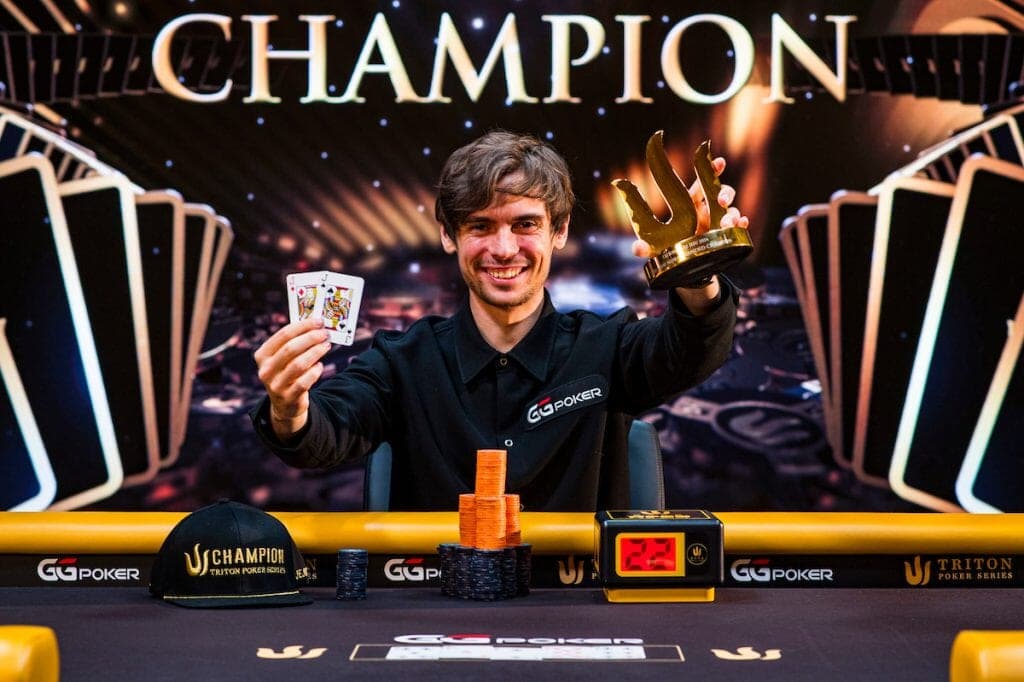
Twenty years later, Chris proves his victory was no fluke. In 2019 he was inducted into the Poker Hall of Fame, and in 2023–2024 he performed successfully on the Triton series, collecting seven-figure payouts. Today he is an ambassador for ACR Poker and the founder of his own series, the Moneymaker Tour.

New breakdowns in your inbox
Subscribe to the FunFarm newsletter: fresh Poker ABC articles and material that helps you grow as a player.
Chris Moneymaker: the essentials
Full name: Christopher Bryan Moneymaker
Date and place of birth: November 21, 1975, Atlanta, Georgia, USA
Online nicknames: Money800 on PokerStars, Moneymaker on ACR Poker
WSOP bracelets: 1
Live tournament earnings: $8,649,423 (according to Hendon Mob)
Biggest career win: $2,500,000
Current status: Active professional player, ambassador for ACR Poker, organizer of the Moneymaker Tour.
PokerStars online satellites: how Chris Moneymaker made it to WSOP 2003
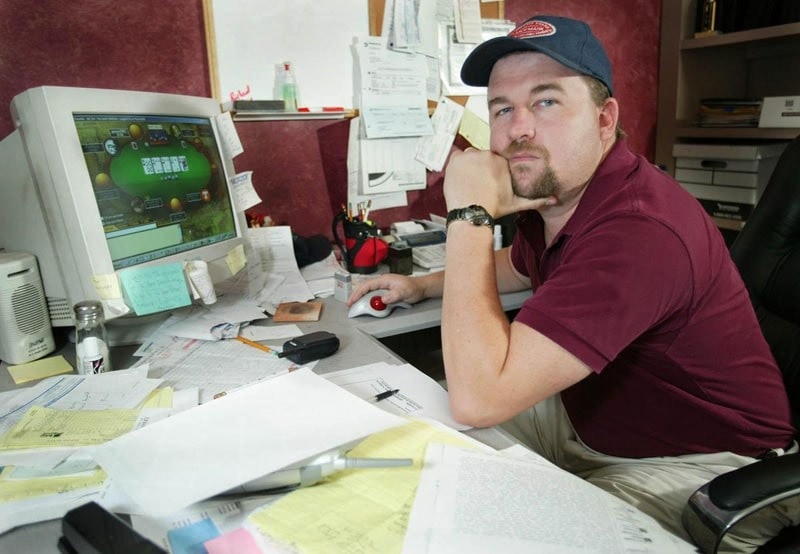
The story that Chris got to the WSOP for $39 is a beautiful legend that marketers have pushed to the extreme. In an interview with Tight Poker, Moneymaker himself admitted that his path consisted of several steps. He really did start with $39 sub-satellites, but he won the key ticket in an $86 online tournament on PokerStars, which he entered completely by accident, having mixed up tabs in the lobby.
At the time Chris was working as an ordinary corporate accountant. Money was tight, his credit cards were maxed out, and at home a wife and a three-month-old daughter were waiting for him. The irony of the story is that Chris didn't actually need the trip to Las Vegas. In that tournament, the top three places each received a WSOP entry package worth $10,000, while 4th place earned a cash prize of $8,000. Moneymaker desperately needed that cash to pay off his debts. At the final table he deliberately tried to bleed off his chips, but apparently the poker gods had other plans — Chris won and took the Vegas package instead.
Chris had no money for the trip to the WSOP 2003. He'd won the buy-in itself online, but had nothing to cover travel and the hotel. To find money for expenses, he had to sell half of his future winnings to his father and a close friend for $5,000. That financial support from loved ones changed the history of world poker.
The Main Event and the Moneymaker effect
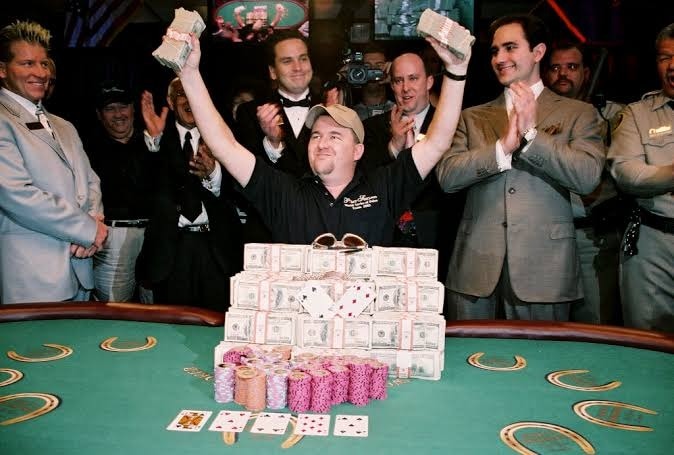
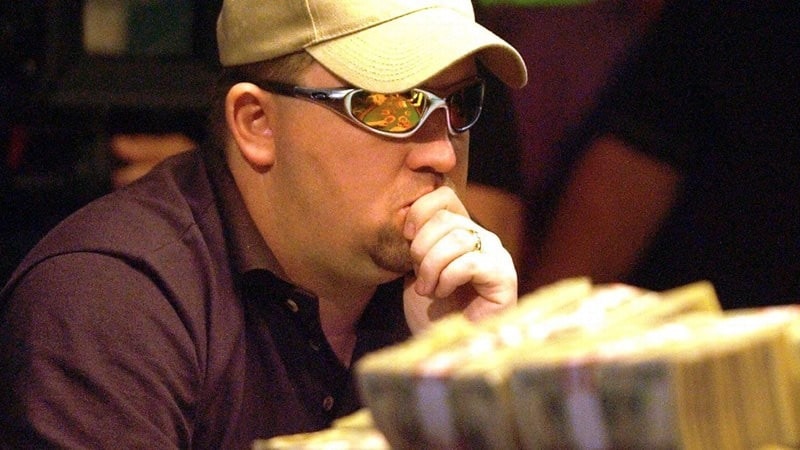
In 2003 the WSOP Main Event drew 839 entrants — a modest number by today's standards, but a huge and intimidating field for someone playing his first live tournament. He played the entire tournament in a white baseball cap and sports sunglasses. Right up to the end, the pros saw him as just a tourist and didn't take the guy seriously. As it turned out — they were wrong.
Moneymaker broke the pros' patterns simply because he didn't know how to play "correctly." Opponents used to calculated plays couldn't make sense of the logic behind his moves.
Moneymaker himself recalled his playing style from that time in his autobiography:
"In 2003, my entire strategy came down to playing strictly in position and only entering pots with hands that could make the absolute nuts. I played incredibly tight because I genuinely thought my opponents could read minds."
Over the course of the tournament, Chris pulled off two major upsets:
He removed the "Poker Michael Jordan" from his path. One step away from the final table, Chris personally eliminated Phil Ivey — a 26-year-old grandmaster who by that point already had four championship bracelets and was considered the best player in the world. Moneymaker ran over the genius on the river, took his massive stack, and robbed the tournament of its biggest favorite.
He pulled off the historic "bluff of the century" in the final heads-up against Sam Farha, breaking him psychologically and clearing his own path straight to the championship title.
Read also:
Phil Ivey's biography and playing style
Chris's victory lined up perfectly with a revolution in television. It was in 2003 that ESPN fundamentally changed its approach to poker broadcasts, turning the card game into a gripping sports reality show. Instead of an hour-long highlight reel of the final hands, ESPN for the first time launched the tournament as a seven-episode mini-series, filming players from the very first days. For the first time at the WSOP, hidden Pocket Cams built into the rail of the table were used, along with graphics showing real-time win-percentage calculations.
Millions of viewers watched the drama of the game unfold with their own eyes and witnessed an ordinary accountant ruthlessly bluffing against established poker stars and beating them. This triggered an instant chain reaction, and already by 2004 the Main Event field had grown to 2,576 players, while online rooms were swept by a wave of new registrations. Poker stopped being a closed-off pastime forever, turning into a multibillion-dollar global sport.
Moneymaker's famous hands
The hand against Phil Ivey (WSOP 2003)
The bubble stage of the WSOP 2003 Main Event final table.
Phil Ivey defends the big blind with 9♠️ 9♥️ against a preflop raise from Chris Moneymaker holding A♥️ Q♦️. On a flop of Q♥️ 6♠️ Q♠️, Moneymaker flops trip queens, and Ivey calls one bet with his pocket pair. The turn brings the 9♣️, which turns Ivey's hand into a full house.
Moneymaker fires a second barrel of $200,000. Ivey, believing his hand is ahead of his opponent's range, moves all-in for his remaining $220,000. Moneymaker calls. At that moment, Ivey's equity is 83% against his opponent's 17%. The river brings the A♠️, giving Moneymaker the higher full house, and he eliminates Ivey from the tournament.
The hand between Moneymaker and Ivey is a classic cooler — a situation where both opponents played the way they were supposed to, but variance happened to favor Moneymaker at that moment.
The hand against Sam Farha (WSOP 2003)
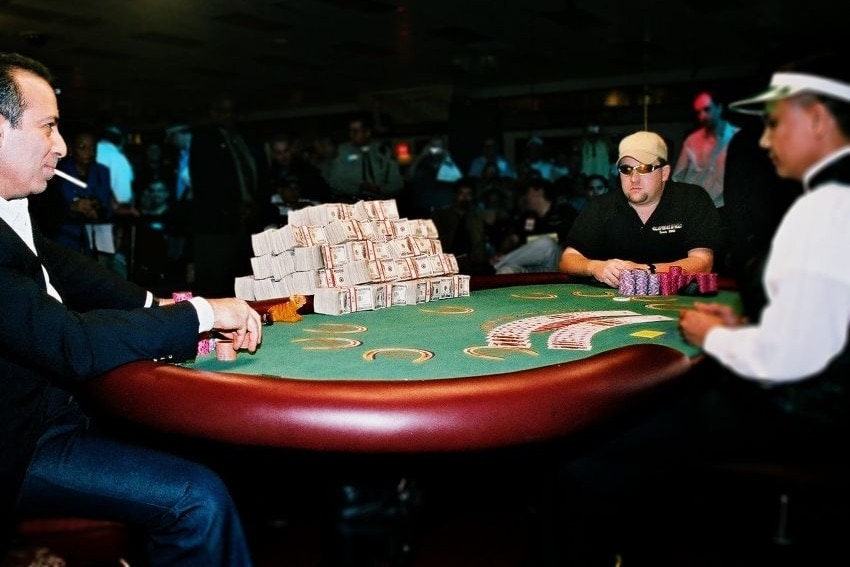
In the final heads-up, Chris faced an experienced opponent and an icon of old Las Vegas — Sammy Farha. He embodied everything ordinary people love about the movie image of a gambler: custom-tailored suits, an unbuttoned shirt collar, massive gold chains, and the iconic unlit cigarette in his teeth "for luck." Farha tried to press the amateur with sheer authority, but Chris executed a bluff that made it into every textbook.
Chris Moneymaker: 7♠️ K♠️
Sam Farha: 9♥️ Q♣️
Board: 9♠️ 2♦️ 6♣️ 8♠️ 3♥️
Preflop, Moneymaker opened with a raise from the button, and Farha defended his big blind. On the flop of 9♠️ 2♦️ 6♣️, Farha hit top pair, but decided to play from a check. Moneymaker checked back as well.
Everything changed on the turn when the 8 of spades landed. Farha decided to take the pot and bet 300,000 chips. At that moment Moneymaker turned on maximum aggression. Holding only the King of spades and faint straight chances, he announced a huge raise to 800,000. Farha accepted the challenge and called.
The 3♥️ river didn't help either player. Farha checked again, and Chris announced all-in. Moneymaker made Farha believe he had made his straight. After thinking it over, Sam Farha folded the best hand, and just a few hands later, the accountant Chris Moneymaker became world champion and won $2.5 million.
Years later, in the Grantland project, Sammy commented on this bluff:
"It was the worst bluff of the year, but it worked for one simple reason: I out-bluffed myself."
The PokerNews portal, together with poker theorist Dara O'Kearney, analyzed the hand using computer simulators in the piece "Analyzing Moneymaker's 'Bluff of the Century' Against Farha".
Solvers consider 7♠️ K♠️ a poor bluffing candidate. Chris blocked the King of spades, which reduced the chances of Sammy having a flush, but otherwise the hand was air. In modern GTO strategy, the computer chooses to fold or check 85% of the time, calling Chris's river all-in a mistake. Meanwhile, Sammy Farha made plenty of mistakes himself, bloating the pot on the turn with an unnecessary overbet, and then making another mistake on the river by folding. Heads-up, that's a strong enough hand to call down bluffs.
But the 2003 final was a psychological war, not a battle of robots. Chris played aggressive poker, building enormous pots. And Sammy Farha fell victim to his own assumptions. He was certain that a frightened amateur wouldn't dare bluff a million dollars on live television.
Read also:
How to bluff correctly in poker
Learning at FunFarm, from any level
Moneymaker's career after the win
After his historic victory, Chris Moneymaker immediately faced enormous pressure. For a long time the poker community considered him a man who had simply gotten lucky with cards once in his life. At live tables, Chris became a target — every reg felt it was their duty to teach the "online upstart" a lesson. But Chris found the strength to prove he wasn't just a lucky passenger.
As early as March 2004 he took second place in the WPT Bay 101 Shooting Star, collecting $200,000, and in 2011 he reached the final of the iconic NBC television show National Heads-Up Championship, where he lost a close battle to the legendary Erik Seidel. In 2019, he was officially inducted into the Poker Hall of Fame for his invaluable contribution to popularizing the game.
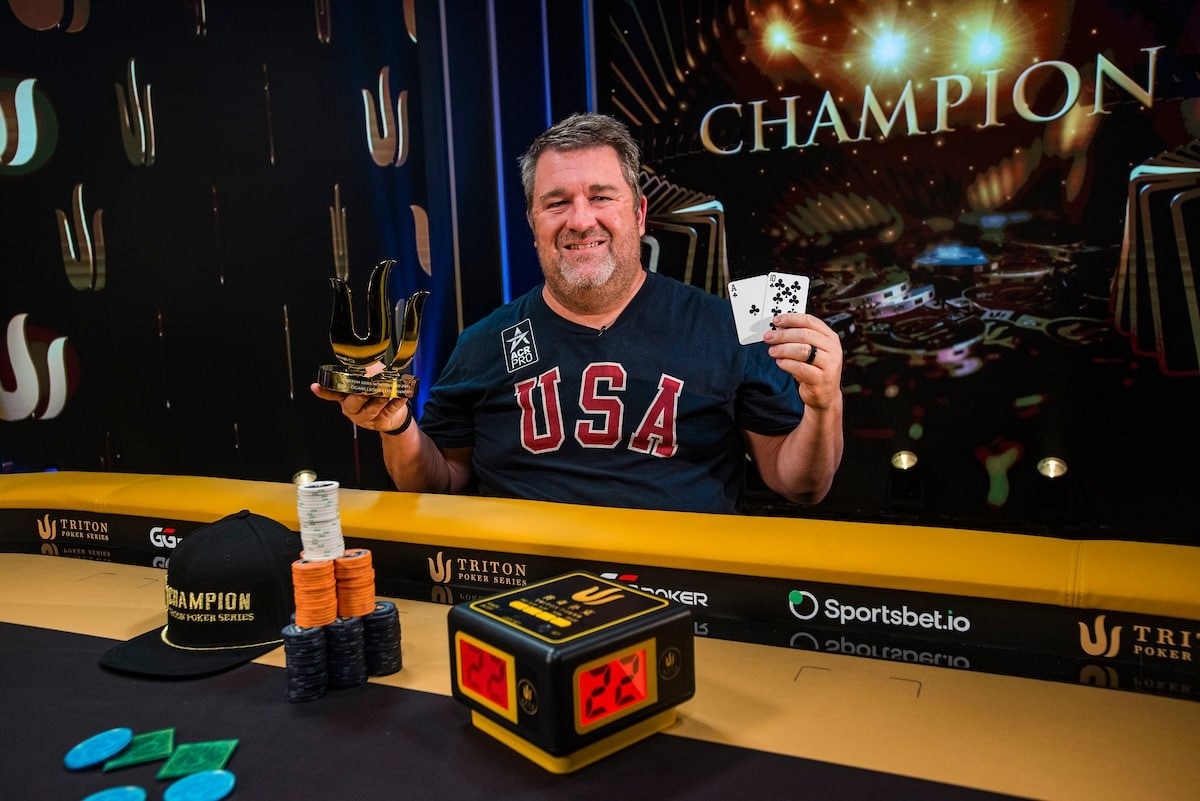
A real second wind hit Chris in 2023–2024. Older now, but just as fearless as ever, he unexpectedly burst onto the elite high-roller Triton series. In London in 2023, Chris made it to 5th place in the Luxon Invitational with a $250,000 buy-in, earning himself a check for $2,030,000. And in the spring of 2024 in Montenegro, Chris finally completed the circle — building back up from a single big blind, he outplayed the elite in the GGMillion$ tournament, won $903,000, and claimed his first Triton series title.
This comeback was the result of a strategic reset and adjustments to his game. In an interview, Chris noted that modern poker has changed a great deal. He hired professional coaches, rebuilt his thinking with the help of solvers, and learned to play wider through calling, finding the thinnest value where previously he would have simply played passively. He stopped being a "target" at the table in the eyes of the community and turned into a dangerous, high-level regular.
Table of key results
Tournament | Place | Prize | Career significance |
WSOP Main Event 2003 | 1st | $2,500,000 | Only WSOP bracelet of his career |
WPT Bay 101 Shooting Star 2004 | 2nd | $200,000 | Confirmation of his professionalism right after the championship |
Triton London 2023 | 5th | $2,030,000 | Second-largest cash of his live career |
Triton Montenegro 2024 | 1st | $903,000 | First win on the Triton series |
From PokerStars ambassador to ACR Poker
17 years with PokerStars
Right after his WSOP 2003 win, Chris signed a contract with PokerStars that would shape the company's marketing for a decade and a half. Moneymaker, under the nickname Money800, became the room's main marketing tool. His job was to travel to tournaments and use his own example to prove to amateurs that repeating the $86 satellite case was genuinely possible.
This partnership lasted 17 years and ended in late 2020. The two sides parted without any scandal. Moneymaker explained the decision as a matter of shifting life priorities.
Move to ACR Poker
In early 2021, Moneymaker became the face of ACR Poker. In the room's lobby, he plays under the nickname Moneymaker.
Chris was never a classic online grinder running GTO models across a dozen tables at once. His online activity now consists of streams, media sessions, and playing at high stakes. At the same time, it's impossible to objectively assess his net financial results online. According to Moneymaker himself, online cash games are primarily a way for him to stay sharp and test strategies against the new generation of regs.
Moneymaker Tour
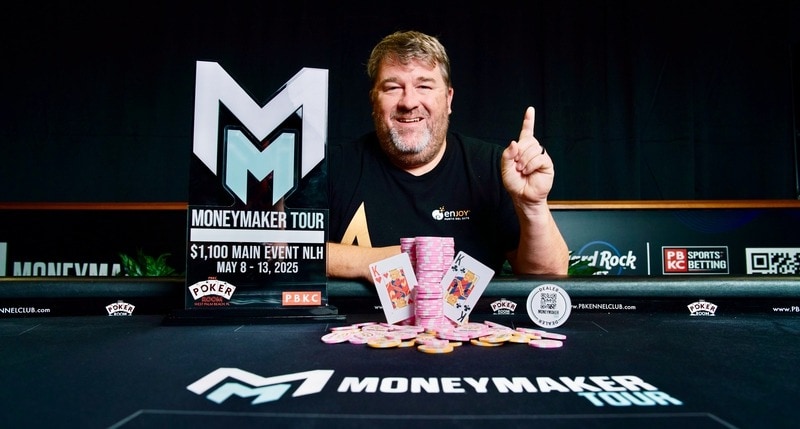
Chris's main current business project is his own live tournament series, the Moneymaker Tour, launched in 2023. Rather than simply selling a franchise, Moneymaker created a full-fledged tournament product aimed at the mid-stakes segment.
The project quickly outgrew the format of local American tournaments. Today the Moneymaker Tour is an international series with a packed schedule of stops. The calendar includes both accessible regional tournaments and Main Events with solid guarantees, held in major poker destinations from Florida to Aruba. Moneymaker personally attends every stop, generates traffic for partners, and plays in the tournaments of his own series.
Earnings and income
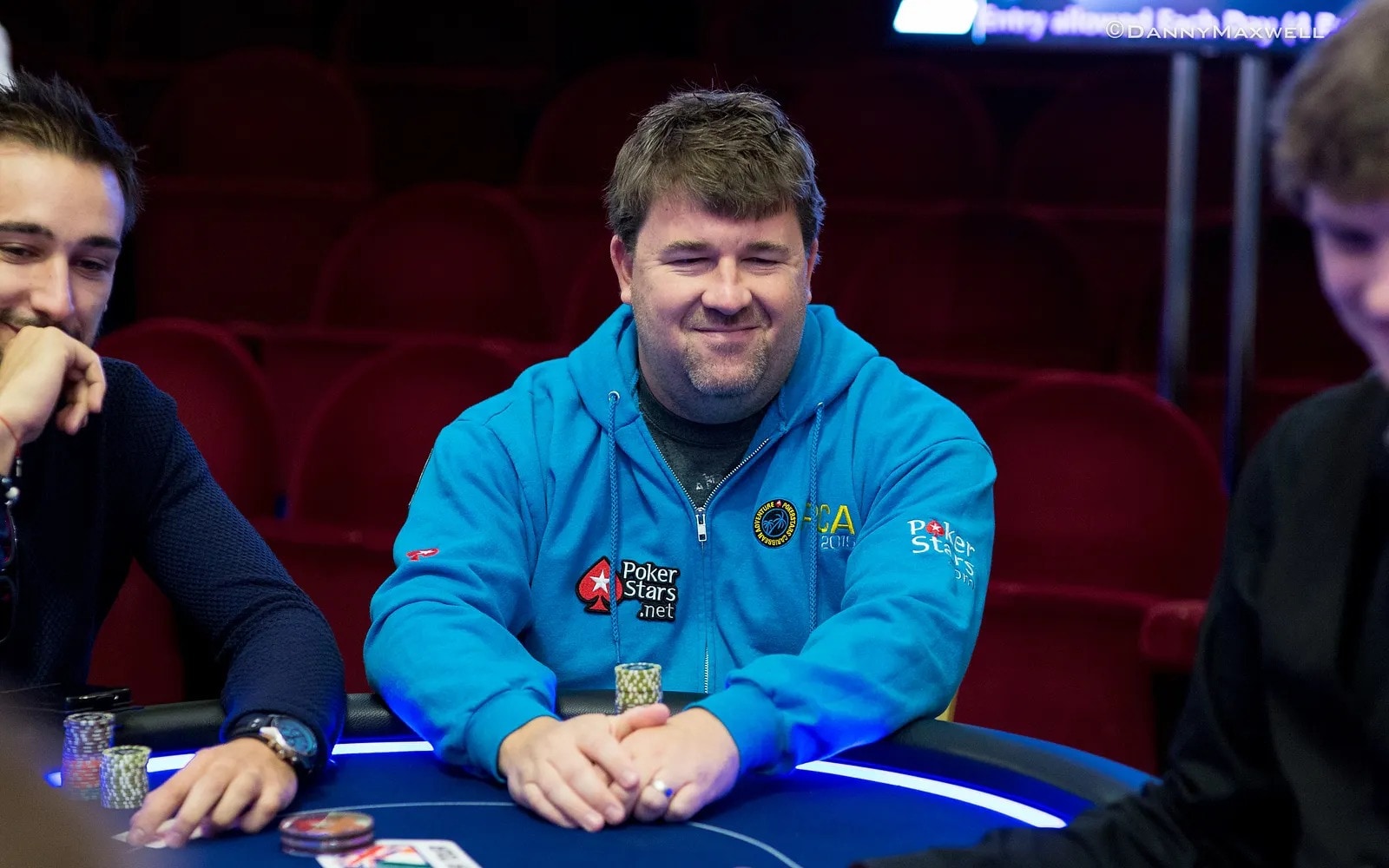
As of October 2026, the The Hendon Mob database records $8,649,423 in total live tournament earnings for Chris Moneymaker across 164 cashes. This figure puts him at 242nd place in the worldwide All Time Money List, 108th among American poker players, and 1st among players from the state of Tennessee.
The biggest single payout of Chris's career remains the $2,500,000 he received for winning the WSOP Main Event in May 2003. Moneymaker officially crossed the $8 million mark during the Triton Poker high-roller tournaments in London and Montenegro.
However, in the sports industry it's important to clearly distinguish between "winnings" and "net income." Tournament prize money is a payout figure that doesn't account for buy-ins, taxes, logistics costs, or the percentages players pay out to their backers.
That's exactly why it's impossible to learn a poker player's real net profit from public databases. The situation is further complicated by the fact that throughout his career Chris Moneymaker has earned money in private cash games at various stakes, as well as received large sponsorship payments from his contracts with PokerStars and ACR Poker, the financial details of which are never published. To this day, there is no reliable, confirmed public estimate of Chris Moneymaker's personal net worth.

Poker-adjacent scandals
The PayPal scandal
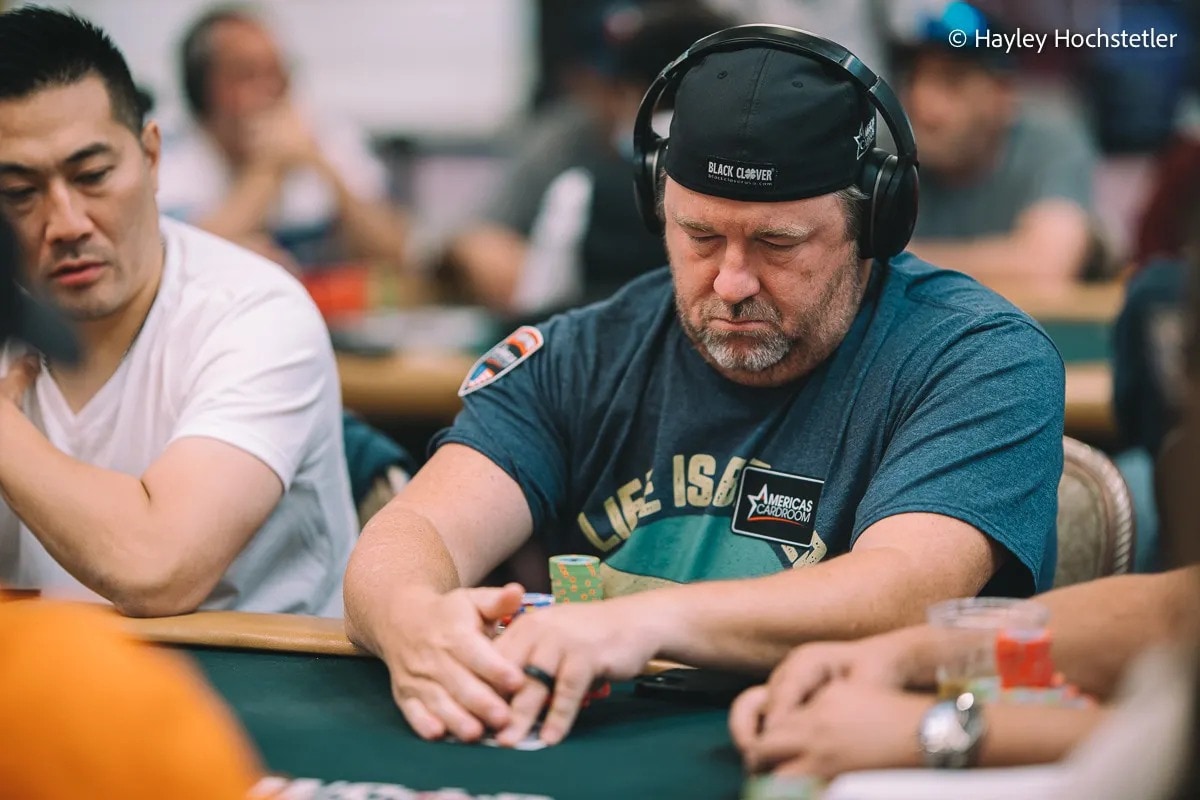
In 2021, Moneymaker made headlines by waging war against the payment giant PayPal. The system blocked his personal account without explanation and unilaterally seized $12,228 that he had collected from friends for entry into a legal fantasy football league. Citing vague "violations of the user agreement," the corporation effectively kept the money for itself.
Chris hired the well-known attorney Eric Bensamochan and publicly announced that he was preparing a class action lawsuit on behalf of thousands of affected users. The champion's media clout worked like a battering ram — fearing a reputational scandal, PayPal quietly and promptly returned every cent of Chris's money. Since Moneymaker's own claims had been satisfied, he withdrew his personal demands and was no longer listed among the official plaintiffs in the high-profile class action Evans v. PayPal, though activists continued the legal battle without his direct involvement.
The clash with the Kentucky prosecutor
In the fall of 2022, Chris decided to open his own space for players — the Moneymaker Social Club in the town of Paducah, Kentucky. The venue didn't take a classic rake, instead running on membership fees and hourly seat charges, which appeared perfectly legitimate under state law.
The project was ultimately killed by the local district attorney. Just a few days before the official opening, he issued a public warning, stating that the legal loophole wouldn't hold up, and threatened the owners and management with criminal prosecution under statutes on facilitating illegal gambling. Chris was faced with a choice — get dragged into a years-long legal battle with the risk of jail time, or shut it down. Moneymaker chose the latter, protecting himself and his team.
Personal life

Chris Moneymaker's personal life changed immediately after his WSOP 2003 victory. His first marriage couldn't withstand the test of fame, while his second became his anchor for the twenty years that followed.
At the time of his triumph in Las Vegas, Chris was married to Kelly Wellman. The couple was raising a three-month-old daughter, Ashley. It was Kelly who had previously insisted that Chris stick to his stable job as an accountant and not spend the family budget on poker.
The sudden win of $2.5 million and his status as the face of the global poker industry destroyed that marriage. Chris spent up to 300 days a year on the road. Kelly wasn't ready for the public attention and the lifestyle that came with such a schedule. In 2004 the couple filed for divorce. The split happened without any loud legal scandals, and Chris later admitted that it was precisely the sudden fame and his desire to become a touring player that were the main cause of his first marriage's collapse.
In April 2005, Moneymaker married for a second time, to Kristy Wren. In his second marriage, Chris had three more children. Chris has repeatedly emphasized that his decision to end his 17-year contract with PokerStars at the end of 2020 was driven purely by family considerations.
Takeaways for beginners
Chris Moneymaker won because he managed to force seasoned professionals into an uncomfortable, aggressive style of play. He adapted at just the right moment to the fact that his status as an "online amateur" made regulars underestimate his actions, and he backed up that approach with a timely dose of tournament luck.
What can a beginner take away from this case?
1. Understanding variance.
The hand against Phil Ivey, where Chris was behind on the turn and caught a lucky out on the river, clearly illustrates that over the short distance of a single tournament, chance can outweigh skill. A mistake many beginners make is treating a single big upswing as proof of their own skill or of poker's guaranteed profitability. In poker, long-term success is measured across hundreds and thousands of similar situations, where expected value matters far more than one lucky river.
Read also:
Variance in poker
2. Table image as a tool of disguise
One of Moneymaker's main lessons in the game is the effective use of your own image. Professionals in 2003 saw him as a typical online amateur, bound to make dumb mistakes and fold under pressure. Chris turned that underestimation to his advantage. Understanding exactly how your opponent perceives you, and acting against their expectations, is an important skill in live play.
3. Decisions based on range and on the specific opponent
The famous bluff against Sam Farha wouldn't have worked against a mathematical algorithm, but it succeeded against a specific person. Moneymaker made his decision based on his opponent's narrow range and his psychological state at that particular moment of the heads-up — he understood that Farha saw him as a cautious amateur incapable of bluffing his entire stack in a WSOP final. That allowed Moneymaker to force his opponent to fold the best hand.
Beginners need to learn to read board texture, narrow down their opponent's possible holdings, and pick up on their opponent's mental state.
Moneymaker's case has gone down in history. Today the game doesn't forgive mistakes, and a lucky river is no substitute for quality preparation. To turn poker into a profession and earn consistently, you need a systematic approach — one that exists at the FunFarm school. Submit an application and start building your career with a team that has developed hundreds of successful players.

Free course · FF Start
Start making sense of poker
Rules, hand rankings, positions and first strategies — in a clear system built for beginners.
Frequently asked questions
Read next

Tom "durrrr" Dwan: the biography of a high-stakes poker legend

Poker as a profession: how to become a professional player
Steven Chidwick: biography, achievements, and playing style