A poker deck has 52 cards.
Let's discuss how many cards are dealt in poker and whether jokers are used in the process.

Ilya is a Liga 2 player with six years of experience in online MTTs. He graduated from the Faculty of Journalism at RSUH and writes about poker for beginners, explaining complex things in simple, clear language. In his texts, Ilya combines his personal playing experience with his professional journalism skills to help newcomers confidently get into the game.
Most beginning players take their first steps online. In apps and rooms, many actions are automated. The algorithm independently determines opponents' positions, shuffles and deals the cards, compares combinations, and selects the winner. Questions about the deck and its values come up in live games. Let's discuss how many cards are dealt in poker and whether jokers are used in the process.

New breakdowns in your inbox
Subscribe to the FunFarm newsletter: fresh Poker ABC articles and material that helps you grow as a player.
Key facts about the poker deck
Texas Hold'em, Omaha, seven-card stud, draw poker, and Pineapple use a 52-card deck.
Short Deck, or Holdem 6+, is played with a reduced deck of 36 cards. All the twos, threes, fours, and fives are removed from the set. Dropping the low cards changed the ranking of combinations.
Jokers are not used in Texas Hold'em, Omaha, or other types of poker.
Online poker is played with a virtual 52-card deck. The dealer's duties are performed by a random number generator. Its fairness is monitored by licensing authorities. The reliability of the RNG is confirmed by a certificate from an independent company.
How many cards are in the deck depending on the type of poker
The most popular type of poker — no-limit Texas Hold'em — is played with the classic 52-card deck. The same deck is used in most other games:
Type of poker | Number of cards in the deck |
Texas Hold'em | 52 |
Omaha | 52 |
Short Deck | 36 |
Badugi | 52 |
Seven-card stud | 52 |
Draw poker | 52 |
Pineapple | 52 |
Extended sets are used in other card games. For example, canasta uses two decks with jokers. As a result, 108 cards are in play simultaneously. Blackjack is also among the games that use several decks.
When and where card games were invented
The first cards were invented in China. Written sources date the invention of the deck to the 12th century. Cards were made from bamboo, wood, or ivory.
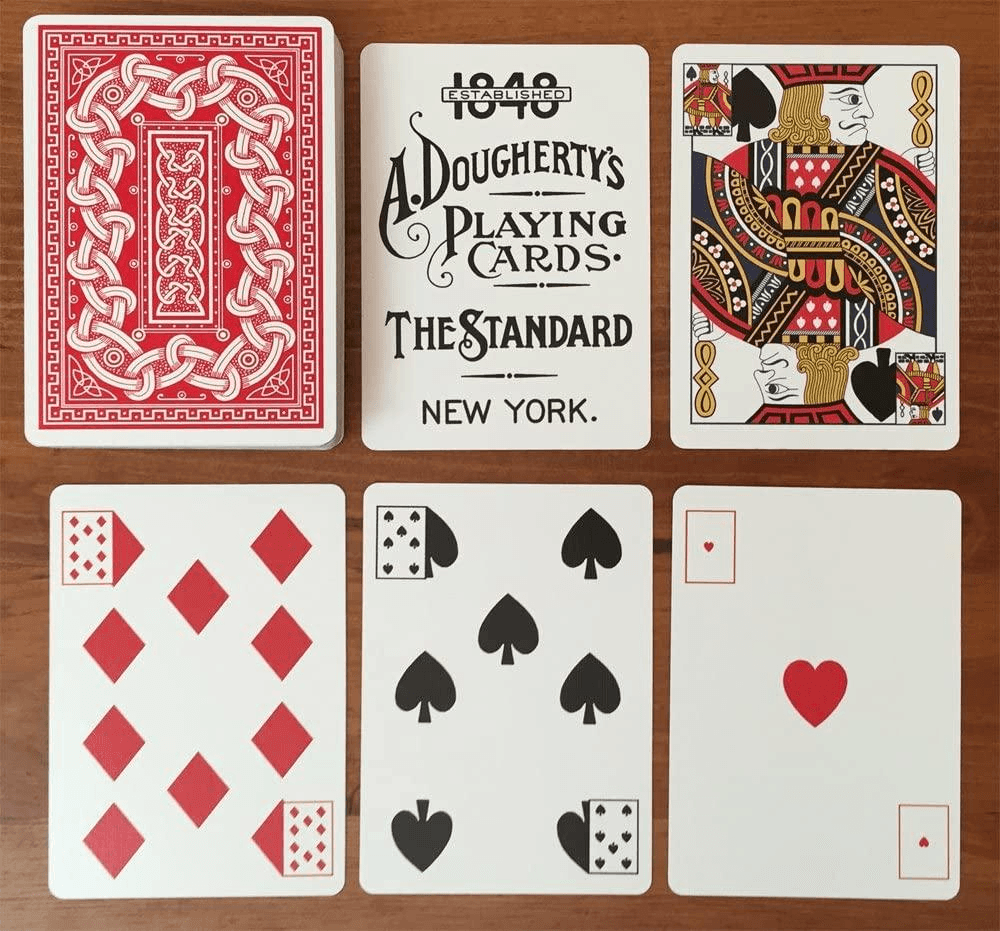
The history of cards spans over 900 years. In the course of its evolution, the deck changed its form and acquired new elements
Soon the game left the borders of China and gained popularity in India and Japan. In the Indian version, the cards took on a round shape. In China, they played with rectangular cards. By the 14th century, the new game reached Europe. Merchants from the Middle East divided the deck into suits. By the 16th century, card games had gained popularity in France, Spain, and Italy.
The history of modern poker began in the mid-19th century in the United States. Seven-card stud and draw poker were invented almost simultaneously. Las Vegas made a huge contribution to the promotion of card games. In 1931, gambling entertainment was legalized in the city. In 1967, Texas Hold'em made its way to Las Vegas. In 1970, the first World Series of Poker was held. In the late 1970s, Omaha was invented. In 1998, Planet Poker opened the era of online poker. In 2003, Chris Moneymaker won the WSOP Main Event and kicked off the "poker boom."
Learning at FunFarm, from any level
The classic 52-card deck — the foundation of poker
Most types of poker are played with a 52-card deck. It includes 4 suits:
Spades — ♠️;
Hearts — ♥️;
Diamonds — ♦️;
Clubs — ♣️.
All suits are equal in strength. The set includes 13 ranks of each suit: twos, threes, fours, fives, sixes, sevens, eights, nines, tens, jacks, queens, kings, aces. Note the dual role of the ace when making a straight. In the combination T-J-Q-K-A, it completes the strongest possible straight. In A-2-3-4-5, the ace acts as the first building block in constructing the combination.
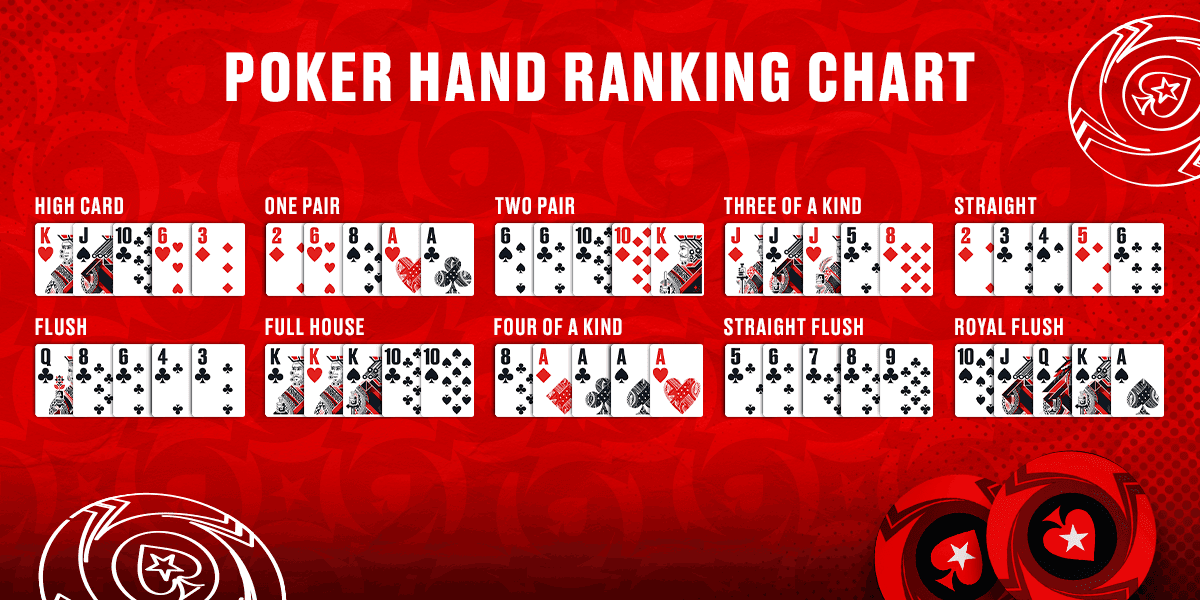
Texas Hold'em, Omaha, seven-card stud, and draw poker use the same rules for the ranking of combinations
Jokers are not used in Texas Hold'em or other types of poker. They are used in other card games, such as canasta.
Short Deck
Short Deck is played with a 36-card deck. The twos, threes, fours, and fives are excluded from the set. Reducing the deck changes the ranking of combinations. Here are the key differences compared to Texas Hold'em:
A flush is stronger than a full house. Excluding the ranks from 2 to 5 makes the single-suit combination rarer.
A set is stronger than a straight.
The weakest straight in Short Deck is A-6-7-8-9.
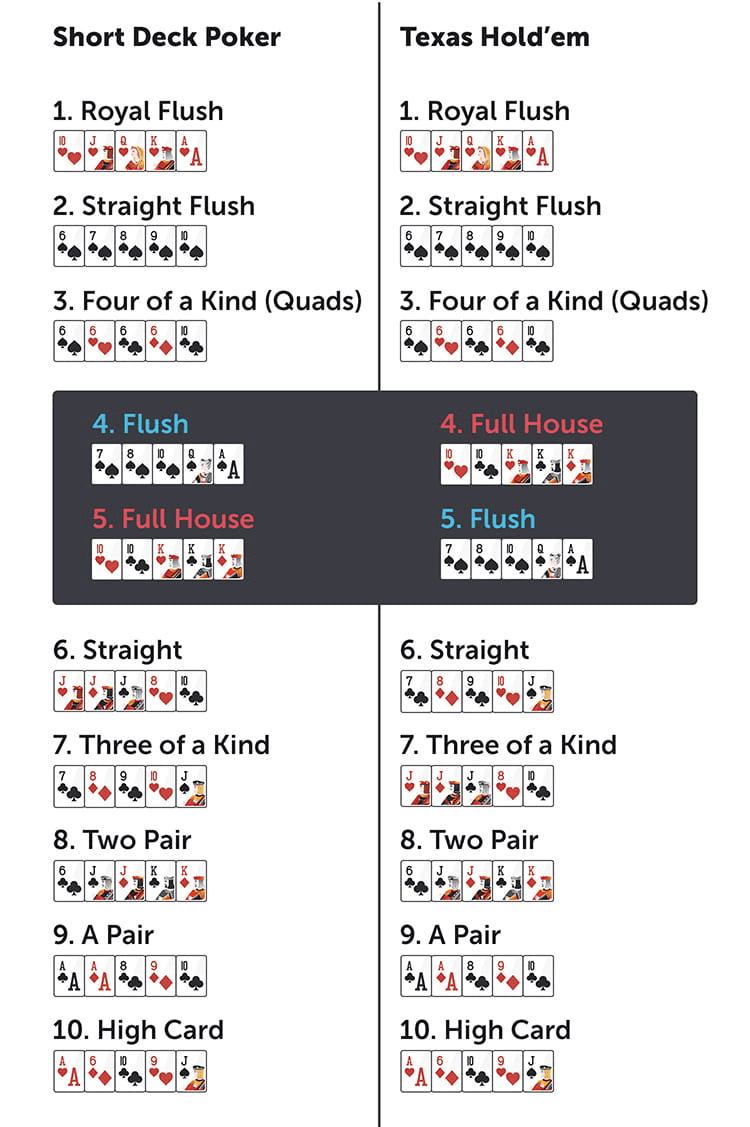
Dropping the low cards changed the odds of making certain combinations. That's why the ranking rules were revised in Short Deck
Short Deck was presented in 2015. Three years later, the card game was shown to the whole world at the Triton Series. Soon, short-deck poker was noticed by online rooms. Dropping the low ranks increased the dynamics of the game. Opponents make strong combinations more often and play big pots. Variance also increased. Short Deck did not become a competitor to Texas Hold'em: over time, interest in short-deck poker faded. POKEROK and RedStar Poker offer Short Deck to play. Among live festivals, the Triton Series stands out. There, 6+ Holdem has retained its popularity.
How many cards are in Texas Hold'em
NL Holdem uses the classic 52-card deck. Jokers are not used in the game. At the World Series of Poker, World Poker Tour, European Poker Tour, and other festivals, a 52-card deck is used. Usually plastic or laminated cards are used. They are valued for their flexibility and durability. At the WSOP, Copag decks are used; at the EPT, Fournier.
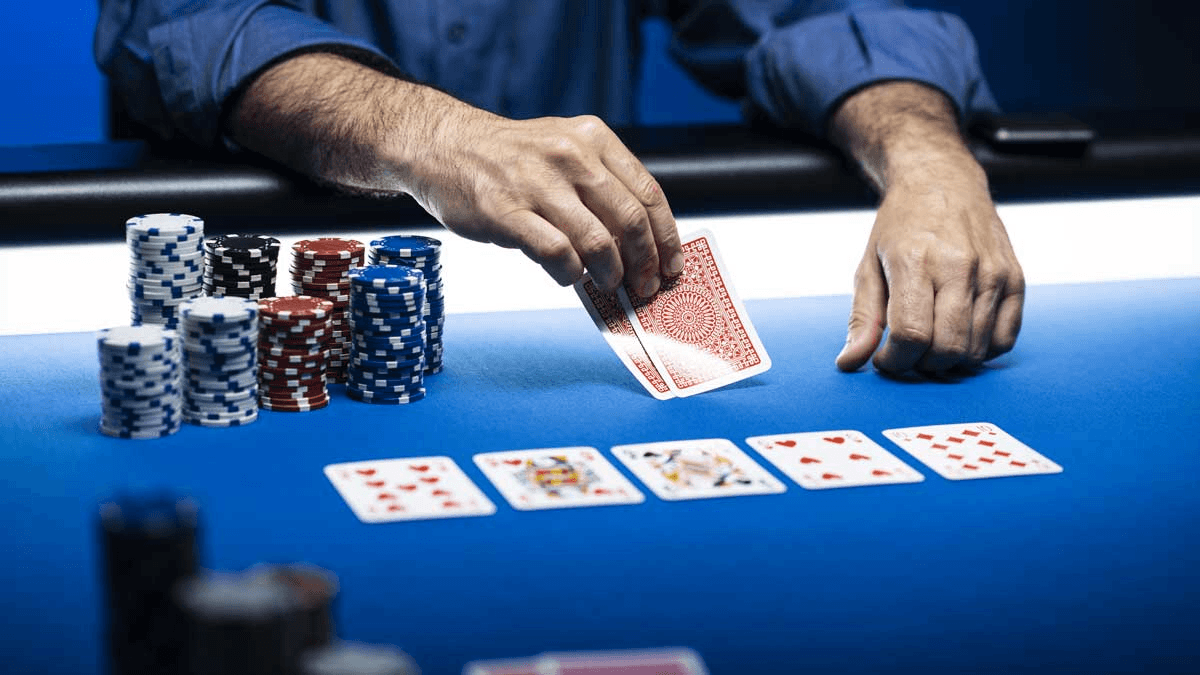
Casinos play with plastic decks. They keep their attractive appearance longer. It is also harder to mark a plastic card
Online, the virtual 52-card deck is shuffled by a special program — the random number generator. The RNG shuffles and deals the cards during the game. A reliable random number generator is the foundation of a poker room's operation. Customer trust depends on its security. If the RNG raises questions, users leave the platform and give it a bad reputation. The fairness of the generator is monitored by licensing authorities and independent companies. After verification, the room is issued a certificate.

How many jokers are in the deck — and what they're for
The rules of Texas Hold'em and other types of poker do not provide for jokers. However, they are often included in the deck. In most cases, the joker serves as a backup card. It replaces one of the deck's cards if it gets lost.
In some games, jokers get an independent role. For example, wild cards are used in joker poker and the Chinese game "Dou Dizhu."
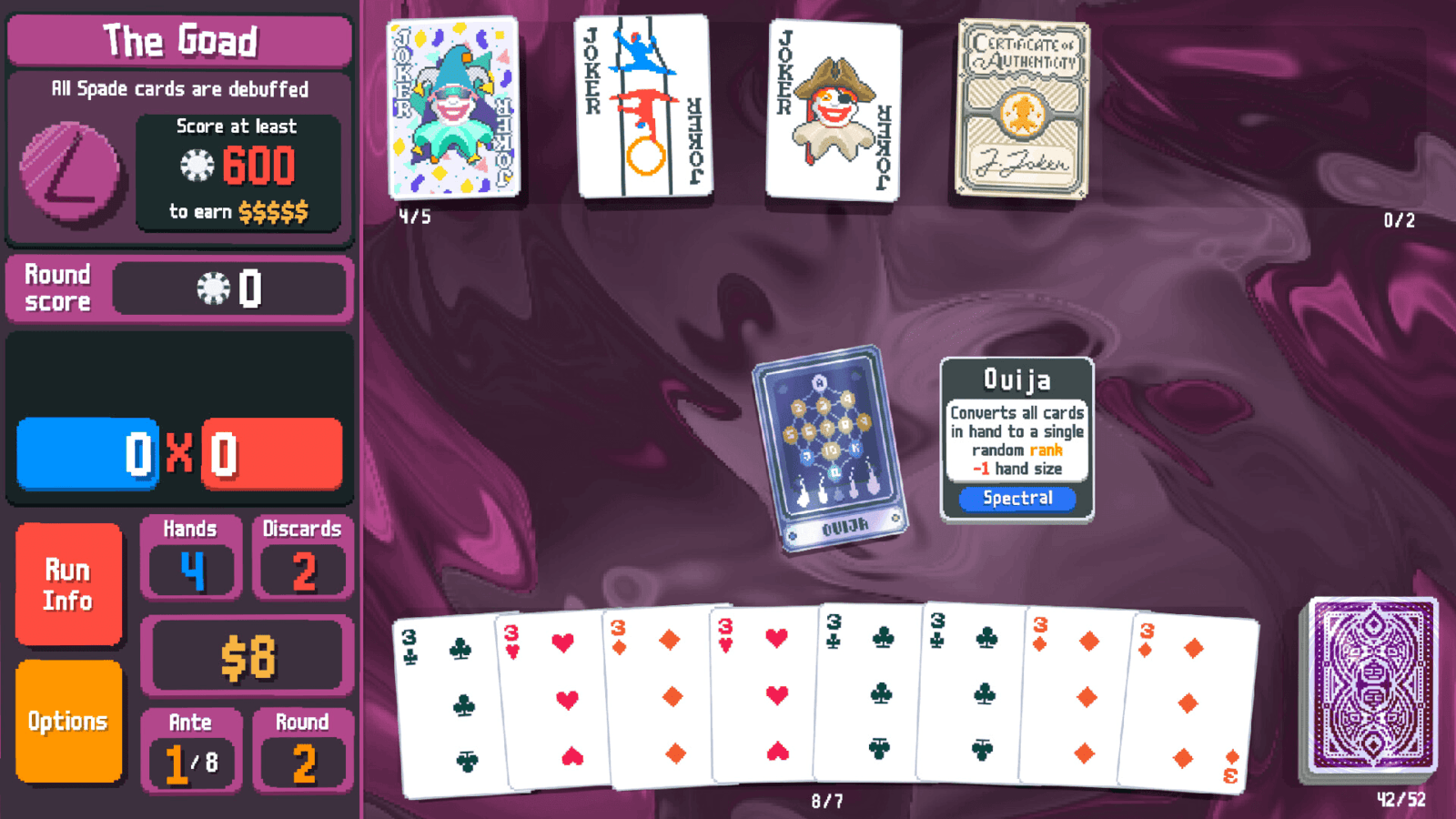
In classic poker, jokers are not used. But they play a crucial role in other games. For example, in Balatro — the hit of 2024
Sometimes jokers also end up at no-limit Texas Hold'em tables. In the WSOP-2026 opening tournament, the dealer put three cards on the flop: the jack of clubs, the king of hearts, and a joker. The hand was voided and dealt again. The video with the joker at the WSOP amused people on YouTube, TikTok, and social media.
How the deck is shuffled and cut
Thorough shuffling of the deck reduces the chance of cheating. Before each hand, the dealer shuffles the cards at least three times. In the process, they use special card-shuffling techniques. At the final stage of preparation, the deck is "cut." This action is performed by the player to the right of the dealer. When cutting, the top part of the deck is moved to the bottom. The procedure prevents players capable of memorizing the sequence of cards from gaining an unfair advantage.

In online poker, the role of the dealer is performed by a random number generator. To prove its fairness, rooms order audits from independent companies
An additional precaution also reduces cheaters' chances — "burning a card." The dealer discards the top card face down into the muck before dealing the flop, turn, and river. Burning prevents cheaters from marking cards. Online, the deck is shuffled by a random number generator. Its operation is checked by independent auditors. The algorithm constantly generates random sequences. As a result, the RNG simulates a perfect shuffle of the deck with millions of combinations.
How to learn to play poker
You can memorize the number of cards in the deck, the ranking of combinations, or the order of betting on your own. However, knowing the basic rules will not turn a green beginner into a seasoned professional. To outplay opponents and earn consistently, you need to improve your skill level. There are different ways to learn to play: watch videos, review hands in software, discuss strategy with colleagues, take lessons from a coach. Finding the most effective method takes time. If you want to speed up your progress, join FunFarm.

School students receive a bankroll for playing, free software, access to a salaried project, round-the-clock support, and other privileges
The FF Start program is suitable for beginning players. The course consists of 30 lessons. During the training, we cover key topics: math, adaptation against different types of opponents, push/fold, and final-table play. The course ends with an exam. Graduates are admitted to the advanced tier — FF Player Path. The program offers the opportunity to get past the microstakes and reach a decent level of income in 8 months.
Free course · FF Start
Start making sense of poker
Rules, hand rankings, positions and first strategies — in a clear system built for beginners.