Heads-Up Poker: How to Win in One-on-One Play
We'll discuss strategy, adaptations to opponents, and other aspects of Heads-Up.

One of our first coaches: on the team since the very founding of the project. He prioritizes simple and practical training with an emphasis on real game situations and decision-making over the long run. Val doesn't just "beat the games" as a player, but also instills a systematic approach to the game and discipline in his students.
The winner of the most prestigious live poker tournament — the WSOP Main Event — took home $10,000,000 in 2025. Their final opponent was paid $6,000,000. The fate of $4,000,000 was decided by one-on-one playing skill. To earn the maximum prize money, a poker player must perform confidently in Heads-Up. Let's discuss strategy, adaptations to opponents, and other aspects of HU.

New breakdowns in your inbox
Subscribe to the FunFarm newsletter: fresh Poker ABC articles and material that helps you grow as a player.
Key facts about Heads-Up poker
Heads-up is a poker format for two players. You can encounter it in MTT finals, HU Sit&Go, and cash.
In one-on-one poker, the small blind gets a positional advantage postflop. The player on the SB acts after the BB.
In HU, opponents make mandatory bets every hand.
Heads-Up strategy implies more active play. To win in HU, you need to play up to 90% of hands on the SB.
In heads-up, psychology is more important than math. The faster a player understands the opponent's line of thinking, the higher the chances of success.
Rules of Heads-Up in poker
The main difference between Heads-Up and other formats is the number of players. At the heads-up table, two opponents do battle.
Every MTT, Sit&Go, and Spin&Go ends with a duel between two players. The difference in prize money makes the skill of playing HU one of the most important in poker
The minimum number of participants changes the rules and strategies. The key differences look like this:
Combined role of the button and the small blind. In classic poker at a full table, the player on the BTN acts last and sees the opponents' actions. In HU, they post the small blind and open the betting preflop. Postflop, the BTN regains the positional advantage: they make their decision after the opponent on the BB. In heads-up, a spot on the BTN doesn't guarantee an absolute edge, but it gives useful information.
Regular mandatory bets. At a nine-handed table, a player can wait for a good starting hand. In heads-up, you can't take a break: both opponents post blinds every hand. If you fold 80% of hands, the bulk of your stack will be gone in 15–20 minutes.
Wide ranges. In Heads-Up poker, a tight strategy won't work. The need to pay blinds forces you to act aggressively. In one-on-one play, it's profitable to enter the hand with 80–90% of starting hands. Many "trash" combinations from classic poker gain value in HU. We recommend folding only hands at the level of 72o, 83o, 94o. For example, J♣️3♣️ goes into the muck at a 9-max table, but in heads-up you raise with it on the SB.
Reduced role of math. To play in the black at 9-max and 6-max tables, you need to align your decisions with math. Is the opponent giving favorable odds to call? How many outs do we have? Will the opponent put in an additional bet on the river? In Heads-Up, observations and psychology come to the fore. If we're confident the opponent has trash, the potential pot odds or GTO frequencies take a back seat.
Heads-Up is one of the most difficult poker formats. In the past, it held a special place in the lobbies of poker rooms. Many platforms offered one-on-one poker in: cash, Sit&Go, and tournaments. The industry leader — PokerStars — paid huge attention to HU. The platform hosted not only the most expensive duels in Heads-Up Sit&Go, but also full-fledged MTTs. Now heads-up has lost ground. Most rooms have removed HU Cash tables from the lobby. Many have also abandoned Sit&Go HU. The format was crowded out by the more dynamic and less skill-demanding Spin&Go tournaments.
Starting hands in heads-up
In heads-up, the preflop range differs radically from other formats. Regular mandatory bets force you to play weak hands. Players on the SB open from 80% to 90% of starting combinations. These include: pocket pairs, suited hands, any combination with a broadway card. The least promising hands go into the fold: 32o-92o, 63o-93o, 94o, T2o.
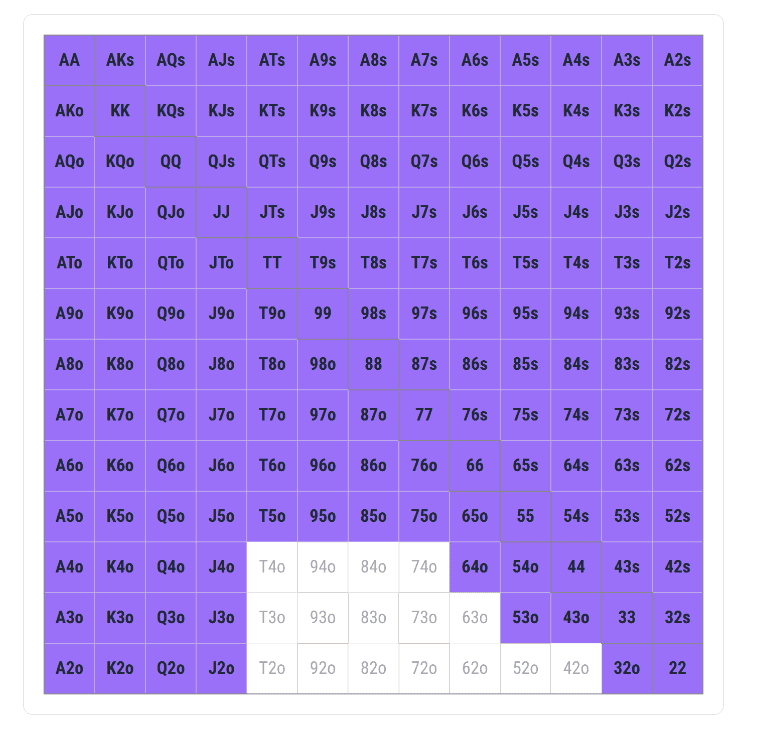
When building your range, take into account your skill level. While getting acquainted with HU, play stronger hands
On the BB, you play a tighter range, but it's still wider than what's familiar for 6-max and 9-max tables. Defend your blinds with: any connector, any pair or ace. Experienced players enter the hand with 70% of their range. They fold on the BB: J2o-32o, J3o-53o, J4o-74o, J5o-85o.
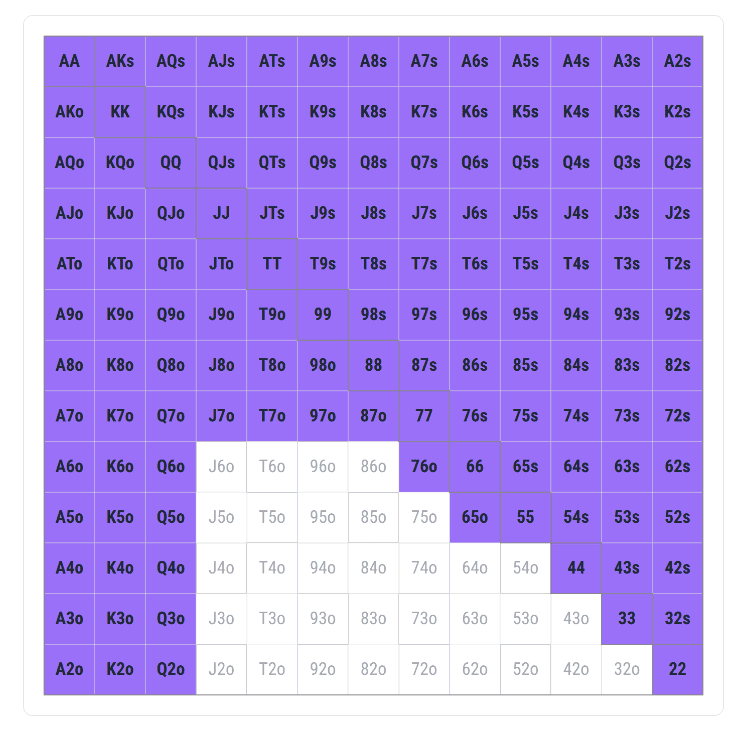
Avoid "default" decisions. Change your strategy depending on the opponent's actions
When constructing ranges, take into account:
Bet size. Against a raise of more than two big blinds, you need to play fewer hands. When a player calls a raised bet, they should win the pot more often. However, without position and initiative, it's difficult to win the pot.
Skill level. Remove the worst hands from your range if you can't play them in the black. Don't enter against raises with Q♣️2♦️ because "you're supposed to." As your skill grows, gradually widen your range.
Against passive opponents, you can apply exploitative techniques, like limps and isolation raises. Calling on the BB will let you play more hands. Aggression in response to the opponent's limps will help you take the pot already preflop. An isolation raise with a strong hand will make it easier to build the pot.
Learning at FunFarm, from any level
Position in heads-up
The result of a hand often depends on position. The player on the SB gets a colossal advantage postflop because they know the opponent's decision. The information allows you to: pick the size of a value bet, take a free card, or pull off a bluff.
For example, Liv made a min-raise on the SB with 9♣️6♣️, and Igor called on the BB with 5♠️5♥️. The board came A♦️8♥️3♠️. Igor checked, and Liv also passed on a bet. The turn brought J♣️, Igor checked again and Liv bet 2/3 of the pot as a bluff. Igor folded. By math, 5♠️5♥️ is far ahead of 9♣️6♣️ and wins 86% of the time. However, Igor showed weakness with two checks in a row, Liv made a bluff bet and took the pot.
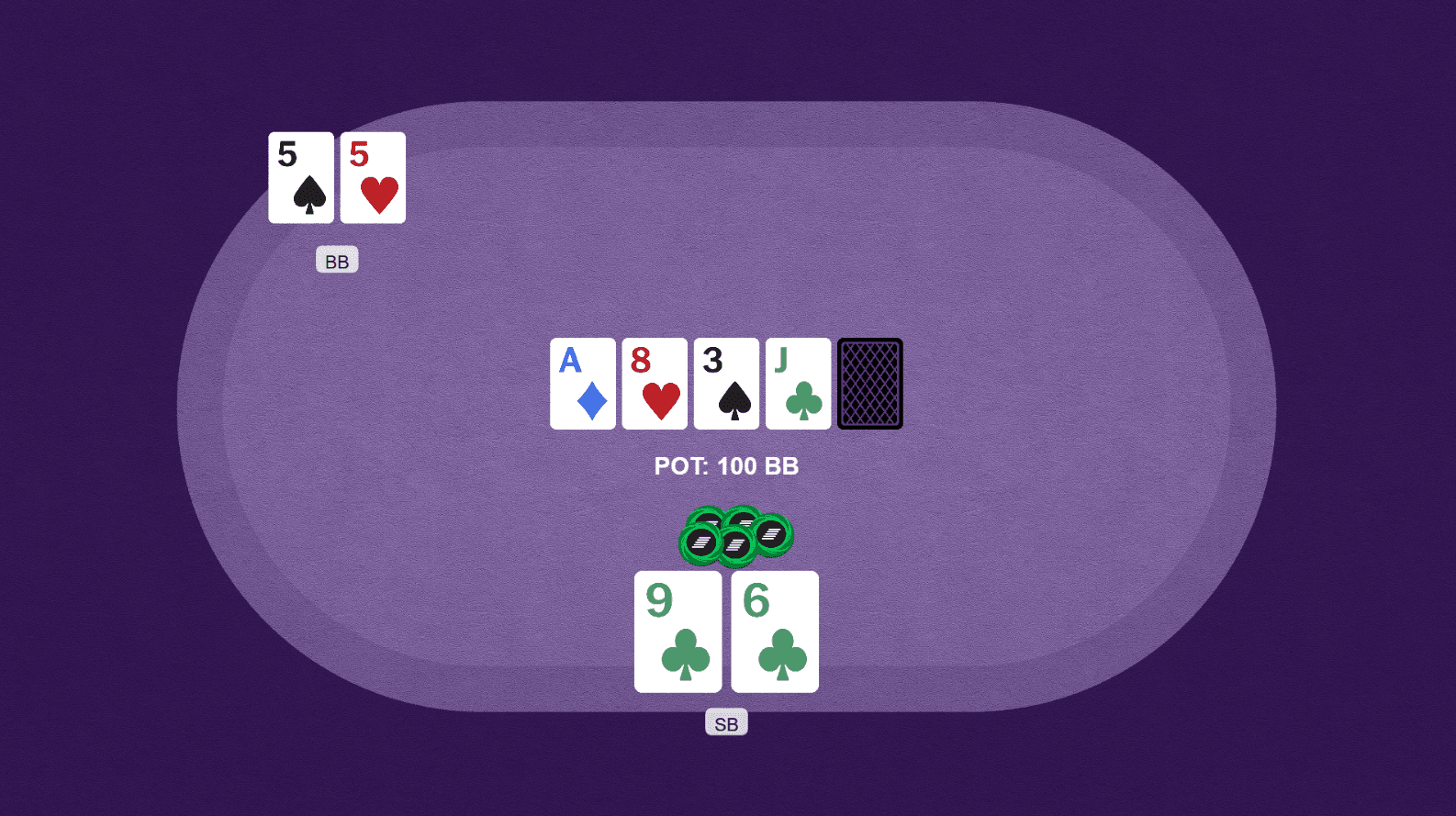
When people talk about the SB and BTN in heads-up, they mean the same position. That's why it's called sometimes the small blind, sometimes the button
The player on the BB acts first postflop and is in an unfavorable spot. Their main weapon is check-raises with made combinations. They're not always allowed to realize their advantage with a strong hand: often the SB checks and takes a free card. As a result, the BB is left with 2 streets to build the pot.
The general recommendations look like this:
On the SB we play wider and bluff more aggressively. On the flop we make c-bets 70-80% of the time.
On the BB we act more carefully and play a tighter range. We make continuation bets in 40-50% of situations.
The positional advantage allows you to win small pots. Over the long run, small wins shape your overall success.
Adapting to the opponent's style
The ability to adapt your strategy to the opponent is a key skill for Heads-Up. The faster a poker player adjusts their playing style, the higher their results over the long run. Top players prepare effective countermeasures against an opponent within just 15-20 hands. High adaptation speed is ensured by "homework." There are no identical opponents in poker, but most opponents can be reduced to a few profiles. Let's discuss them in more detail.
Nit. Plays a tight range. Shows aggression only with strong hands. Bluffs rarely. You can outplay a nit with regular aggression preflop. Sometimes a strategy of raising 100% of your range will also work. Good combinations come rarely, so a tight player won't be able to fight back. If the opponent has figured something out and responds aggressively, then ease off and open strong hands. Postflop, punish passive play with wide c-bets. After 15-20 minutes, stealing blinds will give you a solid chip lead.
LAG. A loose-aggressive player. Enters the hand with a wide range, bets and raises aggressively. Loves to bluff. The optimal strategy against a LAG involves careful play. Let the opponent dig their own grave. Don't get involved in big pots with dubious hands. Lower your requirements for calling big bets: loose-aggressive opponents often overestimate their bluffing skills. In a confrontation with a LAG, don't fully give up the initiative. Otherwise their active play will bring them a big chip advantage.
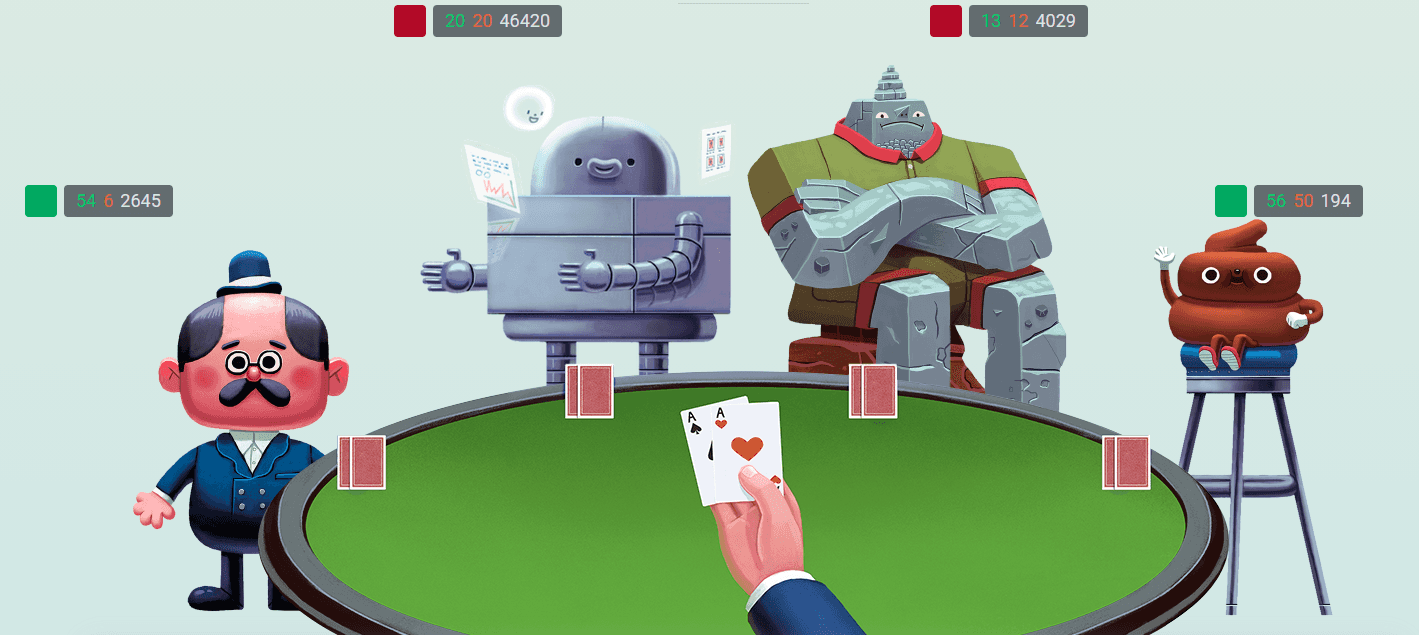
During one-on-one play, take notes on your opponent. Looking for patterns in a player's strategy lets you find the best responses
Calling station. A loose-passive player. Loves to see community cards and call with weak made hands. Preflop, they use limps. You can profit off a calling station with big value bets. If you've made a good combination — bet boldly. A loose-passive opponent will find something to call with. On boards with draws, increase your bet sizing to protect your hand. Against the calling station's bets and raises — fold. Aggression from a loose-passive opponent almost always indicates a strong combination.
TAG. A tight-aggressive player. Enters the pot with a strong range, acts carefully, bluffs in suitable situations. Observation will help you get the upper hand over a TAG. The more attentively you follow their actions and hands at showdown, the higher your chance of success. Usually tight-aggressive opponents respect 3-bets and often fold. Another common weakness is a narrow calling range on the blinds. A TAG defends the BB less often than they should. So steal blinds more often.
Top heads-up masters change their playing style every few minutes. As a result, opponents can't adapt their strategy and keep losing chips. Make raises of different sizes preflop. For example, in the first hand at blind levels of 15/30 open for 60 chips, in the second — 61. In identical situations postflop, bet 2/3, 3/4, 4/5 of the pot. Balance your check range so that strong hands also fall into it.
Postflop strategy in heads-up
To win in Heads-Up, you don't need to radically change your postflop strategy. Classic principles from other formats also work in HU:
play big pots with strong hands;
make solid value bets with made combinations;
don't use slowplay;
bluff in suitable situations, but don't risk too much;
pay attention to showdowns and adjust your impression of the opponent's range;
on draw-heavy boards, actively protect your made hands;
act aggressively in position.
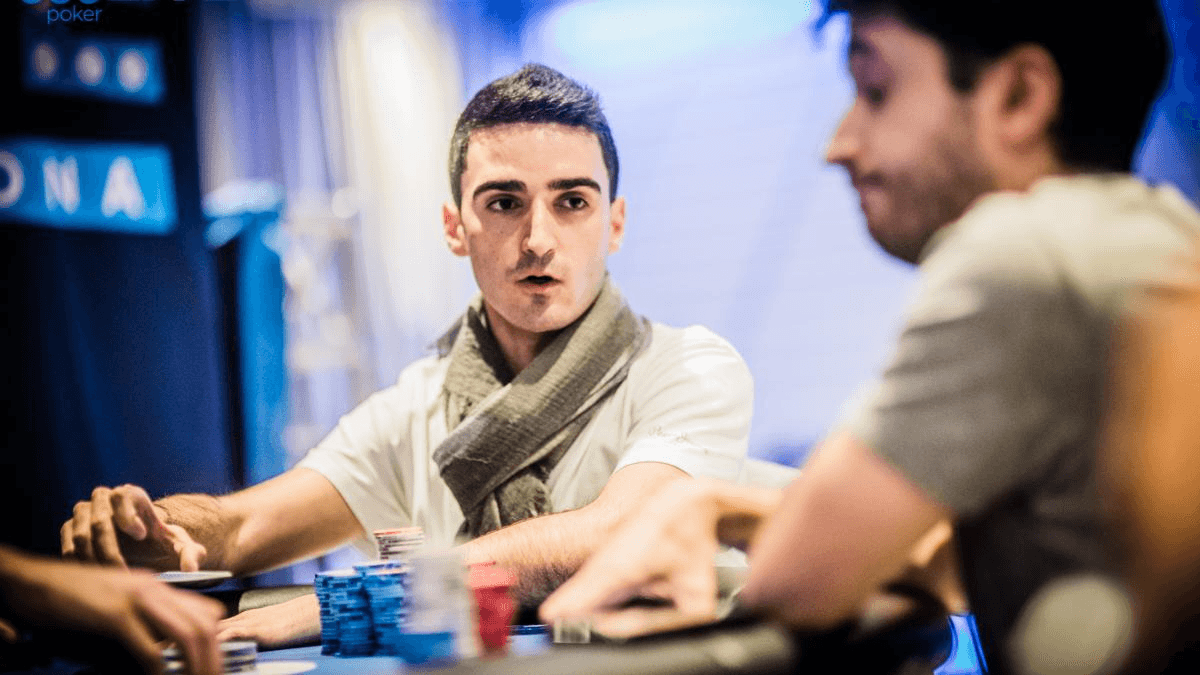
The fate of most pots in HU is decided by weak pairs and thin value bets
An important feature of heads-up play is the reduced requirements for hand strength. Opponents play wide ranges and rarely make worthy combinations. That's why in Heads-Up you need to value bet with second or third pair. Sometimes players make thin value bets with a high card. The remaining recommendations for HU:
Make a lot of c-bets in position. Opponents don't hit boards that often. For example, on the flop A♦️7♥️2♠️ an opponent with a wide range will catch a match or better 41% of the time. A continuation bet of 1/3 of the pot will bring automatic profit if the opponent folds 25% of the time. In reality the opponent will fold out of the hand more often.
Increase the number of bluffs on the river. In heads-up poker, players make strong combinations less often. That's why bluffs on the river get through more often.
Balance your check range. Many opponents react aggressively to a skipped bet. In response to a check, they're ready to attack multiple streets. So dilute your range with strong combinations. A balanced approach will let you profit off an aggressive opponent and force them to act more carefully.
To win more in Heads-Up, use poker trackers. Study the key stats and add them to your HUD. Statistical software will speed up the search for weak spots in the opponent's strategy. We talked about trackers and other poker programs in more detail in a separate article.

Psychology and mind games
Tilt is one of the main enemies of a player in any discipline, but in Heads-Up it's especially dangerous. During a duel, a poker player can't take a break and restore their psychological balance. The high intensity of play combined with a painful defeat causes a loss of control. Tilt in heads-up lowers the chances of success. So study methods of fighting it in advance and regularly do prevention.
In a tournament final you can't set a stop-loss, but in other disciplines you can limit your losses. If tilt prevents you from showing your best game and hits your bankroll, then set a rule: "Lost 5 stacks or buy-ins — closed the client." Making a rational decision in the heat of a bad session is difficult, but a timely retreat will protect your bankroll from a rout.
Tilt in Heads-Up often does more damage than the opponent's actions
"Mind games" can also be turned to your advantage. Put pressure on opponents with constant bets and raises. Soon the opponent will start calling with weak hands, pulling off stupid bluffs, and making other mistakes. The player's task is to find the right moment and take their money.
Tells play an important role in heads-up poker. A tell is an indirect signal indicating the strength of the opponent's hand. In live poker, these include: gestures, movements, changes in communication style. For example: with 72o the opponent chats animatedly about unrelated topics, with AA — stays silent and answers in monosyllables. In online poker it's harder to get a signal, because the player doesn't see the opponent. The most useful tell online is the speed of decision-making. An instant check indicates a weak hand. Long deliberation hints at a strong one. Watch your opponent and look for an advantage in every episode.
Where to play heads-up poker
In the past, Heads-Up was among the popular poker formats. It was supported by most rooms in the industry. Some platforms, like PokerStars, offered heads-up in all disciplines: cash, Sit&Go, and MTT. Over time, HU lost ground. Many brands abandoned the format. Now you can play heads-up on PokerStars, RedStar Poker, Winamax Poker, Pokerdom, and TigerGaming. We collected the information in a table:
Room | Cash | Sit&Go | MTT |
Pokestars | no | no | Tournaments with buy-ins from $3.30 to $16.50. All in Zoom format. 10 MTTs are held per day. |
RedStar Poker | from NL2 to NL4000 | from €0.5 to €5,000 | no |
Winamax Poker | from NL2 to NL400 | from €0.5 to €500 | no |
Pokerdom | Fast poker tables with stakes from 1 RUB /2 RUB to 250 RUB /500 RUB. | from 50 rubles to 25,000 rubles | no |
TigerGaming | no | From $0.25 to $100 | no |
The largest online poker HU MTTs are held as part of big festivals. For example, PokerStars included 3 Heads-Up events in the SCOOP-2025 schedule. The guarantee of the most expensive tournament was $60,000. In 2024, POKEROK held the World Series of Poker Online. One of the events was dedicated to Heads-Up. 128 people took part in it, and the winner took home $366,892.
A Heads-Up tournament is also offered by the schedule of the World Series of Poker festival. In 2025 the winner — Artur Martirosyan — received $1,532,800. Let's also mention the HU poker championship from NBC. The annual tournament was revived in 2025. The trophy and $500,000 went to Sam Soverel.
How to learn to play Heads-Up
In recent years, interest in heads-up has fallen. The audience has flowed into other formats. Many rooms have removed HU SNG and HU Cash from the lobby. However, the skill of one-on-one play holds a key role in tournament poker. Almost every MTT ends with a duel between the two best players of the tournament. A high level of skill in Heads-Up will let you win more MTTs. It's important to prepare yourself for the battle for first place in advance.
HU strategy can be studied independently with the help of: books, videos, software, or individual lessons. Books will give a basic understanding of the principles of one-on-one play. Videos will introduce current concepts. Training in software will teach push/fold. Analyzing hands with colleagues will teach you to see situations from a different angle. Lessons with a mentor will add fundamental knowledge. The main problem with most learning methods is the lack of a systematic approach. Searching for the optimal methodology takes more than one month.

Students of the school are provided with: a bankroll to play, consultations with psychologists, free software, and other privileges
To shorten the path to success, you can join FunFarm. We recommend beginners take the FF Start program. Over 30 lessons, a student will gain basic knowledge about playing in tournaments and prepare a foundation for transitioning to the professional level. FF Start graduates are admitted to the next tier — the FF Player Path course. Over 8 months of work, students will overcome the microstakes and reach a steady income.
Free course · FF Start
Break the game down street by street
Learn to plan a hand from preflop to river and understand the purpose of every action.