A program to combat superusers has been released
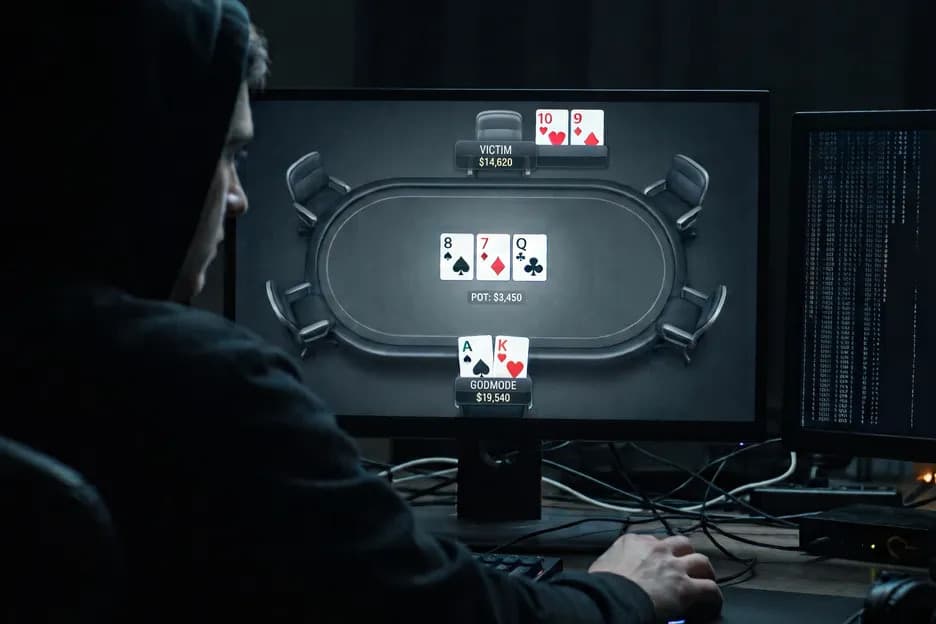
QuintAce has responded to the recent scandal involving Paul Gregg and the Mesh Agent trojan by releasing a new program for detecting superusers. It is open-source software that poker rooms or individual researchers can use to automatically check players against existing hand histories. The repository has been published on GitHub.
The QuintAce tool makes it possible, once a hand is complete, to analyze a player's actions not only against all possible hands, but also against a predicted range based on historical data.
The whole process runs in several stages. The program scans data over configurable time periods and identifies suspicious winrates or playing styles. It then evaluates hands against various triggers, such as the success of low-equity bets, bluffcatching, or folds that are only possible if you know your opponent's hole cards.
Suspicious hands are analyzed separately and receive scores from 0 to 100 across various parameters that help identify anomalous player actions. Finally, an analyst reviews the hands and their scores and makes the final decision.
AceGuardian's head of game integrity, John Andress, said that on a sample of 700 of Paul Gregg's hands, the company's tool was able to identify several categories of actions with anomalously high effectiveness. For example, Gregg often folded strong hands within a few seconds when his opponents' winning combinations made up 0.2% or 2.5% of their range.
"Operators rarely share information, so a single cheater could move from site to site. Players lost a lot of money, operators lost trust, and the signals were in their hands the whole time. The industry needs more transparency, and open-sourcing our solution is our contribution. We invite others to join," Andress said.
📰 Subscribe to Pokerflow