Two pair in poker
Two Pair in Poker: Who Wins and How Not to Misjudge Your Hand Strength


Ilya is a Liga 2 player with six years of experience in online MTTs. He graduated from the Faculty of Journalism at RSUH and writes about poker for beginners, explaining complex things in simple, clear language. In his texts, Ilya combines his personal playing experience with his professional journalism skills to help newcomers confidently get into the game.
Two pair in poker often looks stronger than it actually is. A player sees a made hand, realizes that it beats one pair, top pair, and high card, and starts building the pot as if the hand is already nearly won.
The problem is that two pair isn't the nuts — it's a hand whose strength depends heavily on the board. On a dry board, it can confidently collect payment from weaker matches. On a connected or flush board, this hand needs to be played far more carefully.
That's exactly why it's important not just to know what two pair is, but to understand which two pair we've made, how it looks against the opponent's range, and which cards on the following streets can change the situation.
In this article, we'll break down:
how the two pair hand works
who wins with identical hands
how kickers are compared
why board texture changes a hand's strength
how to correctly play strong and weak two pair
*Kicker — a card that isn't part of the main hand but is used to determine the winner when hands are tied.

New breakdowns in your inbox
Subscribe to the FunFarm newsletter: fresh Poker ABC articles and material that helps you grow as a player.
Key facts
Two pair is a hand made up of two cards of one rank, two cards of another rank, and a fifth additional card.
For example, A-A-K-K-7 or J-J-5-5-Q
When comparing two pairs, you first look at the higher pair. If it's the same, you compare the lower pair. If both pairs match, the winner is determined by the kicker — the fifth card.
If players share all five cards of the best hand, the pot is split evenly.
The probability of making two pair from five random cards is approximately 4.75%.
Now let's dig into the details.
The two pair hand in poker
Two pair is a hand that has two cards of one rank, two cards of another rank, and one additional card. In poker slang, this hand is often called a "doper."
For example, A-A-K-K-7 is two pair: aces and kings. J-J-5-5-Q is two pair: jacks and fives.
In terms of strength, two pair ranks above one pair and high card, but loses to a set, straight, flush, full house, quads, straight flush, and royal flush.
You can study the overall hierarchy in more detail in the article on poker hands. Follow the link and read on.
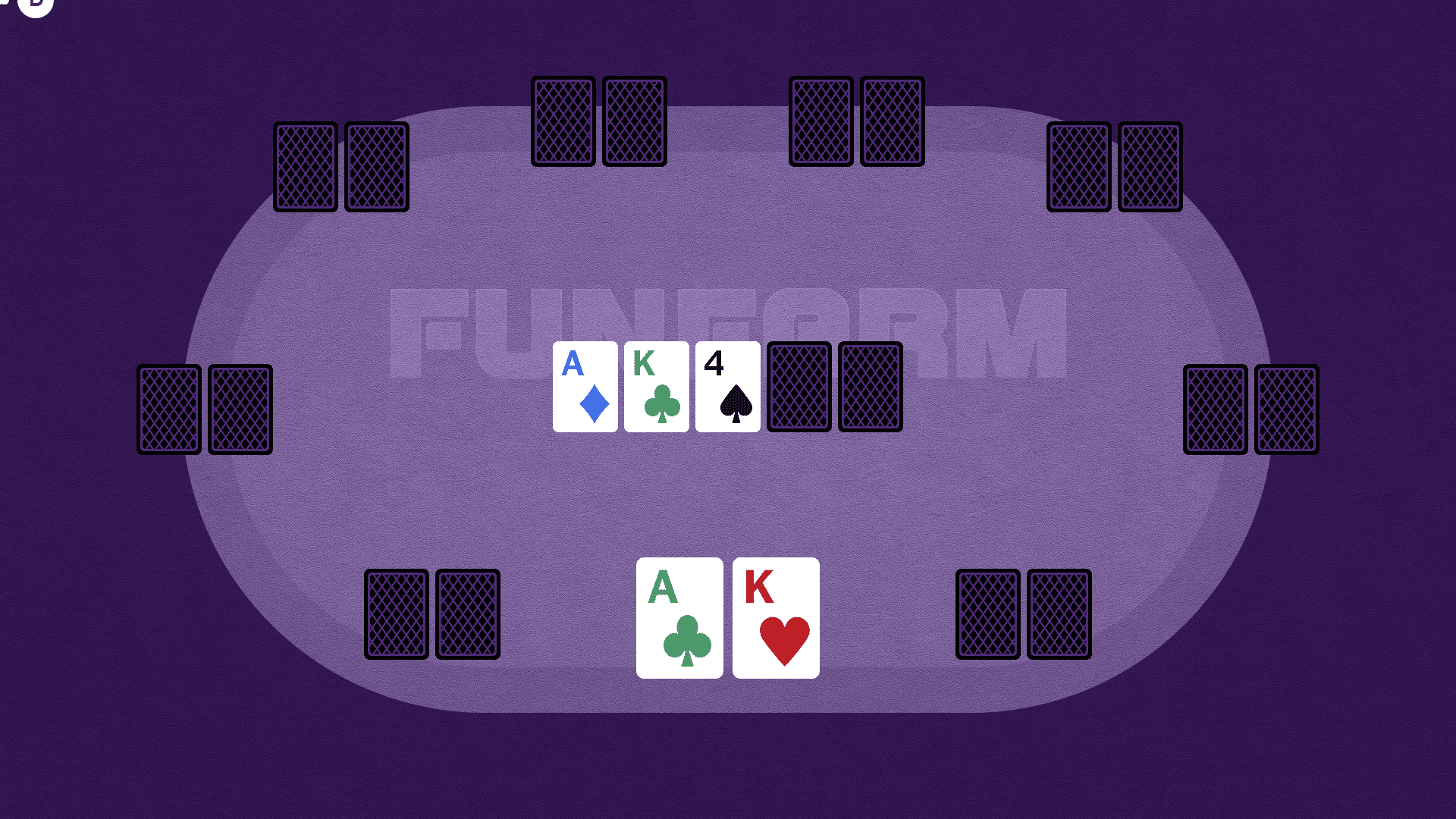
For example, A♣️K♥️ on a board like this is a very strong hand. The opponent will often continue with worse hands, which means we have a clear reason to bet for value.
How two pair is made
Two pair can be made in several ways. This affects how strong the hand is and how easily the opponent can read it.
1. Both hole cards hit the board
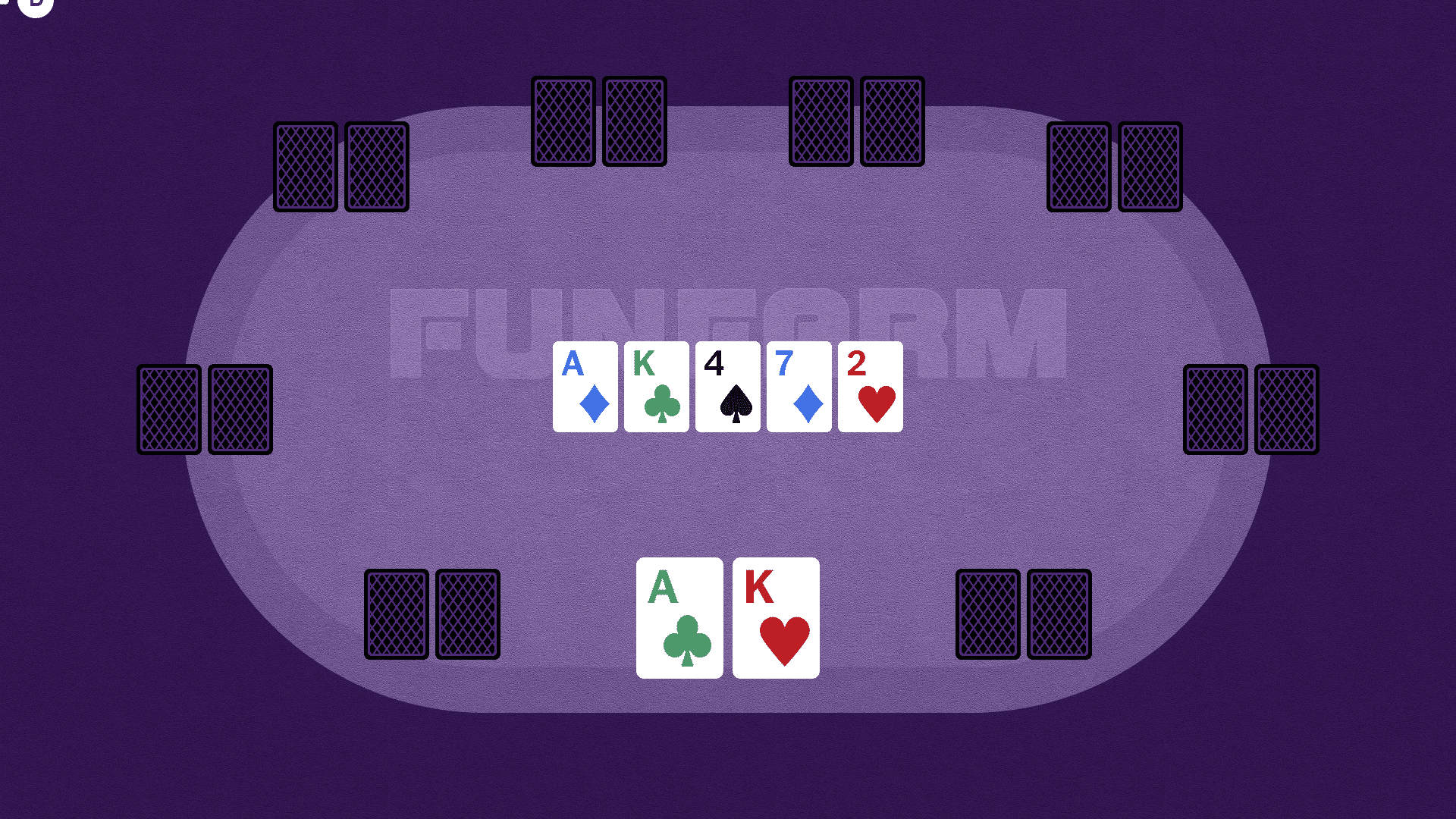
The same example with A♣️K♥️, but the board is now complete.
A hand like this collects well from top pairs, two pairs with a lower second pair (A4, A7, etc.), second pairs, and weaker matches.
But even in this situation, you can't rule out a more cautious line. For example, if a flush completes on the river, an obvious straight appears, or the opponent suddenly starts playing aggressively against our bets.
2. A pocket pair plus a pair on the board
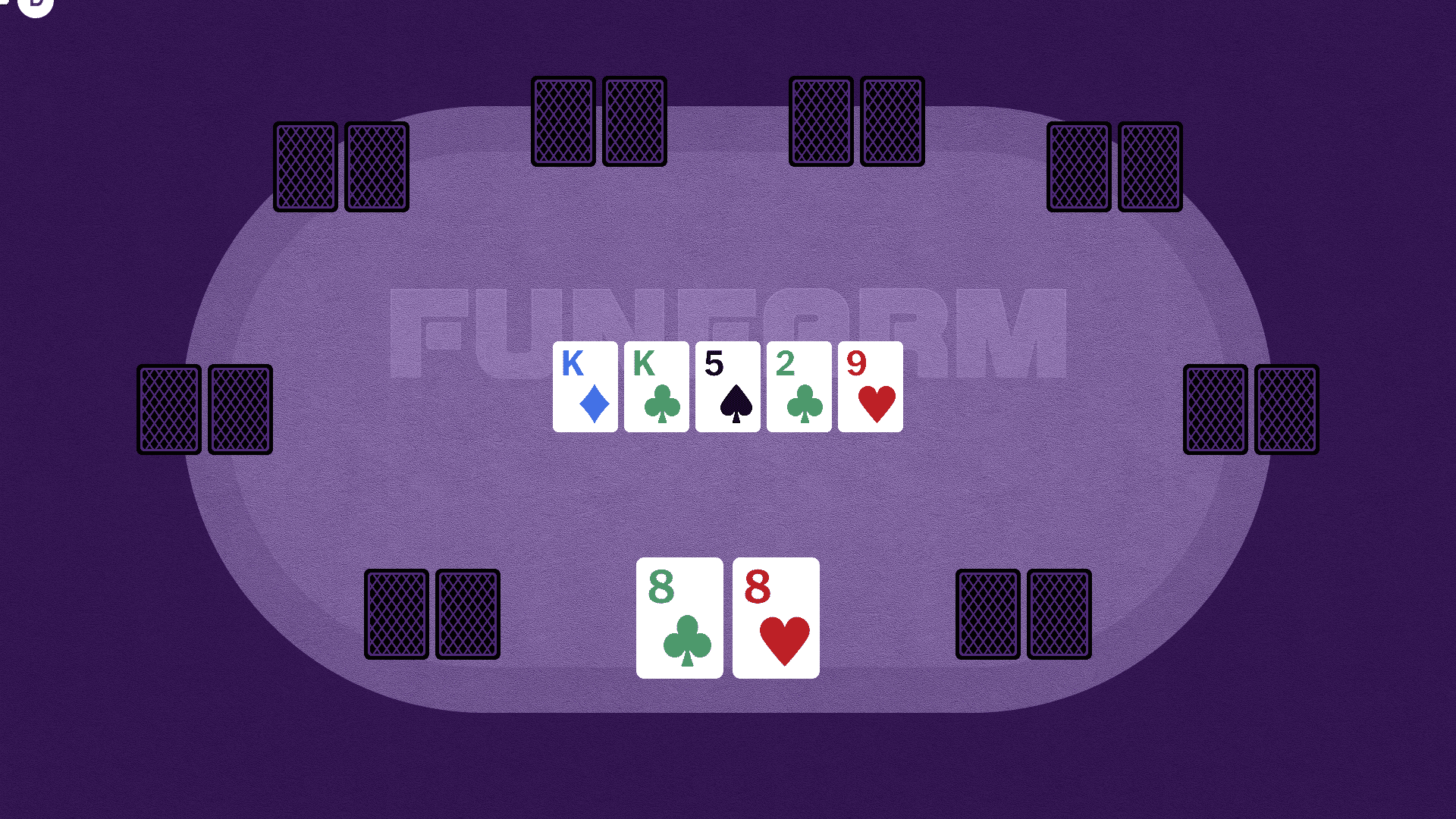
For example, we have 8♣️ 8♥️ on the board shown in the example. Technically we have two pair: kings and eights. But a hand like this is often overrated.
A pair on the board changes the whole structure of the hand. If the opponent keeps putting money in actively, they might have trips, a higher pocket pair, or a full house.
By the way, we covered the full house hand in more detail in this article. Follow the link and read on.
You need to play especially carefully against tight opponents. If such a player has played passively for a while and then starts betting big on a paired board, their range rarely consists of weak hands.
*Tight — a playing style in which a player plays a very narrow and strong range of hands.
3. Two pair is on the board
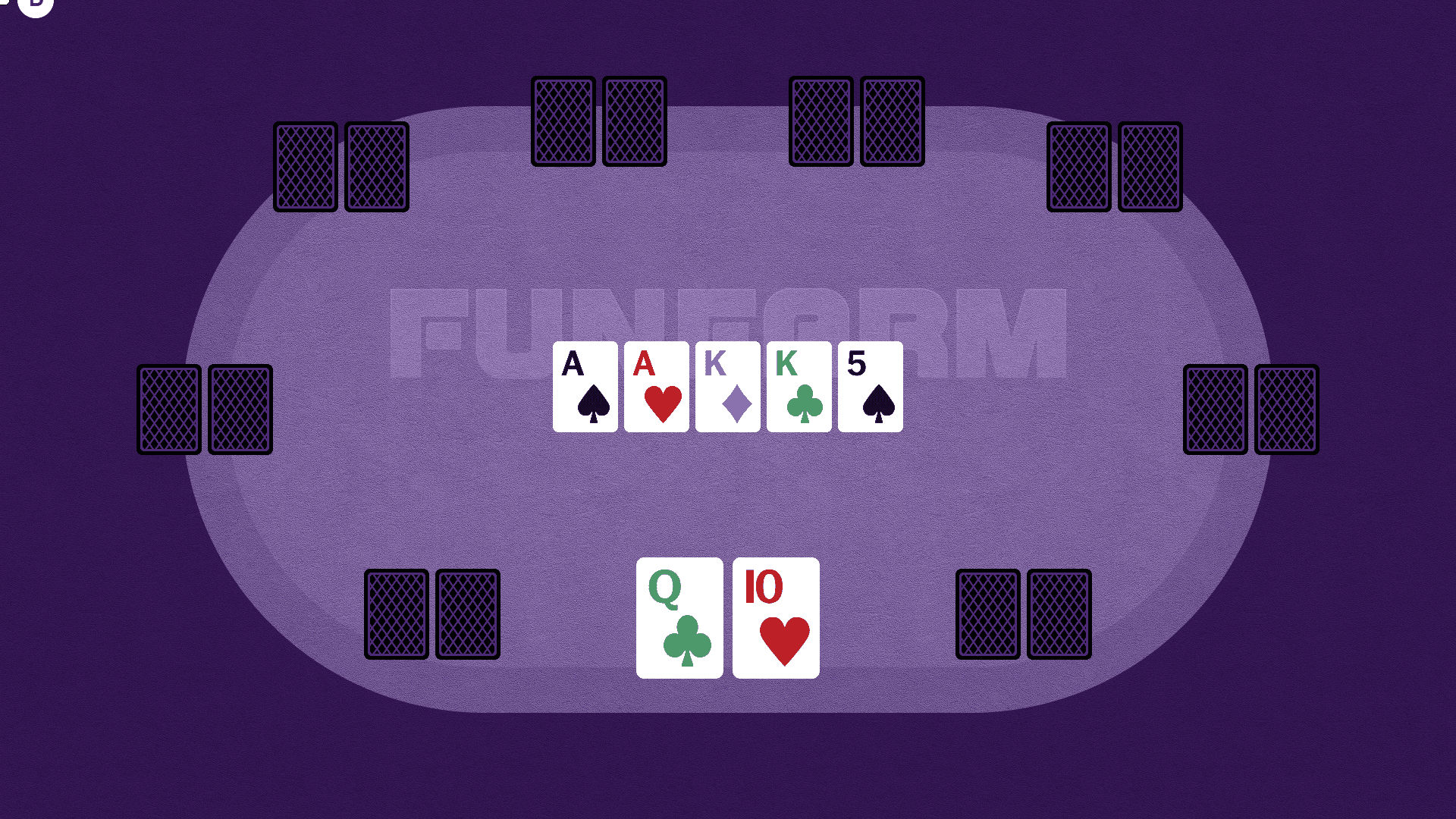
At first glance, it seems that everyone in this hand will have the same hand if no one has either a king or an ace. But that's not always the case. In poker, the five best cards count, so the fifth card can decide the pot.
If one player has Q7 and another has JT, the first one wins, because their final hand A-A-K-K-Q is higher than A-A-K-K-J.
It's exactly these situations that often confuse beginning players. They see two pair on the table and think the pot should be split. In reality, a split only happens when neither player can use a hole card higher than the kicker on the board.
Learning at FunFarm, from any level
Who wins the pot when both players have two pair
If two players make two pair, the winner is determined in a strict order.
First, the higher pair is compared. For example, J-J-A-A-K is stronger than Q-Q-8-8-A. Here, what matters isn't having an ace as a kicker, but specifically the higher pair within the hand.
If the higher pairs are the same, the lower pair is compared. For example, K-K-T-T-A is stronger than K-K-8-8-A. The kings match, so it comes down to tens against eights.
If both pairs match, the kicker is compared. For example, Q-Q-9-9-A is stronger than Q-Q-9-9-T. Both pairs are the same, but the ace as a fifth card is higher than the ten.
If both the pairs and the kicker match, the pot is split.
Two pair on the board — who wins
Two pair on the board is one of the most common causes of disputed situations at showdown.
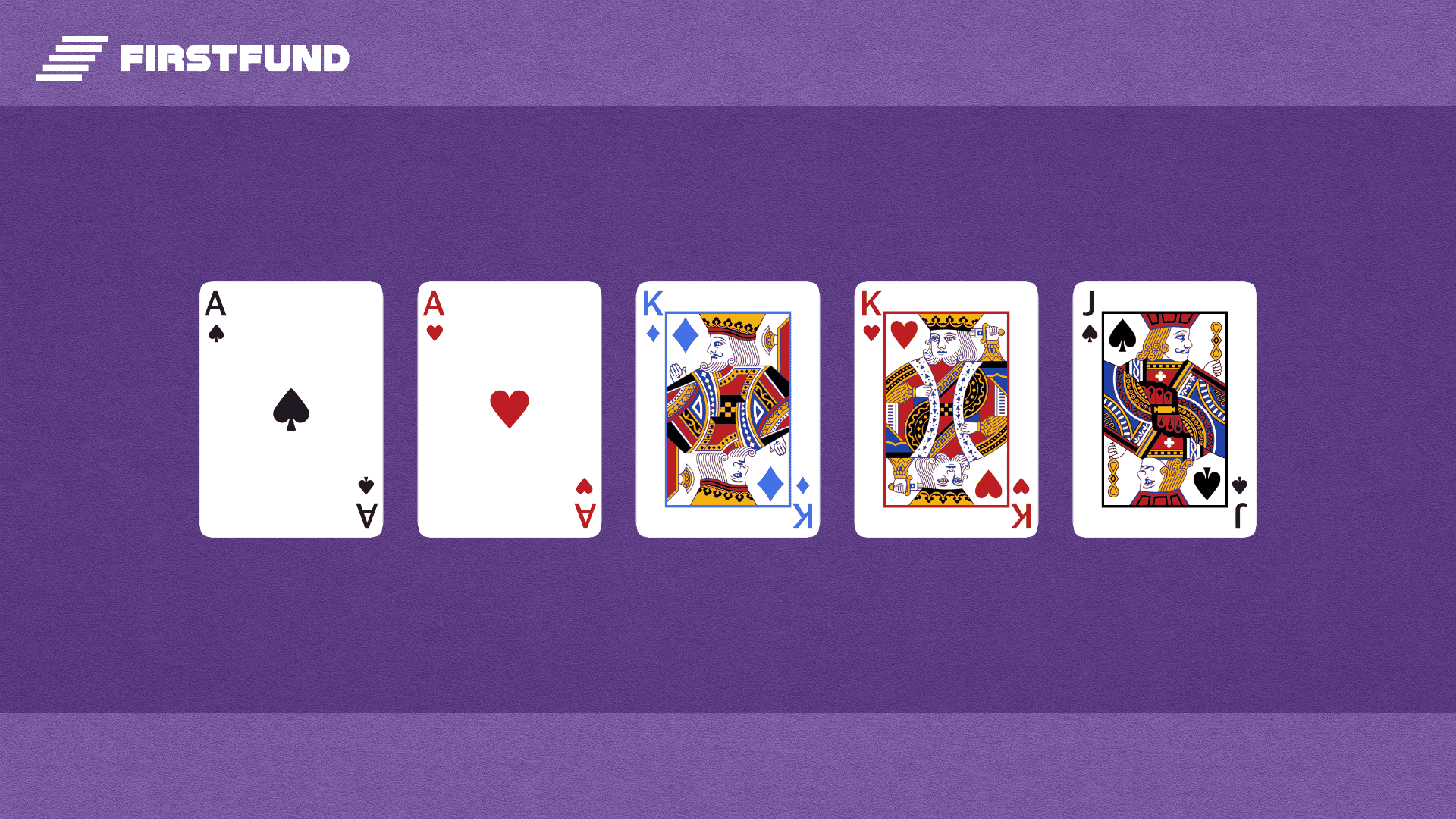
Let's take this board as an example. Both players already have two pair: aces and kings. But if one of the players has a queen in hand, they'll be ahead in this hand. Their best hand is A-A-K-K-Q, while the other's is A-A-K-K-J, meaning a hole card can become a kicker and improve the final hand.
But if the board looks like this:
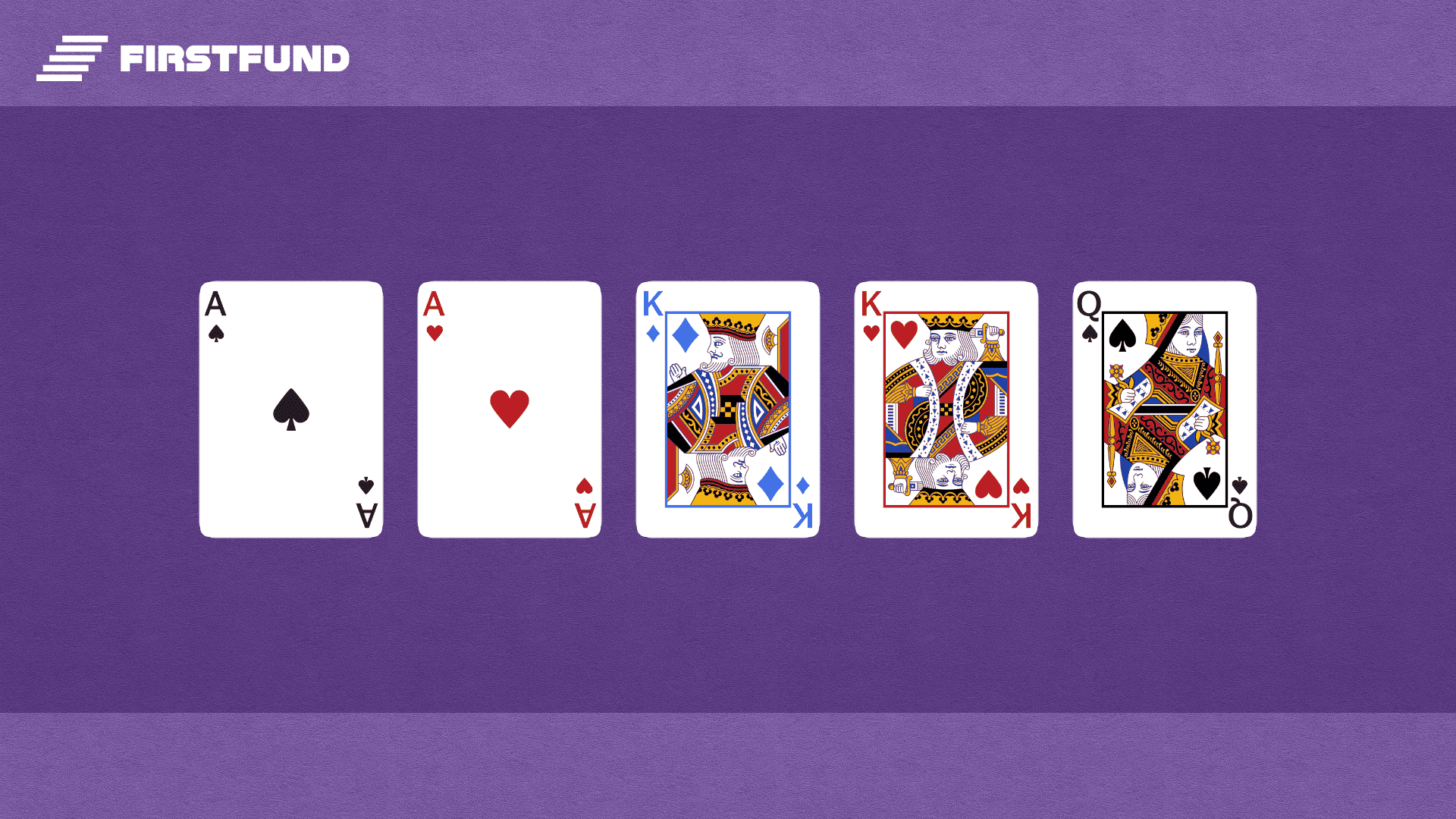
Even if a player still has a queen in hand, the pot will still be split, because the kicker is the same for both the first and second player, and the pair of kings is higher than the pair of queens.
Let's lock this in: the best five-card hand in this case is entirely on the table — A-A-K-K-Q.
Strategy for playing two pair
Playing two pair always starts with assessing the board. The same hand can be a three-street value hand or a hand you'd be better off slowing down with already on the turn.
1. Strong two pair
The most comfortable scenario is two top pairs on a dry board.
Let's return to the example we're already familiar with. Here we have a very strong hand. The opponent can pay with a weaker ace, a king, some pocket pairs, a straight draw. On a board like this, the opponent will very rarely have a hand better than ours, so we can confidently bet for value.
Our goal isn't just to bet big because the hand is strong. It's important to figure out which worse hands will continue. If you bet too much, weak kings and draws can fold right away. If you bet too little, we'll under-collect with aces and give draws too cheap a chance to see the next card. A bet of 33% pot looks perfectly reasonable.
2. Weak two pair
Weak two pair requires far more caution.
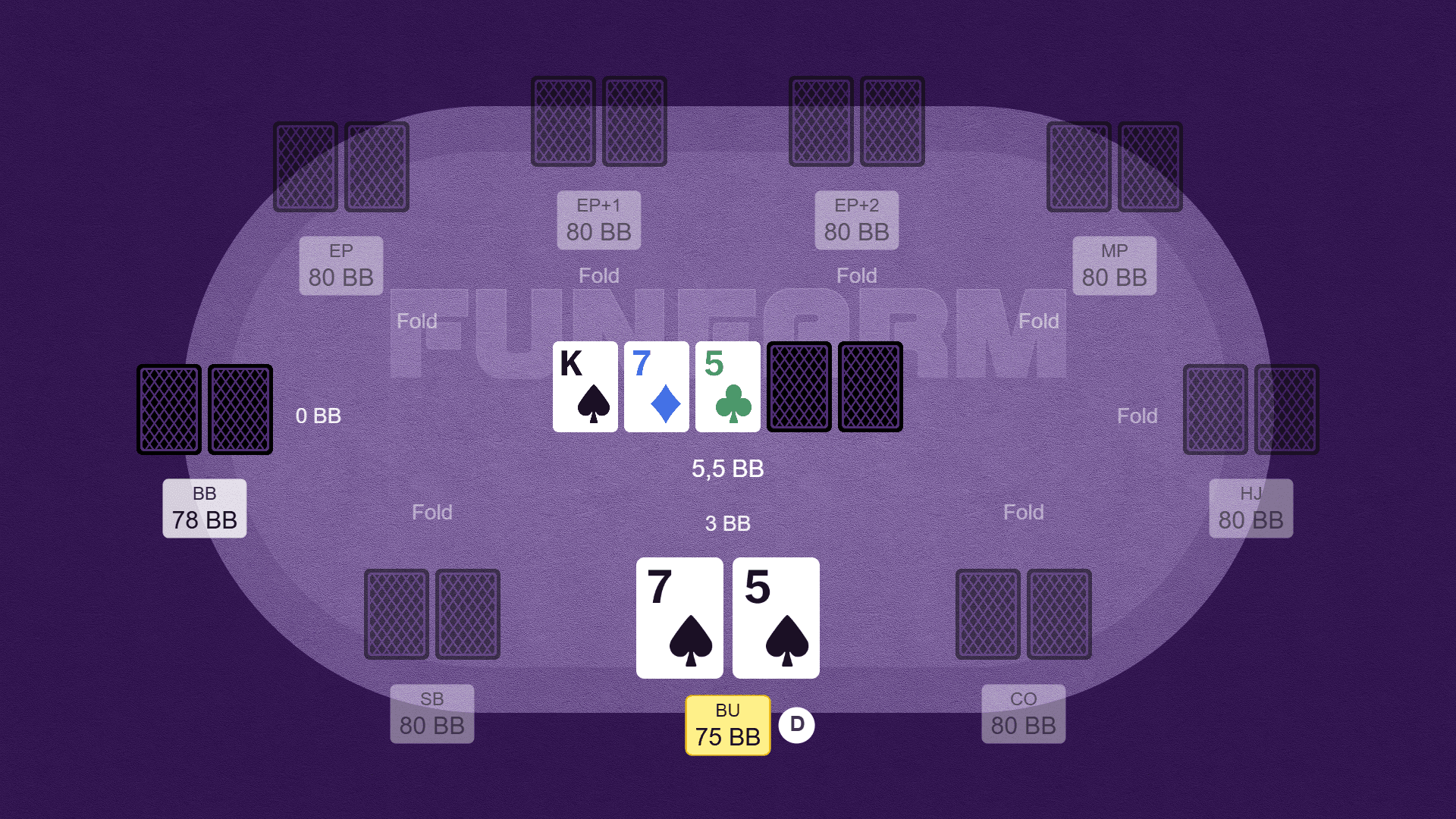
On the flop, this hand looks strong. But the opponent has chances to make a stronger hand on future streets — for example, improving to a higher two pair, making a straight, or already having a set in hand.
So in this case it's reasonable to continue with a c-bet using an increased sizing — a bet larger than 50% pot, for instance.
We covered what a c-bet is and how to use it correctly in poker in this article. Head over and read on.
3. Connected and flush boards
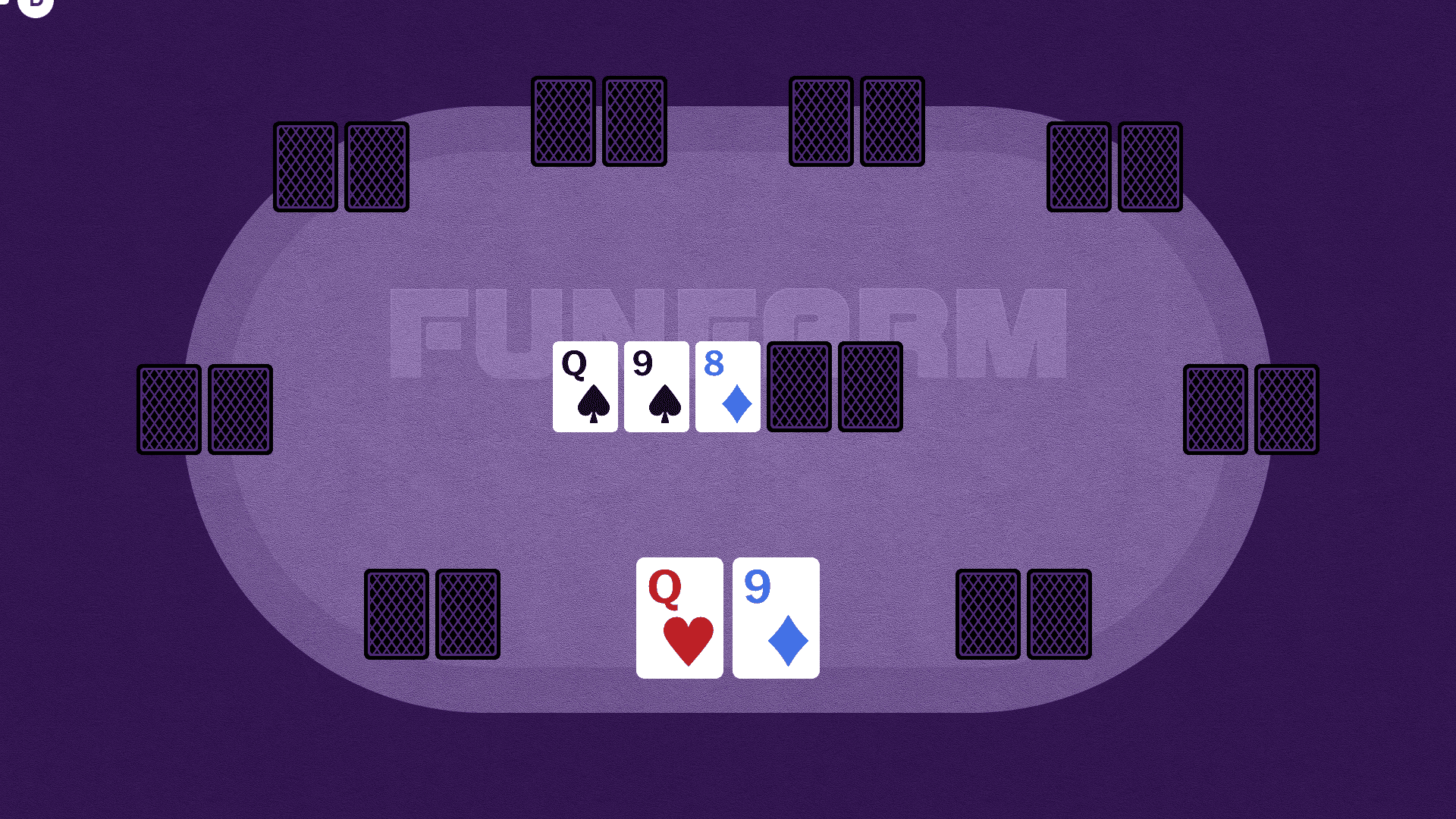
On connected boards, two pair quickly loses its stability. For example, on a board like this the opponent might have:
a flush draw
a straight draw
a set
a pair with a strong draw
a made straight on some structures.
On boards like this, a bet is often needed not just to collect value, but also to prevent the opponent from realizing their equity too cheaply. But at the same time, you can't forget: if the opponent raises actively, their range can be very strong.
The more possible straights and flushes there are on the board, the more carefully you need to treat two pair on later streets. You can read more about textures in our article on board types in poker.

Example of playing two pair
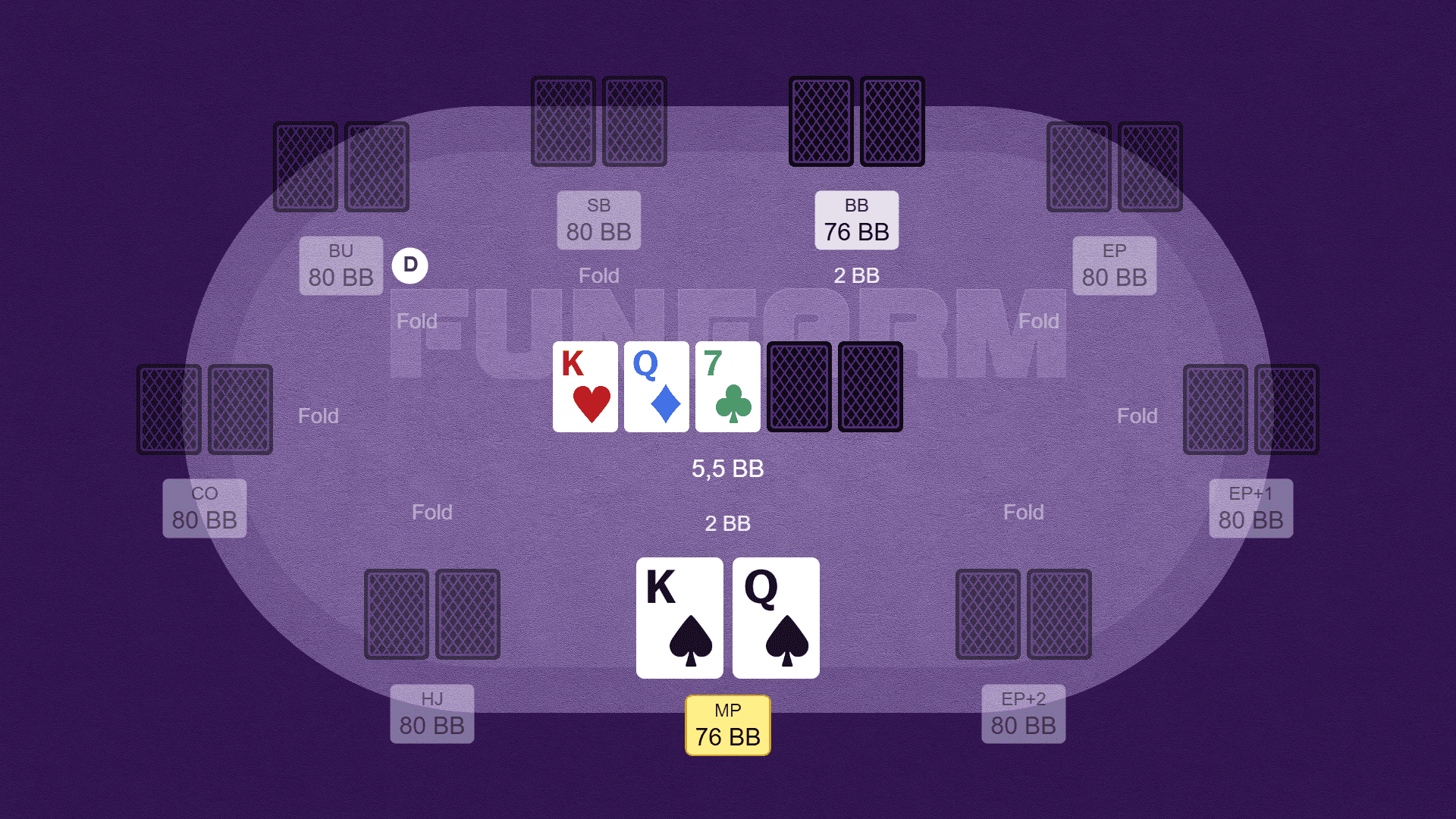
Let's imagine a hand. We have K♠️Q♠️ in middle position. We open with a raise and get a call from the player on the big blind.
We make two top pairs. This is a strong hand we should bet for value with. The opponent might have KJ, KT, QJ, a flush draw, a straight draw. All these hands can pay at least one bet.
We bet. The opponent calls.
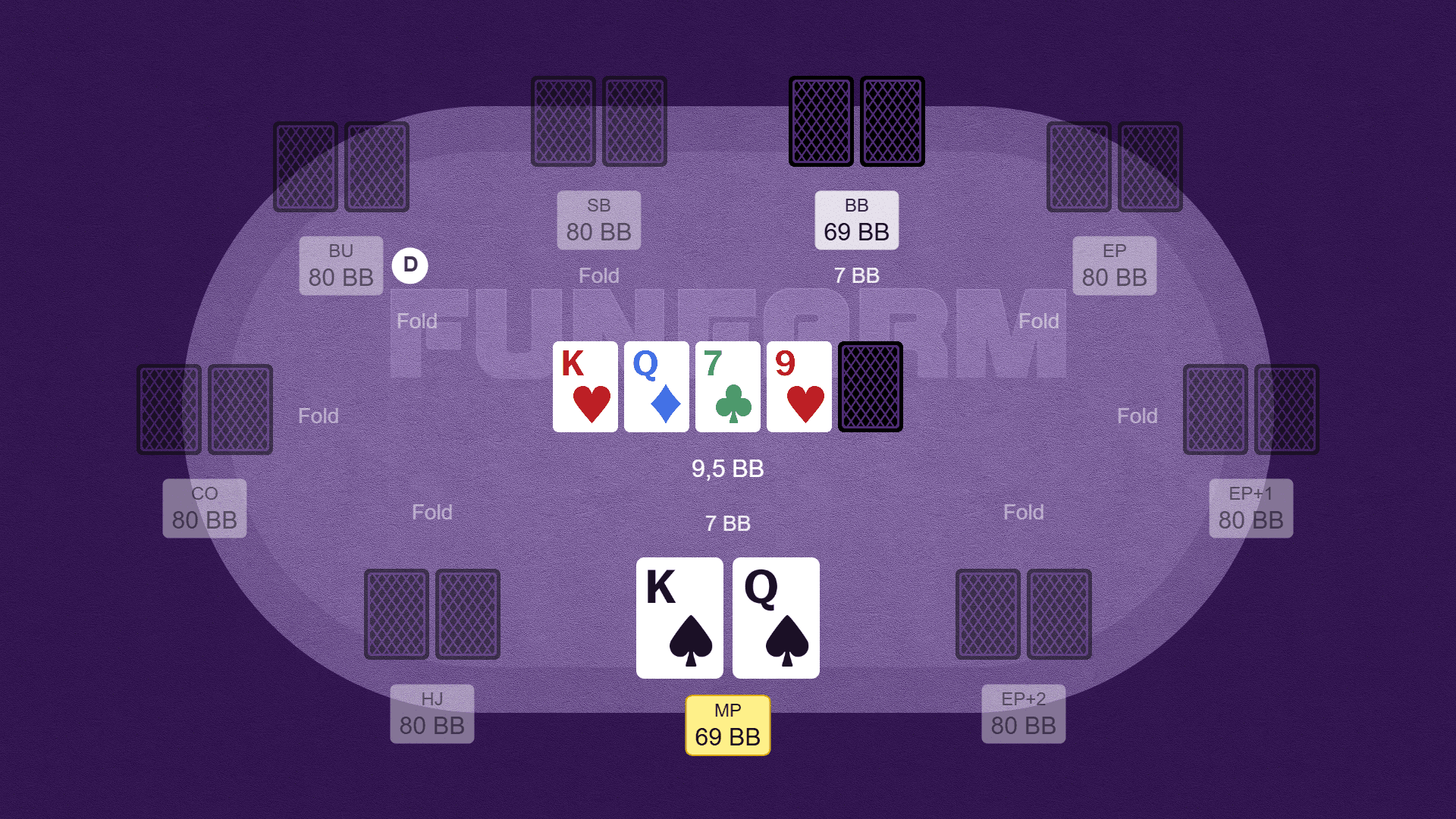
The 9♥️ falls on the turn. Not the safest card. Completed straights appear, part of the opponent's hands improves, but we still have a strong hand. Here a bet remains logical: we collect from kings, queens, draws, and don't let the opponent see the river for free. But on a check-raise, you should think about what range the opponent has and try to figure out — are we still ahead, or has the opponent outdrawn us?
Let's imagine that in this situation the opponent calls.
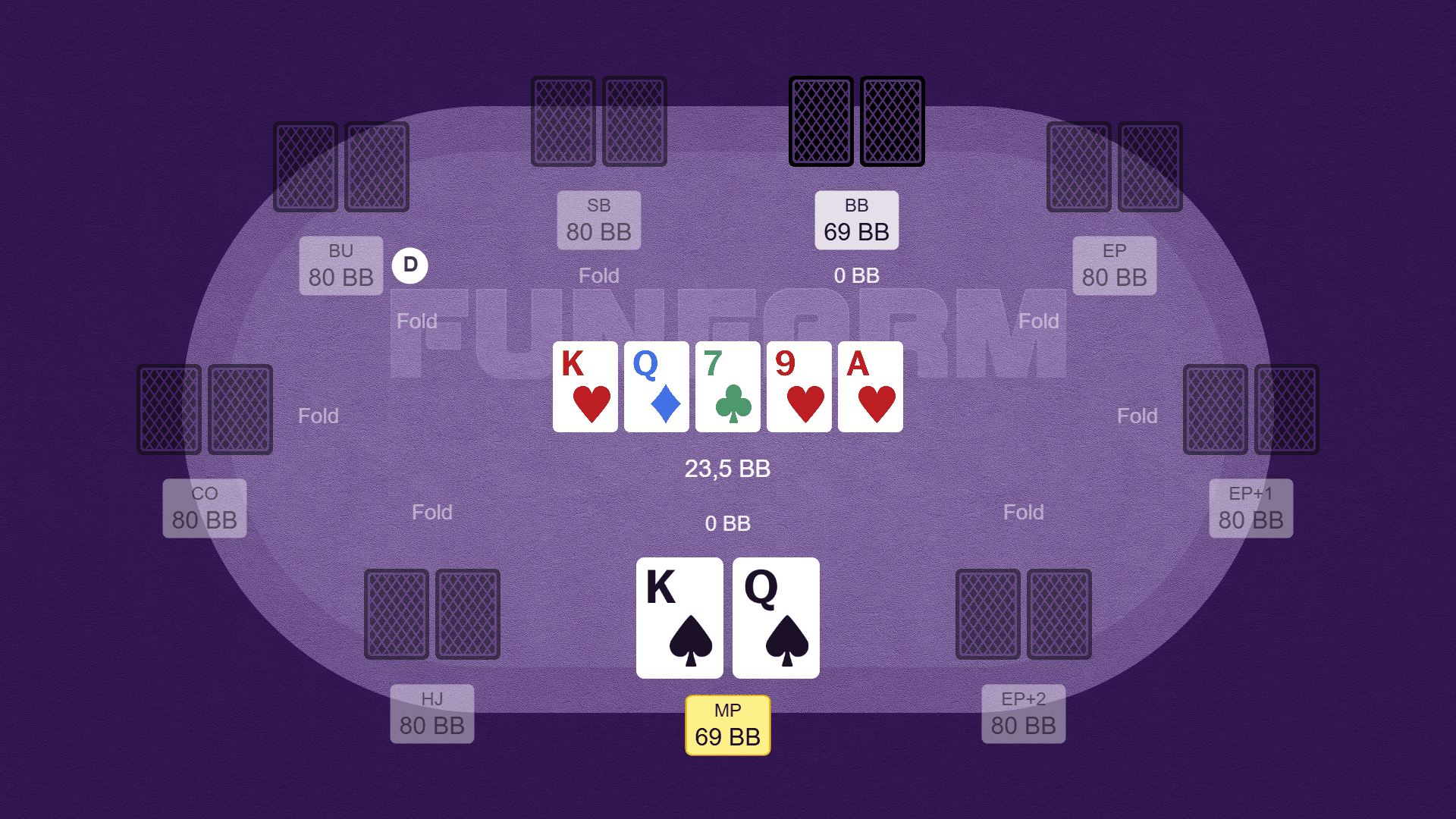
An ace falls on the river, and the situation changes. The ace gives the opponent the chance to make a higher two pair. Besides that, the opponent could already have completed a flush. We need to make a decision — are there hands we collect value from with a bet if the opponent checks?
In this case, a check might be a good decision: we keep the pot under control and don't turn our hand into an overrated value bet.
This example shows an important point: two pair can be a very strong hand on the flop, but its value changes with every new card.
Conclusion
Over the long run, it's important not just to be happy about two pair on the flop, but to understand how to play the hand correctly.
If you want to learn to analyze such situations through board structure, ranges, and betting logic, submit an application to FunFarm.
We help players build professional thinking and make decisions that work over the long run.

Free course · FF Start
From the rules to your first confident game
Work through the fundamentals in order: from hand rankings and positions to choosing starting hands.