A champion's mindset: why Kostritsyn had already won the WSOP bracelet before the final table
Alexander Kostritsyn's win in the H.O.R.S.E. event became the biggest story in the Russian-speaking community. In our report — an exclusive interview about the bracelet, high-stakes cash games, and the mindset of a high roller.
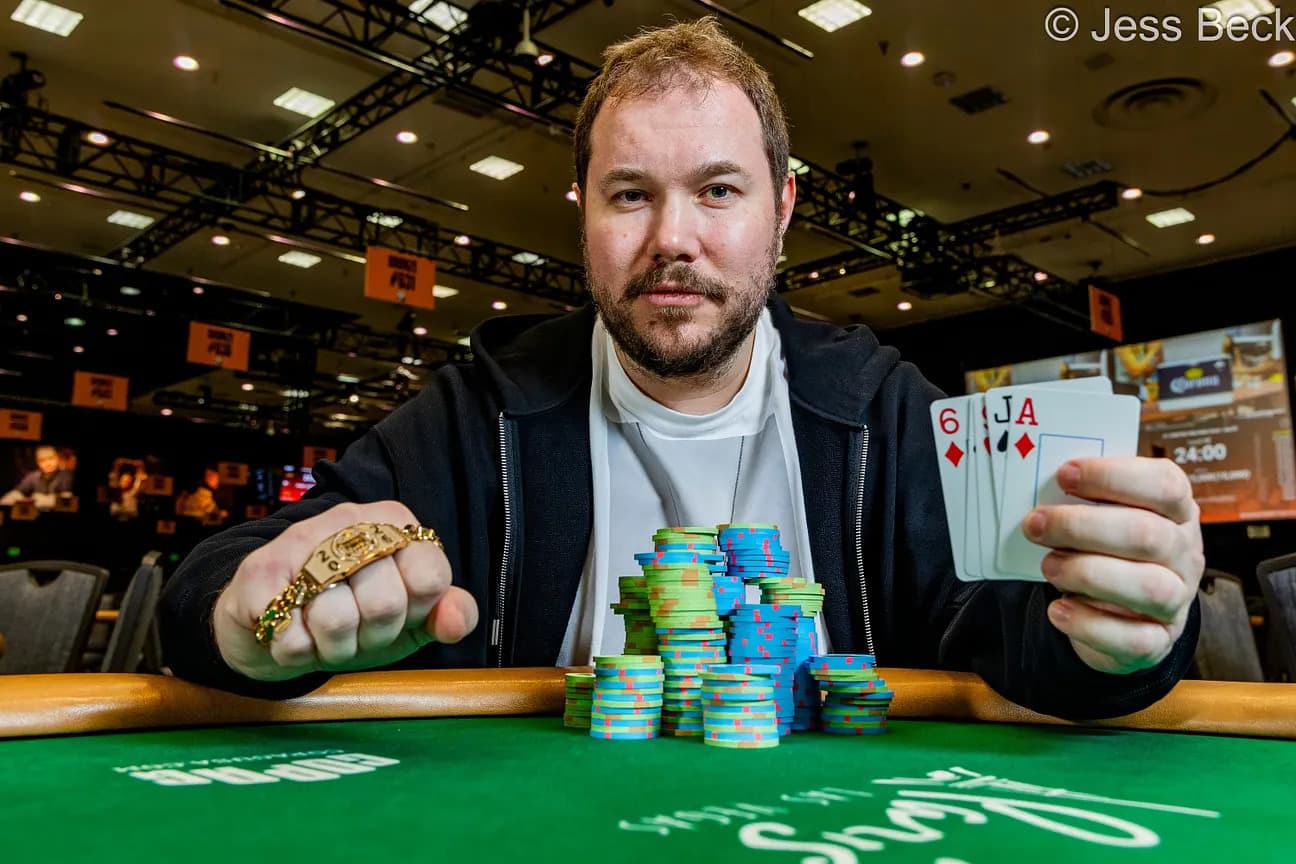
Alexander Kostritsyn's victory in the H.O.R.S.E. tournament with a $25,000 buy-in at the 2026 World Series of Poker brought him his first gold bracelet and $872,052 in prize money. From the outside, especially for those who only follow tournament summaries, this may look like a sudden win. In reality, this title is a logical continuation of deep, continuous and non-public analytical work.
Tournament poker as a change of context
From tournament reports it's easy to draw the wrong conclusion: if a player isn't visible in the winners' lists, that must mean he's stepped away from the big games. With Kostritsyn things work differently — he never left the high stakes. It's just that the core of his playing life has long been in closed, expensive cash games, out of reach of cameras and live reporting.
«For the last 10-15 years I've played 2-5 tournaments a year. If I did come to Vegas, it was for the cash games. With Bloom, for the whole first half of 2026 we had 8-15 hour matches at $2K-$4K stakes on the Phenom platform. And with Ivey and Antonius we've been playing cash all summer here in a mix of 14 games at $4K-$8K stakes» — Kostritsyn replied.
On that scale, an expensive $25,000 H.O.R.S.E. tournament isn't the main goal of the year, but simply a way to briefly change context. Evidence of this is the champion's playing schedule: right after the end of the first day of the tournament, Alexander returned to the closed cash tables, where he played a regular session until 4 in the morning.
How to minimise the luck factor
Kostritsyn himself approaches the assessment of his win without unnecessary mysticism. Strategy in limit mixed games comes down to internal discipline and minimising technical mistakes.
«The fewer slip-ups you make, the less luck you need. Tournaments still can't be won without luck, just as upswings in cash can't happen without luck either», — states Alexander.
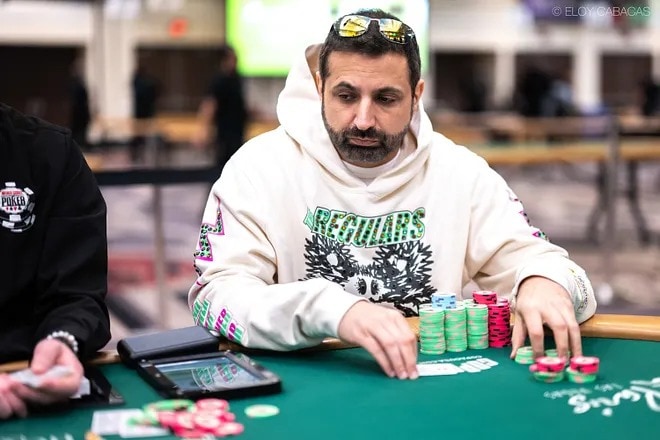
The H.O.R.S.E. format requires deep knowledge across five different poker disciplines at once. Over the long run, the difference in players' level of preparation becomes increasingly noticeable. In the champion's assessment, at the final table only Shaun Deeb and Asian cash player Rich had, from a technical standpoint, a solid level across all the limit disciplines.
The rest of the opponents were either tournament regulars with an understanding of MTT specifics but with little experience in mixed games, or players who haven't played regularly for many years, like Ali Eslami.
Signal, noise and borderline situations
When asked whether there was a specific key hand in the tournament where a disciplined refusal to take a borderline spot saved his tournament, Alexander answers more broadly. For a high roller, the value lies not in one isolated episode, but in the ability to recognise opponents' hidden motivations in time and cut out excess informational noise.
«The difficulty is in understanding what is key at a particular stage of the tournament and hand, which factors matter in borderline situations where there's no single clear signal, and which are just noise», — explains the champion.
Philosophy of thinking
The most noticeable transformation of Alexander Kostritsyn as a player has taken place at the level of working with his own thinking. By today, it has evolved into his own personal vision of the game and of life.
Answering a question about the difference between Sasha Kostritsyn in 2008, after winning the Aussie Millions, and Alexander today, he says that his attitude to the game has remained the same. For him it's still the same ease, deep respect for the beauty and spirit of the game, as well as a healthy compromise between precision of calculation and enjoying the process.
«The main difference is that analyticalness has been added to intuition. I've started putting feelings and hunches into words, and then engaging in an honest dialogue, where on one side there's the rationalisation of an unconventional move, and on the other, the scepticism of calculation. All four components are difficult: being honest and unbiased, being able to articulate a gut feeling, breaking down any complex situation into first principles, and being able to translate the resulting meaning into concrete actions at the table. This requires resolve, of which, in 2008, there was arguably even more than there is now».
«I'm interested in the process of breaking down any complex system into first principles: from an opponent's behaviour on a particular runout to situations outside of poker — in everyday life, business and life in general. The purpose of this approach is to see patterns, because they show up in all spheres and layers of life, only changing their form and intensity. On one hand, this protects against tunnel thinking and the trap of the local optimum; on the other, it cuts out unnecessary theorising and outside noise, and, most importantly, it helps you better understand yourself and others, and helps make the connection more meaningful, interesting and productive».
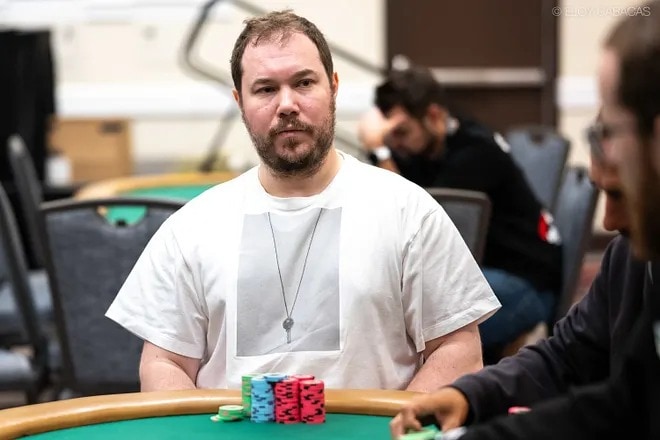
A vivid example of such calculation is a decision that some tournament players would find questionable. Alexander calculated that leaving early, skipping the last two hours of the WSOP Main Event's playing day, would cost his tournament stack roughly 10% in lost blinds, or about $2,000 in EV. But the last open seat in an expensive private cash game was on the line. From his point of view, the potential winrate and hourly rate in the cash game more than outweighed the tournament losses, and the choice became obvious.
Kostritsyn applies this same rigorous audit to his entire life: from calculating the volume of his own action to sell for a tournament to the mundane decision of whether to go to a nightclub to celebrate a bracelet win if a demanding session awaits him the next day. Alexander continues to develop this approach to working on mindset within the goodreasonclub project — a small private club that he founded and runs himself.
«Right now the club has just 9 members: they're investors, businessmen and high rollers. About half of them play full-time. We don't go over technical charts. My poker module is about how to think correctly, how to make decisions during play, how to analyse opponents and yourself at the poker table. We're creating internal tools for this — for example, «Delo v golove»», — Alexander explains.
According to the champion, this activity has interested him far more than poker for several years now.
The 2026 WSOP bracelet in this story isn't a final point or a rematch, but a natural consequence of a system in which results grow out of the quality of one's thinking. Thanks to this, the title was already «won» long before the final table.