Bet sizing: how to make your opponents make mistakes
In poker, in the early stages it's easy to get stuck in the illusion that what matters most is the cards in your hand. We're dealt a strong combination — we win; we're dealt a weak one — we fold. And when we're just starting out, that's exactly how it feels: as if the result depends more on luck than on us.

One of our first coaches: on the team since the very founding of the project. He prioritizes simple and practical training with an emphasis on real game situations and decision-making over the long run. Val doesn't just "beat the games" as a player, but also instills a systematic approach to the game and discipline in his students.
The more a player studies the game, the clearer another concept becomes: cards are just a reason to enter a hand, while chips are earned through correct decisions and well-chosen strategies. And one of the important levers in understanding profitable play is the bet size (sizing).
Sizing is not just a number, but an important factor in the game that determines:
what mistake we provoke in our opponent
which hands continue against us
how much we earn when they call against us
how much we lose when pressure is applied to us
how believable the line of our hand looks
In this article we'll talk about what sizing is, what goals a player pursues when choosing a sizing, what bet sizes look like on the preflop and postflop, and we'll break down typical mistakes beginning players make when choosing a sizing.
What is sizing in simple terms
Sizing is the size of a bet or raise in a specific situation.
In poker it's very easy to fall into the trap of "we have a good hand — so we should bet." But a bet by itself is not the correct action. What makes it correct is the goal.
Before choosing a size, we first answer one question:
What reaction do we want to get from our opponent with this bet?
If there's no answer — we're not choosing a sizing, we're mindlessly pressing a button. And poker doesn't reward that.

New breakdowns in your inbox
Subscribe to the FunFarm newsletter: fresh Poker ABC articles and material that helps you grow as a player.
Three goals of bets: why we bet at all
Any bet usually pursues one of three goals:
1. To earn when our hand is stronger.
2. To knock out a hand better than ours.
3. To deny cheap realization of equity when the opponent has a chance to make a strong combination.
Let's break down each goal and tie it to sizing.
1. Value bet
If we have a strong hand, we want the opponent to continue playing with a weaker hand. So we need a size that:
is big enough for us to earn
is not so big that the opponent gets scared and folds weaker hands
This is a subtle point: too big — we knock out the very hands we wanted to earn from; too small — we don't extract enough.
Let's look at an example with a specific hand.
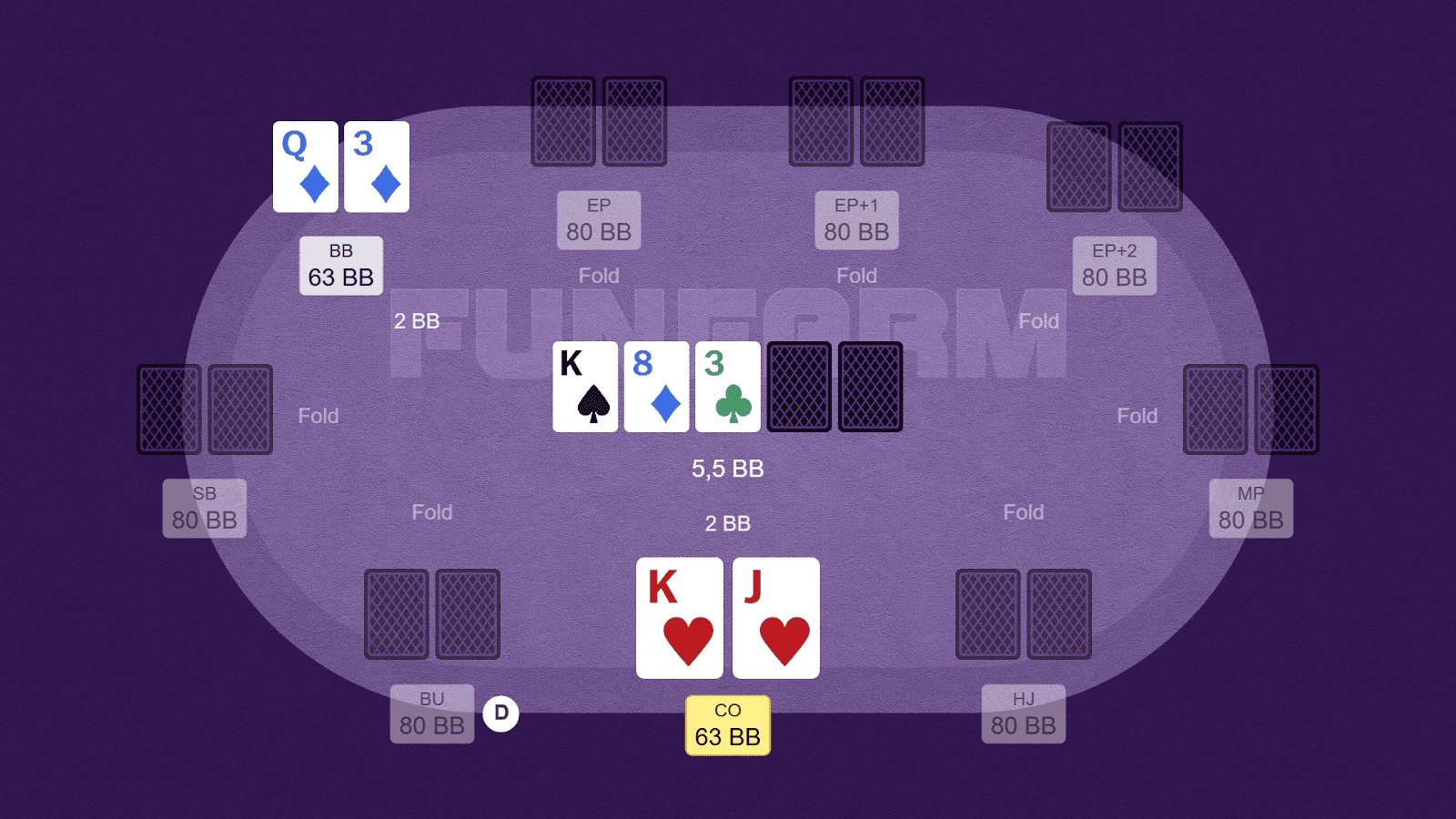
Situation: we open K♥️J♥️ from CO, BB calls, effective stacks are around 65bb.
There are no obvious draws on the board, and we have a top-pair match with a strong kicker. A beginning player will immediately want to bet a lot — thereby scaring off weaker hands. If we bet 80% of the pot or pot, BB will only continue with stronger Kx, rare sets, and occasionally stubborn 8x. The rest of the hands will fold.
So we choose a not-too-scary size — about 40–55% of the pot. This is a bit more than the standard c-bet of 25-33%, because in this situation we have obvious value.
This way we keep in play the hands we actually earn from: weaker kings, 8x, low pocket pairs, sometimes Ax if the opponent is curious.
The point is that value isn't a story about a big bet when the hand is strong, but about maximum payment for a strong hand.
2. When we want to knock out a stronger hand
When we bluff, we want the opponent to fold hands better than ours. For this the bet must create discomfort.
Here beginners often make two mistakes:
they bet too little, and it's easy for the opponent to continue
they bet too much, which looks unconvincing for the line we've been showing.
The main principle: a bluff bet must look as if we have exactly the hand we're representing. Not necessarily huge, but logical for the given board and the given street.
Let's demonstrate with an example.
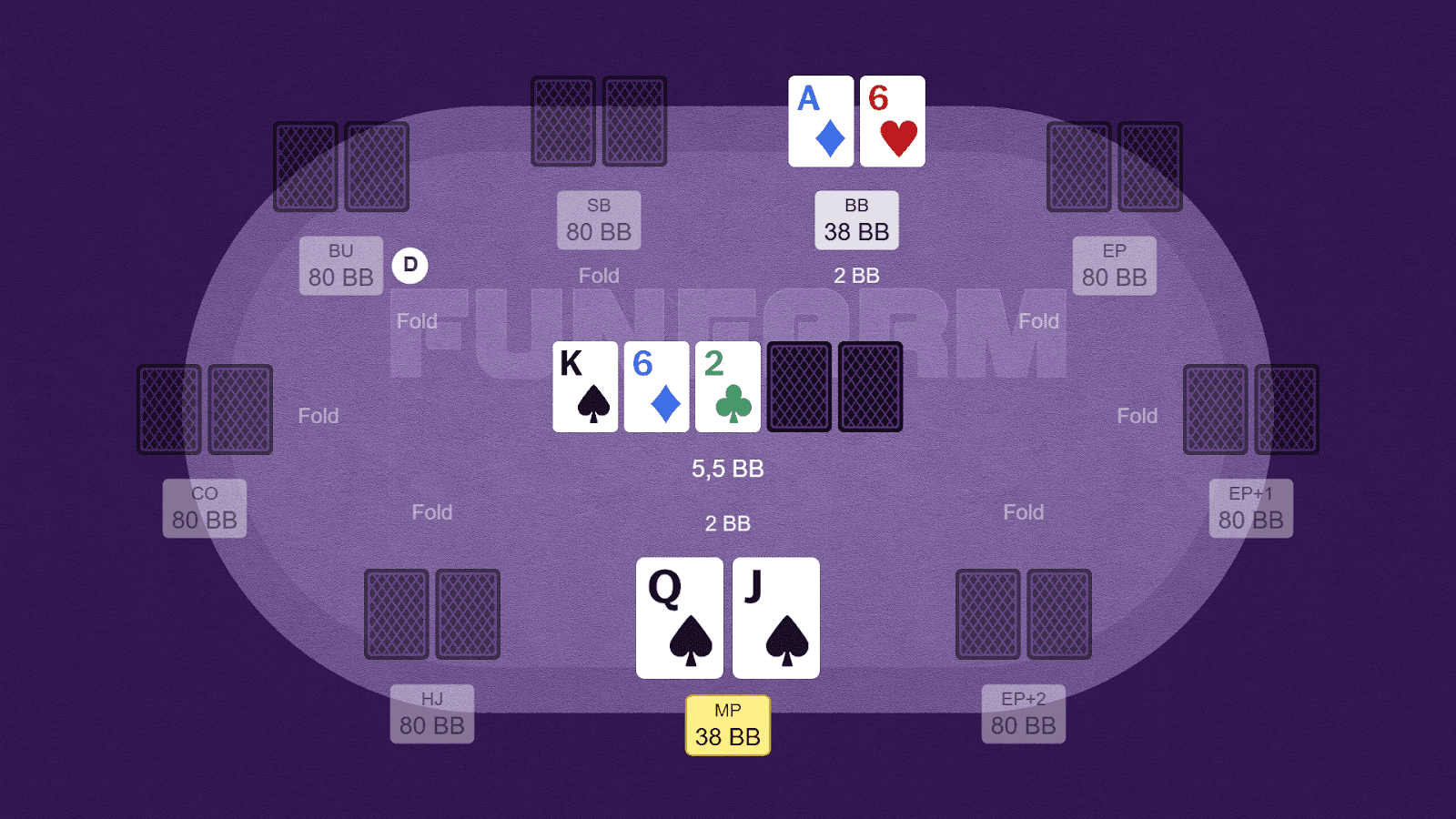
Situation: we open Q♠️J♠️ from MP, get a call from the opponent on BB, effective stacks are 40bb.
On the flop we make a small c-bet — 33% of the pot — because our range hits the board better than the opponent's range.
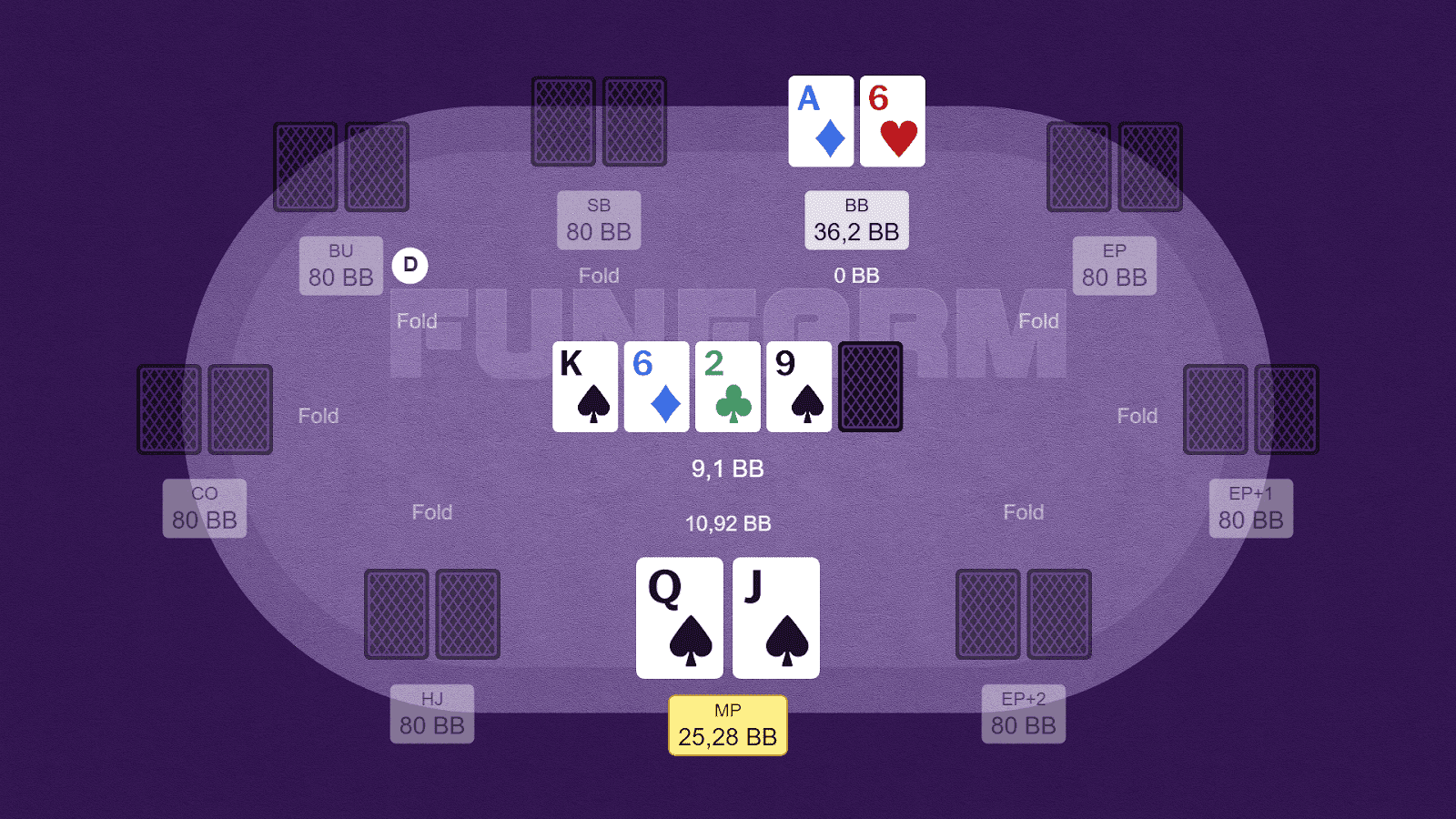
On the turn we get 9♠️. This card opens up straight, flush, and straight-flush draws for us, but we haven't yet made the needed combination — although we have decent chances at the nuts on the river.
As a bluff in this case we can choose an overbet — 120% of the pot. This way we knock out many of the opponent's weak matches that won't want to pay such an expensive bet and make a difficult decision on the river.
In addition, if we often get the needed card on the river, we'll be able to collect more value in a very large pot.
It's important to note that if we played an overbet, the opponent called, and our card didn't complete, then we don't keep bluffing on the river, because the opponent's defending range is too strong to hope for a fold.
3. A bet for protection: so the opponent pays dearly for trying to improve
On some boards the opponent can have many hands that are weaker for now but can improve — flush draws, straight draws, combinations with a pair and a chance to improve on later streets.
If we bet too small a size, we give the opponent a cheap opportunity to see the next card. This is almost always a mistake against us, because he realizes his equity too profitably.
So on dangerous boards we more often choose large bets.
Let's look at an example.
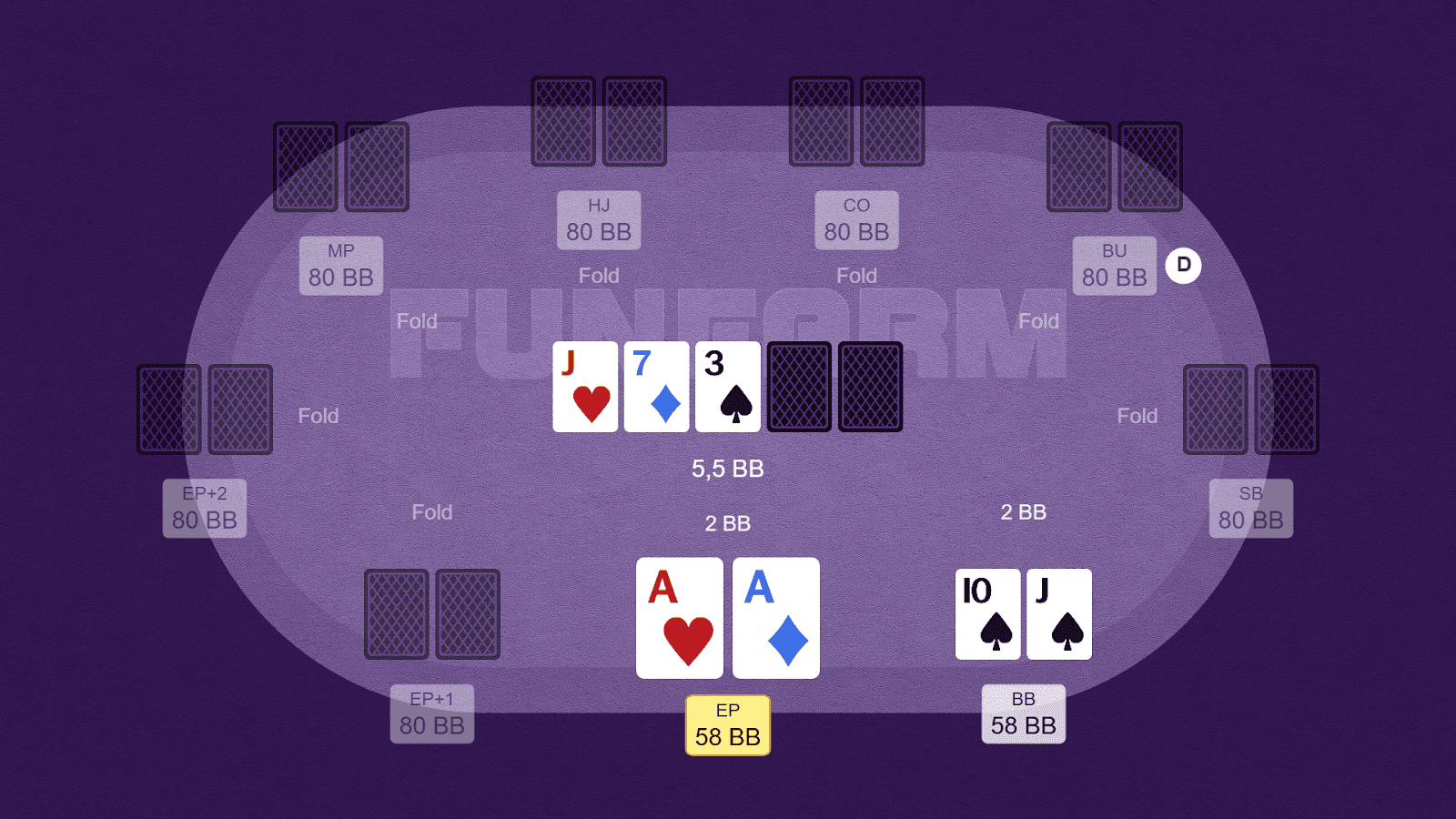
Situation: we open A♥️A♦️ from EP, get a call from the player on BB, effective stack is 60 bb.
On the flop we get a fairly coordinated board with possible draws on future streets. In the example of the first hand we bet half the pot, having obvious value against the opponent's top pairs and middle pairs.
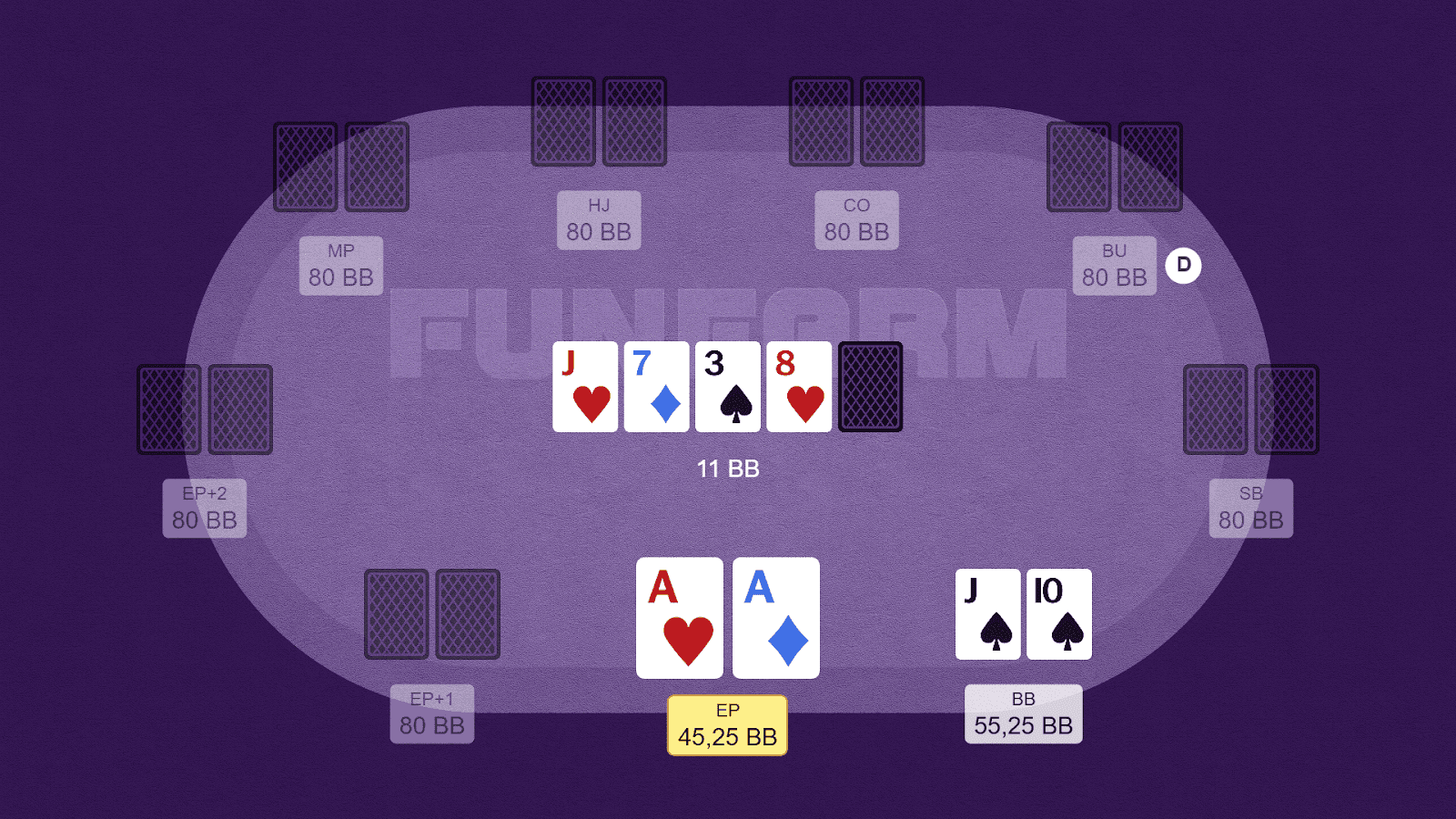
The turn brings 8♥️, which completes some straights for the opponent and gives him hands like two pair that beat us.
But at the same time there are many hands that haven't yet made a ready combination beating our hand but are willing to pay a lot. J♠️T♠️ is an excellent example of such a hand.
Decision: we bet the pot, not letting the opponent realize his equity cheaply.
Basic bet sizes on the preflop
Preflop is the foundation of profitable play. If we choose sizings incorrectly on the first street, we create tough hands for ourselves — lots of calls, multiway pots, difficult decisions on the postflop.
1. Open-raise: which sizes to consider basic
The standard opening sizing on the preflop in modern realities is 2bb.
2. Isolating limpers: the most effective way to avoid a multiway pot
If there are limpers ahead of us and we raise with the standard sizing, we often get a lot of calls behind us.
The working rule is simple: 3.5bb + 1bb for each limper. That is, if there are two limpers, we bet about 4.5 bb; if two limpers — 5.5bb — and so on.
* A limper is a player who enters a hand simply by calling the big blind instead of raising.
*Isolation is a raise against one or more limpers with the goal of taking the initiative in the hand.
3. 3-bet sizing
When we re-raise the opponent's raise, i.e. make a 3-bet, it's important for us to understand — will we be playing in position or out of position.
In deep stacks in position — 3x the raise size, and out of position — 4x. For example, when the effective stack in the hand is 70-100bb, if the opponent raised to 2bb, we choose a 3-bet size of 6bb in position or 8bb out of position.
We covered the 3-bet in poker in more detail in this article.
Learning at FunFarm, from any level
How to choose sizing on the postflop
There's no universal bet size on the postflop, but there is a consistent logic that helps make decisions systematically — especially during the learning stage.
Let's break it down point by point.
1. We study the board structure
The first thing we look at after the flop comes out is how static or dynamic the board is.
Dry boards are boards without obvious draws. For example:
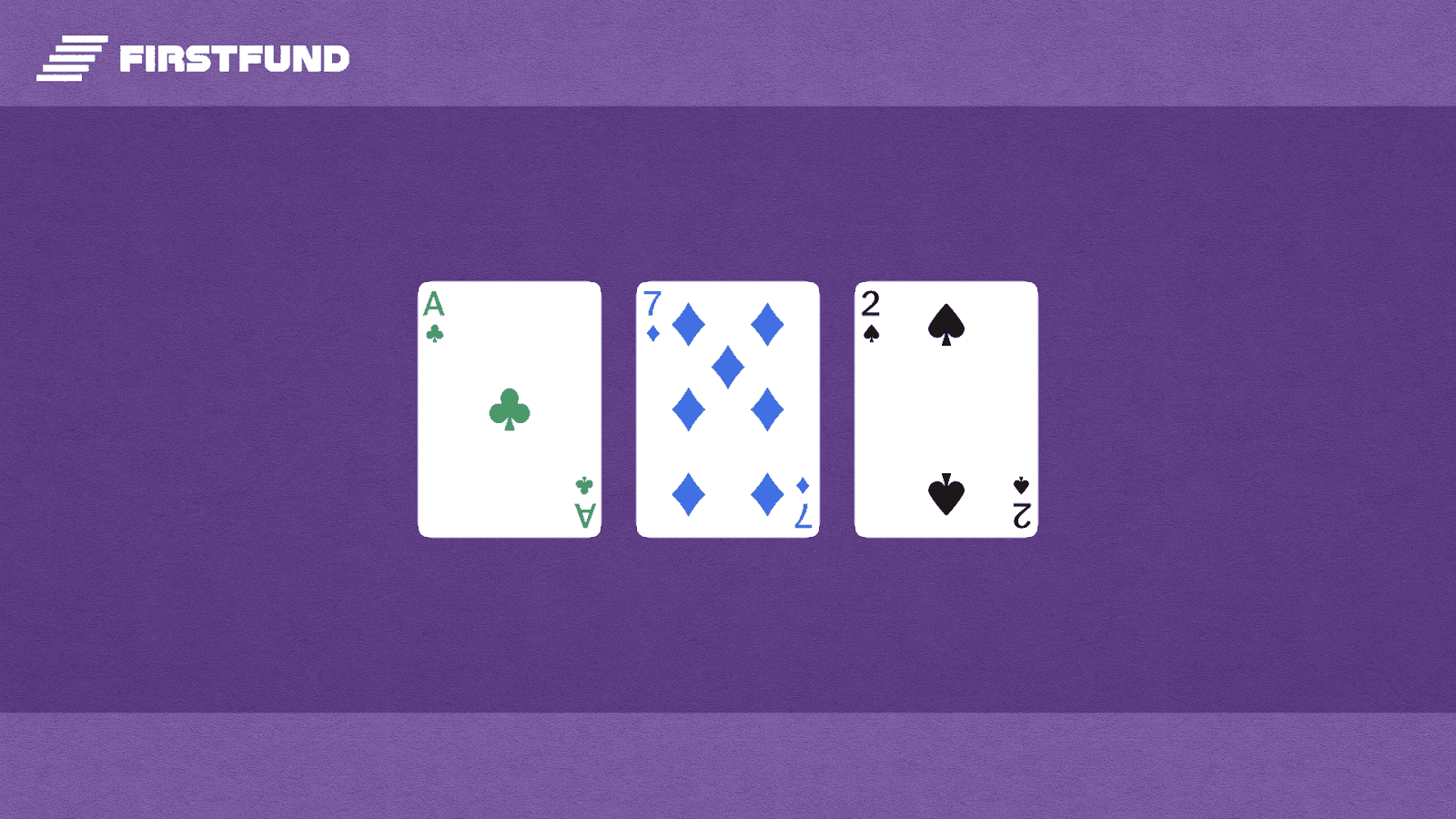
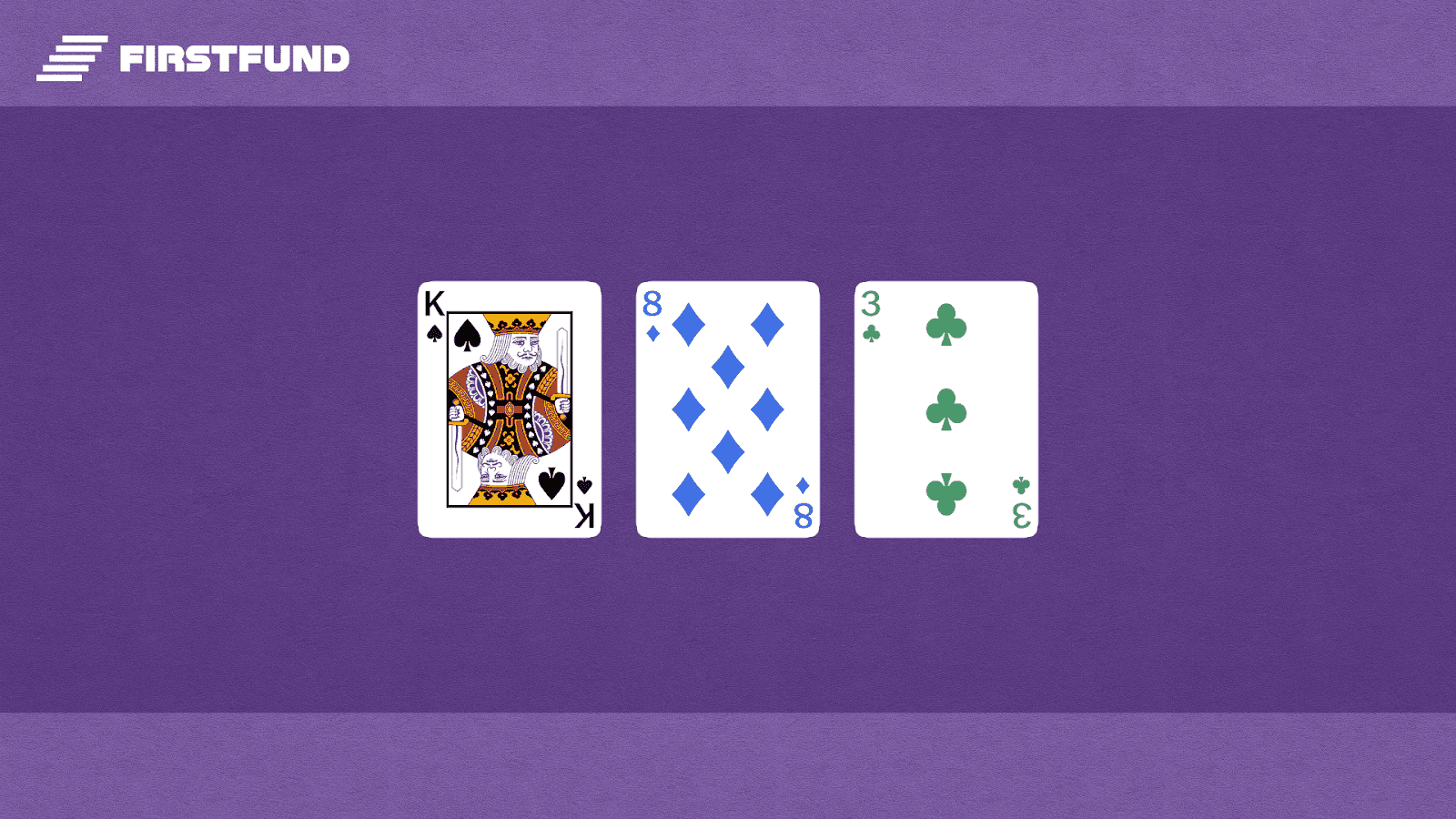
What's important to understand here?
the opponent rarely has a strong hit
most hands either didn't connect at all or have limited improvement potential
the preflop aggressor's range often looks stronger.
In such situations small and medium bets work especially well, because we don't need to protect against draws, even a small sizing knocks out a significant portion of empty hands, and we don't risk extra chips where we can take the pot cheaply.
Dynamic boards are boards with draws, connectivity, and the possibility of sharp changes in hand strength. For example:
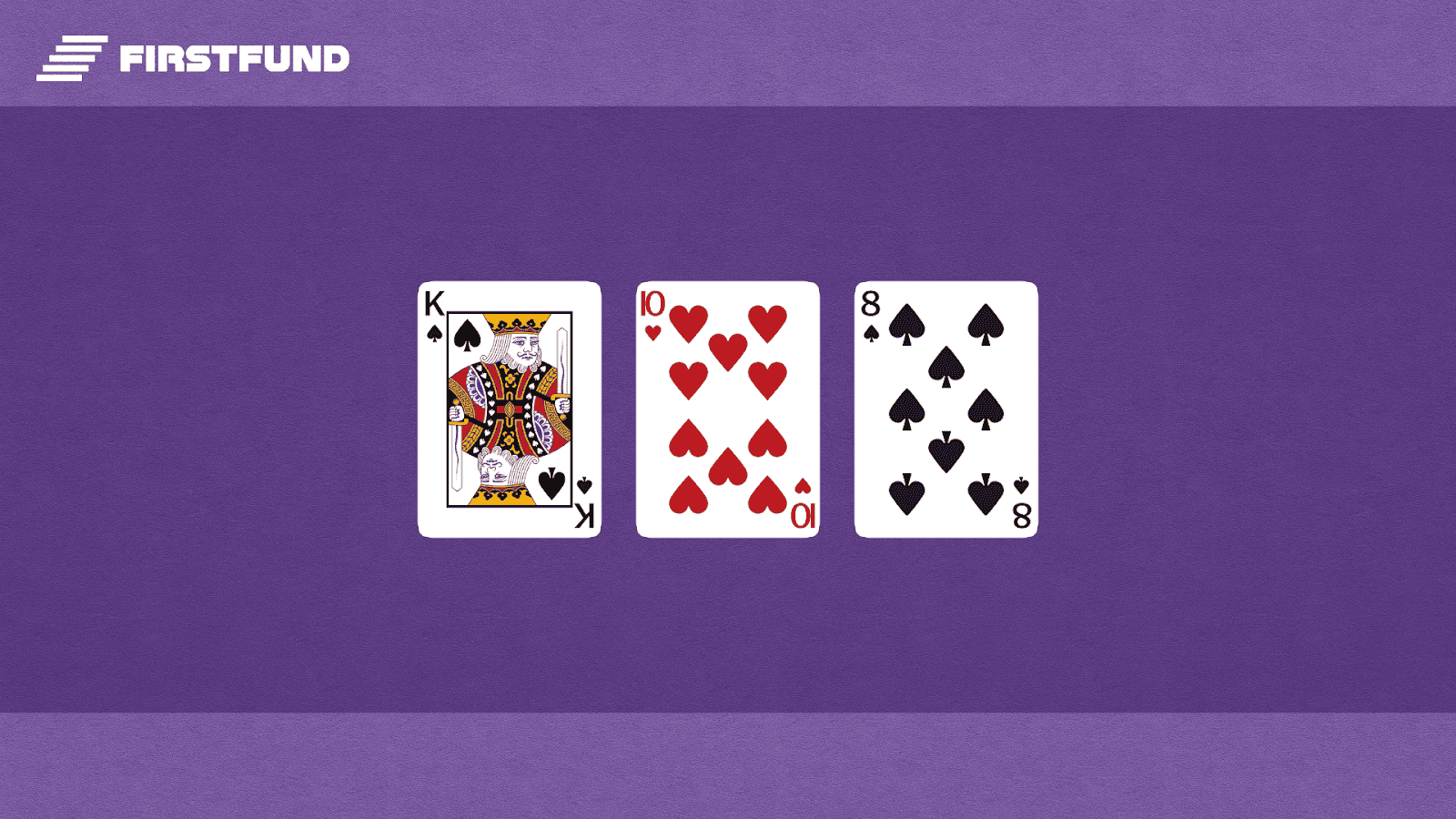
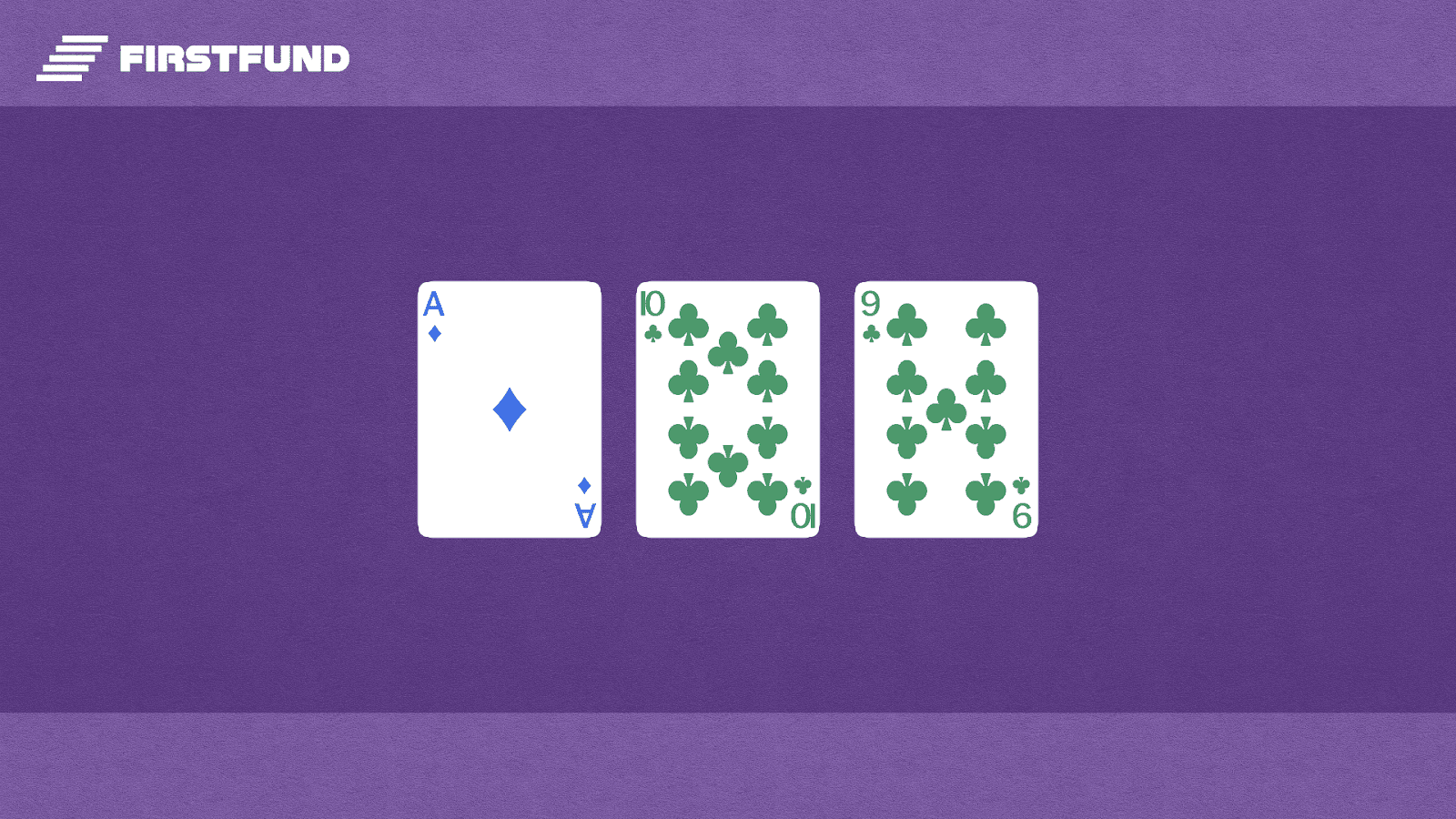
Here the logic changes:
the opponent more often has equity
a free card can radically change the situation
a small bet gives too good a price to call.
Therefore on such boards we more often use medium and large sizings, to deprive the opponent of profitable chances to get there, to apply pressure right away, and to simplify our decisions on later streets.
We've put together a complete guide to board types in poker in this article.
2. We pay attention to the effective stack
The second key point is the ratio of the pot to the effective stack.
If the pot is already large after the flop and the effective stack is relatively small, then small bets often lose their meaning. We're moving toward stacking off anyway, we're just doing it in a more convoluted way.
In such situations:
a small sizing gives us neither protection nor pressure
we postpone stacking off but don't improve our position
So, when the pot and stack are already close in size, it's often more logical to choose medium or large bets or even go all-in right away, if the board structure and the goal of the bet justify it.
This isn't about aggression for the sake of aggression, but about the rational use of the remaining chips.
* The effective stack in poker is the smallest of the stacks of the players currently involved in the hand.
3. We think through the goal of the bet
The most important point — why are we betting at all? We already talked about this above.
If all three answers agree with each other, sizing stops being a guess and becomes a conscious strategic decision. That's exactly how bets start working for us, not against us.
When min-bets and overbets work
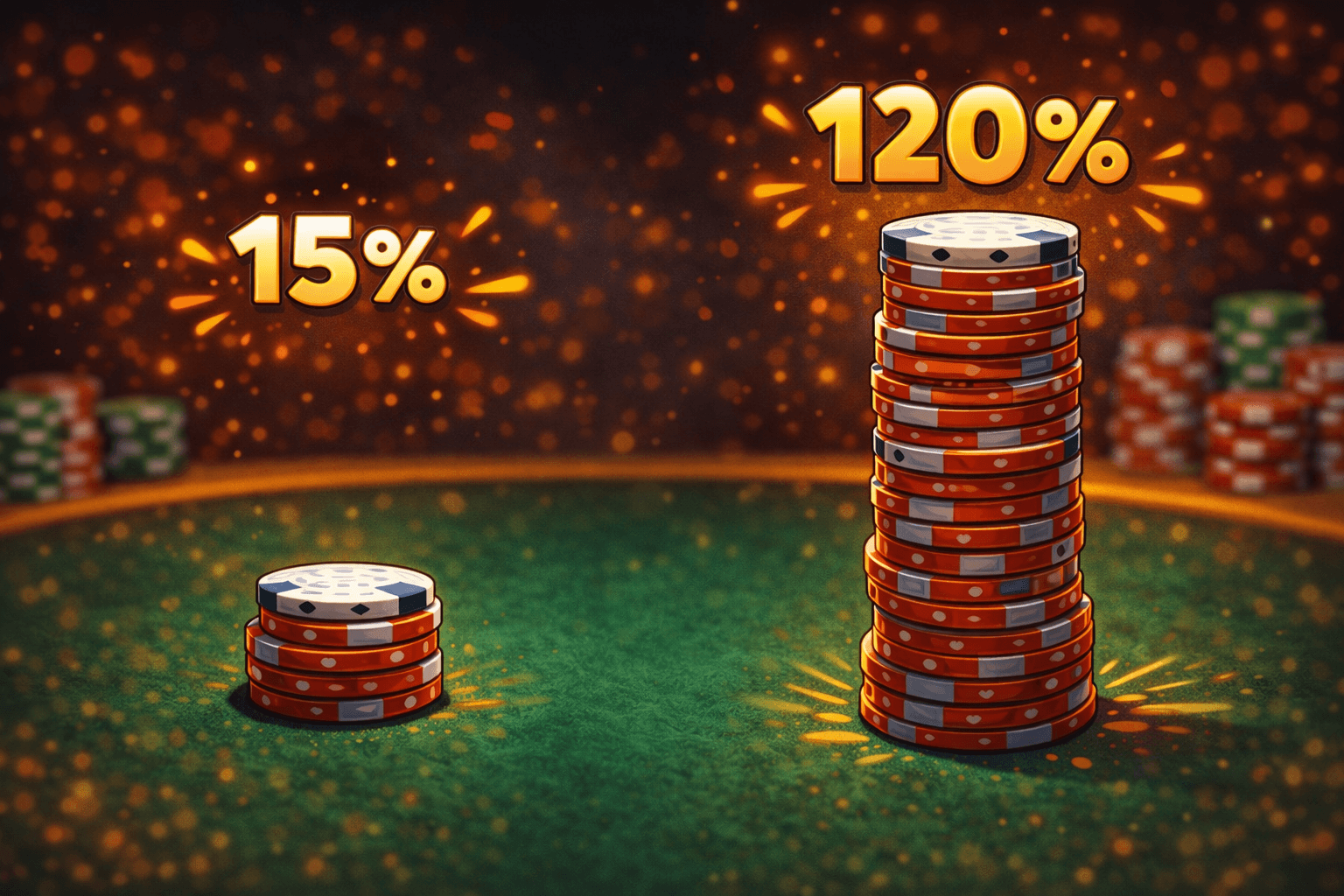
Non-standard bet sizes often attract the attention of beginning players. It seems that they hold the "secret button" for winning.
In practice it's the opposite: both min-bets and overbets are advanced tools that work only with a clear understanding of the goal and context.
Let's break it down in more detail.
Min-bet (10–15% of the pot)
A small bet for many is associated with weakness — and that's no coincidence. Very often beginning players bet small simply because they're afraid to play large pots or don't know what to do next.
But in the hands of a thinking player a min-bet can be a conscious tool. When can a min-bet be useful?
1. Overfold
At low stakes min-raises are mathematically justified. Weak opponents fold roughly equally to a 33% bet and to a smaller bet.
Why overpay where you can take the pot more cheaply?
*An overfold is folding too frequently in situations where, by the math or the logic of ranges, you should continue the hand.
2. Expanding the continuation range
A min-bet makes calling psychologically and mathematically easy. The opponent is forced to continue with hands he would have folded against a standard sizing — weak pairs, overcards, backdoor draws.
* A backdoor draw is a situation where our hand can improve to a strong combination only if the needed cards come on both of the next two streets.
This can be profitable if:
we have a strong but vulnerable hand
we want to keep the opponent's wide range in the hand
the board isn't too dangerous
Important to remember: a min-bet is not a universal size. If we don't understand why exactly we're betting 10–15% of the pot and what we'll do facing a raise or call, such a bet turns into weakness, not strategy.
Overbet
An overbet is a bet larger than the pot that creates serious pressure on the opponent's range.
An overbet works only when several conditions are met.
1. The opponent reacts differently to different bet sizings
If the opponent tends to call out of curiosity or doesn't pay attention to the bet size, an overbet loses its meaning as a bluff. Against such players an overbet is used only for value, to win more chips.
2. The line must be logical
A large bet size must fit into the story of the hand. If we've been betting moderately the whole hand and suddenly bet more than the pot on the river without an obvious reason, an attentive opponent will notice this.
A good overbet logically continues aggression, looks like a bet with a very strong hand, and matches the board texture and ranges.

Common mistakes in choosing sizing
Almost all mistakes in choosing bet sizes are born not from a lack of understanding of poker math, but from a desire to simplify the game. Beginning players want to rely on understandable templates, but this is exactly where systematic flaws begin.
Let's break down the most common of them — and why we arrive at them.
Mistake #1: the same bet size in any situation
The phrase "I always bet half the pot" sounds safe and even disciplined. In practice it means that we refuse to think about the context — the board, ranges, the goal of the bet.
The problem here isn't the specific size, but its universality. When we use the same sizing, it's easy for the opponent to adjust, we take fewer chips where we should take more, and our bluffs are easily exposed, because the size doesn't create discomfort.
We ourselves make our game predictable, and predictability in poker almost always means a loss in expectation.
Mistake 2: small bets without a goal
A small bet with the logic "I'll bet a little to figure out where I'm at" is one of the most widespread traps. It's important to remember that we never get any information with a small bet.
A beginning player might reason — "with a small bet I'm portraying a weak hand when I actually have a strong one, the opponent will understand this and now go and bluff over me."
Most often in this case the player bluffs himself out. If we have a strong hand, we bet in accordance with its strength; if we want to bluff, we choose the line that will be as logical and profitable as possible.
In each situation we're solving specific goals, and the choice of sizing is based exclusively on them — it's important to remember this.
Conclusion
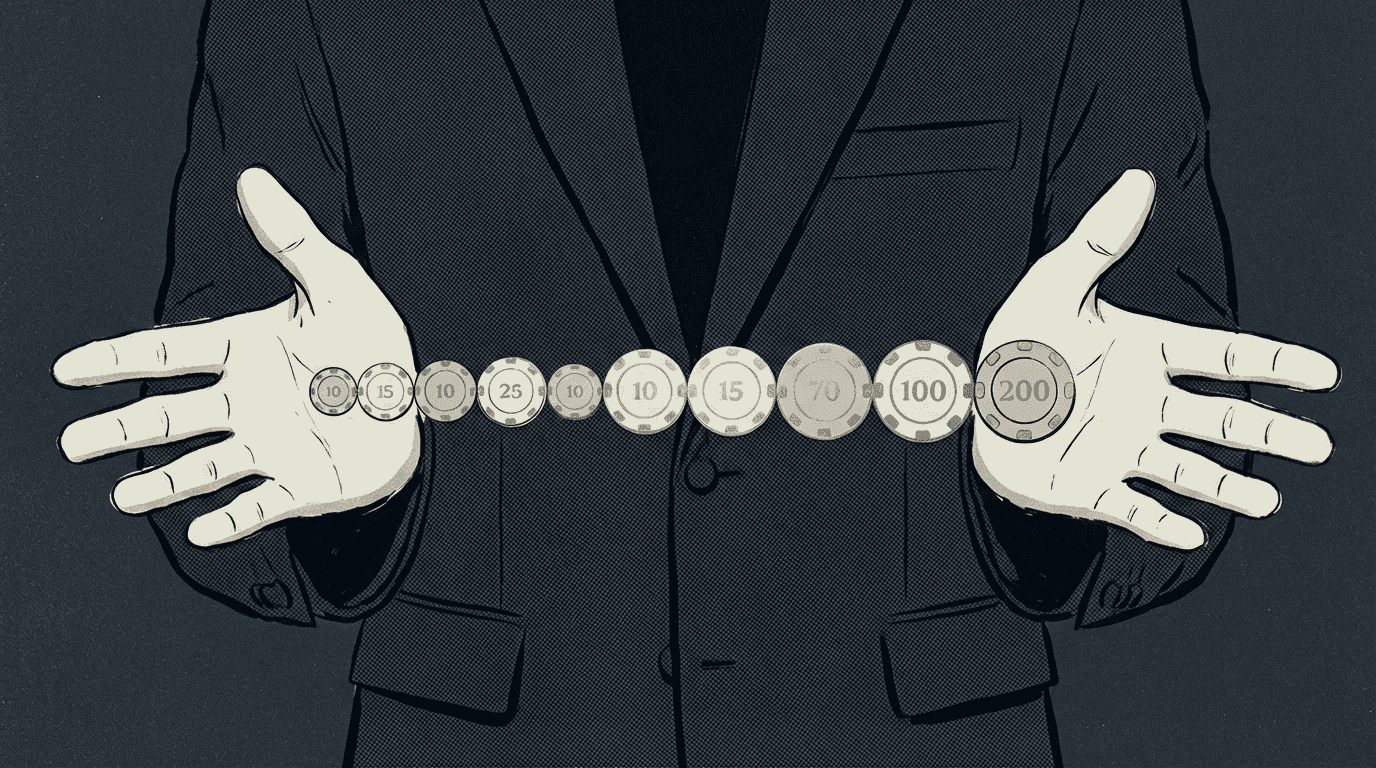
Sizing is a story about logic, goal, and consistency. Each bet size is a message we send to the opponent. And if the message is contradictory or unconvincing, an experienced player will recognize it.
The good news is that choosing a sizing is a skill that is best trained consciously. At FunFarm we work a lot precisely on this: we teach not just to press buttons, but to build a coherent strategy — from preflop to river, where each bet has meaning and fits into the overall picture of the hand.
If you want to stop losing money on unsystematic decisions — this is exactly the skill to start with together with our team.
Free course · FF Start
Strong play starts before the flop
Master starting hands, position, bet sizes and the core preflop scenarios.