Bloqueadores en poker: cómo una carta cambia todo
En el póker, casi nunca tomamos decisiones contra una mano concreta. Jugamos contra un rango: el conjunto de combinaciones con las que el rival pudo llegar al punto actual de la mano. Y cuanto mayor es el precio de la decisión, más importante es entender cuántas manos fuertes puede tener realmente el oponente.

Uno de los primeros entrenadores: forma parte del equipo desde la fundación del proyecto. Da prioridad a un aprendizaje simple y práctico, con énfasis en situaciones reales de juego y en la toma de decisiones a largo plazo. Val no solo «bate la mesa» como jugador, sino que también inculca a sus alumnos una actitud sistemática hacia el juego y una gran disciplina.
El concepto de bloqueadores ayuda a hacer exactamente eso: ajustar las frecuencias de las combinaciones en el rango del rival teniendo en cuenta qué cartas ya están con seguridad fuera de la baraja.
En este artículo veremos:
qué son los bloqueadores en palabras sencillas
cómo funcionan los bloqueadores en el preflop
cómo se usan los bloqueadores en el postflop
cómo se relacionan los bloqueadores con la selección de manos para el 4-bet y con las líneas de farol
los errores típicos por los que los bloqueadores se convierten en una excusa para tomar malas decisiones
cómo puede un jugador principiante incorporar el concepto de bloqueadores a su juego
* El rango de manos (range) es el conjunto de todas las manos iniciales posibles con las que un jugador puede estar en una mano, según sus acciones y su posición.

Nuevos análisis en tu correo
Suscríbete al boletín de FunFarm: nuevos artículos del ABC del póker y materiales para crecer como jugador.
Qué son los bloqueadores en palabras sencillas
Un bloqueador es una carta que ya está con seguridad fuera de la baraja. En el caso más habitual, la tenemos en nuestra mano.
Debido a esto, disminuye la probabilidad de que el rival pueda tener determinadas manos y disminuye la probabilidad de que salgan determinadas cartas en las siguientes calles.
El sentido clave de los bloqueadores es siempre el mismo: reducen el número de combinaciones del oponente. Y eso significa que cambian la estructura de su rango y la frecuencia de aquellas manos que nos interesan: value, draws fuertes, nuts, manos para continuar contra un 3-bet/4-bet, etc.
* El value es el juego orientado a obtener beneficio de las manos más débiles del rival.
* Los nuts son la combinación más fuerte posible en el board actual, que no se puede superar.
Puedes saber más sobre los 3-bets en el póker en este artículo, y más sobre los 4-bets, en este.
Es importante fijar de entrada algunas particularidades a la hora de entender el concepto de bloqueadores:
1. El bloqueador no garantiza que el rival no tenga la mano en cuestión. Más bien «desplaza» las probabilidades: de algunas manos hay menos, de otras relativamente más.
2. Los bloqueadores funcionan en conjunto con los rangos y la línea. Si no entendemos qué manos tiene en principio el rival, el bloqueador se convierte en un autoengaño.
La forma más sencilla de notar la fuerza de los bloqueadores es mirar las parejas servidas. Por ejemplo, la mano QQ se puede formar de 6 maneras. Si tenemos una dama en la mano, al rival le quedan 3 combinaciones de QQ, porque en la baraja solo quedan tres damas.
Lo mismo ocurre con las parejas altas. Si tenemos A♠️K♠️, en la baraja solo quedan 3 ases y 3 reyes, lo que significa que las combinaciones de AA pasan a ser 3 en lugar de 6, y las combinaciones de KK pasan a ser 3 en lugar de 6.
Esto es justamente la «mecánica del bloqueador»: no decimos «no puede tener AA», decimos «AA aparece con menos frecuencia que sin nuestro as».
Conclusión práctica: cuando elegimos decisiones agresivas en el preflop —por ejemplo, un 3-bet o un 4-bet—, las manos con un as/rey suelen ser útiles no solo por su fuerza, sino también porque reducen la proporción de las continuaciones más fuertes del oponente.
Los bloqueadores en el postflop
En el postflop los bloqueadores se vuelven más interesantes, porque los rangos ya se han estrechado por las acciones del oponente en el preflop, y la estructura del board añade clases concretas de manos: combinaciones hechas, draws, top pairs, sets, etc.
Analicemos esta idea con un ejemplo concreto.
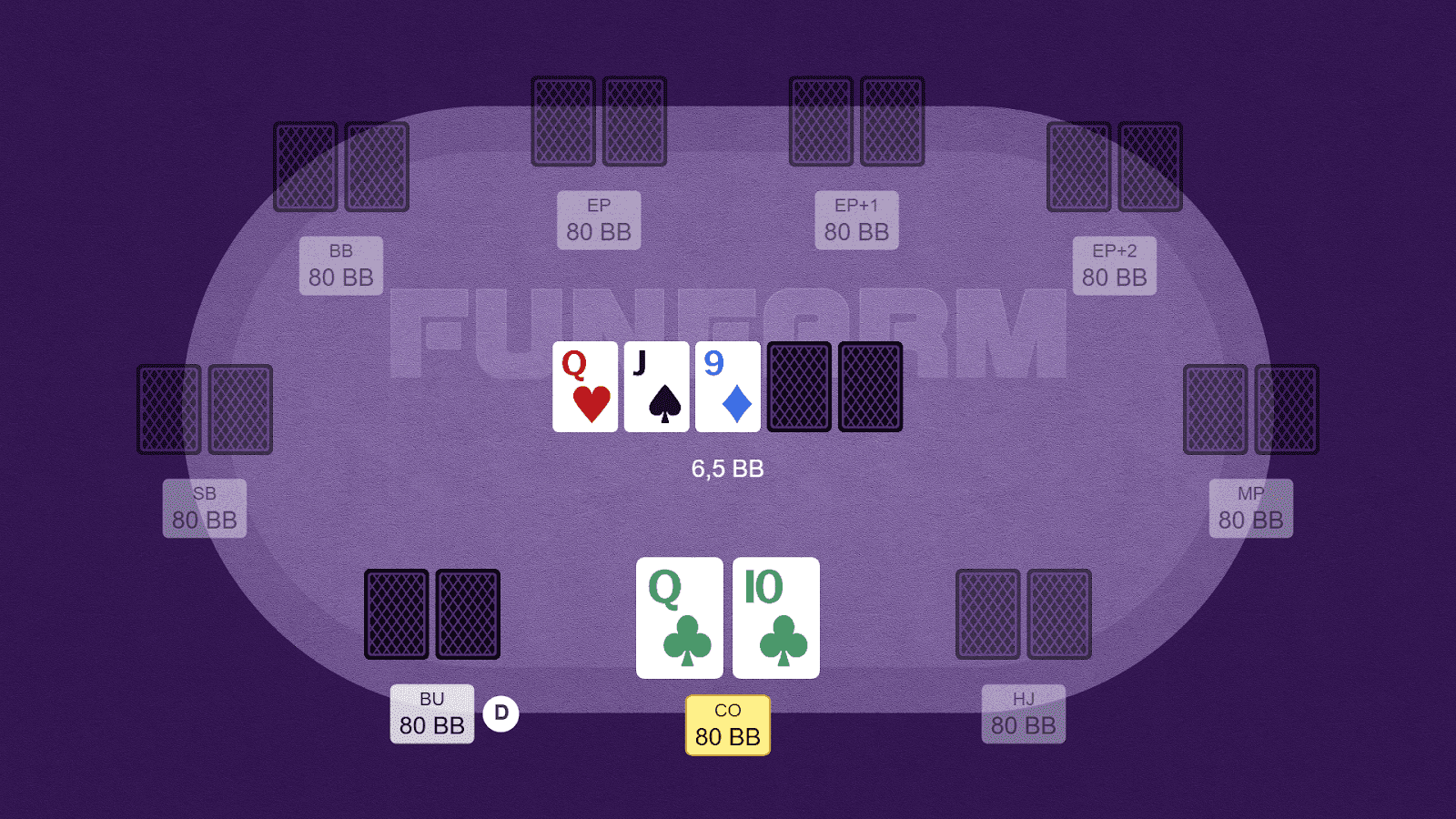
En el preflop tenemos Q♣️T♣️. En el flop vemos Q♥️J♠️9♦️. Hemos ligado top pair y tenemos un proyecto de escalera abierto: una mano fuerte y dinámica. Pero en un board así el rival puede tener bastantes manos hechas, por ejemplo:
escaleras hechas: KT y T8 (del mismo palo)
top pairs más fuertes: AQ, KQ
dobles parejas: QJ, Q9 (del mismo palo), J9 (del mismo palo)
proyectos de escalera abiertos por la Tx
Y ahora analicemos cómo funcionan aquí los bloqueadores. Las dos observaciones principales son las siguientes:
1. Tenemos la T♣️. Es un buen bloqueador frente a las escaleras hechas y los proyectos de escalera abiertos, porque en la baraja quedan tres dieces, y las combinaciones de KT/T8 son menos
2. La Q♣️ reduce el número de combinaciones de AQ/KQ.
El principal sentido práctico: cuando decidimos con qué frecuencia el rival puede tener una combinación fuerte en la mano, los bloqueadores desplazan las frecuencias a nuestro favor.
Esto no nos pone automáticamente por delante, pero hace que algunas de las partes más desagradables del rango sean menos frecuentes, y por tanto influye en la elección de la línea: por ejemplo, dónde nos resulta más cómodo jugar de forma agresiva y dónde es mejor controlar el bote.
Formación en FunFarm, desde cualquier nivel
Bloqueadores y 4-bets: cómo elegir las manos para farolear
Cuando hacemos un 4-bet de farol, en realidad resolvemos dos tareas a la vez.
1. Conservar una calidad de mano razonable para continuar la mano. Incluso un buen 4-bet no siempre cierra la mano: el oponente puede igualar, puede ir all-in.
Por eso es importante que entendamos qué hacemos contra un call y contra un all-in por todo el stack: si la mano es jugable, si hay al menos algo de realización de equity, si el 4-bet no se convierte en una pura quema de fichas.
2. Conseguir un fold ya en el preflop. Queremos que el rival se retire con parte de su rango de 3-bet y no pueda realizar su equity. Cuanto más a menudo foldea, más a menudo nos llevamos el bote sin postflop.
Y aquí los bloqueadores se convierten en una herramienta que ayuda a resolver ambas tareas.
Por ejemplo, si tenemos un A o una K en la mano, reducimos el número de combinaciones en la parte alta del rango del rival, esas manos con las que más a menudo está dispuesto a continuar de forma agresiva.
Esto hace que el 4-bet de farol sea matemáticamente más «limpio»: la probabilidad de encontrarse con una mano fuerte disminuye, y por tanto crece la proporción de situaciones en las que el rival se ve obligado a foldear o a igualar con manos más débiles.
Al mismo tiempo, es importante no sobrevalorar el efecto: el bloqueador no es una licencia para hacer un 4-bet de farol. Si el rival es poco condescendiente y con baja probabilidad se va a rendir ante un 4-bet, o, por ejemplo, abre con un rango estrecho —y por tanto con mayor probabilidad tiene una mano fuerte—, entonces los bloqueadores dejan de ser un argumento decisivo.
Pongamos un ejemplo de una situación.
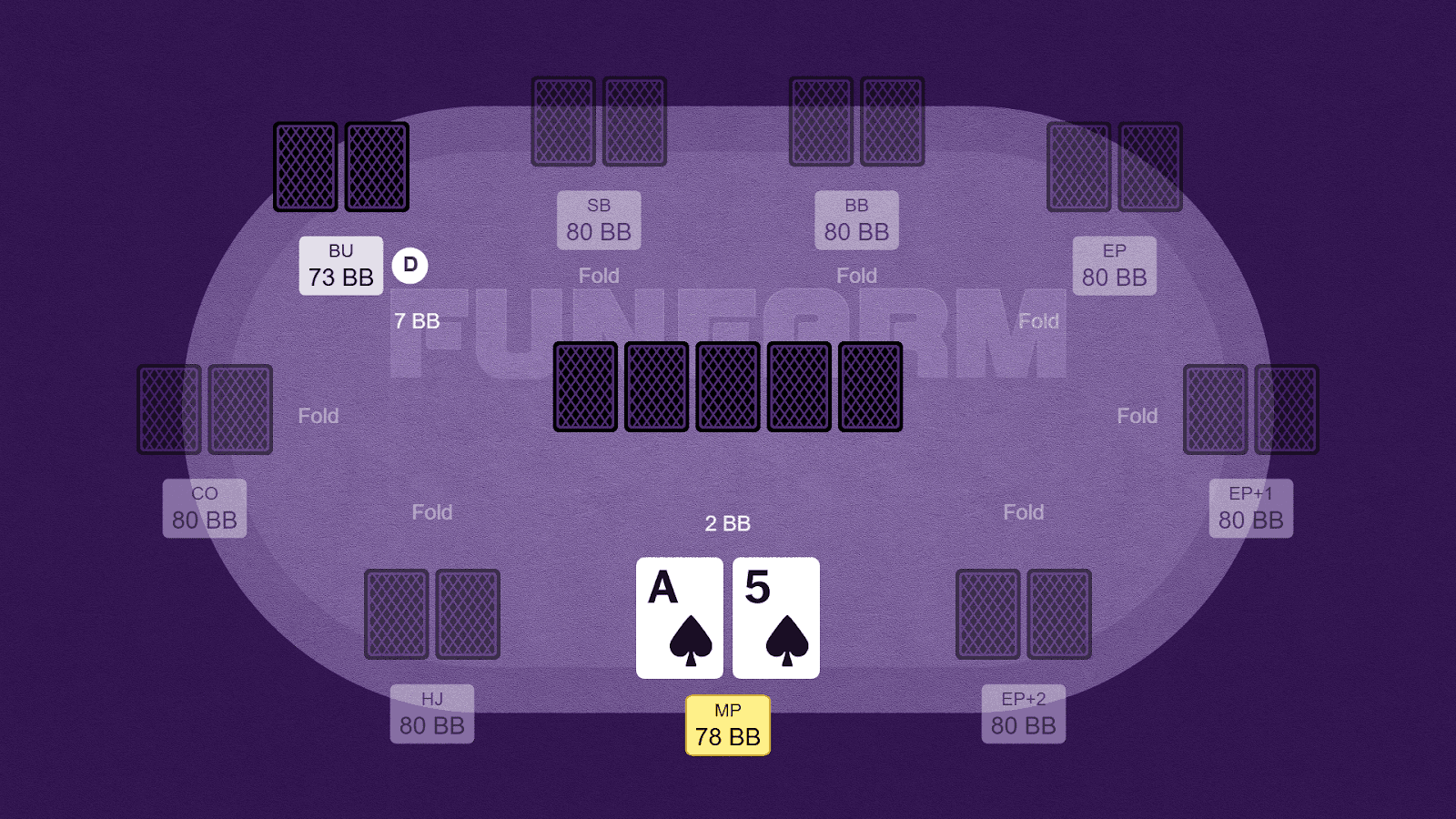
Hemos abierto en MP con A♠️5♠️. El BTN hace un 3-bet de 7bb. Suposición sobre el oponente: el BTN juega el 3-bet de forma relativamente agresiva: tiene no solo manos nuts, sino también broadways del mismo palo y ases débiles. Es el tipo clásico de rival contra el que los bloqueadores van a funcionar bien.
Nuestra mano es perfecta para un 4-bet de farol, porque:
tiene un as, que reduce la frecuencia de AA/AK y de otras manos fuertes con ases del BTN
la mano tiene mala jugabilidad en el postflop, porque estamos fuera de posición y nos será más difícil tomar decisiones
Lo principal es que es más adecuada para un 4-bet de farol que, pongamos, un 9♠️8♠️ sin bloqueador, porque la tarea del 4-bet aquí es llevarse el bote preflop gracias al fold equity.
Lógica de la acción: si el BTN realmente continúa estrecho, el 4-bet con A♠️5♠️ gana no por la fuerza de la mano, sino porque el rival a menudo se ve obligado a foldear su rango de 3-bet bajo/medio, y la frecuencia de las continuaciones más desagradables —por ejemplo, un 5-bet all-in— se vuelve menor por culpa de nuestro bloqueador.
Cómo funcionan los bloqueadores de color
Los bloqueadores de color parecen el ejemplo más claro del funcionamiento del concepto de bloqueadores, porque en el river los rangos a menudo se vuelven más polarizados.
Cuando se cierra un color, la línea del oponente —especialmente una apuesta grande— suele representar dos grandes categorías:
value: colores (y a veces otros nuts, si son posibles en esa textura concreta)
faroles o value fino: manos a las que les cuesta llegar al showdown a través del check, pero que pueden intentar expulsar parte de nuestro rango.
Si tenemos en la mano una carta del palo necesario, reducimos el número de colores que el oponente puede tener realmente. Esto no elimina los colores por completo, pero desplaza la distribución: la parte de value se vuelve menos frecuente, y la proporción relativa de faroles, mayor.
De ahí el principio clave: los mejores bloqueadores de color son los que bloquean justamente el value.
Un as del palo suele ser más fuerte que una carta media del palo, porque corta los colores altos, que más a menudo eligen un sizing grande para value. Una carta media del palo a veces bloquea más colores «aleatorios», pero no siempre bloquea las combinaciones que realmente apuestan mucho.
Cómo funcionan los bloqueadores en la práctica
Para que los bloqueadores realmente influyan en la estrategia, necesitamos un orden de pensamiento claro. A continuación recogemos una secuencia de acciones operativa que se puede aplicar en una partida real.
1. Construimos el rango del oponente en toda la línea
Es importante reconstruir la lógica de la mano: qué posición tiene el rival, cómo forma su rango en el preflop, qué parte de ese rango continúa en el flop, qué manos llegan al turn y al river teniendo en cuenta el tamaño de las apuestas y la estructura del board.
Por ejemplo,
si el rival defiende la ciega grande contra una apertura desde el botón, su rango es más amplio y contiene más manos del mismo palo
si hace 3-bet desde la ciega pequeña contra el CO, su rango es más estrecho y contiene más a menudo broadways fuertes y parejas servidas
si en el flop apuesta grande en una textura seca, descartamos así parte de las manos débiles, y así sucesivamente.
2. Identificamos las partes clave del rango
Cuando el rango está más o menos delimitado, nos hacemos una pregunta más concreta: ¿qué manos son ahora mismo críticas para nosotros?
Según la mano, pueden ser: nuts y value fuerte (colores, escaleras, sets), value medio (top pairs, segundas parejas), draws fuertes y faroles.
Por ejemplo, en el river tras una apuesta grande lo que normalmente nos preocupa es justamente la parte alta del rango del oponente. Si planteamos igualar la apuesta, nos interesa la proporción: cuánto value fuerte tiene y cuántos faroles tiene.
Y si somos nosotros quienes queremos farolear, nos interesa: qué manos va a igualar él con más frecuencia y qué manos va a tirar.
Solo después de esto pasamos al análisis de los bloqueadores.
3. Analizamos qué bloqueamos exactamente
Ahora surge la pregunta clave: ¿de qué combinaciones tiene menos el oponente por culpa de nuestras cartas? Aquí lo importante no es la carta en sí, sino su influencia en la estructura del rango.
Por ejemplo, el river cerró un color. Si tenemos el as de ese palo, reducimos el número de colores nuts, pero quizá reducimos también parte de los faroles, si el rival farolea con draws fallados de ese palo.
La tarea es entender: ¿estamos cortando la parte de value del rango o la parte de farol? Esto es fundamental. A veces una carta parece un buen bloqueador, pero en la práctica reduce los faroles del rival y con ello empeora nuestro call.
4. Ajustamos la decisión
Solo después de los tres pasos anteriores el bloqueador empieza a funcionar en la decisión.
Son posibles cuatro escenarios típicos:
1. El bloqueador refuerza nuestro farol
Bloqueamos el value fuerte del rival, y su rango de continuación se vuelve más débil. En esa situación la apuesta se vuelve más rentable.
2. El bloqueador refuerza nuestro call
Bloqueamos las manos fuertes del rival y no bloqueamos sus faroles. La proporción value/faroles se desplaza a favor de los faroles: el call se vuelve mejor.
3. El bloqueador empeora el call
Bloqueamos los faroles del rival. Aunque cortemos parte del value, si al mismo tiempo cortamos más los faroles, la proporción relativa de value aumenta, y el call se vuelve peor.
Este es uno de los errores más habituales: nos alegramos de tener la «carta adecuada» sin darnos cuenta de que ha eliminado justamente las manos que deberían farolear.
4. El bloqueador casi no influye en la decisión
A veces una carta reduce las frecuencias de forma insignificante o corta de manera simétrica ambas partes del rango. En esas situaciones el bloqueador no debe convertirse en un factor decisivo.
En resumen: para que los bloqueadores realmente aporten beneficio, siempre empezamos por el rango, no por la carta; determinamos qué partes del rango son importantes para la decisión; analizamos qué bloqueamos exactamente y ajustamos la decisión, en vez de forzarla para que encaje con tener una carta bonita.

Errores típicos de los jugadores principiantes
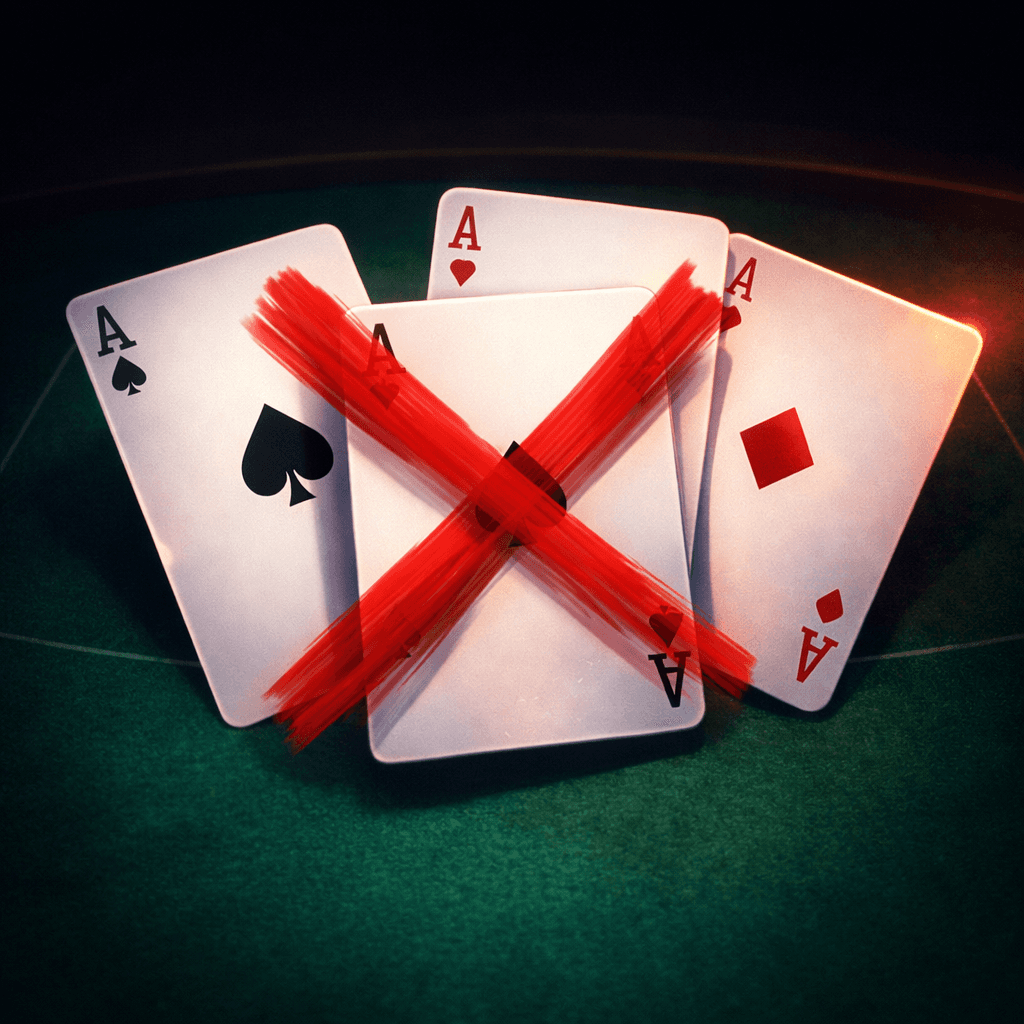
El concepto de bloqueadores parece lógico y comprensible: si tenemos una carta que reduce el número de combinaciones fuertes del rival, entonces nuestra decisión mejora.
En la práctica todo es más complejo. Los errores con los bloqueadores casi siempre se deben no a las matemáticas, sino a cómo interpretamos su influencia dentro del rango.
Analicemos las trampas principales con más detalle.
1. Sobrevalorar el bloqueador
El error más habitual es pensar que tener un bloqueador «elimina» parte de las manos fuertes del rival.
Ejemplo clásico: en el river se cerró un color, tenemos una carta de ese palo, y automáticamente decidimos que el rival casi no tiene colores. De ahí: un call demasiado fácil contra una apuesta grande o un farol demasiado agresivo.
Pero la lógica correcta es distinta. El bloqueador reduce el número de combinaciones, pero no elimina la propia estructura del rango ni la línea de juego.
Si por posición y línea el rival tiene muchas manos del mismo palo, una línea agresiva en el flop y el turn, y en el river apuesta grande, entonces, incluso teniendo el bloqueador, su rango puede seguir estando saturado de value.
Si sin el bloqueador el call era marginal o malo, un solo bloqueador rara vez lo convierte en claramente rentable.
2. Ignorar el contexto y el estilo del oponente
Los bloqueadores son una herramienta del pensamiento por rangos. Funcionan mejor contra jugadores que construyen los rangos de forma consecuente, foldean donde deben foldear y polarizan las líneas con lógica.
Contra rivales tight y estructurados, el efecto del bloqueador se realiza más a menudo de forma matemáticamente correcta.
Pero si el oponente iguala demasiado amplio, no foldea ante 3-bets y 4-bets, no sabe tirar las manos medias y juega de forma caótica, entonces la reducción de combinaciones en teoría no se traduce en un fold real en la práctica.
El bloqueador refuerza la estrategia solo cuando el rival es capaz de jugar de forma racional. Contra jugadores que no respetan la estructura básica de rangos, el bloqueador a menudo se convierte en un factor secundario.
3. Bloquear faroles, no value
Este es uno de los errores más sutiles e infravalorados, especialmente en el turn y el river. A menudo nos alegramos de tener la «carta adecuada» sin hacernos la pregunta principal: ¿qué bloqueamos exactamente, manos fuertes o faroles?
Imaginemos una situación en el river: el board cierra un posible draw, el rival apuesta grande y nos planteamos el call.
Si tenemos una carta que bloquea parte de sus draws fallados, pero no bloquea su value, entonces la proporción relativa de faroles en el rango disminuye, y nuestro call se vuelve peor, a pesar de tener el bloqueador.
Antes de apoyarnos en un bloqueador, hay que entender qué parte del rango reduce. Si corta los faroles, es un argumento a favor del fold, no del call.
4. Usar bloqueadores sin construir el rango
El error estratégico más grosero es hablar de bloqueadores sin tener una imagen clara del rango del rival.
Si no podemos decir qué manos abre el rival en el preflop, cuáles continúa en el flop, cuáles llegan al river y con qué manos apuesta con un sizing u otro, entonces hablar de bloqueadores se vuelve una formalidad.
El bloqueador es el toque final de un modelo de rango ya construido. Si no hay modelo, el bloqueador no salvará la decisión.
Conclusión
Los bloqueadores son una herramienta que ayuda a ver con más precisión la distribución de las combinaciones en el rango del rival. En el largo plazo esto se traduce en cosas concretas: elegimos manos más adecuadas para la agresión, entendemos mejor cuántos nuts son realmente posibles y dejamos de tomar decisiones caras basándonos en una sensación, y no en la estructura de los rangos.
Para entender mejor las matemáticas del póker y dominar las bases racionales del juego, envía tu solicitud a FunFarm: enseñamos a jugadores de todo el mundo a ganar dinero de forma estable con el póker.

Curso gratuito · FF Inicio
El buen juego empieza antes del flop
Domina las manos iniciales, la posición, los tamaños de apuesta y los escenarios básicos de preflop.
Preguntas frecuentes
Sigue leyendo
Call, 3-bet o fold tras un raise: cómo tomar decisiones

Float en el póker: cómo usar la posición para robar botes
Cómo jugar contra jugadores muy agresivos en el póker