Blind Defense in Poker: Why Does It Matter?
In poker tournaments, the size of the forced bets — that is, the blinds — keeps increasing. Meanwhile, opponents regularly try to steal them with a raise from late position. If you don't defend your blinds, your stack will start shrinking even without being involved in any big hands.

One of our first coaches: on the team since the very founding of the project. He prioritizes simple and practical training with an emphasis on real game situations and decision-making over the long run. Val doesn't just "beat the games" as a player, but also instills a systematic approach to the game and discipline in his students.
It's important to understand: folding the big blind on every hand means losing more than a hundred big blinds over a hundred such hands, and on the small blind — more than fifty when you account for the ante. If you don't defend your blinds, you'll never go deep in a tournament and you'll lose money.
The goal of blind defense isn't to play every single hand profitably. You defend your blinds to reduce inevitable losses. That way you minimize your losses, resist blind steals, and preserve your stack over the long run.
Principles of blind defense
Blind defense is a response to an opponent's raise when you're on the small or big blind. The basic idea is simple: don't let your opponent take your contribution to the pot without a fight.
However, defending your blinds doesn't mean calling every raise. Proper defense is built on three key nuances:
Position
The raiser's position at the table plays a key role. Players in late position enter the hand with a wider and weaker range of starting hands, whereas an early-position raise indicates a strong range. Accordingly, you should defend your blinds more cautiously against a raise from early position.
Your own position is no less important. On the big blind you have to commit fewer chips to call, so you can pay off a raise with a wider range of hands compared to the small blind. On top of that, being on the big blind, you close the preflop betting round and always know what the other players have done.
On the small blind the situation is different: the big blind still acts after you, which creates additional uncertainty. That's why you should defend the small blind with a stronger range.
Raise size
The smaller the raise size, the more often you can defend. If your opponent raises a standard size of 2 big blinds, you get favorable pot odds to call with many hands you wouldn't play from open positions. Against large raises, your defense should be tighter.
Opponent type
Different opponents play differently preflop and postflop. An active opponent will raise more often with a wider range of starting hands and play aggressively postflop even without a good combination. A passive opponent attacks the blinds far less often, usually with good starting hands, but will also often give up without connecting with the board. This is worth keeping in mind.
How to defend the big blind?
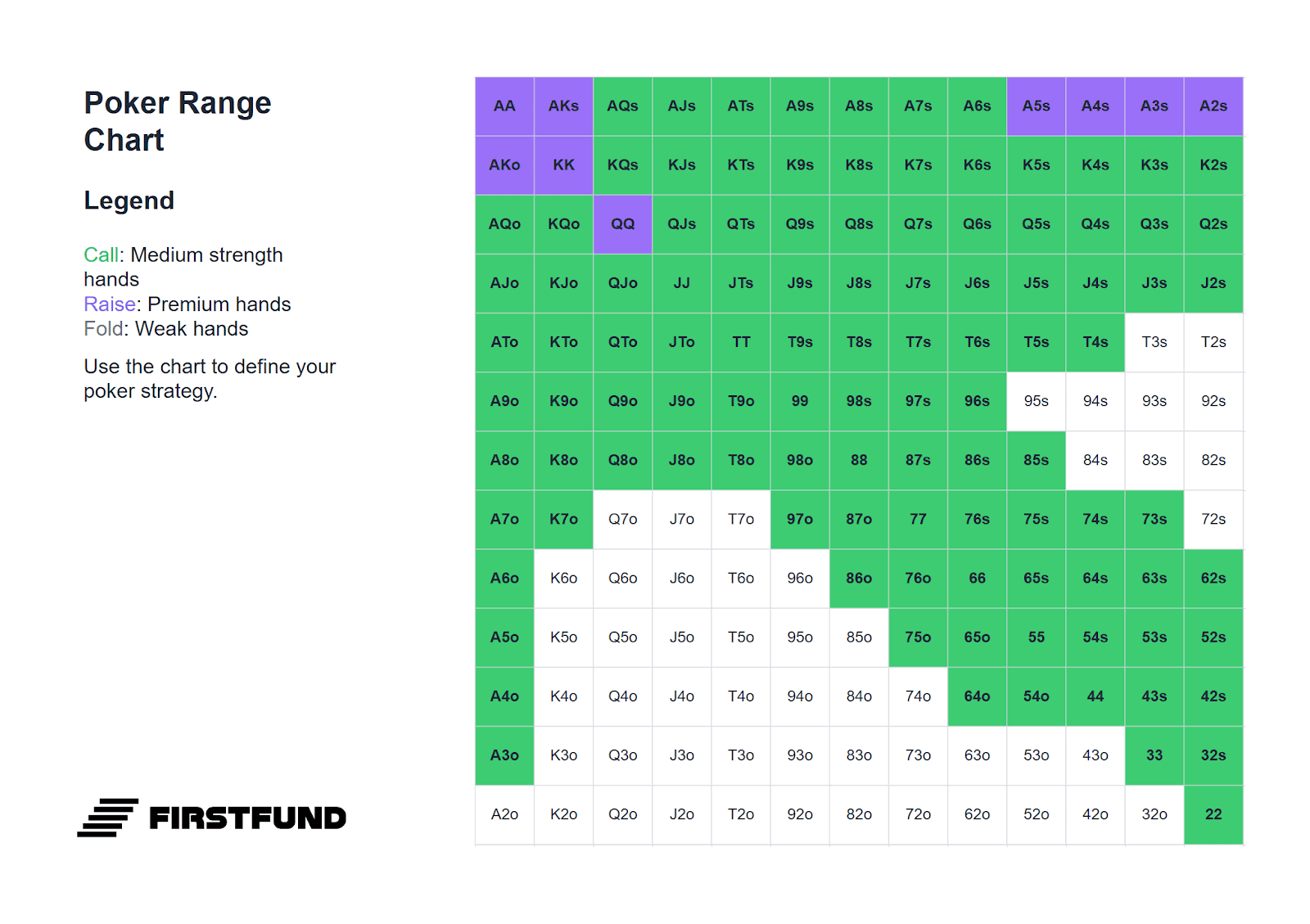
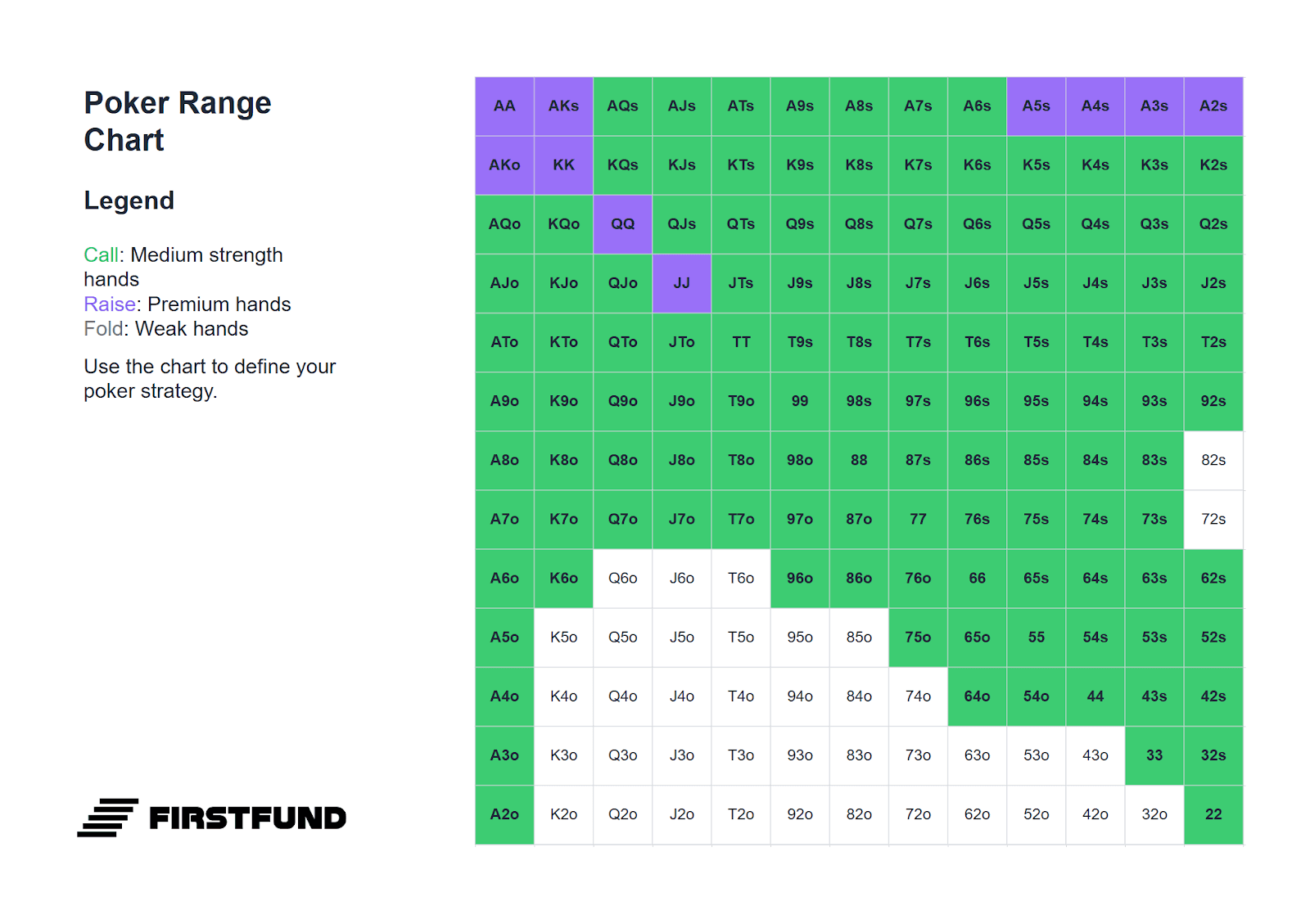
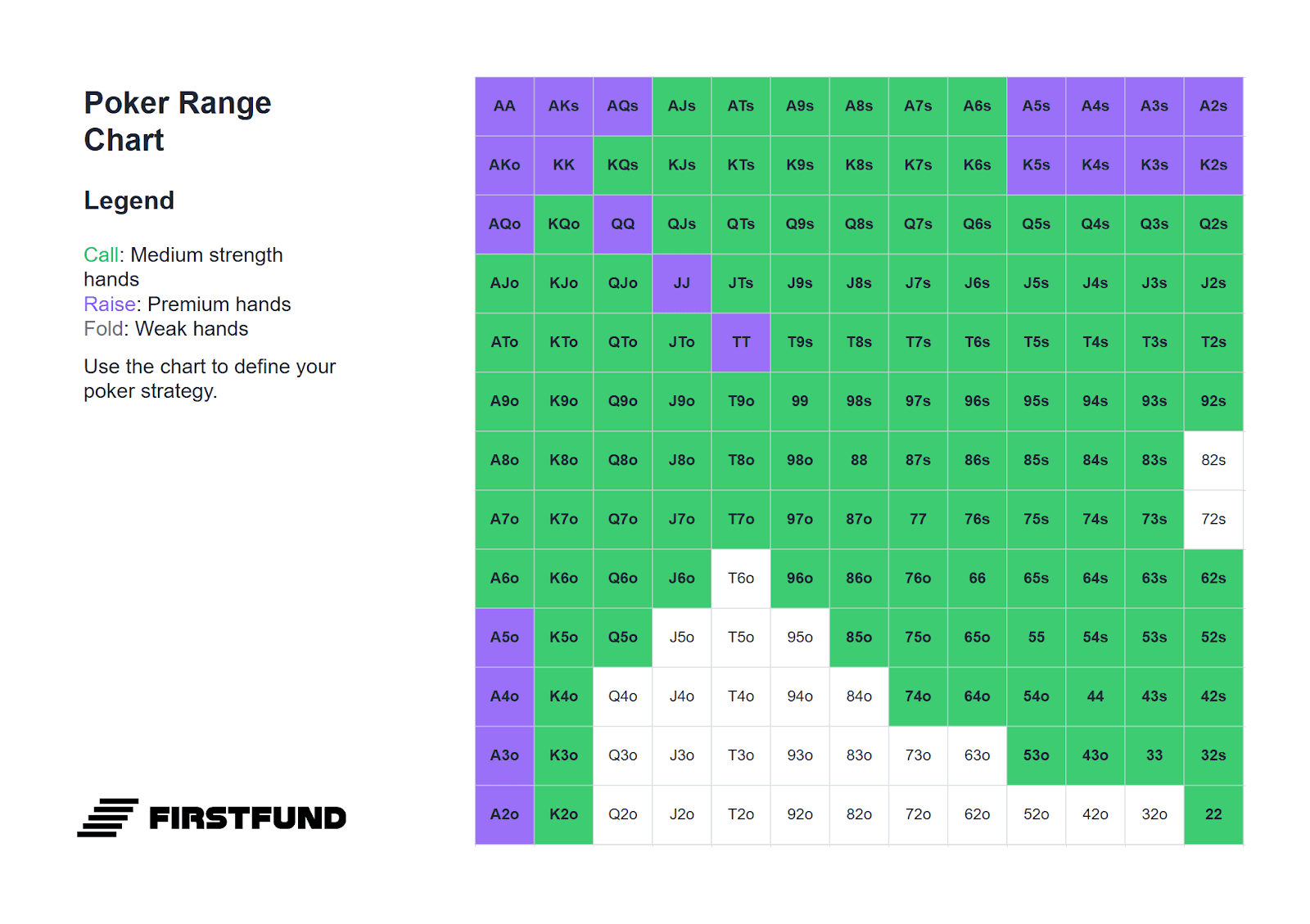
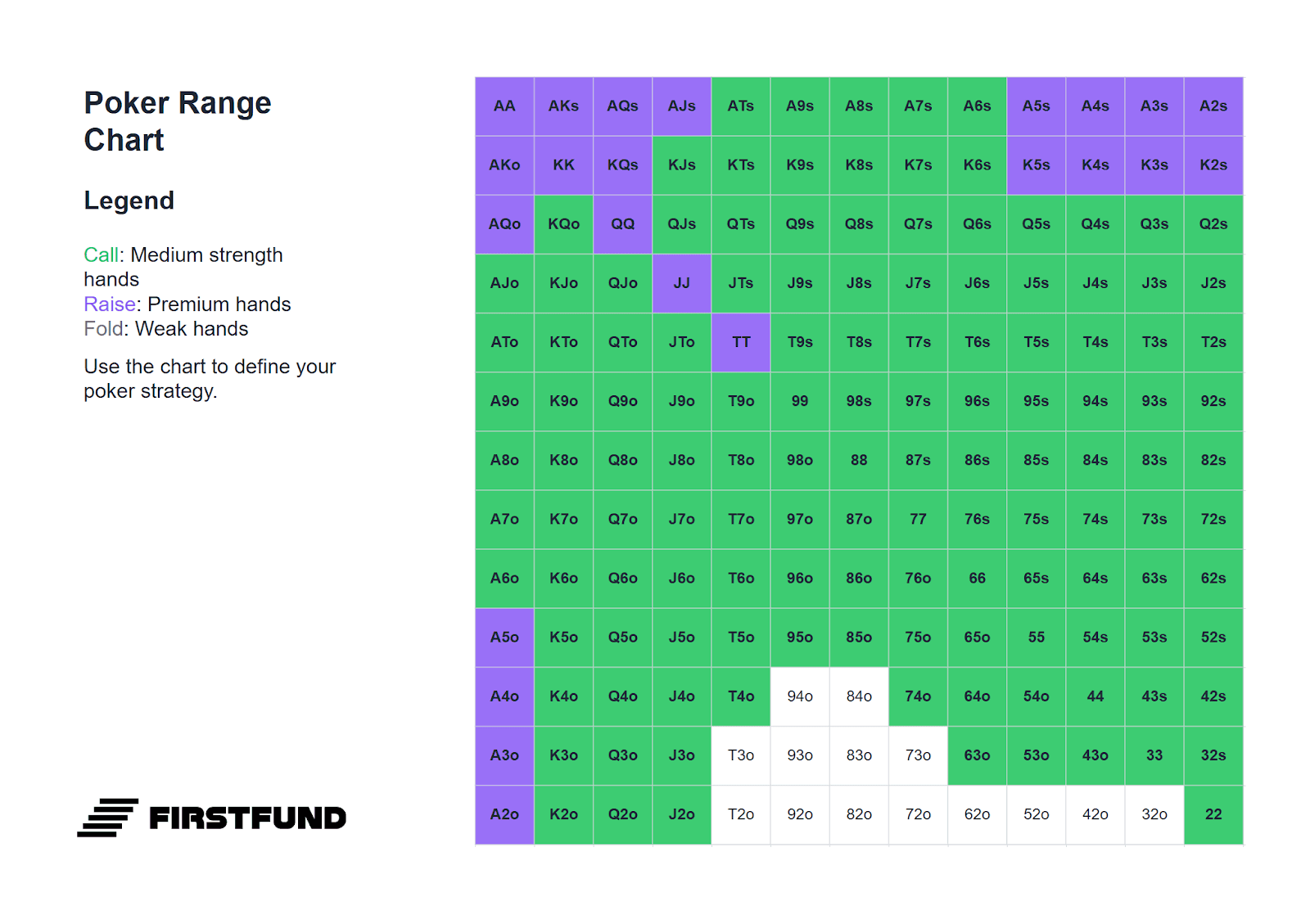
Below is a range of hands suitable for defending the big blind. Keep in mind that the choice of hand depends on the position of the player who raised: the earlier the raiser's position, the tighter your defense range should be.
All hands highlighted in green can be played by calling. Combinations highlighted in purple are suitable for playing either by calling or with a standard-size 3-bet: four times the open size. For example, if your opponent raises 2 big blinds, the optimal 3-bet size will be 8 blinds.
If the raise size exceeds 2.5 big blinds, you should treat it more carefully: such raises more often signal a strong hand. In situations like these, your defense range for both calling and 3-betting needs to be narrowed.
Against early position (EP)
Against middle position (MP)
Against the cutoff (CO)
Against the button (BTN)
Learning at FunFarm, from any level
How to defend the small blind?
Below is a range of hands suitable for defending the small blind. It's significantly tighter than the big blind defense range, because to call on the small blind you need to add one and a half big blinds, whereas on the big blind — only one. On top of that, after your action there's still one more player left — the big blind. Their decision can change the course of the hand, so an overly wide small blind defense often leads to playing out of position in difficult postflop spots.
All hands highlighted in green can be played by calling. Hands highlighted in purple can be played by calling or with a standard-size 3-bet: 4 times the bet size. If the raise size is larger than 2.5 big blinds, defend tighter — just like on the big blind, only with a narrower range.
Against early position (EP)
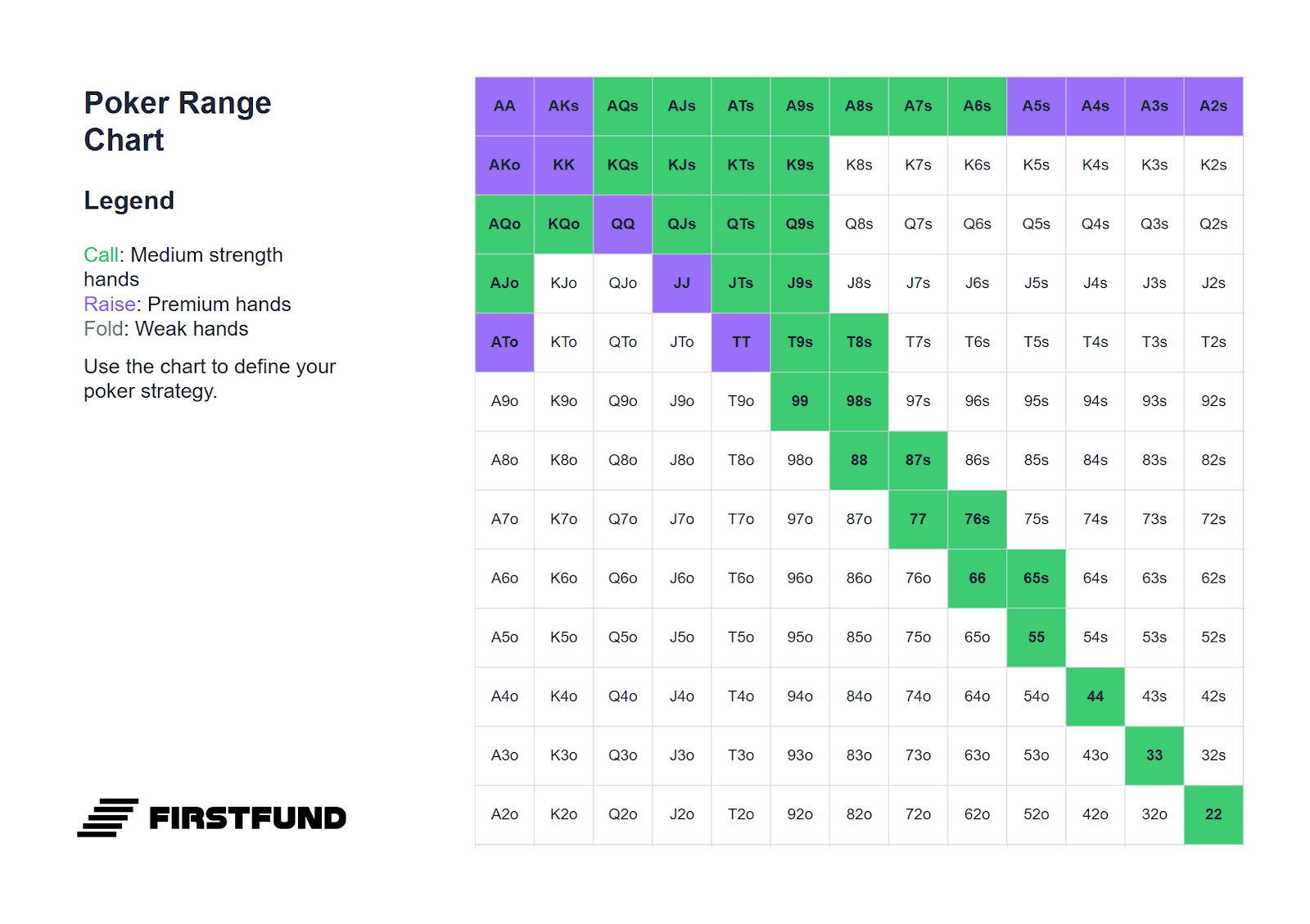
Against middle position (MP)
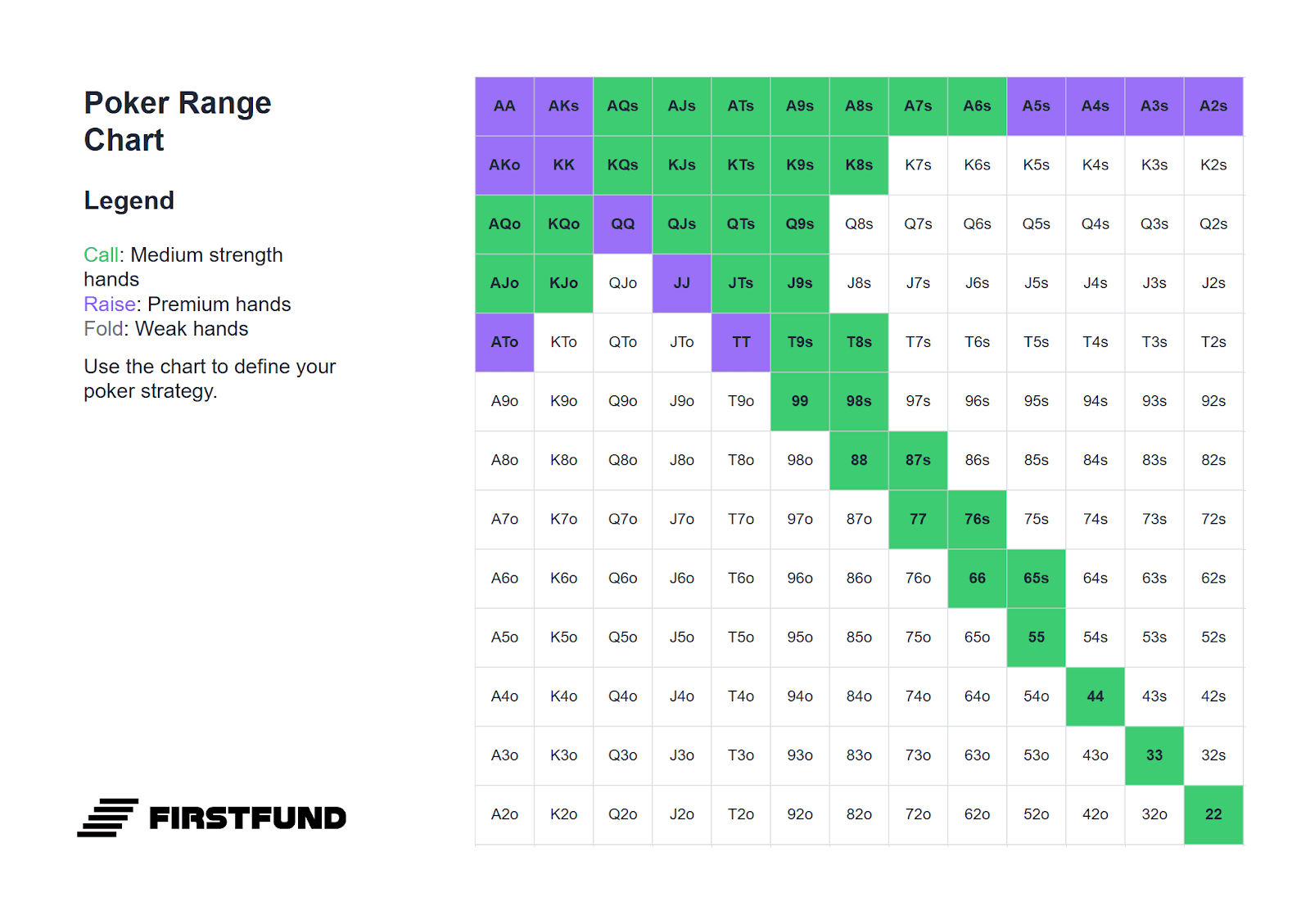
Against the cutoff (CO)
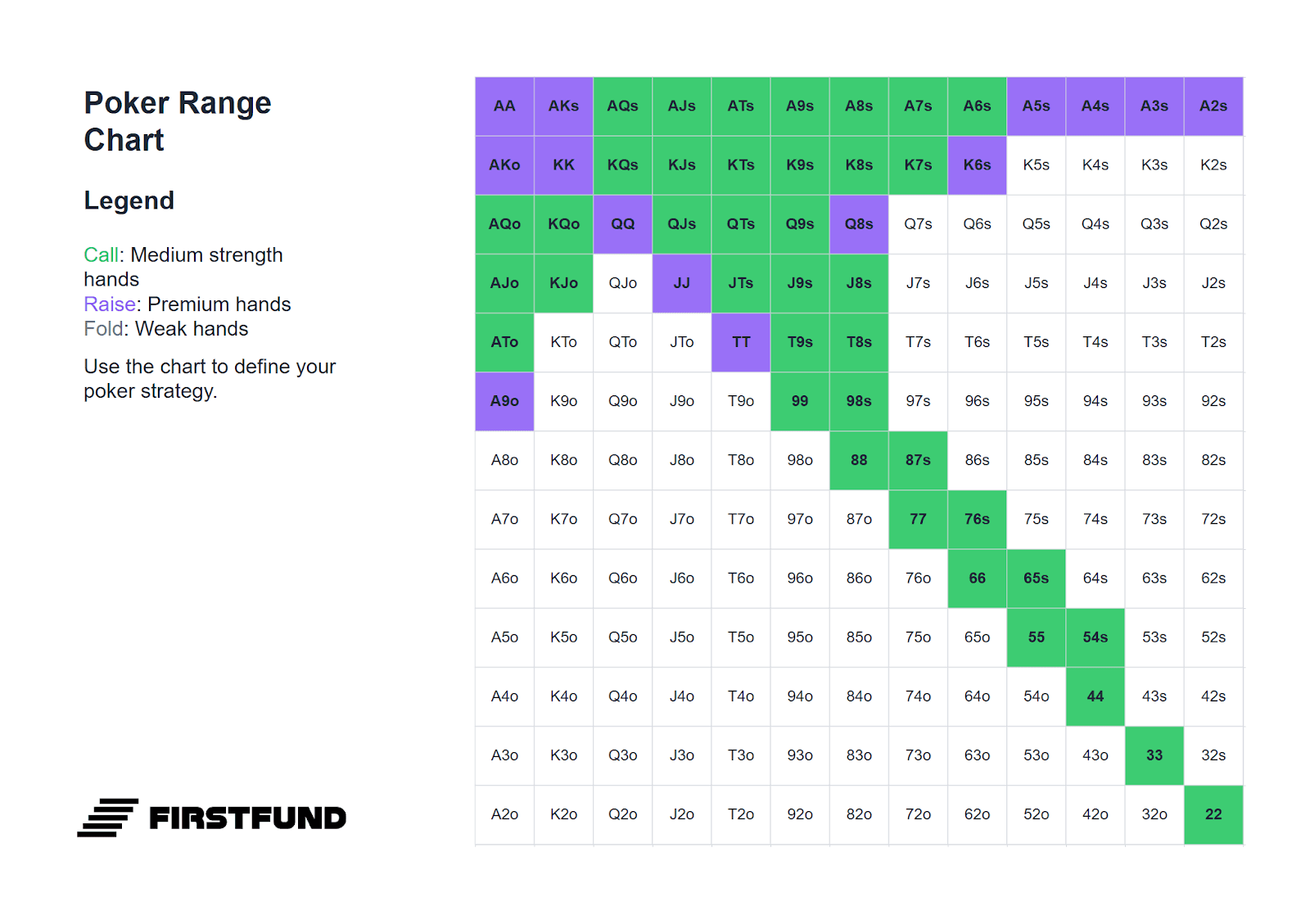
Against the button (BTN)
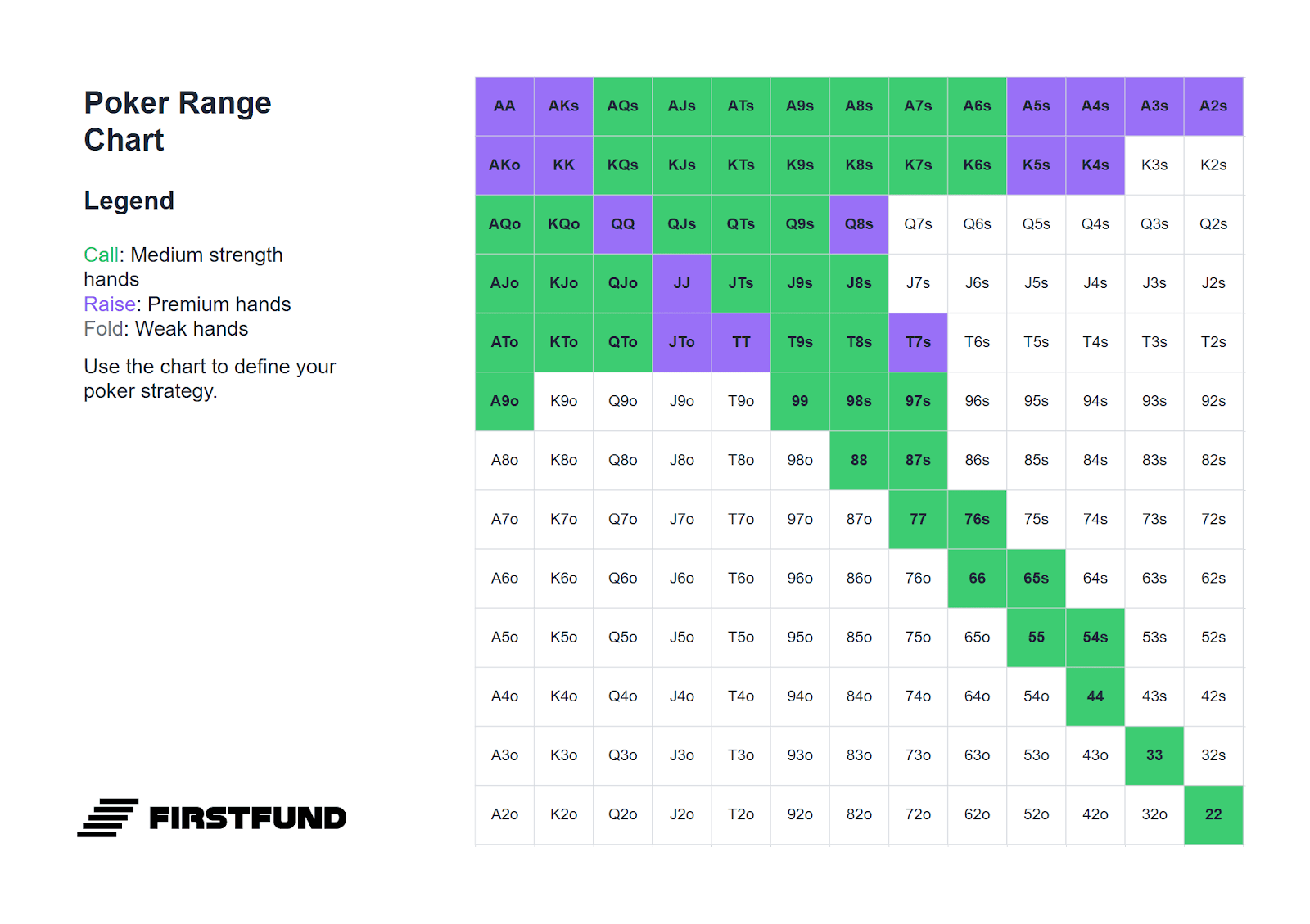
Conclusion
Sound blind defense is one of the key components of a profitable tournament strategy. A player who doesn't defend their blinds inevitably loses a significant portion of their stack, doesn't go deep in tournaments, and loses money.
When defending your blinds, pay attention to your opponent's position, their raise size, and your own chances of improving your hand. Don't be afraid to call on the blinds with suitable hands: in the long run, a sound strategy for playing this position will let you keep your stack at a stable level and avoid losing chips.

Free course · FF Start
Break the game down street by street
Learn to plan a hand from preflop to river and understand the purpose of every action.