# Position in Poker: A Complete Guide for Beginners
Why is position in poker more important than your cards? A complete guide for beginners: we break down early and late positions, learn to use the button, and turn your seat at the table into profit.

Ilya is a Liga 2 player with six years of experience in online MTTs. He graduated from the Faculty of Journalism at RSUH and writes about poker for beginners, explaining complex things in simple, clear language. In his texts, Ilya combines his personal playing experience with his professional journalism skills to help newcomers confidently get into the game.
Position in poker is one of the main factors influencing the outcome. Where you sit at the table determines how much information you get and which hands you should play for profitable play.
In this article, we'll break down what positions exist and how to use them to your advantage.
Position in poker refers to a player's seat at the table relative to the dealer button. In the poker world it's called the button.
* The button (Button, BTN) is the dealer chip that moves clockwise after each hand. The player on the button always acts last after the flop, which makes this the most profitable position.
Position determines the order in which players take action preflop and postflop. Simply put, position is the turn order for making decisions.
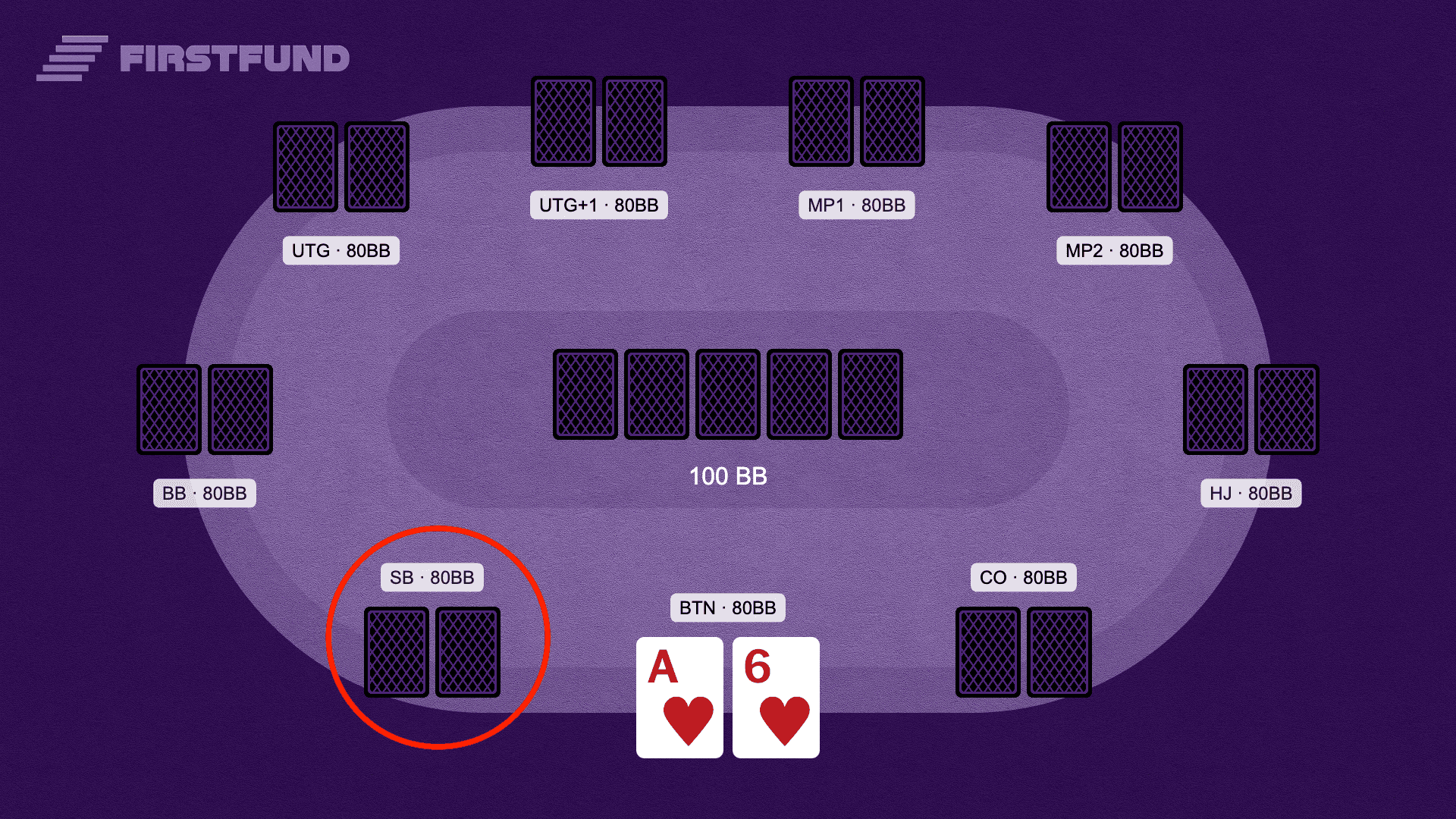
The player on the SB (Small Blind) always starts the betting in the hand, putting money into the pot. The player on the BB (Big Blind) posts a blind (1 bb), and the SB posts half a blind (0.5 bb).
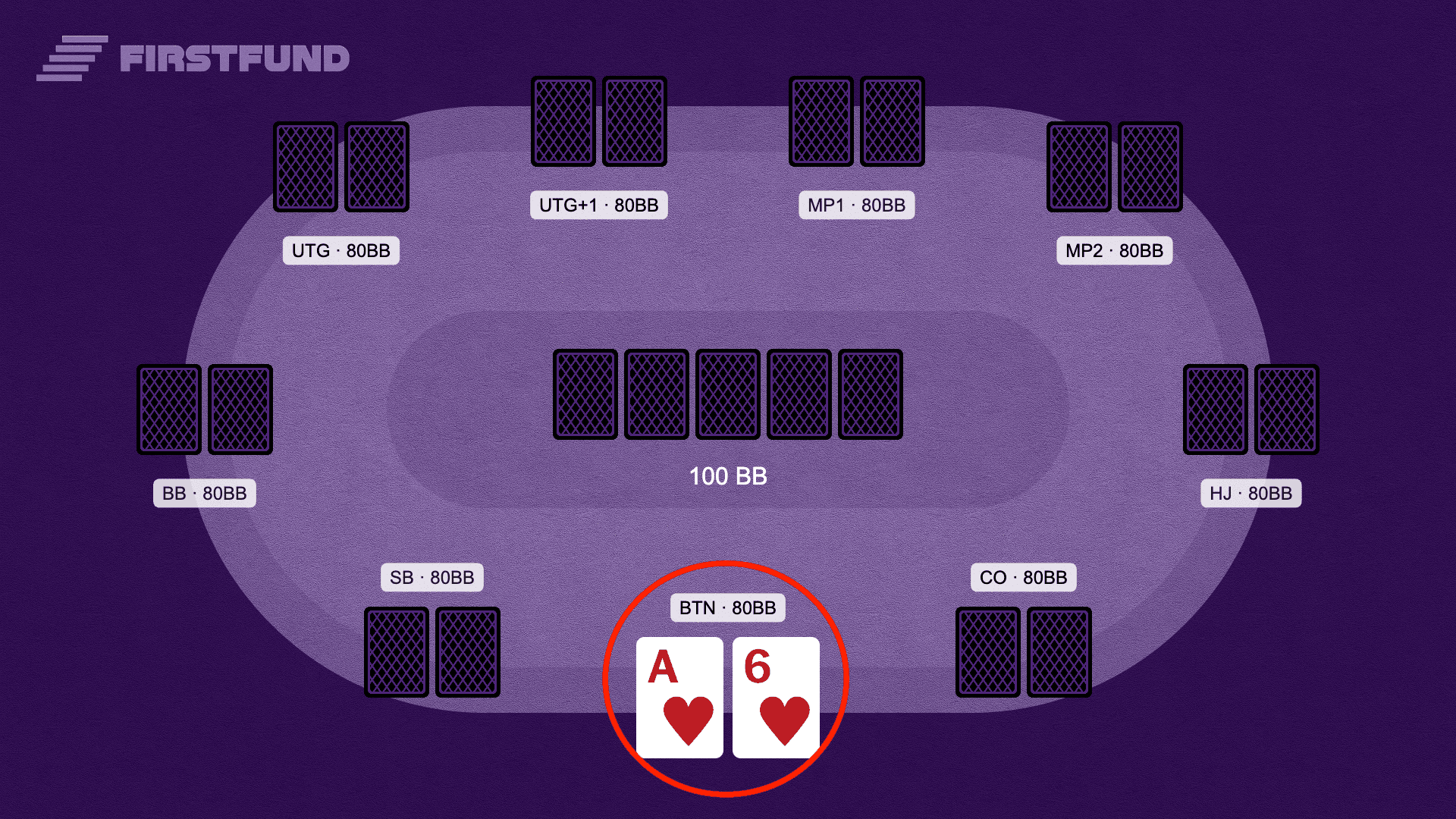
The player on the BTN (Button) closes the betting and is always in position relative to every player at the table.
Position plays a key role when deciding whether to enter a hand. It's not just the turn order but the main factor that changes the value of your cards, the assessment of your range strength, and the overall plan for the hand.
Why position is so important
Playing in position gives a strategic advantage that directly affects your winrate. Over the long run, it's precisely the ability to use position that separates a strong player from a weak one.
Winrate is the average amount of a player's profit over a certain number of hands or tournaments. This metric shows how effectively a player earns over the long run.
1. You get more information. By acting last, you see your opponents' actions and can more accurately assess the strength of your hand. The later you make your decision, the more information you get about your opponents' actions.
In late positions you can play more hands and execute your strategy more effectively, while in early positions your range should be limited to only strong combinations.
2. It's easier to realize equity. Playing in position, you realize your expectation better because you control the size of the pot:
— With strong hands you can grow it and win more chips
— With medium-strength hands you can limit the size of the pot, keeping it from getting too expensive
— With weak hands you can save chips and reach showdown more cheaply
* Equity is the probability of your hand winning the pot at the moment of the hand or on a specific street. It's also called "expectation."
3. More chances to take the pot with a bluff. Players out of position always act first and often don't know how strong their hand is relative to the opponent's range. They're forced to play more carefully and are under pressure.
That is, your bluffs in position become safer and more profitable because you have full control over the situation.
The main position groups
For an example, let's break down a 9-max table. All positions are divided into early (EP or UTG), middle (MP), late (LP), and the blinds.
In addition to describing the main features of the ranges, we'll include poker charts for visualization. We explained how to read and use them in your study in this article.
1. Early positions (UTG, UTG+1)
Also called: Early Position (EP).
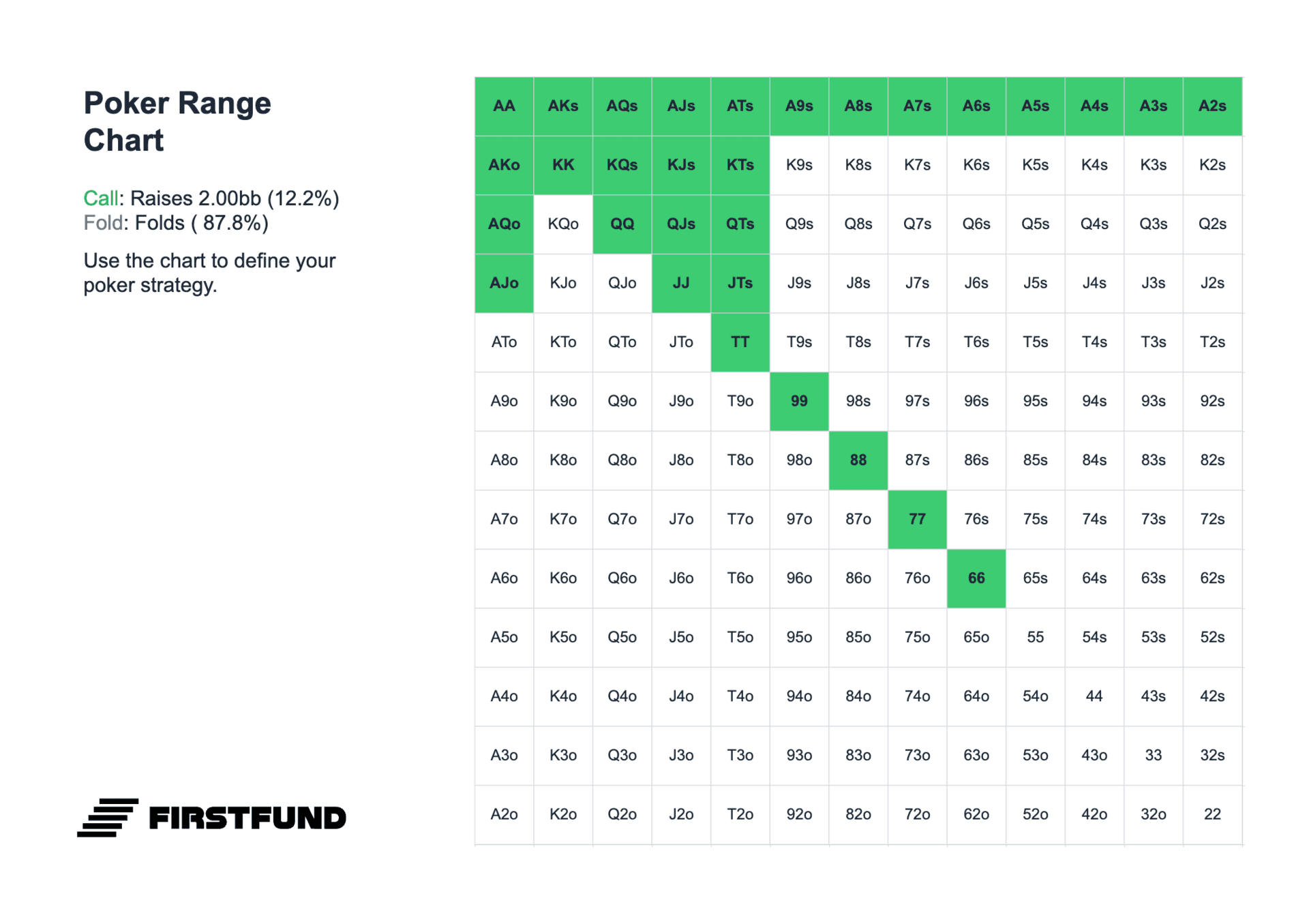
Opening range from UTG
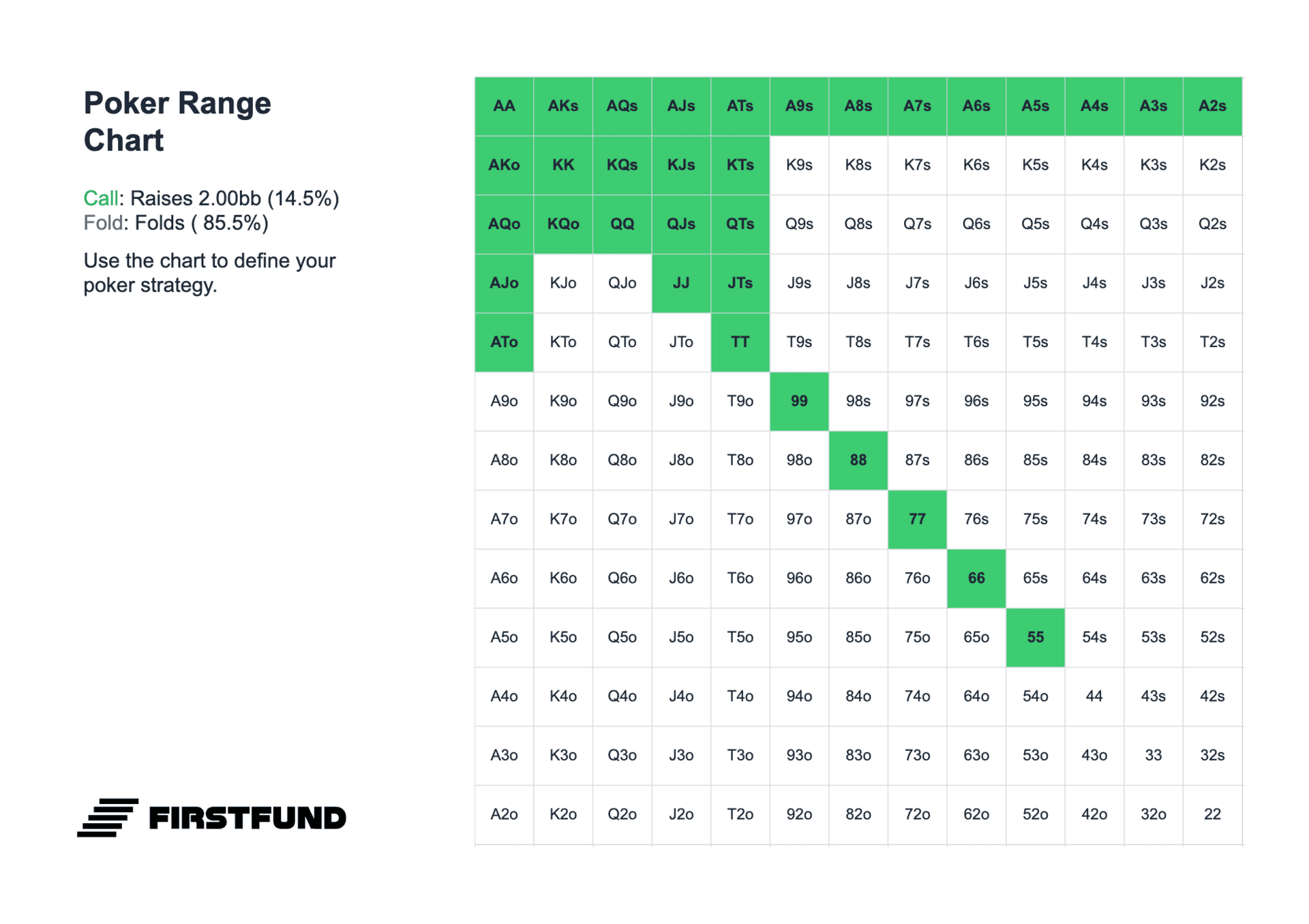
Opening range from UTG+1What should you consider when opening?
— Many opponents behind you. After your action there's a large number of players left, and the chance of meeting resistance is higher.
— You should open tighter. This helps minimize the risk of running into a strong range from opponents.
— Opening range is about 10–15% of all hands. Mostly these are premium hands, strong broadways, high suited connectors, and medium-strength pocket pairs.
Tight is a style of poker play in which a player plays a limited number of starting hands, choosing mostly strong combinations and avoiding marginal situations.
2. Middle positions (MP, MP+2, Lojack, Hijack)
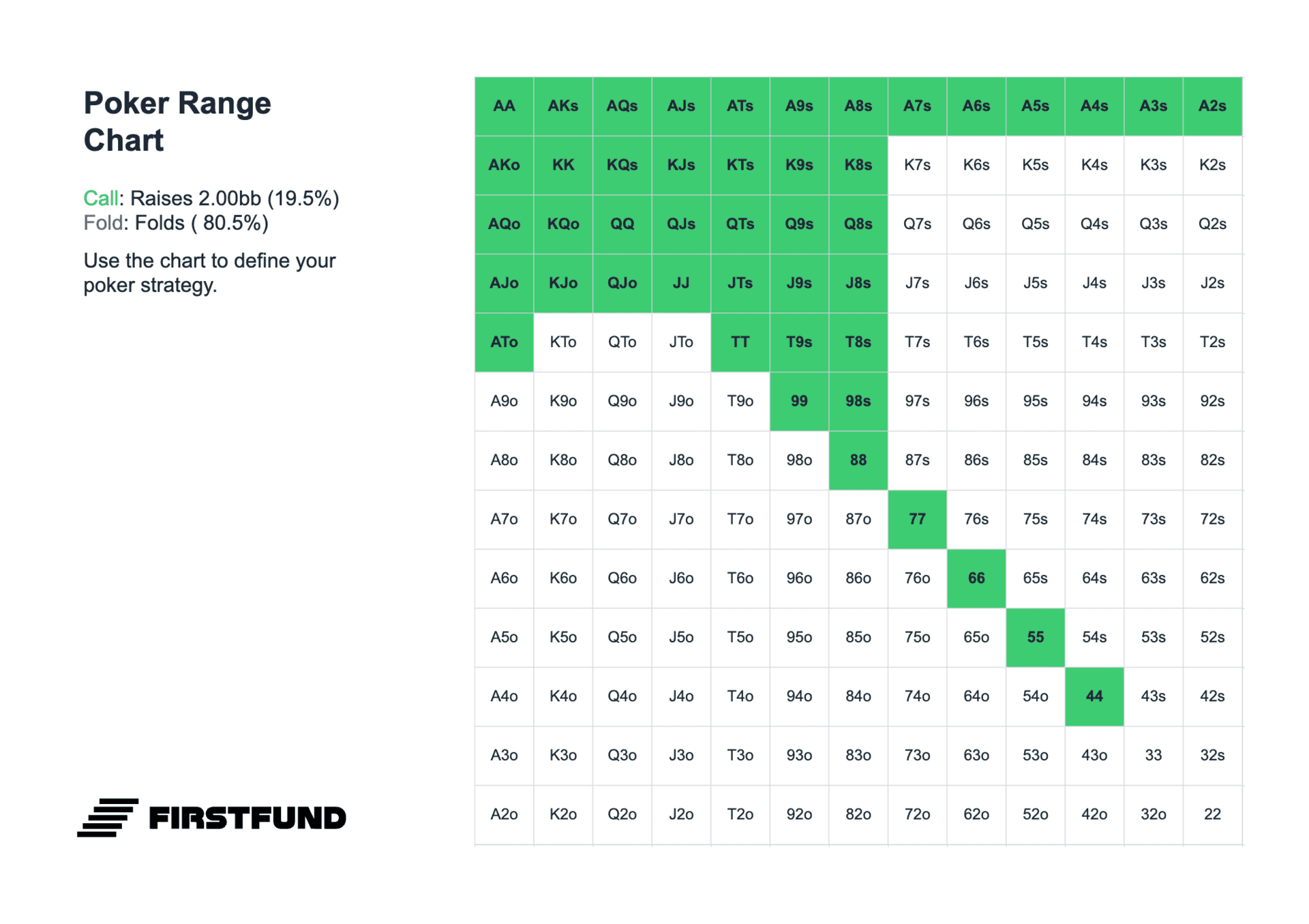
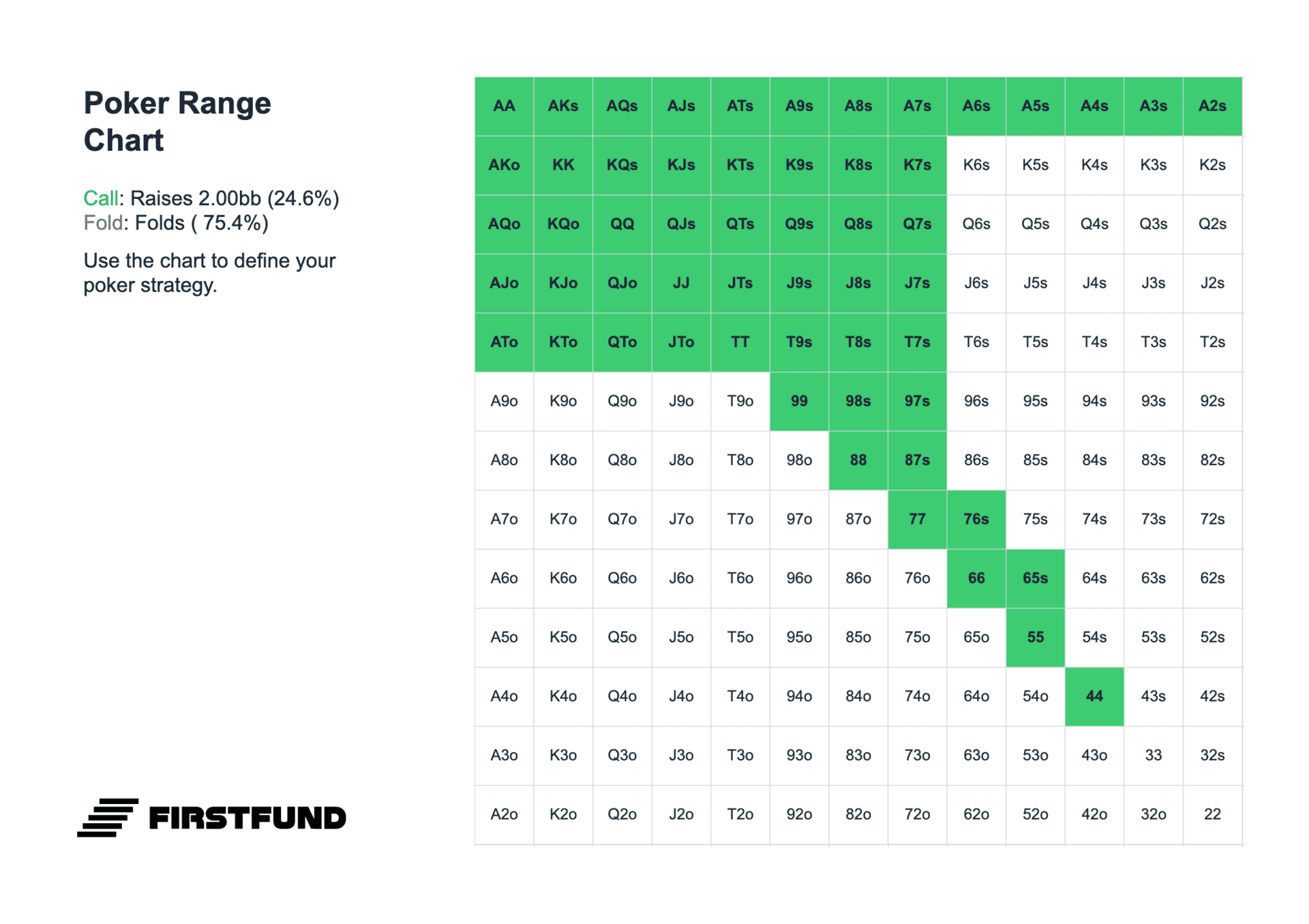
The opening range from these positions can be widened — compared to UTG and UTG+1
What should you consider when opening?
— The range can be widened to 18–22% of all hands. Here we add medium suited connectors and pocket pairs down to 44.
— Fewer players behind you = more aggression from our side. It's precisely from these positions that the percentage of raises should be increased, because the risk of running into a premium hand from opponents is lower than when opening from early position.
Middle positions let you balance between tight play and aggression, gradually increasing the opening range without excessive risk.
3. Late positions (Cutoff, Button)
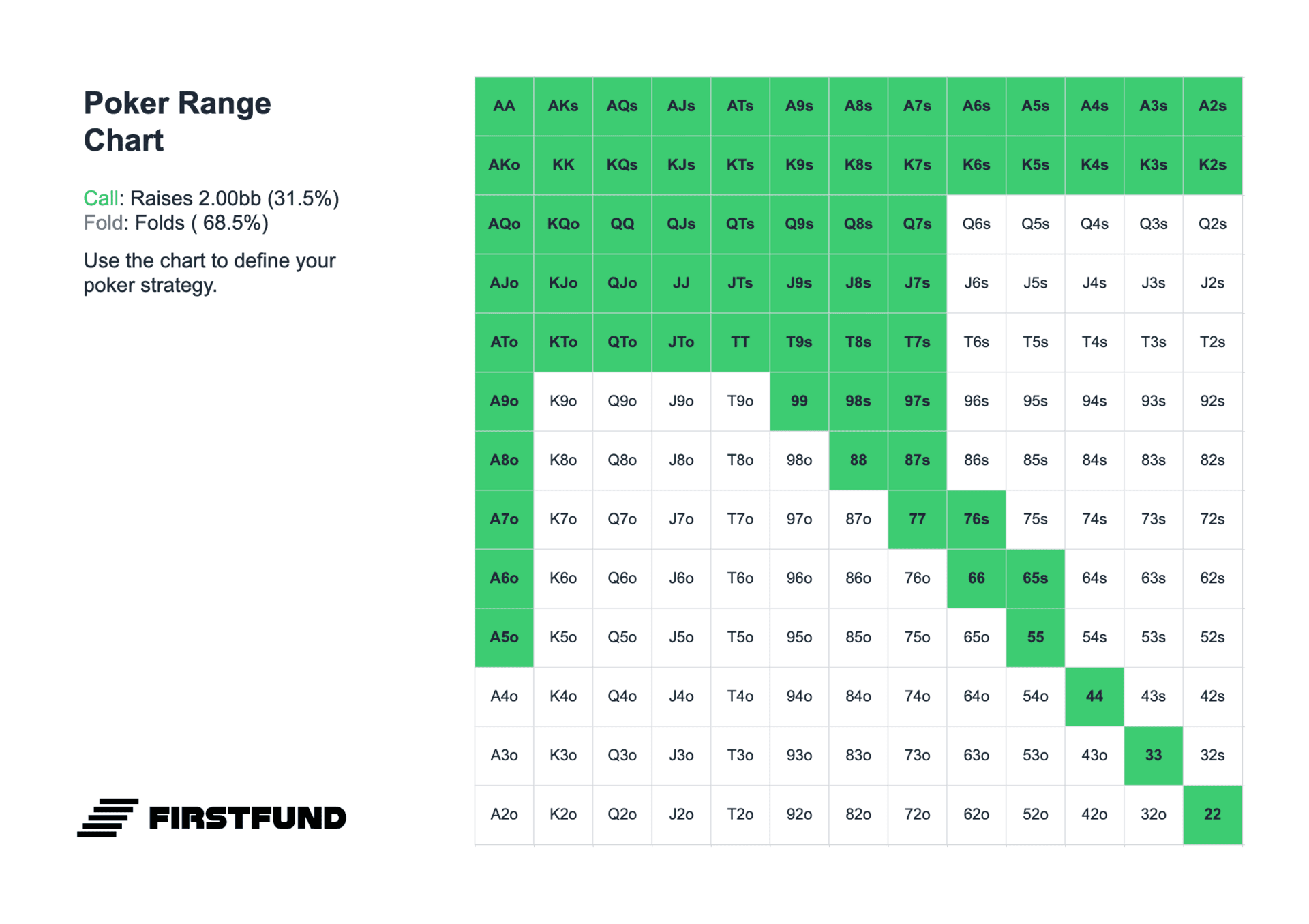
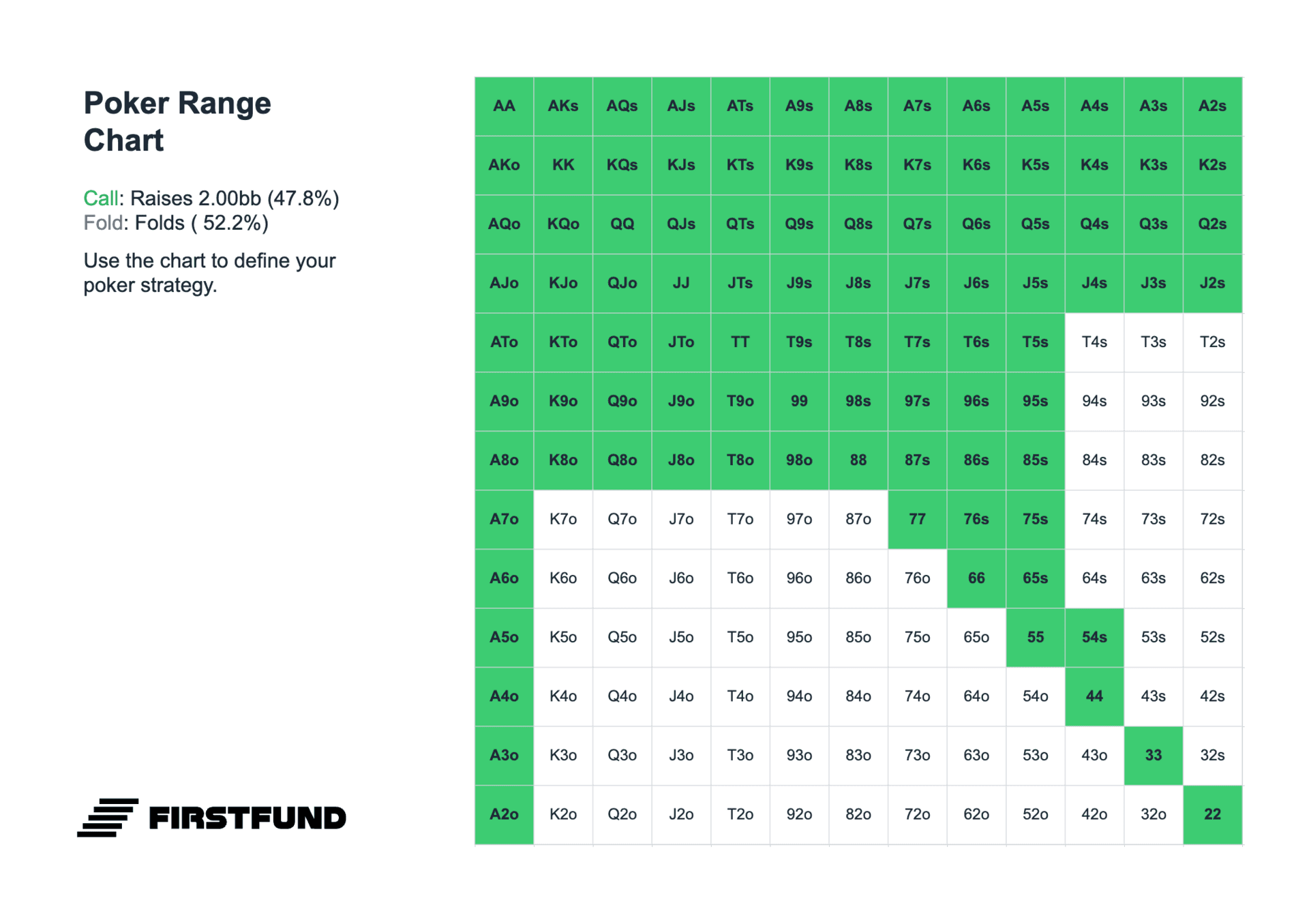
Cutoff (CO) and Button (BTN) are considered the most profitable positions in poker.
What should you consider when opening?— These positions show the highest winrate over the long run. Only the blinds remain behind you, which gives the maximum advantage.
— You should open wide — from 35% to 55% of all hands.
— The button is the best position in poker. Acting last postflop, you control the pot and get the maximum information
Learning at FunFarm, from any level
How position changes the value of a hand
Not all hands are equally valuable in different positions. Their strength directly depends on how many players remain behind you and what information you've received about your opponents' actions. To start, keep this in mind:
The earlier your position, the stronger your hand should be. The later your position, the more hands you can profitably play.
Let's give a clear example with the hand ATo.
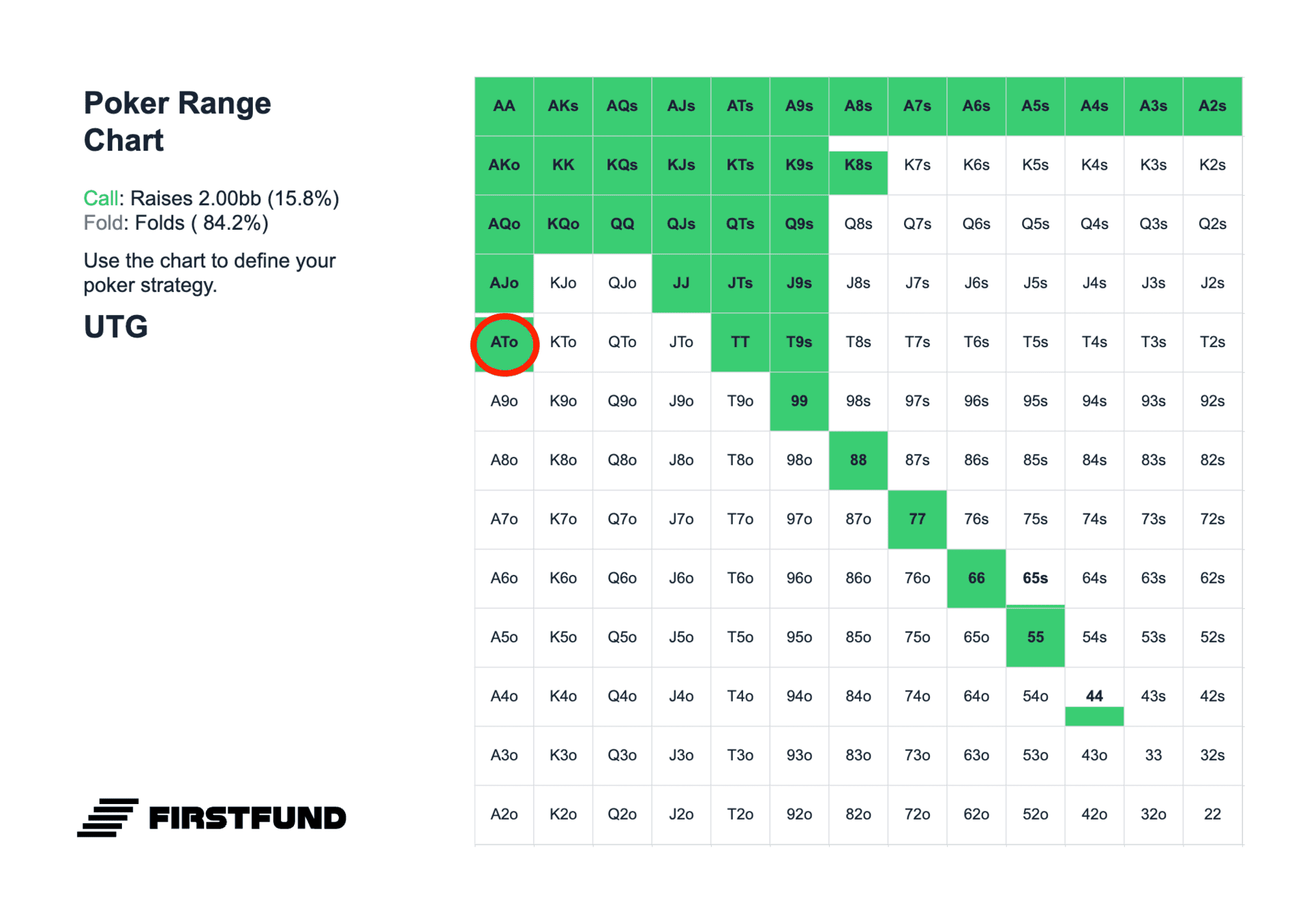
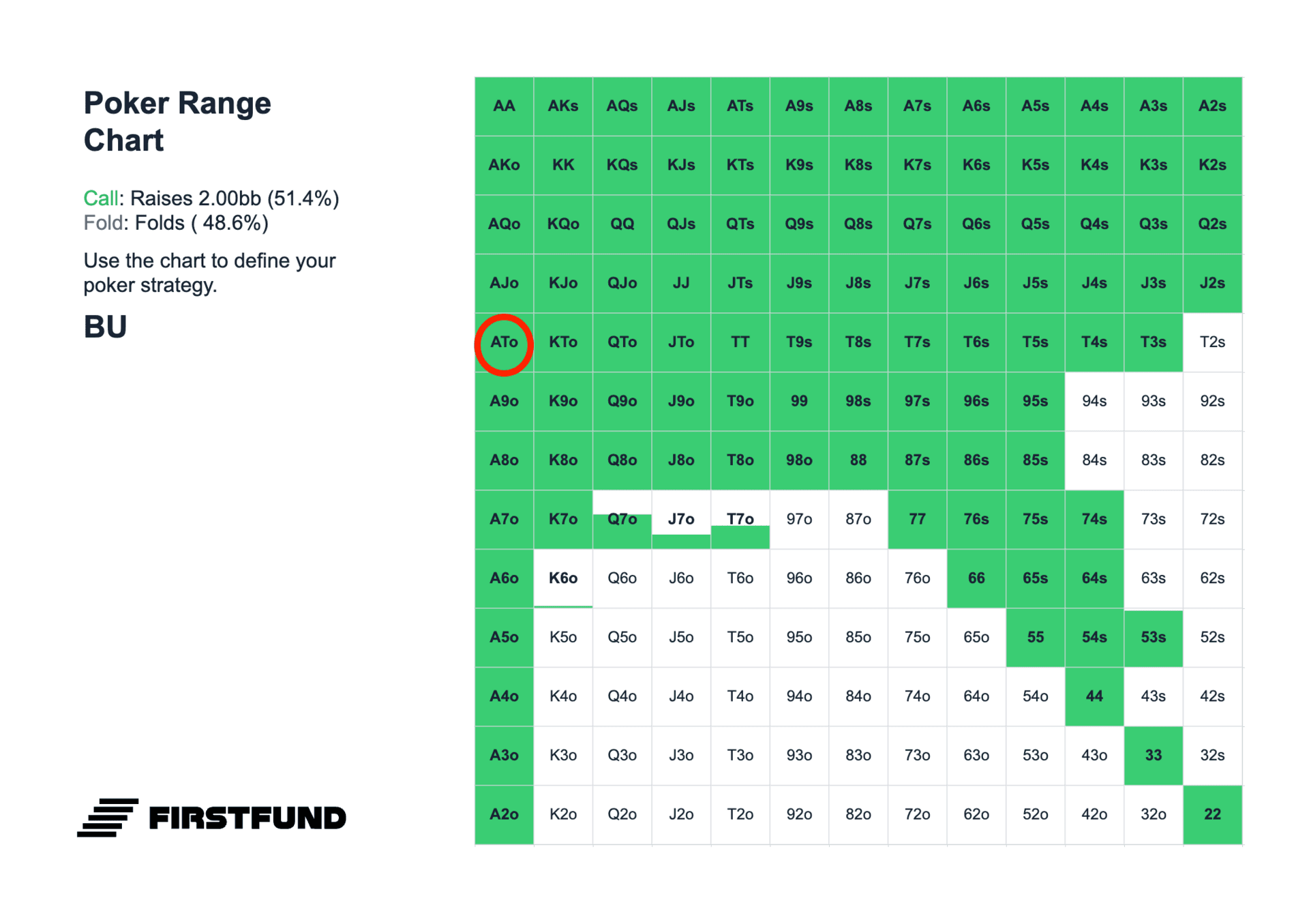
The same hand has different strength. When opening from UTG, ATo is the bottom of the range, that is, literally one of the weakest hands in the range.
But when opening from the BTN, ATo is a fairly strong hand, closer to the top of the range — compared to the weakest hands (J2s, T3s, T7o)
Beginners' mistakes in understanding positions
Beginning players often don't understand the power of position and lose a lot of chips because of it. What do we most often encounter at the tables?
— Identical ranges in all positions. Beginners open the same hands from early position and from the button — this is a huge mistake. The example above shows why this will lead to losing.
— Incorrect assessment of hand strength. A player thinks the hand is strong but forgets about the context of position and the flow of the hand. A hypothetical A (hearts) and A (diamonds) on a QJ9 flop (all spades) don't have the strength they had preflop.
— Ignoring postflop context. Beginners don't grasp the advantage of position and play the same strategies in all types of hands.
If you want to understand the topic more deeply and avoid these mistakes, submit an application to FirstFund, and we'll teach you:
— To correctly choose the opening range for each position
— To use the postflop advantage: control the pot, realize equity, and bluff effectively
— To adapt your strategy depending on opponents' styles and the type of tournament.
Thank you for reading the article to the end. We'll be glad to see you on our team.
Free course · FF Start
Fix costly beginner mistakes
Learn when to bet, call or fold — and when putting pressure on an opponent pays off.
Frequently asked questions
Read next
Call, 3-bet or fold after a raise: how to make decisions

Float in Poker: How to Use Position to Steal Pots
How to play against very aggressive players in poker