Nuts in poker
In this article we'll break down what the nuts is in poker, how it changes from flop to river, how the absolute nuts differs from the current nuts, and how to extract the maximum chips from a nut hand without scaring off your opponent or falling into a trap.

Ilya is a Liga 2 player with six years of experience in online MTTs. He graduated from the Faculty of Journalism at RSUH and writes about poker for beginners, explaining complex things in simple, clear language. In his texts, Ilya combines his personal playing experience with his professional journalism skills to help newcomers confidently get into the game.
In poker, situations regularly arise where a hand seems strong enough for a bet or a raise. A player sees top pair, a flush draw, or a set — and makes a decision without checking the main thing: whether they actually hold the best possible hand in that particular deal.
This is exactly where one of the most common mistakes over the long run hides. A player overvalues their hand because they didn't account for how strong a hand the opponent could theoretically have. As a result, they either miss the chance to extract the maximum from the hand, or they end up in a spot where their strong hand turns out to be weaker.
In this article, we'll break down what the nuts are in poker, how they change from the flop to the river, how the absolute nuts differ from the current nuts, and how to extract the maximum number of chips from a nut hand without scaring off your opponent or falling into a trap.

New breakdowns in your inbox
Subscribe to the FunFarm newsletter: fresh Poker ABC articles and material that helps you grow as a player.
What are the nuts in poker
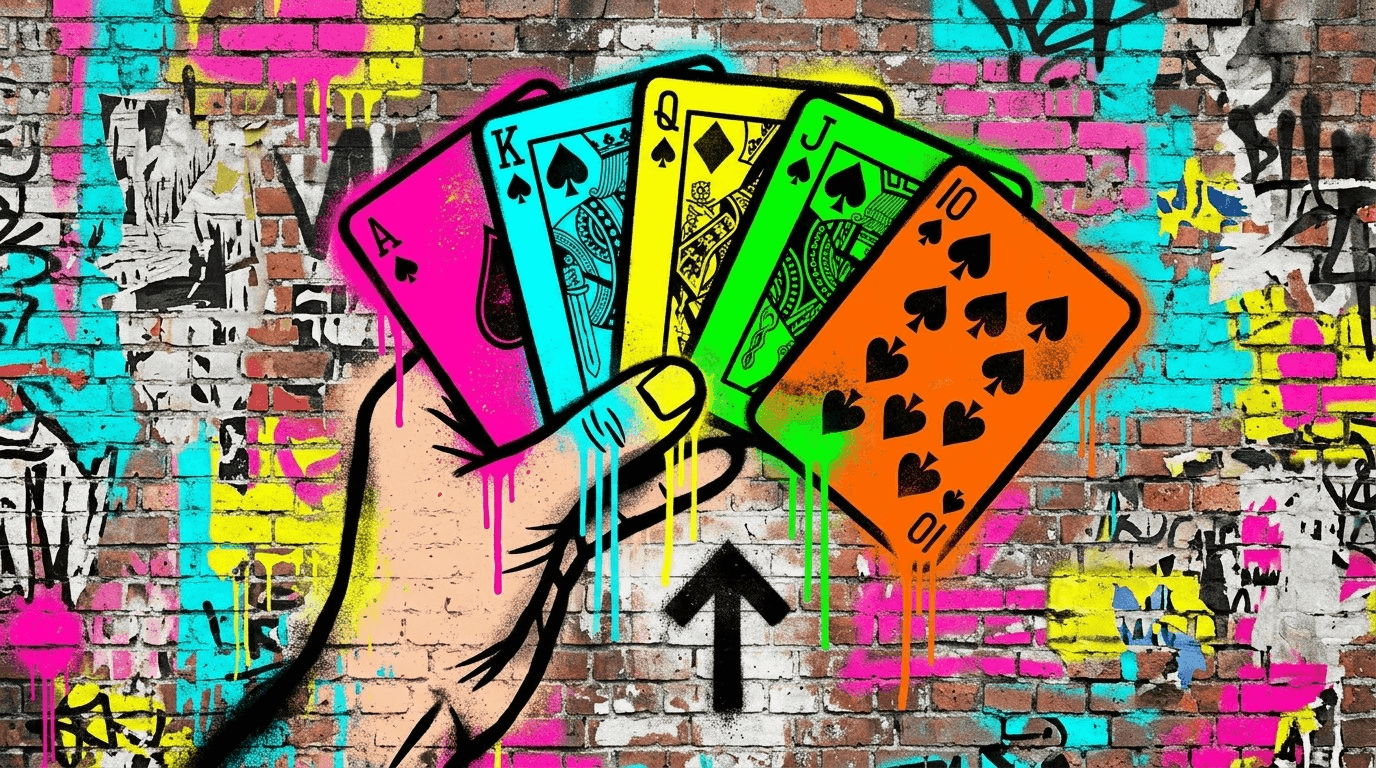
The nuts (from the English "Nuts") is the best possible hand on a specific board at a specific moment in the deal. If you have the nuts, no opponent at the table can make a stronger hand.
It's important to nail down a key point right away: the nuts is not just a very strong hand. It's the hand of maximum possible strength on the given street, taking into account all the exposed cards.
For example, on a K♣️ 7♦️ 2♠️ flop, the nuts would be a set of kings (the hand KK). No other hand can be stronger. But a pair of aces (AA), which on the preflop was the absolute favorite, is no longer the nuts here — there are stronger holdings on this board.
The term "nuts" is slang; you won't find it in the official rules of poker. But in the professional environment, in training literature, and on streams, it's used everywhere.
Absolute nuts and current nuts: what's the difference
There are two types of nuts. The difference between them is critically important for playing correctly.
1. Absolute nuts
This is a hand that cannot be beaten on any of the following streets. Most often the absolute nuts is determined on the river, when all the cards are already exposed. But there are exceptions too.
Example of the absolute nuts on the river:
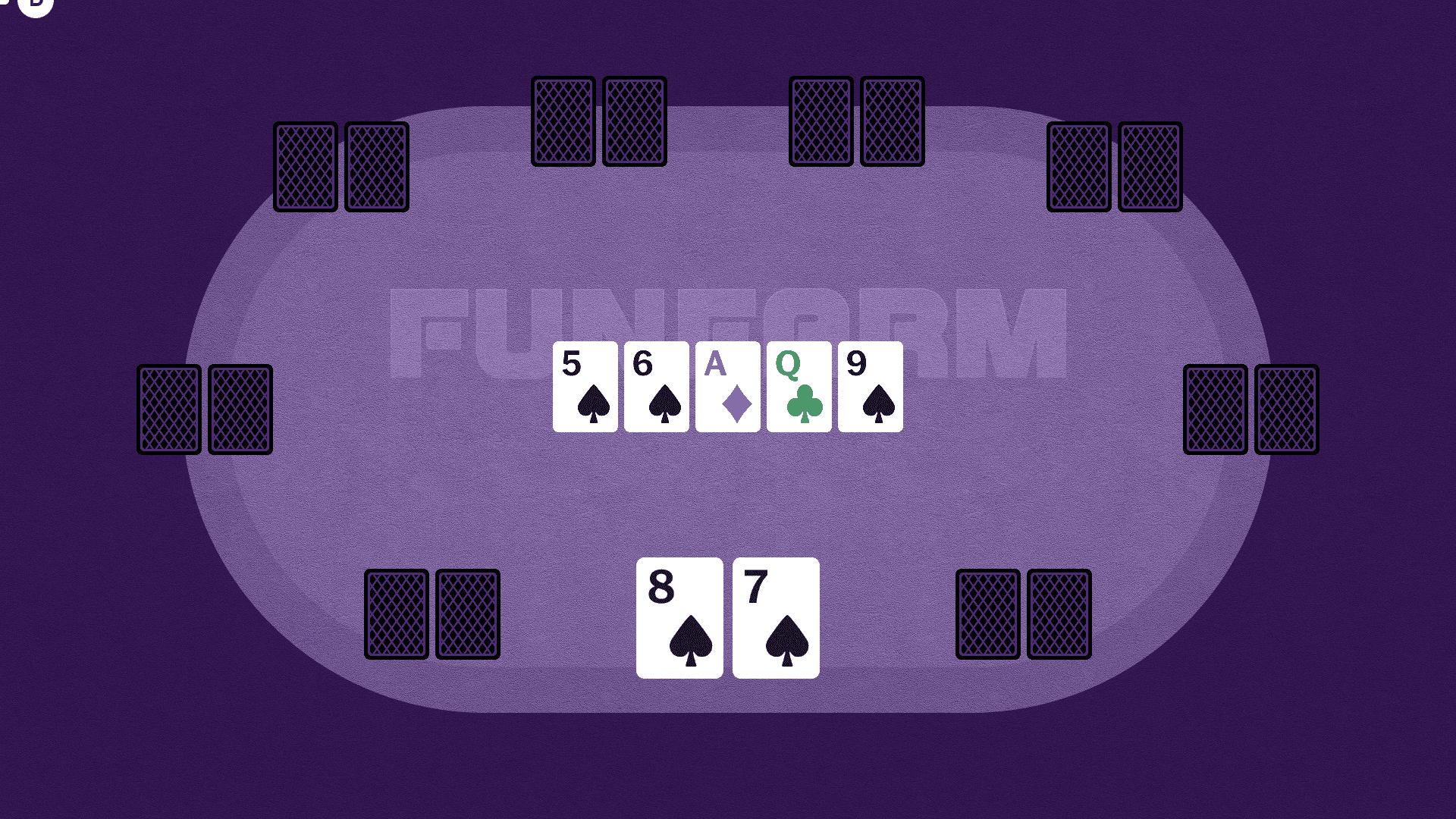
Our hand is 8♠️ 7♠️. We have a straight flush from five to nine. This is the absolute nuts. No other hand on this board can be stronger.
Example of the absolute nuts on the flop:
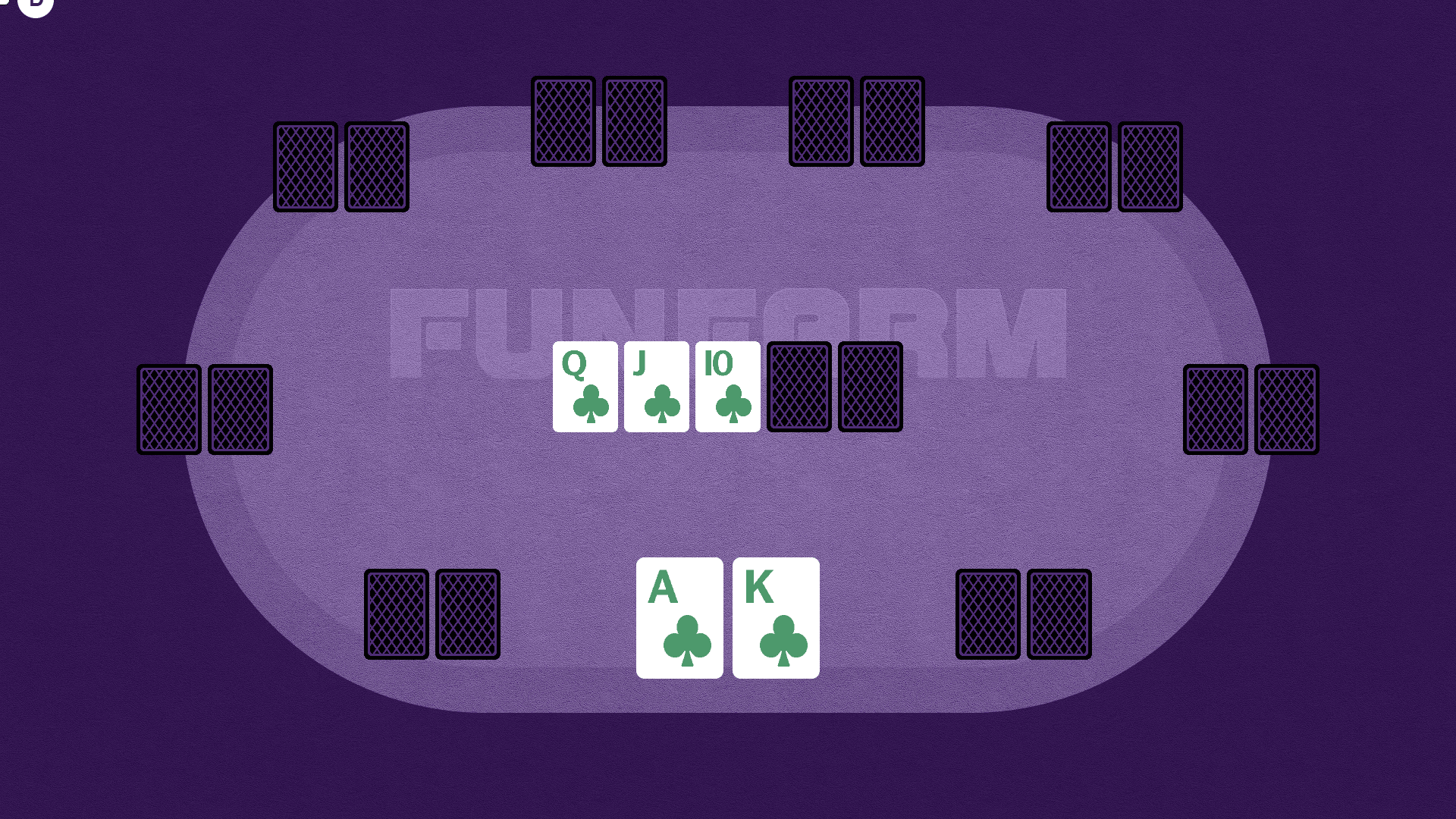
We have a royal flush already on the flop. Opponents cannot improve to a stronger hand, because a stronger one doesn't exist.
2. Current nuts
This is the best hand on the given street, but it can be beaten on the following streets. The current nuts is always a risk. You're stronger than everyone right now, but the next card can change everything.
Example of the current nuts:
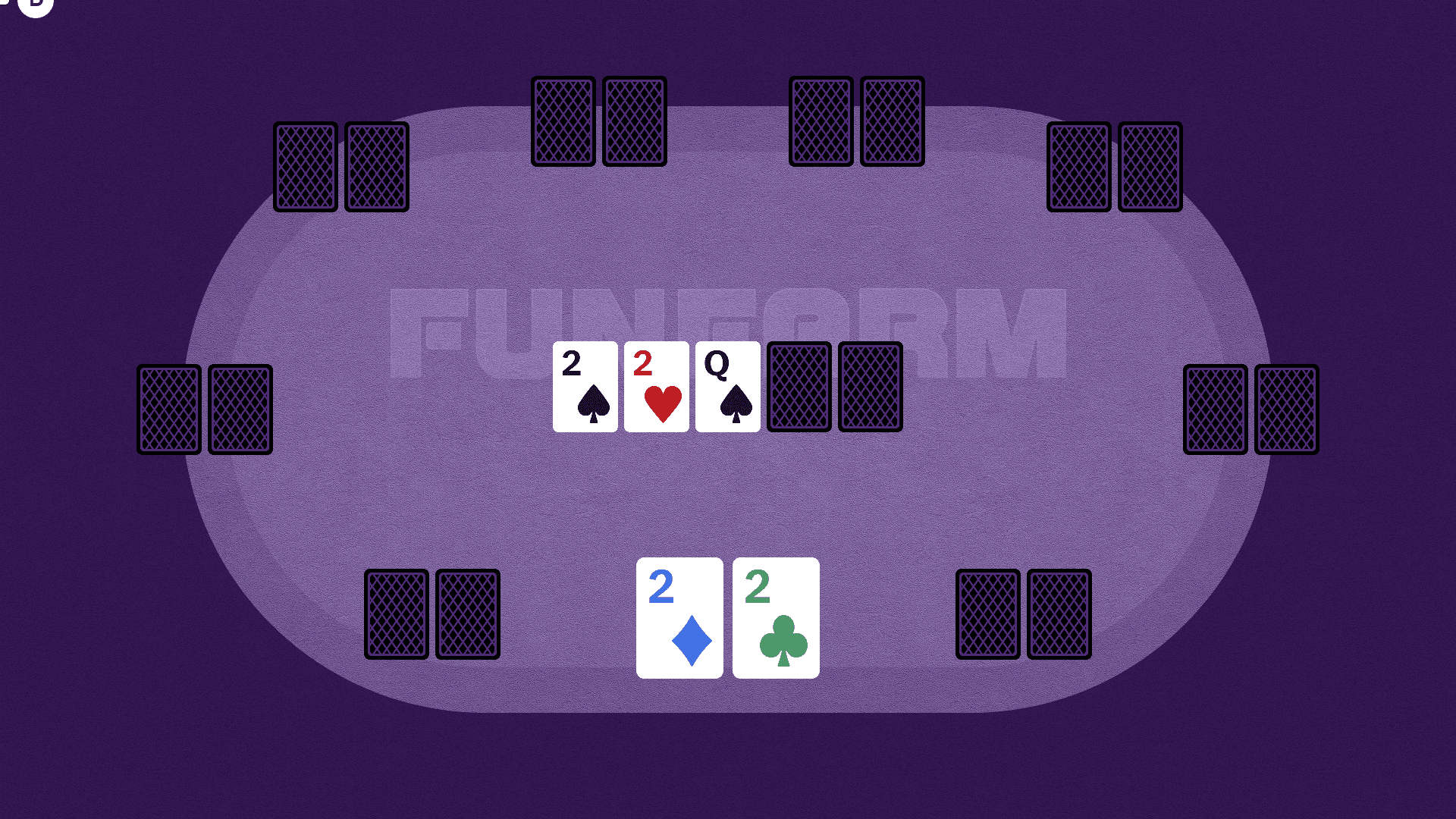
We have quad deuces. At this moment it's the best possible hand. But if a queen (Q) comes on the turn or river, and the opponent has a pocket pair of queens (QQ), they'll make quad queens, which beats your quad deuces.
Such a situation happens rarely, but this example is illustrative with regard to a thesis coming up later in the article: the nuts should, as a rule, be played aggressively.
It's precisely the distinction between the absolute and the current nuts that determines the playing strategy. With the absolute nuts you can afford to set a trap for your opponent; with the current nuts you almost always need to bet and protect your hand.
How the nuts change from street to street
One of the most important ideas to grasp is this: the nuts is not a static concept. Every new card on the table can completely change the situation. What was the nuts on the flop may turn out to be the second-best hand on the turn.
Let's look at a specific deal to see how the nuts change.
Preflop:
Your hand: A♦️ A♥️. On the preflop this is the absolute nuts — the best starting hand in Hold'em.
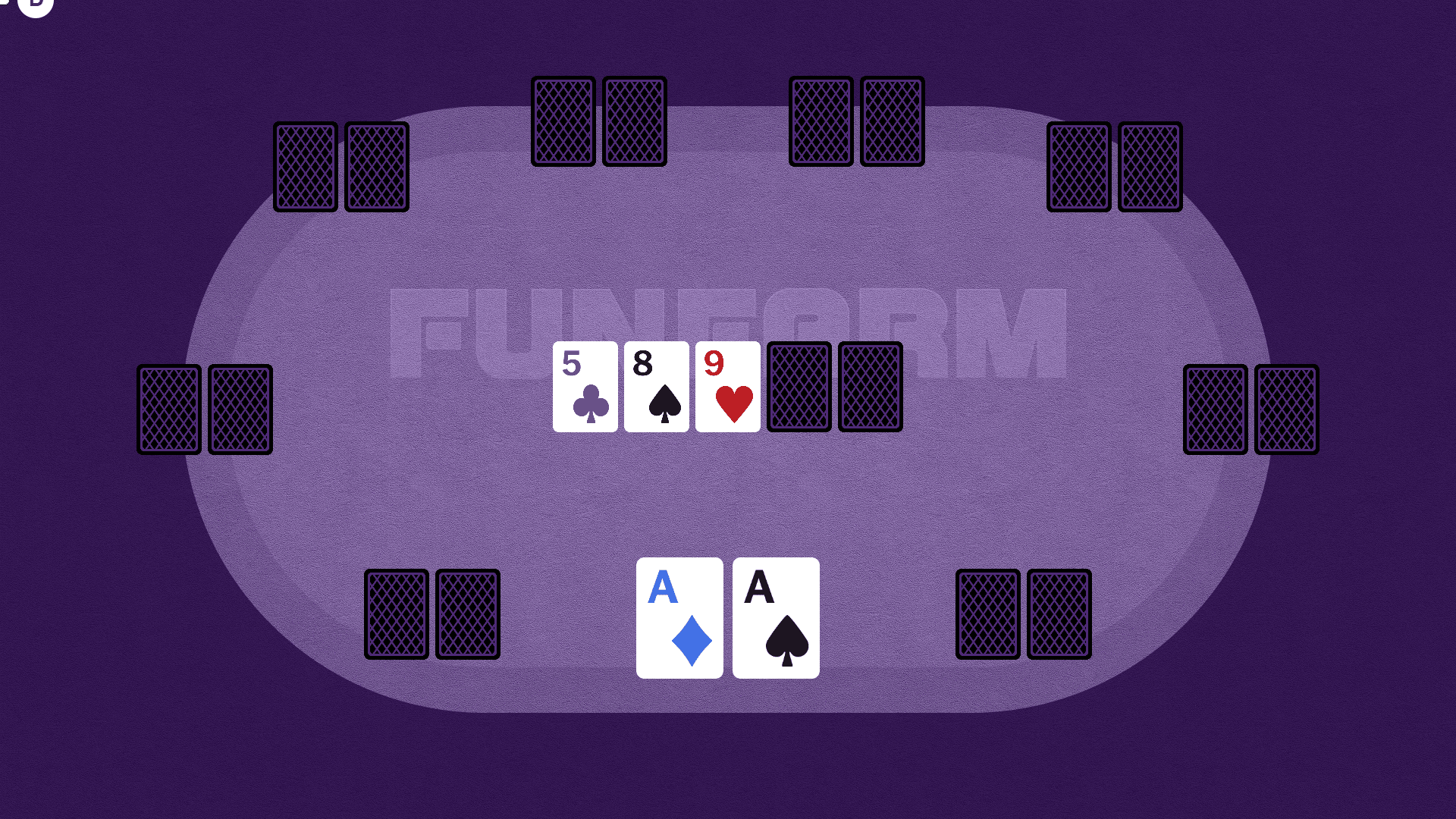
Flop: 5♣️ 8♠️ 9♥️. Now the nuts is not our aces, but a straight 6♠️ 7♠️. Or any hand consisting of a six and a seven. An opponent who entered the deal with connectors may have the best hand. Our aces are an overpair, which is vulnerable.
* Connectors are starting hands consisting of two cards consecutive in rank, for example 7♥️ 8♦️ or J♠️ Q♣️. Such hands are valuable for their potential to make a straight postflop, especially if they're suited.
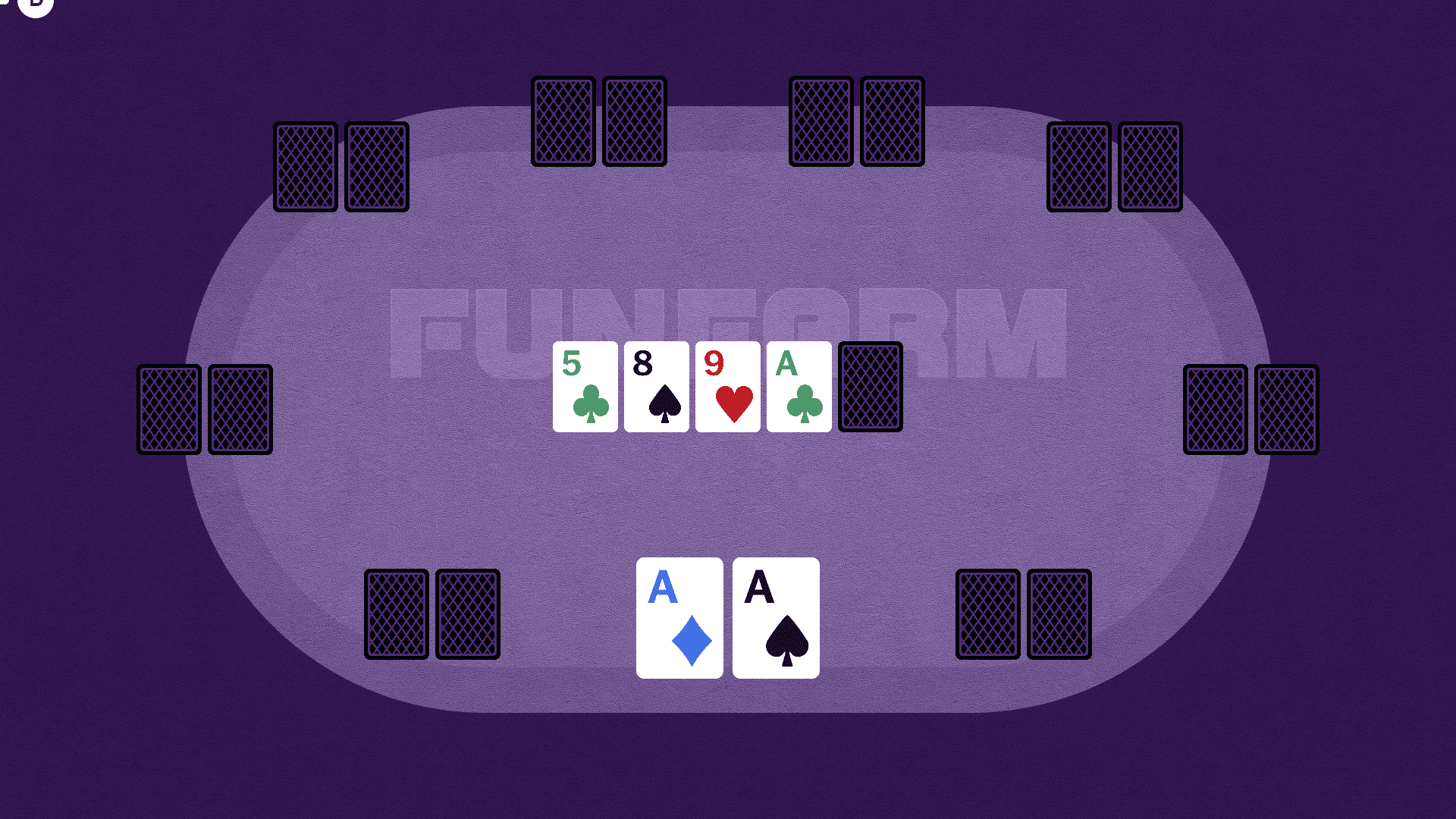
Turn: A♣️. We have a set of aces. It's a strong hand, but is it the nuts? No. An opponent's straight with 6-7 still beats your set. The current nuts on this turn is still the straight.
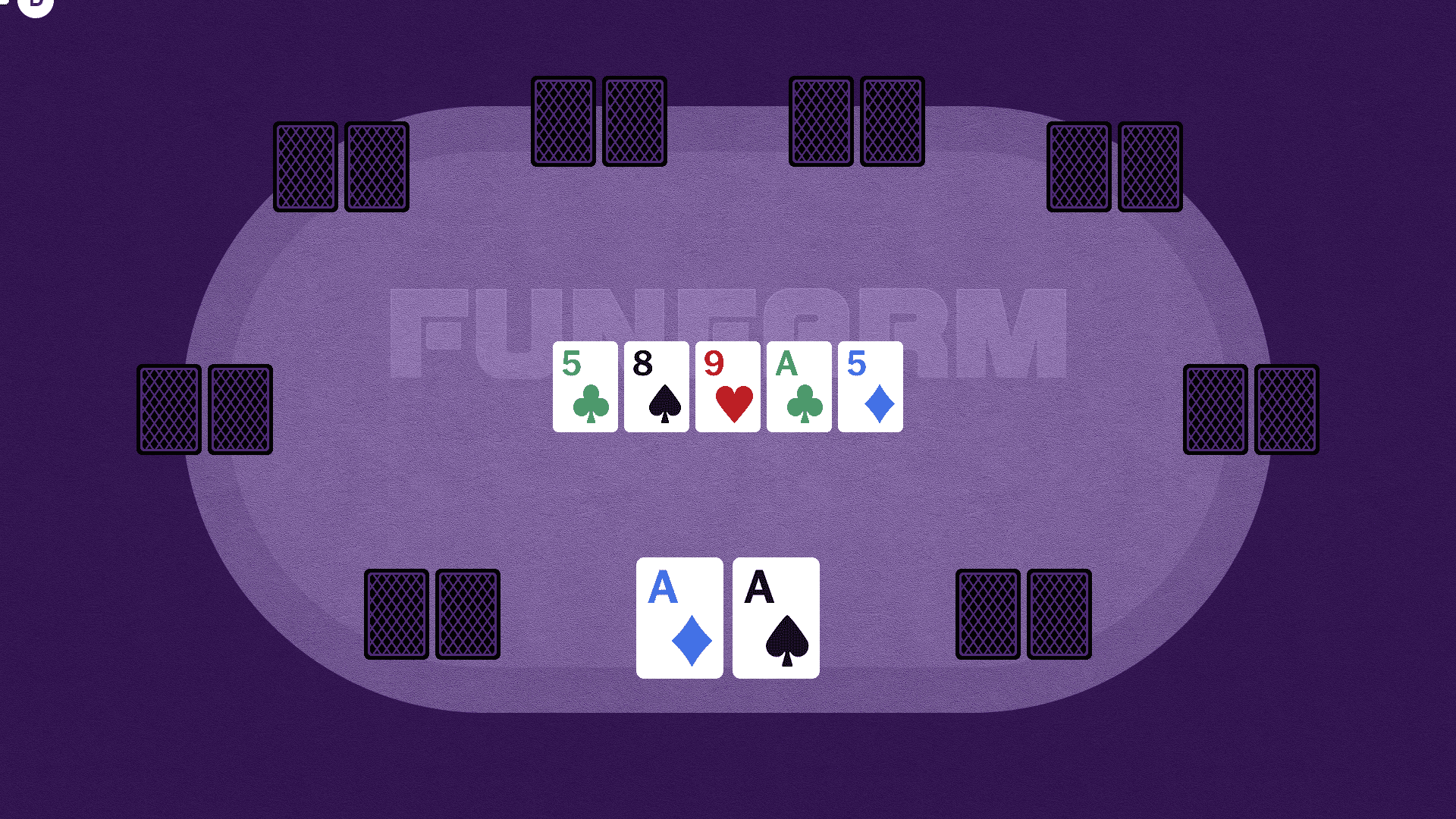
River: 5♦️. The board pairs. We have a full house, and now we beat the straight. But is there a stronger hand? Yes. If the opponent held a pocket pair of fives (55) — they have quads. And that's the absolute nuts on the river.
This deal demonstrates the main rule: you can't relax with the nuts on early streets. Each subsequent card can either strengthen our position or devalue it.
Learning at FunFarm, from any level
The nut straight and the nut flush
When people talk about the nuts in poker, they often use the more specific terms: "nut straight" and "nut flush." These aren't separate types of nuts, but specific situations where the best hand is a straight or a flush.
1. Nut straight
This is the highest possible straight on the given board.
Example:
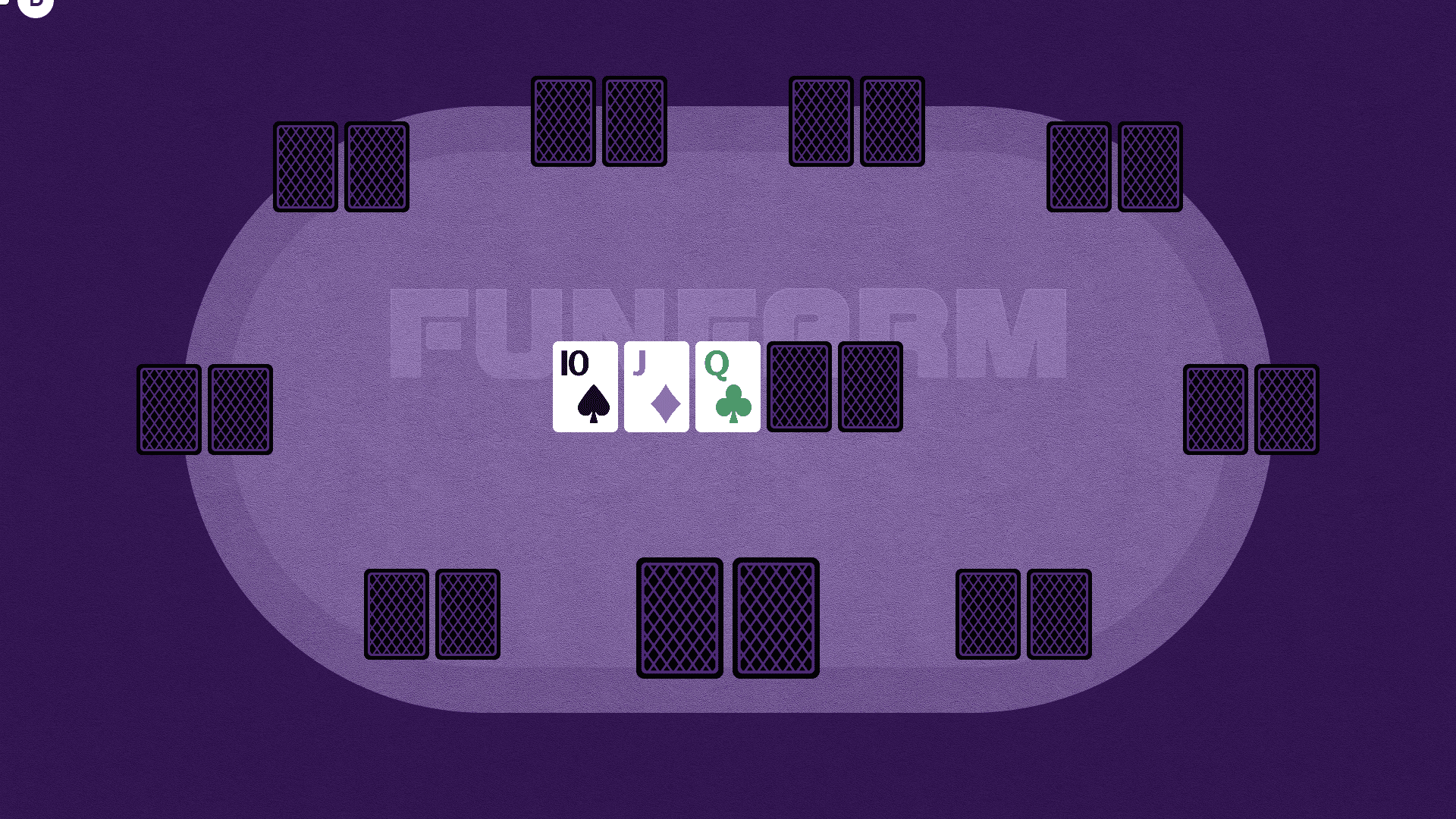
Board: 10♣️ J♠️ Q♥️. What straights are possible?
— 9♥️ 8♠️ (straight from Q to 8)
— K♠️ 9♦️ (straight from K to 9)
— A♦️ K♠️ (straight from A to T)
The highest is the straight from ten to ace. That's the nut straight. If you have AK on such a board, you're ahead of everyone with lower straights.
2. Nut flush
This is the flush with the highest possible card. As a rule, it's the flush with the ace.
Example:
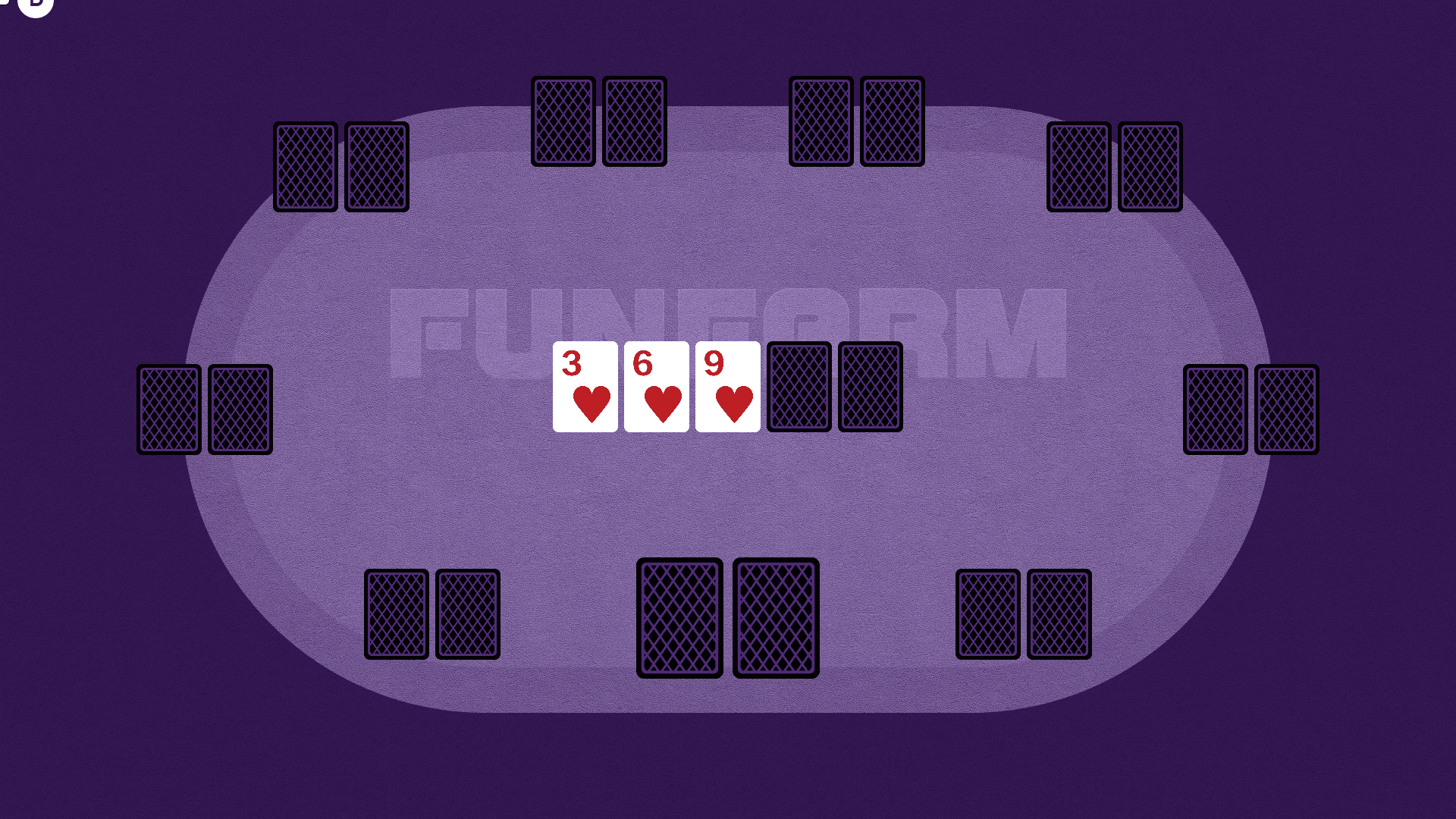
Board: 3♥️ 6♥️ 9♥️. A flush can be held by anyone with two hearts. But if you have A♥️ 2♥️ — you have the nut flush. Even if the opponent has K♥️ Q♥️, your hand is stronger, because the ace beats the king.
Why is this important? Because on boards with three cards of one suit, many players overvalue their flushes. They see that they made a flush and don't check whether someone has a higher card of the same suit. Over the long run this leads to large losses.
Nut draw: a hand that can become the nuts
The concept of the nut draw deserves separate attention. It's not a made hand, but a hand that, with a certain card on the next street, will become the nuts.
Example of a nut flush draw:
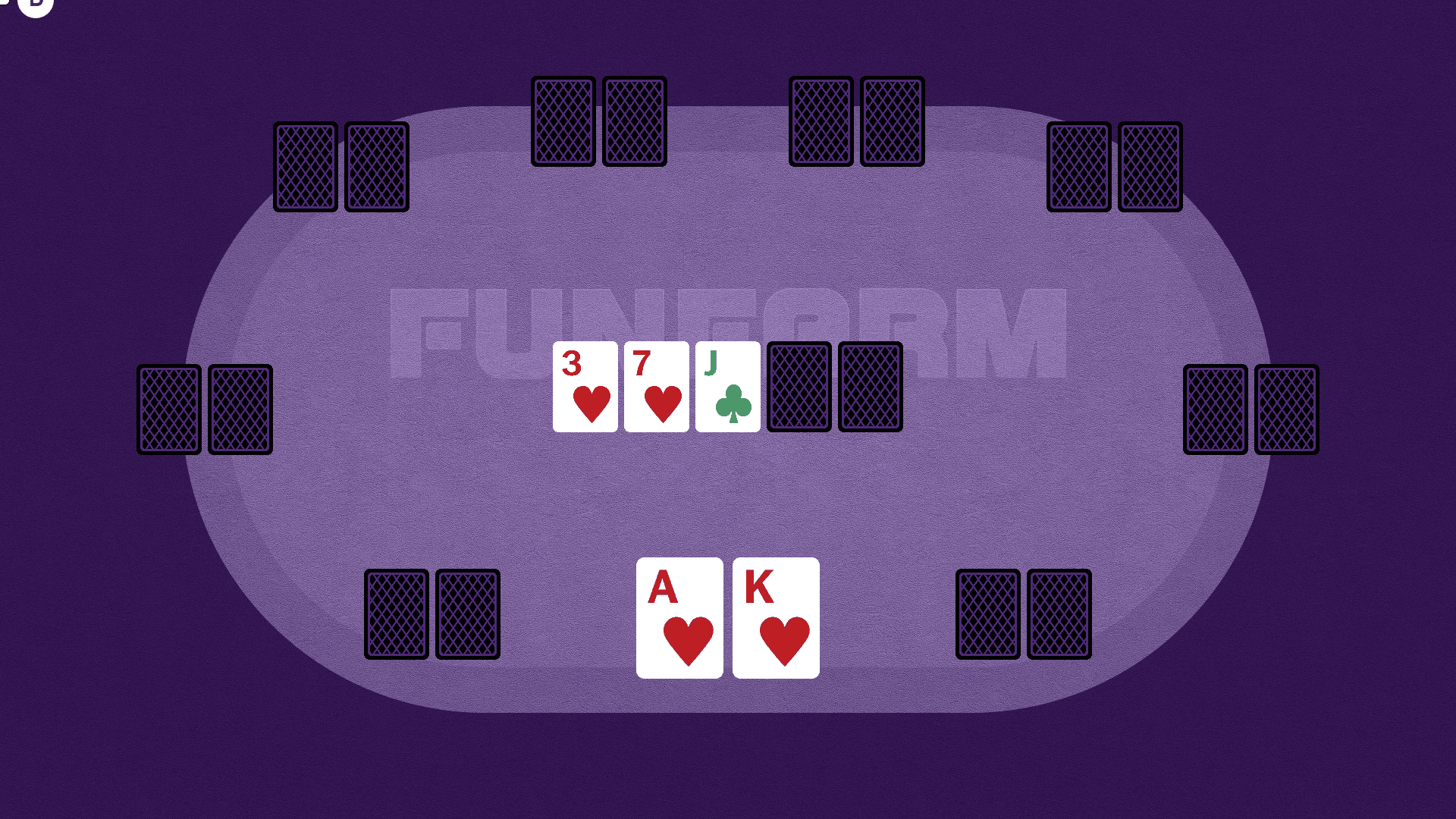
Our hand is A♥️ K♥️. The board is 3♥️ 7♥️ J♣️. We're one heart short of a flush. But if a card of the needed suit comes, we'll have a flush with the ace — the nut flush. That's the nut draw.
Why is the nut draw so valuable? Because in this case we have two paths to victory:
1. The draw completes, and we get an absolutely strong hand.
2. We use the hand as a semi-bluff, applying pressure on the opponent.
* A semi-bluff is a bet or raise with a hand that isn't yet a made hand but has the potential to improve to a strong hand on the following streets.
The probability of completing a flush draw from the flop to the river is about 35%. This is a high enough figure to play such hands aggressively — especially in position.
If you're curious why we have about 35% to complete a flush draw, get acquainted with the topic in more detail in one of our articles about how to calculate our equity in a hand.
How to play the nuts correctly: strategy and lines
It might seem that playing the nuts is the easiest thing in the world. We have the best hand; all that's left is to win the maximum number of chips. But this is exactly where the main problem hides: how do you make sure the opponent pays rather than folding?
There's no universal answer, but there is a system of rules that works over the long run.
1. Aggressive play
In most situations a bet is better than a check, and a raise is better than a call. This is an axiom of modern poker.
When we have the nuts, our main task is to inflate the pot. The more chips in the pot, the more we win. Passive play almost always leads to us not collecting potential chips.
This is especially important on dynamic textures where the opponent has draws. If we don't bet, we give them a free look at the next card. And if they complete their draw, our nuts may stop being the nuts.
We covered in more detail what kinds of boards there are in poker and what rules to follow on each of them when playing a hand in this article. Go and read it.
On dry textures, where the opponent has few draws, you can bet standard — about half or two-thirds of the pot. On drawy boards you should bet bigger — from three-quarters of the pot and up.
Many beginning players are afraid that a big bet will scare off the opponent. But over the long run, big bets bring in more money, even if the opponent folds more often. Rare but big pots compensate for frequent folds.
2. Slowplay: when it's worth slowing down
Slowplay is the passive play of a strong hand with the aim of provoking the opponent into betting. When does slowplay work?
If the opponent has few hands to call with. When we block a large part of their continuing range, a bet may simply get no response. In this case a check can provoke a bluff.
Against aggressive players. Such opponents love to bet and raise themselves. If you give them the initiative, they may invest chips with a very wide range, including a complete bluff.
The main rule: if we're not sure that a slowplay is justified — we bet. Erring on the side of aggression costs less over the long run than erring on the side of passivity. When we err on the side of aggression, we simply don't collect full value.
* Value is the worth of a hand, i.e. its ability to win the pot at showdown without bluffing. We discussed this topic in more detail in this article.
3. Protecting the nuts on dangerous textures
If our nuts is the current nuts and not the absolute nuts, we have no right to be passive. Every subsequent card can become an out for the opponent.
Let's look at a typical example. We have a set on the flop, and there are straight and flush draws on the board. The opponent may have 10–15 outs to improve. This means that in 20–30% of cases on the turn or river they can overtake us.
Our task is to make their call unprofitable. We bet three-quarters of the pot or more. If they call — they're making a mistake from a mathematical standpoint. If they fold — we take the pot without risk.

Typical mistakes when playing the nuts
Over the long run, even small mistakes in playing the nuts turn into a noticeable loss of EV. We'll list the most common ones.
* EV (Expected Value) is the mathematical expectation, the average result of an action over the long run. Positive EV means the action brings profit in the long term, negative EV means a loss.
We explained how to calculate EV and ROI in this article. If the topic interests you, follow the link and get acquainted in more detail.
Mistake 1. Excessive slowplay
Situation: a player is afraid that a bet will scare off the opponent, and checks. As a result, the opponent also checks, and the player loses a street of value.
The correct approach: we bet in most situations. If the opponent folds, they wouldn't have paid a big bet on the following streets anyway. If they call, we inflate the pot while our hand is the strongest. We reserve slowplay only for rare cases — against aggressive opponents who love to bet themselves, or when our hand blocks almost all the possible hands to call with.
Mistake 2. Confusing the current and absolute nuts
Situation: a player makes a set on the flop and believes it's already a win. They remember that they have the nuts, but forget that this nuts is the current nuts, not the absolute. They check, give the opponent free cards, and on the turn or river it turns out the opponent completed a straight or flush.
The correct approach: we reassess the strength of our hand on every new street. Even if we had the nuts on the flop, on the turn we determine the best hand anew. It takes seconds, but it saves us from costly mistakes.
Mistake 3. Playing non-nut hands as nut hands
Situation: a player sees that they made a flush and doesn't check whether there are cards of the same suit on the board higher than their highest card. On a board with three hearts, a flush with the king is not the nuts, because the opponent may have the ace of the same suit. The same goes for straights. A player makes a lower straight and doesn't notice that there's the possibility of making a higher one on the board.
The correct approach: every time we make a strong hand, we check whether the opponent could have a stronger hand. For a flush, we look at the highest card of the suit on the board. For a straight, we assess whether someone could make a straight with a higher card.
Conclusion
Understanding which hand is the nuts gives us several advantages:
1. We know exactly when we can bet for value and when it's better to slow down.
2. We don't fall into coolers where our strong hand turns out to be the second-best.
3. We can effectively use the nut draw for semi-bluffing and pressure.
Over the long run, it's precisely a systematic understanding of the game that separates the consistently winning player from the one who relies on luck and emotions.
If you want to understand the playing of strong hands more deeply, learn to correctly assess opponents' ranges, and build a strategy on all streets — apply to FunFarm. We help players move from intuitive decisions to systematic play that brings results.

Free course · FF Start
Poker without the confusion
Master the basics and know what to do at the table from your very first hands.