Top 5 Poker Books: Strategy, GTO, and Psychology
What poker books are worth reading? Which methods of learning the game work best? We tell you in this article.
Ilya is a Liga 2 player with six years of experience in online MTTs. He graduated from the Faculty of Journalism at RSUH and writes about poker for beginners, explaining complex things in simple, clear language. In his texts, Ilya combines his personal playing experience with his professional journalism skills to help newcomers confidently get into the game.
Books have been humanity's main source of knowledge since the invention of writing. They allow us to record and pass information from generation to generation. Hundreds of books have been written about poker too. Many of them carry no value. However, there are also genuinely useful works. Let's look at the top 5 poker books that will benefit beginners and experienced players alike.
Is there any point in reading books about poker
"Poker books become outdated the moment they go to print" — a popular idea among players. They are partly right: online poker changed the pace at which the industry develops.
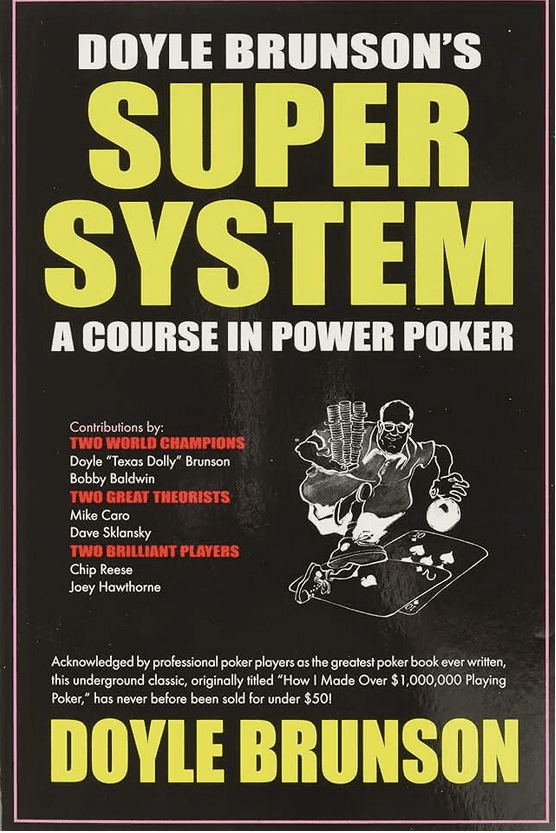
A groundbreaking poker book was written by 10-time World Series of Poker bracelet winner Doyle Brunson. "Super System" was published in 1978.
In the "pre-internet" era, innovative strategies worked for years, and opponents took a long time to adapt to them. In modern realities, opponents will find an antidote within months, or even weeks. Specific plays quickly lose relevance. That's why there's no point in copying lines from a poker book. However, studying the concepts and thoughts of leading players is still useful.
The best poker books don't teach you to check/raise on dry boards with an ace or to 3-bet suited 64 on the button. They lay the foundation and introduce the key aspects of the game. Take Phil Gordon's "Little Green Book" as an example. In the first pages the author reveals the basic ideas of poker. Phil titled one of the sections "Study the players first, then look at the cards." Choosing your strategy depending on the opponent was a sensible approach both in 1925 and in 2025. Making decisions based on your opponent is more profitable than following an average plan.
We'll split the top list into 2 parts. In the first, we'll discuss the most useful poker books from a strategy standpoint. In the second, we'll look at the best works on poker psychology.
Top 5 books about poker
A professional player must know poker math. Roy Rounder's book covers the topic better than others.
Easy Poker Math. Most authors of poker literature offer a section on math. Many are let down by how they present the material. They explain simple concepts in a complicated way and leave chaos in the player's head. Rounder took a different path and filled the manual with a huge number of examples. In 36 pages the reader is taught to instantly calculate outs, real and implied pot odds. We'll separately note the rules for counting outs ×2 and ×4. With them you can make a mathematically sound decision in seconds.
Applications of No-Limit Hold'em. A balanced strategy is the trend of the last decade in online poker. Matthew Janda's work will introduce the player to the key ideas of GTO. In the manual the author doesn't just break down the basic ideas of balance, but also teaches players to calculate frequencies in specific situations on their own. Modern poker players study GTO in solvers. Janda's book will help you "dig deeper." The manual contains many formulas and calculations — this work on balanced strategy will not be light reading.
Harrington on Hold'em. Dan Harrington wrote 3 books about NL Hold'em. In the first the author introduces the reader to the rules of poker, math, and starting hands. The second covers strategy for the late stages of tournaments. In the third Harrington offers to consolidate knowledge through exercises. First Dan gives a problem, then a detailed solution with explanations. Many experts believe that every tournament player must read Harrington's books.
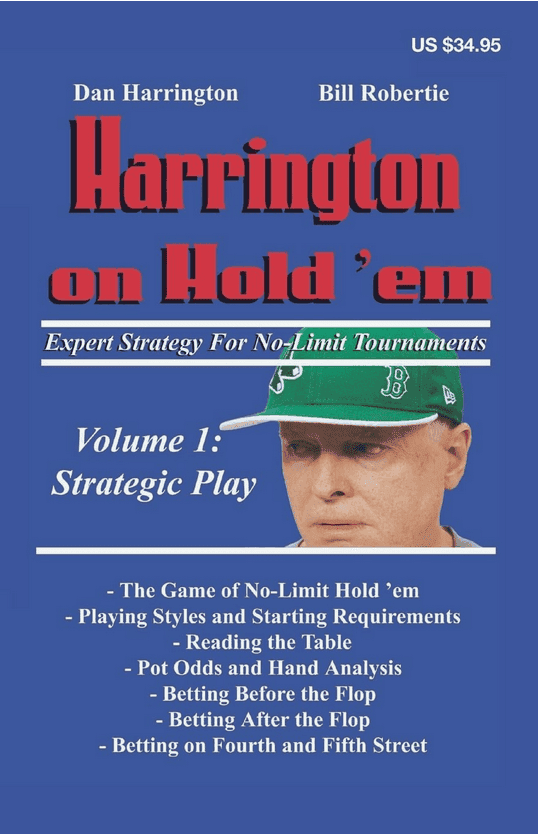
Dan Harrington made a huge contribution to the development of the top tournament players of the 2000s
Moorman on Poker. A sort of sequel to Dan Harrington's third volume. In the book Chris Moorman thoroughly breaks down hands from tournaments with an average buy-in of $50. First the player whose session Moorman is reviewing shares his thoughts on the hand. Then Chris makes a detailed analysis, points out mistakes, and gives recommendations on how to fix them. Moorman has won more than $22,000,000 in online tournaments over his career, so his opinion and way of thinking are worth studying.
Kill Everyone. A book about tournament poker by Lee Nelson, Steve Heston, and Tysen Streib. If Harrington's works lay the foundation of strategy, then "Kill Everyone" offers advanced concepts. The authors give detailed recommendations on playing at different stages of a tournament. The book pays special attention to the bubble. The authors' thoughts are supplemented by commentary from Bertrand Grospellier — a two-time WSOP bracelet winner with career earnings of $15,400,000.
Learning at FunFarm, from any level
Top 5 books about psychology
Many poker players show good results over the long run but crash due to psychological problems. The best poker books will help you overcome tilt, develop the right approach to the job, and beat procrastination.
The Mental Game of Poker. Jared Tendler thoroughly broke down all the psychological problems of players. In the first book he classified the types of tilt and gave practical recommendations for dealing with them. Thousands of poker players got rid of anger or reduced its intensity thanks to "The Mental Game of Poker." Tendler devoted the second volume to reaching a new level of mastery. Jared proposed ways to increase productivity and the quality of poker training.
Your Worst Poker Enemy. Alan Schoonmaker is a pioneer of poker psychology. He devoted 3 books to the game: 1) The Psychology of Poker, 2) Your Best Poker Friend, 3) Your Worst Poker Enemy. In the first volume Alan reveals the connection between players' actions and their temperament. In the second book Schoonmaker offers recommendations for acquiring the right habits and psychological balance. "Your Worst Poker Enemy" covers tilt and methods of dealing with it.
Treat Your Poker Like a Business. Dusty Schmidt breaks down the components of professionalism in poker. A sensible daily routine, rules of bankroll management, questions of discipline — a small part of the book's topics. Dusty's work is a ready-made manual for the transition from amateur to professional.
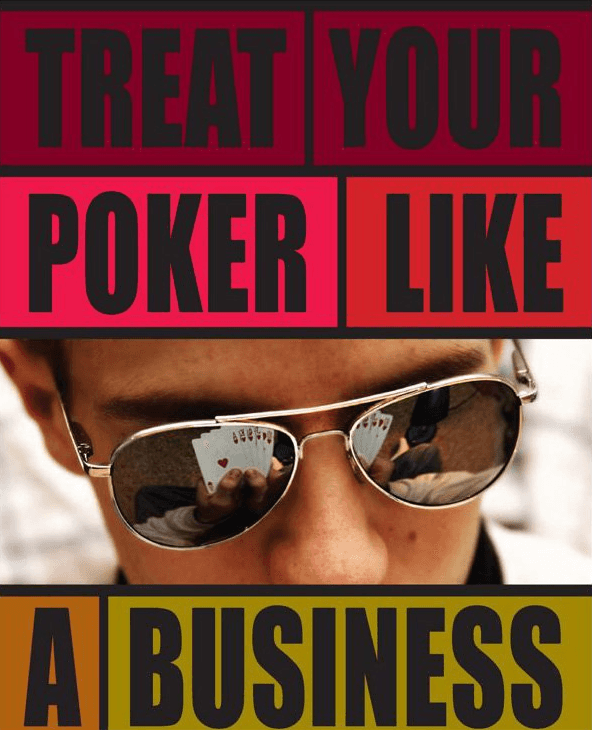
Dusty Schmidt specialized in cash, but most of his advice works in tournament poker too
The Mental Edge. Leszek Badurowicz adapted the psychological strategies of "big" sports to poker. The main idea of the book: "To reach a new level and outpace thousands of average players, you need to change your approach to the job." Badurowicz breaks down the basics of time management and effective poker training. Compared to its competitors, "The Mental Edge" stands out for its huge number of exercises and practical tips. If a player not only reads the book but also completes the assignments, results won't keep them waiting.
Poker Therapy. Peter Clarke proposes rethinking your approach to decisions at the table. The main idea: "Don't overestimate your opponents' actions." Often a player's brain sees a trap where there is none. An error of interpretation leads to abandoning the standard decision in favor of a strange line. As a result the player loses money. Clarke recommends making changes to the "trigger — interpretation — reaction" chain. Small adjustments will bring huge benefits over the long run. We'll note the 4-step brain rebuilding technique. It will allow you to steer your thinking in the right direction.
A lot of information about psychology is offered by the dedicated FunFarm section. The mental care department helps work through the problems of the school's students. FunFarm psychologists conduct group and individual sessions. The specialists are familiar with poker, so they easily get to grips with players' problems.
Other ways to study poker
Poker training through books is a good option at the start of a career. They: help you learn the rules of the game, introduce you to different kinds of poker and disciplines, and offer basic strategies. There are other ways to learn too. Among them: working in software, sessions with a coach, discussing hands with other players, watching training videos and streams. Let's discuss each in more detail.
Working in software. Many players reached high stakes thanks to training in poker programs. Regular hand analysis in a calculator or solver will rid you of most gross mistakes. A special trainer like ICMIZER will let you hone push/fold. FreeBetRange will help you build ranges for each position and tournament stage. We covered the topic in more detail in our guide to poker software.
Sessions with a coach. The fastest way to take your game to a new level is training with a qualified specialist. A good coach will analyze the player's database, find the key mistakes, and fix them. Worthy mentors charge solid price tags. Not every beginner is ready to invest hundreds or thousands of dollars in training. A more budget-friendly option is to join a school like FunFarm.
Discussing hands. Analyzing hands with other poker players will bring great benefit. Joint reviews allow you to evaluate a hand through someone else's eyes and notice key details. Communication with colleagues gradually grows into friendship. An understanding environment will help you develop in poker.
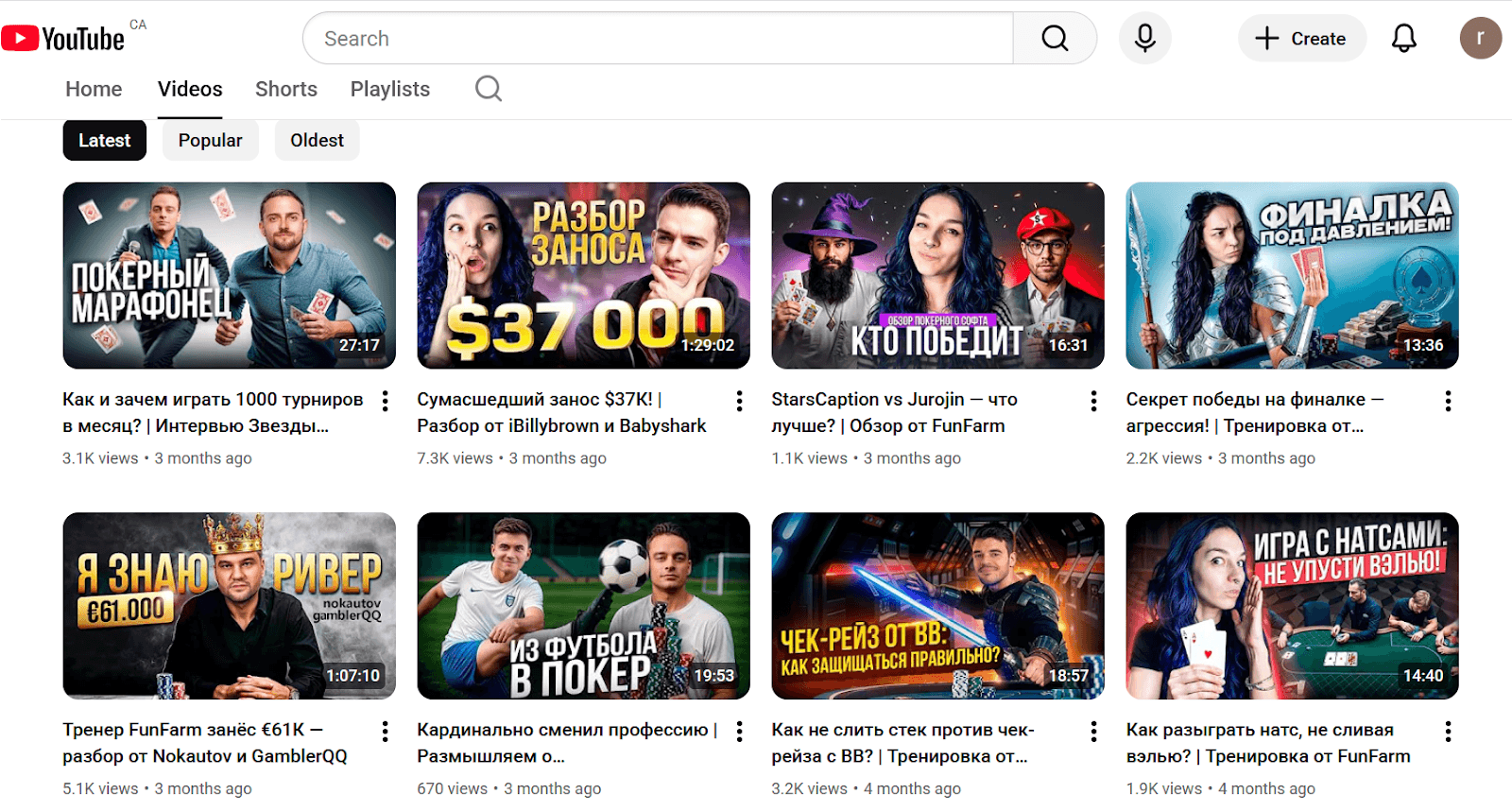
On the school's YouTube channel we alternate deep reviews with short videos about strategy
Watching videos. Content about poker will help you study many aspects of the game. A huge number of materials can be found on YouTube. Browsers with automatic translation make it possible to grasp the gist of a video with minimal effort. Let's not forget about the hundreds of training courses from professional coaches. Many can be found freely available. Interesting videos also come out on the FunFarm YouTube channel. Among them: reviews of winning final tables, themed training sessions, and interviews with popular players. Subscribe to get useful content before everyone else.
Poker streams. Leading professionals in the industry hold live broadcasts on Twitch, Kick, and other platforms. During the streams poker players explain their decisions and answer questions in the chat. The best players don't just click buttons but also entertain the audience. We'll note the therapeutic effect of streams: when you see a top poker player run over with trash, it's easier to come to terms with your own setbacks. There's a FunFarm channel on Twitch too. Subscribe to watch live broadcasts of the school's leading coaches' sessions.
Free course · FF Start
Learn poker systematically
From the first rules to strategy, math and a clear development plan.
Frequently asked questions
Read next

Healthy sleep for poker players: how to fix your routine
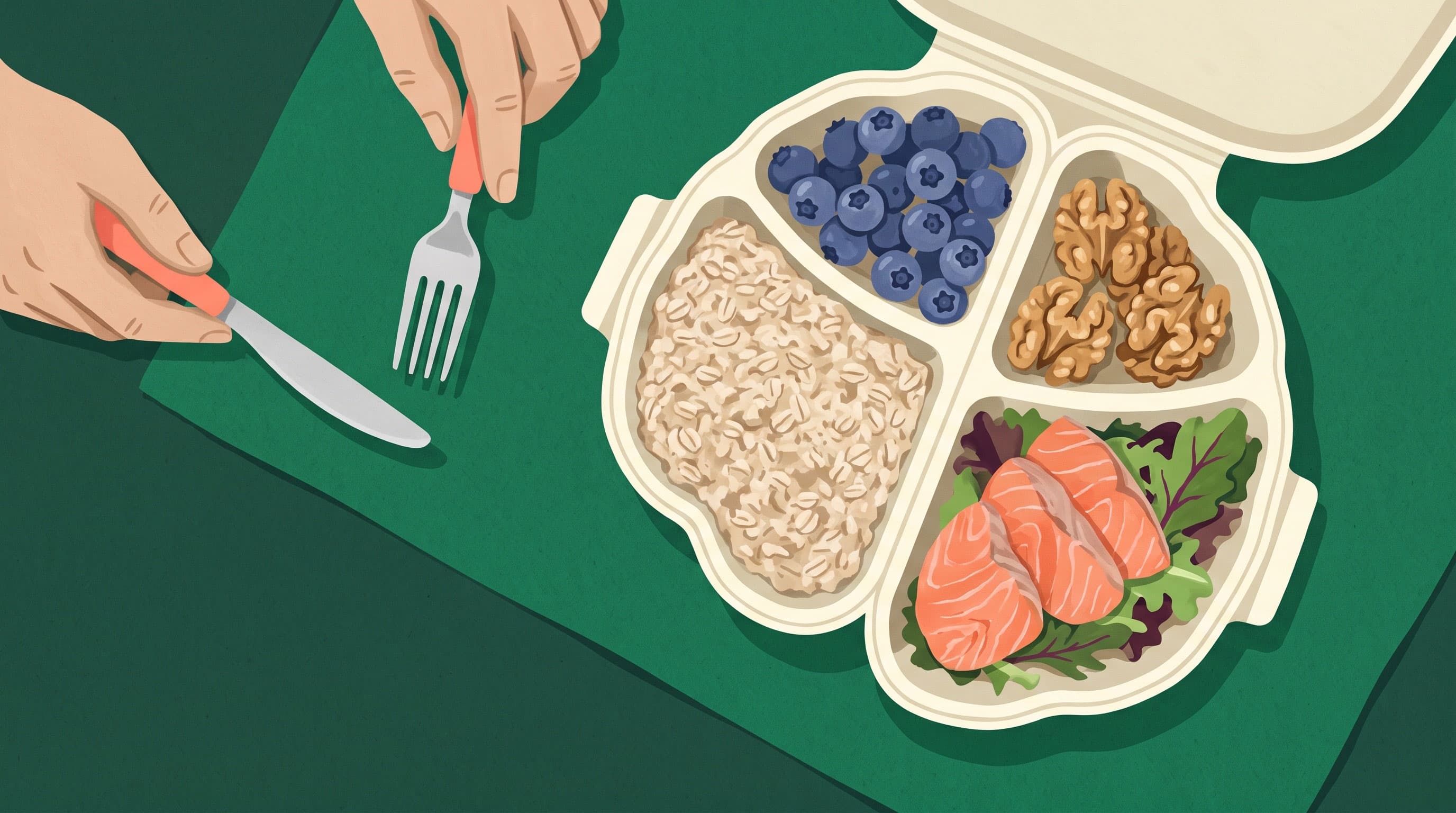
Brain Food for Poker Players: The Top Foods to Sharpen Focus and Cognitive Performance

Sports for Poker Players: Best Picks for Focus