Bankroll Management: 7 Rules to Avoid Going Broke
How can a beginner protect their bankroll? Which rules will help you avoid losing all your money? We explain in this article.


Ilya is a Liga 2 player with six years of experience in online MTTs. He graduated from the Faculty of Journalism at RSUH and writes about poker for beginners, explaining complex things in simple, clear language. In his texts, Ilya combines his personal playing experience with his professional journalism skills to help newcomers confidently get into the game.
Over the long run, poker results depend on a player's skill. However, many beginners never manage to put in a sufficient number of hands or tournaments. The culprit is poor bankroll management. To avoid losing all your money, you need to follow the rules. We'll discuss them in this article.

New breakdowns in your inbox
Subscribe to the FunFarm newsletter: fresh Poker ABC articles and material that helps you grow as a player.
What is bankroll management?
Bankroll management is a set of rules for managing your poker capital. It allows you to minimize the risk of going broke and to move up in stakes carefully.
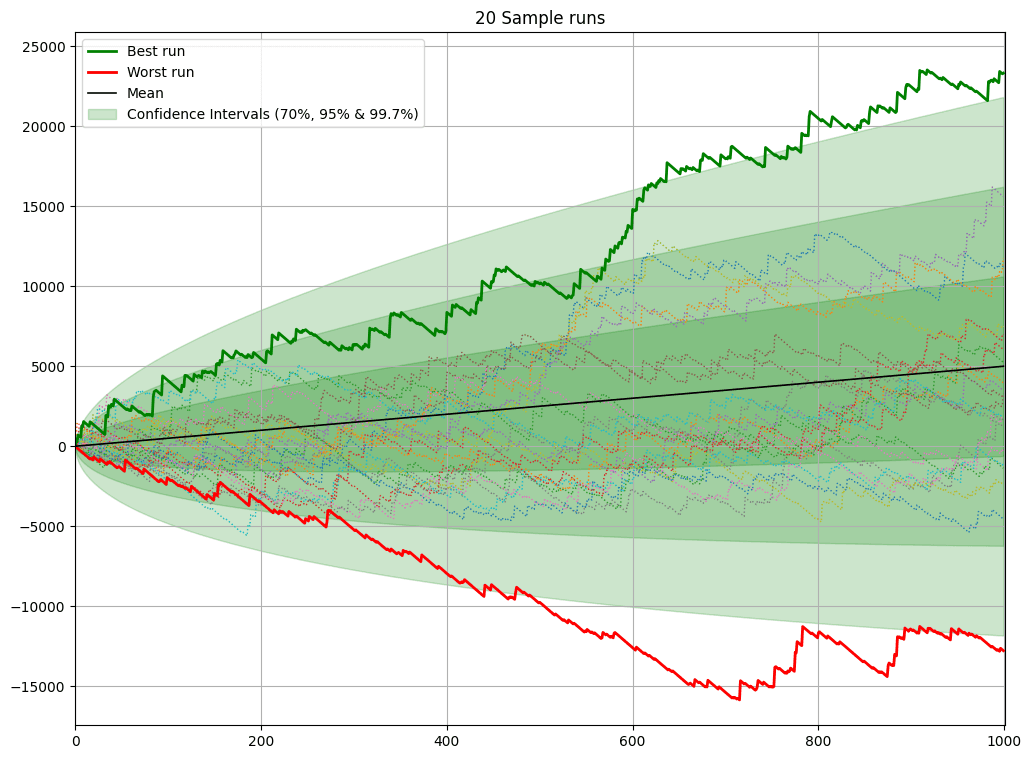
A lot in poker depends on variance. Variance — is the deviation of a result from the mathematical norm. Two players can make identical decisions, yet the first will lose while the second — wins
Bankroll management wasn't invented in poker: the stop-loss and other ideas were borrowed from stock brokers. Capital management strategies are also used in sports betting. Bankroll management can be called a special case of financial literacy. In real life, people with a monthly salary of $1,000 aren't advised to spend $1,500 on a new iPhone. In poker, registering for a $2,650 tournament with a $3,000 bankroll also wouldn't be called a wise decision.
Specific bankroll management models depend on several factors: the discipline being played, the opponents' skill, the player's mastery, and their psychological stability. For example, in multi-table tournaments the 100 buy-in rule applies. To play $5 tournaments, you need to save up $500. At low cash game stakes the requirements are softer: NL2-NL5-NL10 can be cleared with a bankroll of 40-50 stacks. As you move up in stakes, it's wise to increase your safety margin too.
To successfully navigate the "stormy waters" of online poker, follow a few capital management rules. Here are the main ones:
reliability is more valuable than a fast start;
take shots in the right situation;
be flexible when your bankroll shrinks;
don't chase losses at higher stakes;
set a stop-loss and stick to it;
don't spend your bankroll on everyday needs;
study the psychology and mathematics of poker.
Let's discuss each rule in more detail.
Rule #1: reliability is more valuable than a fast start
Many beginners come to poker for big and fast money. The thought "I'll deposit $100 — register for the Sunday Million — win it — collect a prize of $100,000+" visits many people. Fairy-tale stories have happened in poker. For example, in 2003 Chris Moneymaker won the main event of the World Series of Poker. Before this landmark success he played cheap tournaments on PokerStars. In 2015 a player with the nickname Tornado111 won a $5 Spin&Go with the maximum multiplier and took home $1,000,000. Before that million-dollar spin he had played only 20 tournaments.

Moneymaker's win sparked the "poker boom". While 839 players took part in the 2003 WSOP ME, the following year 2,576 people played the main tournament
In most cases a beginner's career follows a different trajectory. He deposits, jumps into an expensive tournament with all his money, busts quickly, and forgets about poker. Over the long run, success comes to patient players. With a starting bankroll of $100 it's wise to take part in freerolls and $1 tournaments. A cautious approach will let you accumulate experience battling live opponents and hone your gameplay skills. After 50-100 tournaments not only mastery but also your first wins will come. Without bankroll management a player simply won't "survive" long enough to reach success.
We recommend beginners pay attention to the "FunFarm Start" program. If a beginner completes the theoretical part of the course, they receive a starting capital of $50. This free money will give you the opportunity to alternate between freerolls and $0.5-$1 tournaments.
Rule #2: take a shot in the right situation
In poker, a "shot" means a trial attempt at the next stake. It allows you to:
gradually move up to more expensive tournaments or cash tables;
gather information about opponents and their gameplay tendencies;
reduce psychological pressure.
In cash, a player mixes their regular-stake tables with one higher-stake window. For example, a player adds one more table to their 3 NL10 tables — an NL25 one. In tournaments a shot can be implemented in a different way. Suppose a player takes part in $5 events and has saved up $800. The bankroll doesn't allow systematically playing $10 buy-in tournaments, but adding one more expensive event to the session is possible. As a result, they play 10 $5 tournaments and 1 $10 one. With a lucky run the player will sooner accumulate the money for the move up.
No one forbids trying a more complex shot scheme either. We're talking about cheap satellites into expensive tournaments. Convert $5 into a $100 ticket. For example, at the time of writing this material PokerOK is running satellites to the Mini Main Event for $5. The ticket will give you the chance to compete for $1,000,000. Any in-the-money finish will substantially increase the player's bankroll. A win will multiply the capital hundreds of times.
Learning at FunFarm, from any level
Rule #3: be flexible when your bankroll shrinks
The path to success in poker resembles a winding road with lots of bumps, cracks, and dead ends. Downswings and setbacks accompany a player throughout their career. Bankroll management will help you get through the difficult moments with minimal losses. Many players take moving down in stakes painfully. The prospect of cheaper play doesn't scare an experienced professional. Moving down allows you to: work on your mistakes, keep your confidence, and lose less.

Dropping down a stake is disappointing. However, surviving a move down is easier than pining over a lost bankroll
Set flexible rules for moving. For example, if you lose 25% of your poker capital, you move down a stake. Let's illustrate the rule with a real-life situation involving two players — Daniel and Phil. Both players play $5 tournaments with a $500 bankroll. Both were hit by a losing streak. When Daniel's capital fell to $400, he moved to less expensive events. Phil decided to change nothing and lost 80% of his capital. Later Daniel quickly returned to his previous stake. Phil, however, spent a long time rebuilding his bankroll. A timely step back will make life easier in the future.
Rule #4: don't chase losses at higher stakes
Setbacks are a natural part of poker. The very nature of the game implies bad periods and big losses. During a losing streak a player's main task is to reduce losses. However, many players move up in stakes to win their money back. Battling stronger opponents leads to predictable losses. Disciplined players follow bankroll management and humbly end the session in the red.

Moving up in stakes to recover your losses is the shortest path to going broke
The long run will smooth out the negative effects of variance, but not the consequences of tilt and loss of control. Regularly repeat the basic capital management rules and ignore the urges to go up a stake. Poker won't give a bankrupt player anything back.
Rule #5: set a stop-loss and stick to it
The stop-loss, or Stop-loss, came to poker from trading. It means selling a security at the moment its value falls. For example, a Disney share is worth $100. If the security's owner sets a 5% Stop-Loss, then when the price falls to $95 the broker sells it and locks in the loss. In poker the rule protects the player from tilt. If after a series of losses a player starts making bad decisions, then it's wiser to end the session early.
Cash players have it easier with a stop-loss: lost 10 stacks — closed the tables and went to rest. In tournaments, locking in losses is harder. Players play several events at once. Often they start at different times. It's easier to track the number of tournaments and the overall "load". For instance, once a player has put $60 into different tournaments through buy-ins, they stop the registration process.
A Stop-Loss will benefit fans of the Re-entry format. After busting from a tournament a player can put in a buy-in and take part in it again. The format is dangerous for tilt-prone players. If you love Re-entries, limit the number of entries. An example rule: "when I bust from a tournament I take one re-entry, but no more".

Rule #6: don't spend your bankroll on everyday needs
After their first successes, players start withdrawing money. Some reward themselves for their efforts, others prove to relatives that you can make a living from poker. However, cashouts slow your move up in stakes. Withdrawing your poker bankroll is especially dangerous for tournament players. The reason is variance. You can keep playing good poker yet lose for months. If you withdraw too much, then before your next win you can lose your bankroll or drop a stake.
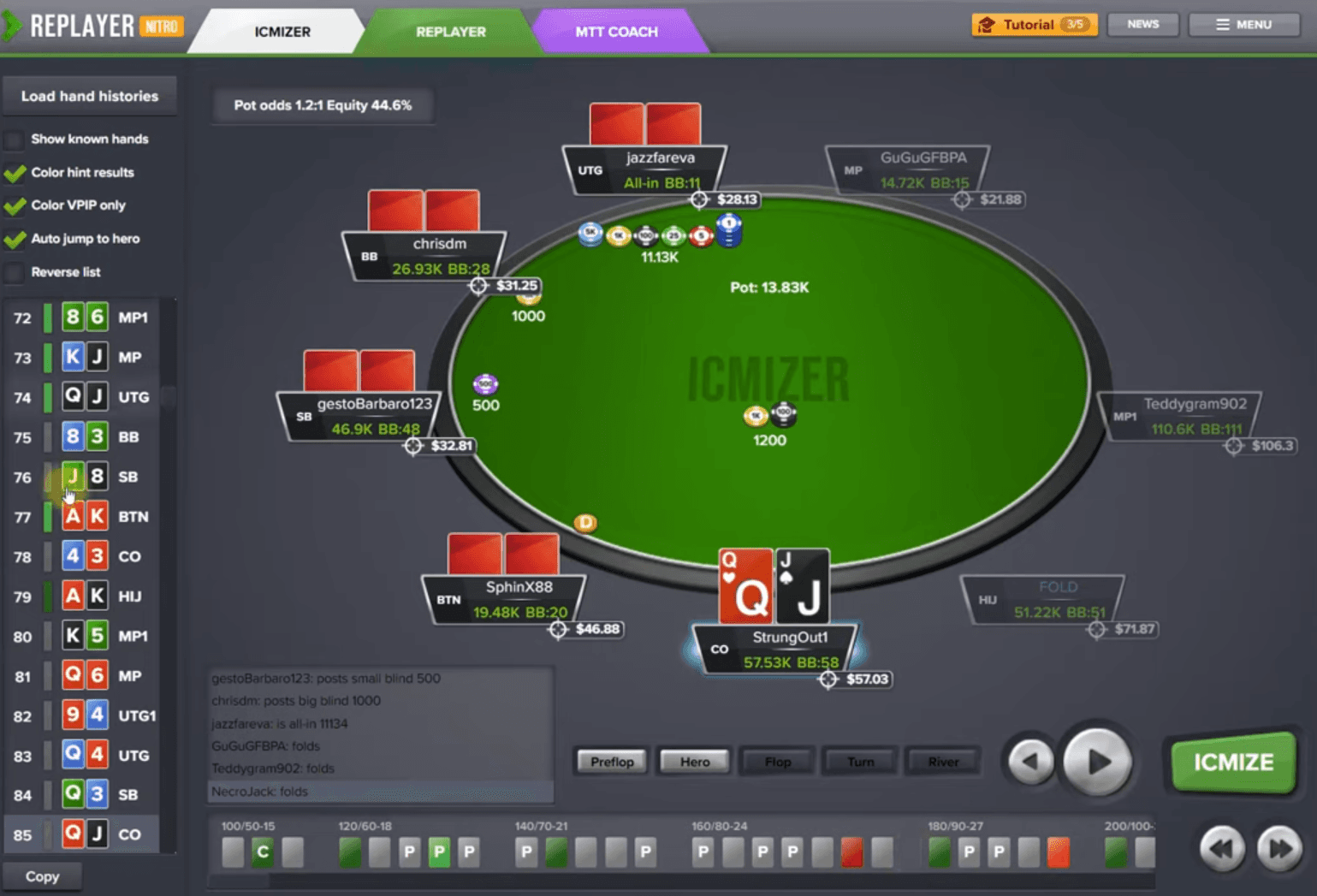
The bankroll is a player's working tool. Don't slow your progress for a momentary whim
Extra money is better invested in yourself. Buy useful poker software or hire a coach. Both decisions will let you raise your skill level. Keep it up and over time you'll start winning tens of thousands of dollars a month. At that point no one will forbid you from withdrawing money and treating yourself.
Rule #7: study the psychology and mathematics of poker
Bankroll management protects a player from going broke. Psychological stability: helps you lose less during difficult periods, lets you move down a stake in time, and shields you from attempts to win back losses while on tilt. The mathematics of poker introduces you to variance. The sooner a player understands the full complexity of poker, the faster progress will come. Knowledge about variance won't bring back 30-40 lost buy-ins, but it will help you take losses more calmly. The most rational beginners start working on their game with double the effort, to reduce the influence of luck on their results.

Free course · FF Start
Is that really a +EV call?
See through examples how equity, pot odds and EV help you choose the right action.
Frequently asked questions
Read next

Poker Winnings Tax: What Players Pay Worldwide

How to Beat Microstakes and Start Growing in Poker

A Career in Poker: How Much Do Professional Players Earn