Antes and Blinds: How They Shape Poker Strategy
If you remove antes and blinds from poker, the game quickly turns into an endless exchange of checks — everyone would just wait for perfect cards and never put chips in voluntarily.

Ilya is a Liga 2 player with six years of experience in online MTTs. He graduated from the Faculty of Journalism at RSUH and writes about poker for beginners, explaining complex things in simple, clear language. In his texts, Ilya combines his personal playing experience with his professional journalism skills to help newcomers confidently get into the game.
It's the forced bets that create action at the table, build the initial pot, and force players to make decisions — to defend their chips, steal from others, widen their ranges, and adjust their strategy depending on the betting structure.
In this article, we'll break down what blinds and antes are in simple terms, why they're needed, how they differ from each other, and how they affect strategy in tournament poker.
This material will be especially useful for those just starting out in poker who want to understand the logic of the game rather than simply memorize individual moves.
You'll learn:
what the small blind and big blind are and why they're considered unprofitable positions
what typical mistakes beginners make in the blinds
what an ante is and how it differs from blinds
how the ante changes dynamics and makes the game more aggressive

New breakdowns in your inbox
Subscribe to the FunFarm newsletter: fresh Poker ABC articles and material that helps you grow as a player.
What blinds are in poker
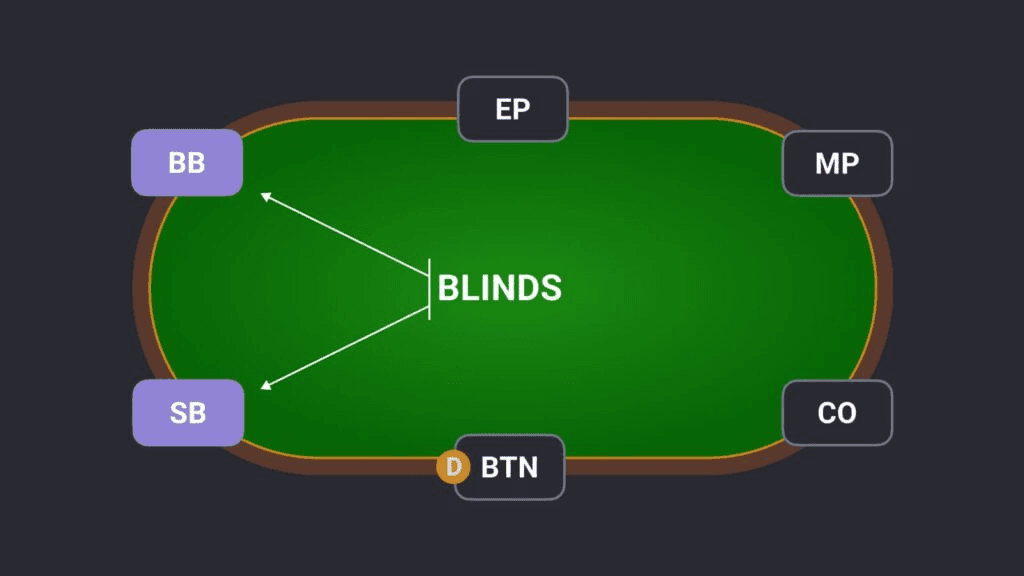
Blinds are forced blind bets made by two players at the table before any cards are dealt.
There are two types of blinds:
the small blind (SB) — posted by the player immediately to the left of the button
the big blind (BB) — posted by the player after the small blind
In No-Limit Texas Hold'em, it's the blinds that build the starting pot before anyone has even seen their cards. After each hand, the button and the blinds move clockwise, so betting obligations are distributed evenly among all participants.
Without blinds, players would have no incentive to enter the pot — you could wait endlessly for better hands. Blinds create ongoing costs that have to be offset by active play.
Features of the blind positions
From a strategic standpoint, the small and big blind are not a privilege but a working position with clear downsides.
1. Constant financial costs
Over the long run, you'll pay the blinds many times and often simply fold preflop. This means the SB and BB positions will almost always be negative in expected value, and the player's task is to minimize the losses.
2. An awkward position after the flop
Starting from the flop, the blinds act first. This is an early position with no information about opponents' actions. The lack of information is a serious downside: any decisions are made "in the dark," and mistakes cost more.
3. Pressure from late positions
Players in late positions often open with a wide range, trying to steal the blinds. Telling a strong hand apart from a bluff is harder than it seems, and players in the blinds constantly face a dilemma — whether to defend their bet or accept the loss.
That's exactly why experienced players widen their calling and 3-betting ranges, to the point of playing 90% of starting hands.
You can read about what a 3-bet is and how to use it correctly in your game strategy in this article.
Typical mistakes beginners make in the blinds
1. Folding from the small blind = missed profit
At first glance, it seems logical in an SB vs BB situation to simply fold the hand — the position is awkward, you face postflop play without initiative, and it's far from always clear how to play a given hand.
However, this strategy leads to a systematic loss of profit, because opponents (especially at low stakes) in the big blind hardly ever attack a wide limping range, rarely raise, and play postflop passively. This creates a situation in which the small blind can realize its equity even with a very wide range.
It's far more profitable to overcall almost your entire range on the SB and bet 1 bb on the flop, prompting the opponent to fold. Over the long run, this is a far more profitable strategy than simply giving up.
Why is folding a mistake?
the player voluntarily gives up invested chips without trying to realize equity
the player misses the chance to take the pot with small bets on the flop
regularly folding on the SB makes your strategy too tight and predictable.
Thus, frequently folding on the SB isn't caution but a missed opportunity to earn profit with a simple, robust strategy that is especially effective at micro stakes.
2. The same defending range for the SB and BB
One typical mistake beginners make is defending the small blind and big blind equally wide, as if they were interchangeable positions. In practice, the difference between them is significant, and ignoring this difference leads to systematic losses.
Why can't the SB and BB ranges be the same?
The small blind is always out of position against all players.
On the SB, you can't realize equity as effectively as on the BB.
On the BB you get the better price-to-pot ratio.
Calling on the BB has a better price, while the SB pays more relative to potential profit and more often ends up in tough postflop situations.
That's why an identical defending range causes a player to overvalue weak hands and then fail to play them profitably after the flop.
3. Overcalling too wide as the third or fourth player
This mistake follows logically from the previous one and occurs among beginners just as often: players in the SB and/or BB call too wide after a raise and one or two calls from opponents, entering multiway pots out of position.
Why is this bad?
The more players in the pot, the less often your hand wins.
Players in the SB and BB are out of position.
Opponents in position control the pot size and the flow of the hand
Learning at FunFarm, from any level
What an ante is and how it differs from blinds
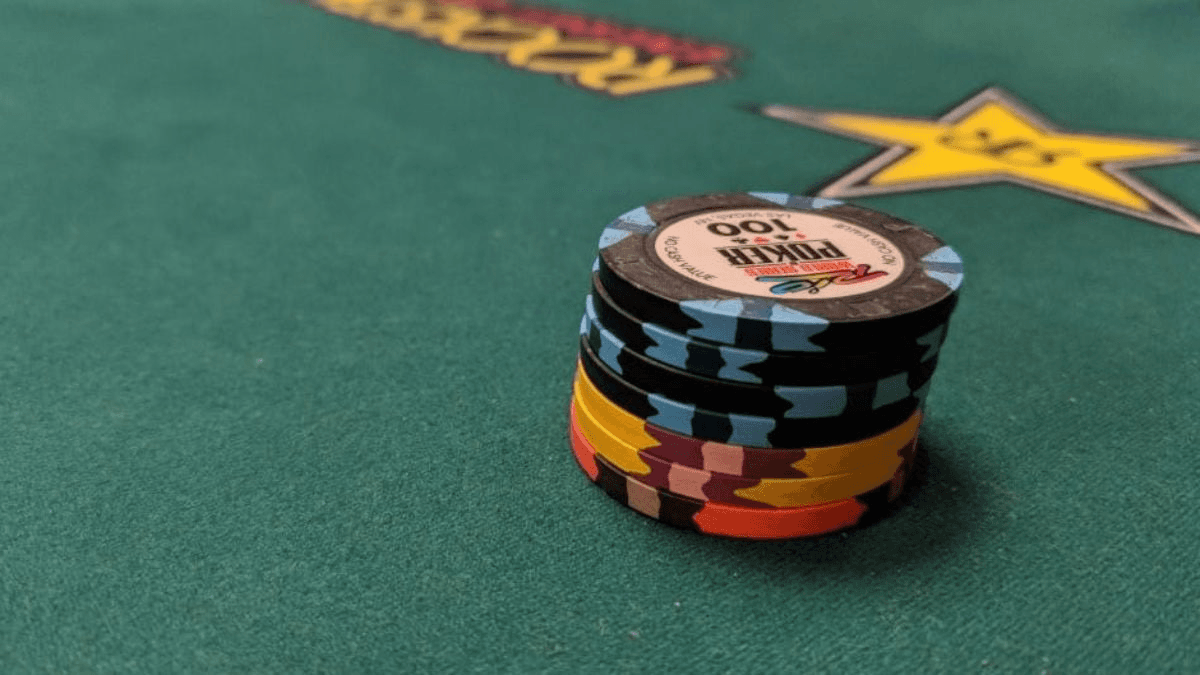
An ante is also a forced bet, but it has key differences:
The ante is posted by all players at the table
The ante size is the same for everyone, regardless of position
The ante is added to the pot before the hand begins — even before the blinds and the deal
The ante makes every pot bigger from the start and motivates players to take part in the hand more actively.
Rules for posting the ante
The general principles are as follows — the ante size is fixed within a level and is set in advance in the tournament structure, the ante is paid before the cards are dealt, and if a player can't pay the ante, they either bust out or play all-in per the rules.
In online poker, antes and blinds are deducted automatically; offline this takes time and requires attention from the dealer and players. Recently, in offline tournaments, the player in the BB posts the ante for the whole table — precisely to save time and maintain the pace of play.

How antes and blinds affect strategy
A simple rule applies — the more chips lie in the pot before the flop, the more motivation players have to take them.
From this follow strategic consequences:
1. Opening ranges widen
When there are more "dead" chips in the pot, opening with a raise becomes more profitable — you risk a smaller portion of your stack relative to what's already sitting in the middle.
2. Push/fold ranges change
In tournament situations, especially with short stacks, the presence of an ante widens the range of hands you can go all-in with on short stacks and makes it possible to take 10–20% of opponents' stacks without resistance if they fold too much.
3. Aggression increases
The more chips in the pot before the flop, the higher the motivation to open wider from late positions, play more aggressively in the blinds, and use bluffs and semi-bluffs as a working part of your strategy.
A player who ignores the impact of the ante and keeps playing the same way in both the early and late stages of a tournament risks losing their entire stack to forced bets.
Conclusion
Antes and blinds are the foundation of Texas Hold'em, setting the pace of hands, building the starting pot, forcing players to make difficult decisions rather than endlessly waiting for premium hands, and directly affecting which starting-hand ranges will be profitable over the long run.
Understanding how antes and blinds work is an essential foundation for any player who wants to treat poker as a professional discipline rather than a set of random decisions.
If you want to learn how to build a strategy that accounts for the structure of blinds and antes, choose tournaments correctly, defend your blinds, and use the game's dynamics to your advantage — apply to FunFarm.
We help players build a deliberate, mathematically grounded game over the long run.
Free course · FF Start
Start making sense of poker
Rules, hand rankings, positions and first strategies — in a clear system built for beginners.